
Welcome to:
Costa Rica
Pura vida isn’t just a saying in Costa Rica, it’s genuinely how life feels here. Slower, greener, wilder, and somehow exactly what you didn’t know you needed.
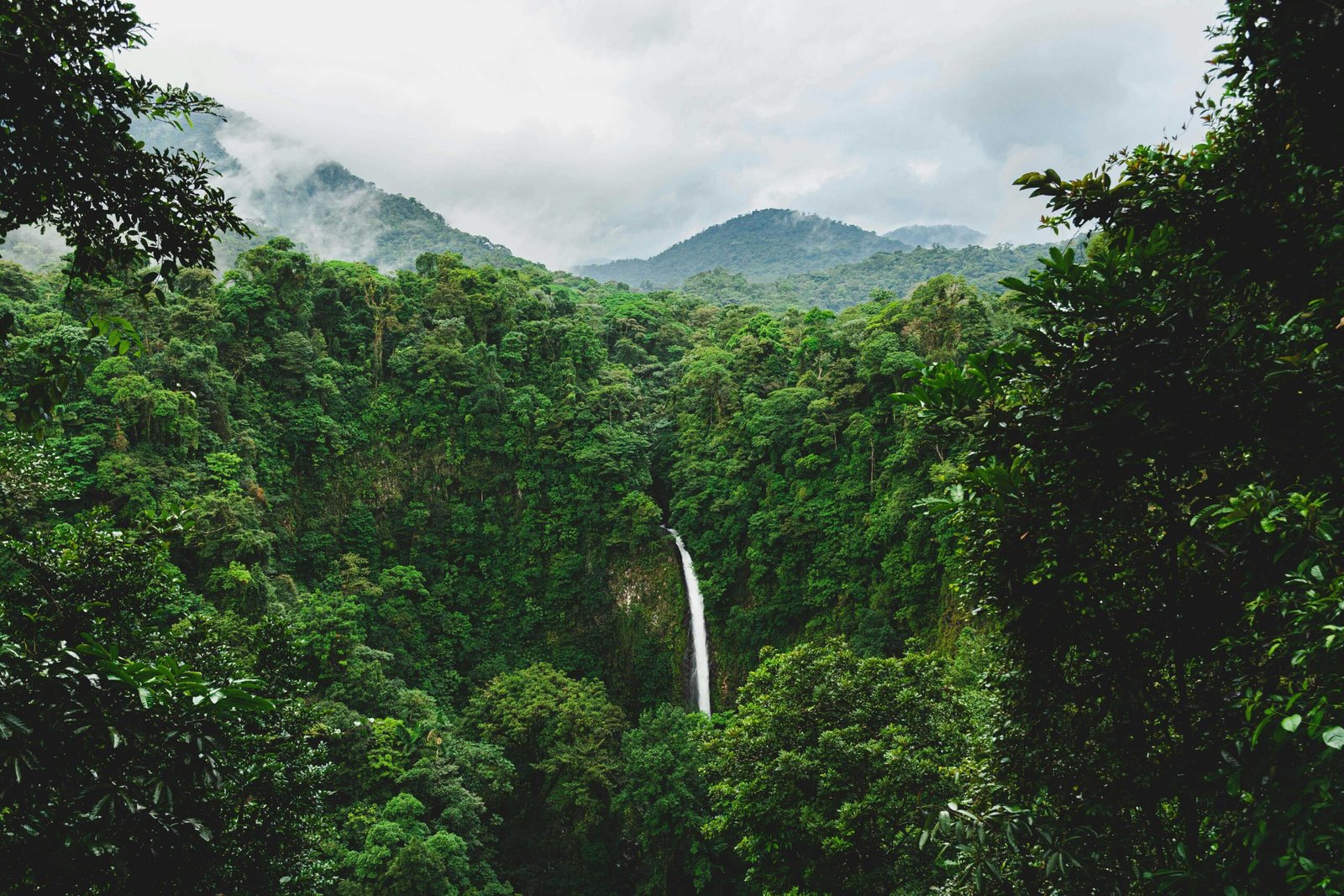
Best places to visit in Costa Rica



Weather in Costa Rica
Costa Rica has a tropical climate with two distinct seasons: the dry season (December to April) and the green season (May to November). Temperatures stay warm year-round, ranging from 22°C in the Central Valley to a humid 30°C on the coasts, with the cloud forests of Monteverde staying cooler and misty whatever the time of year.
Best time to visit Costa Rica
The best time to visit Costa Rica is December to April, when dry, sunny conditions make beaches, national parks, and outdoor adventures most accessible. If you don’t mind the occasional downpour, the green season offers lush landscapes, fewer crowds, and significantly lower prices and mornings are often clear.
🇨🇷
Best time to visit Costa Rica:
Jan–May, Nov–Dec
⏳
Faq’s
What time is it in Costa Rica?
Costa Rica is in the Central Time Zone (CST, UTC−6) and does not use daylight saving time, so it stays consistent year-round.
Is Costa Rica tourist-friendly?
Yes, Costa Rica is one of the most tourist-friendly countries in Central America, with well-developed infrastructure, English widely spoken in tourist areas, and a culture that genuinely wecomes visitors through its pura vida philosophy.
What is Costa Rica best known for?
Costa Rica is best known for its extraordinary biodiversity, home to nearly 6% of the world’s species despite covering just 0.03% of its surface. It’s also famous for its national parks, active volcanoes, and the pura vida lifestyle.
Is $1000 enough for a week in Costa Rica?
$1,000 can work for a week if you stay in hostels, eat at local sodas, and use public buses. Budget around $80-100 per day for a more comfortable mid-range experience with tours and private transfers included. Compare to neighbouring countries, Costa Rica is more expensive.
Can you drink the tap water in Costa Rica?
Tap water is safe to drink in most cities and tourist areas, including San José and Manuel Antonio. In more remote or rural areas, stick to bottled or filtered water to be safe.
Where to see sloths in Costa Rica?
You can spot sloths in places like Manuel Antonio National Park, Tortuguero, and the Puerto Viejo area, where guided tours increase your chances significantly.
What is the culture of Costa Rica?
Costa Rican culture is rooted in the pura vida philosophy — a genuine outlook of gratitude, simplicity, and wellbeing. Influenced by Spanish heritage, it places strong values on family, nature, and sustainability, and Costa Rica’s commitment to conservation is reflected in its world-leading national park system.
Where are the airports in Costa Rica?
The two main international airports are near San José (Juan Santamaría International Airport) and Liberia (Daniel Oduber Quirós International Airport).
What are the national dishes of Costa Rica?
The most iconic dishes are gallo pinto (rice and beans, often served for breakfast) and casado, a hearty meal with rice, beans, plantains, salad, and meat or fish.
What should I pack for a trip to Costa Rica?
Pack lightweight clothing, a rain jacket, comfortable shoes, insect repellent, sunscreen, and a swimsuit, since the weather can shift quickly between sun and rain.
Get Ready For Your Trip
Book popular activities in Costa Rica


Be prepared for Costa Rica
Language
Spanish is the official language, but you'll find many people in tourist areas speak basic to good English. Outside the main tourist trail, a few basic Spanish phrases go a long way and are always appreciated by locals.
Currency + How to Pay
The local currency is the Costa Rican colu00f3n (CRC), but US dollars are widely accepted, especially in tourist areas. You can pay by card in most places, though it is smart to carry some cash for small shops or rural areas.
Visa
Most travelers from the EU, US, UK, and Canada can enter visa-free for up to 90 days, as long as you have a valid passport and proof of onward travel. Always check the latest entry requirements before your trip on the official government website.
Costa Rica uses type A and B plugs, the same as in the US, with a standard voltage of 120V. If you are coming from Europe, you will need a plug adapter. nClick here to shop your international plug.
Safety
Costa Rica is generally safe, especially compared to neighboring countries, but petty theft can happen in tourist areas. Take basic precautions like not leaving valuables unattended and avoiding isolated areas after dark.
Driving and Fuel
Driving is a great way to explore Costa Rica, but expect potholes and unpaved roads in rural and more remote areas. Fuel prices sit around $1.30u2013$1.60 per litre, and gas stations are full-service, attendants fill your tank for you.