
Welcome to:
Greece
Whitewashed villages, ancient ruins, and water that genuinely looks that blue in real life. Greece is one of those places that feels both timeless and completely alive.
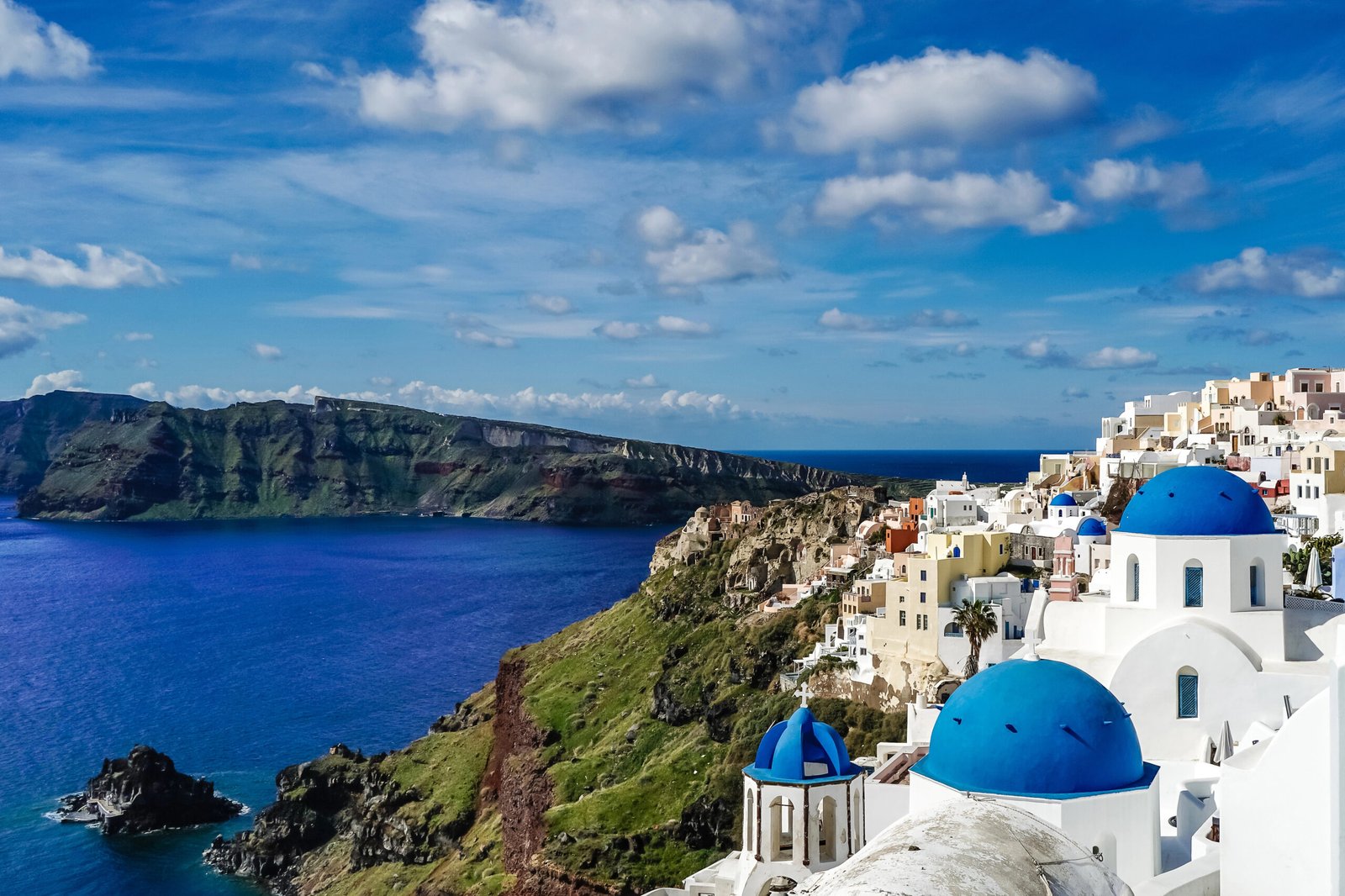
Best places to visit in Greece
Weather in Greece
Greece gets a lot of sun, more than almost anywhere else in Europe. With hot, dry summers pushing above 30°C and mild winters that rarely drop below 10°C. The islands can catch a strong breeze in July and August, which makes the heat more bearable, though Crete tends to stay warmer than most well into autumn.
Best time to visit Greece
May, June, and September are the sweet spot: warm enough to swim, without the crowds and peak prices that July and August bring. If you’re planning an island trip, avoid August unless you’ve booked well in advance, as accommodation and ferries fill up fast.
🇬🇷
Best time to visit Greece:
May–Sep
⏳
Faq’s
What time is it in Greece?
Greece follows Eastern European Time (EET, UTC+2) and switches to Eastern European Summer Time (UTC+3) during daylight saving months.
Is Greece tourist-friendly?
Greece is well set up for visitors, English is widely spoken across tourist areas, the islands are easy to navigate by ferry, and locals are genuinely warm, especially outside the peak summer rush.
What is Greece best known for?
Greece is known for its ancient history: the Acropolis, the birthplace of democracy, the original Olympic Games but also for its islands, its food, and some of the best sunsets in the world. It’s a country that works on multiple levels at once.
Can you drink the tap water in Greece?
Tap water is safe to drink in Athens and most mainland cities, but on many islands, including Santorini and Mykonos, bottled water is recommended as the supply comes from desalination or external sources.
What is the culture of Greece?
Greek culture centres on food, family, and taking time over both. Meals are long, hospitality is genuine, and there’s a strong sense of local pride that varies between the mainland and the islands. The influence of ancient history sits quietly underneath all of it.
Where are the airports in Greece?
Major international airports include Athens (ATH), Thessaloniki (SKG), and on islands like Santorini (JTR), Mykonos (JMK), and Crete (HER).
What are the national dishes of Greece?
Classic dishes include moussaka (a layered bake of aubergine, minced meat, and béchamel), souvlaki (grilled meat skewers), gyros (meat wrapped in flatbread), Greek salad, and fresh seafood.
What are some interesting things about Greece?
Greece is the birthplace of democracy and the Olympic Games, has over 6,000 islands (around 200 of them inhabited), and more UNESCO World Heritage Sites than most people realise. It’s also one of the sunniest countries in Europe, with over 250 days of sunshine a year in some regions.
Is it safe to travel in Greece?
Greece is generally very safe. Petty theft can happen in busy spots like Athens’ Monastiraki or crowded ferry ports, so keep an eye on your belongings but serious crime affecting tourists is rare.
What are the best islands to visit in Greece?
Santorini for the views and sunsets, Mykonos for nightlife and beaches, Crete if you want history, mountains, and coast all in one place, and Naxos or Paros if you’d rather skip the crowds without sacrificing the scenery.
Get Ready For Your Trip
Book popular activities in Greece




Be prepared for Greece
Language
Greek is the official language, but English is widely spoken in tourist areas, especially on islands and in major cities.
Currency + How to Pay
The currency is the euro (EUR), and cards are widely accepted, especially in tourist areas. It is still worth carrying cash for smaller tavernas or local shops.
Visa
Greece is part of the Schengen Area, so EU travelers can enter freely, while many others can stay visa-free for up to 90 days. Always check current entry requirements before traveling.
Plugs
Greece uses type C and F plugs with a standard voltage of 230V. European travelers typically won't need an adapter.
Safety
Greece is generally very safe, though petty theft can occur in busy areas like Athens or popular islands. Keep an eye on your belongings in crowded places.
Driving & Fuel
Driving is a great way to explore islands and mainland regions, though roads can be narrow and winding in places. Fuel sits around u20ac1.80u2013u20ac2.20 per litre. Check current rates before your trip and factor it in if you're planning to cover a lot of ground.