
Welcome to:
Spain
The food, the people, the landscapes: Spain has a way of making everything feel like the best version of itself. A market in the morning, lunch that lasts until four, and a view that makes it all make sense.
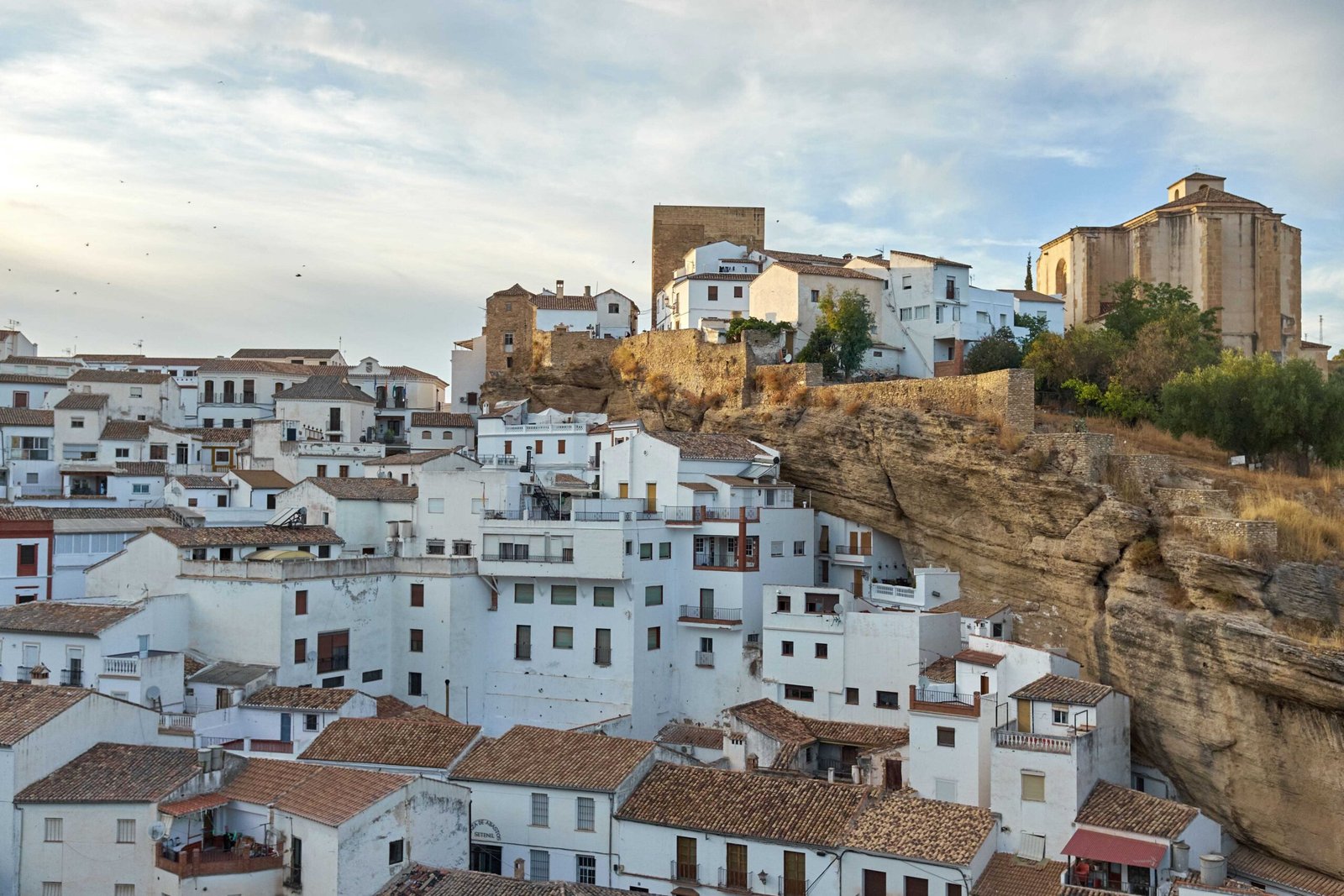
Best places to visit in Spain
Weather in Spain
Spain’s climate varies more than most people expect. Madrid and the interior have hot summers above 35°C and cold winters, the north is green and rainy, and the south and the islands stay warm and sunny for most of the year. The Mediterranean coast is the most reliable for sun, while the Canary Islands are warm enough to visit year-round.
Best time to visit Spain
April to June and September to October are the sweet spot, comfortable temperatures, manageable crowds, and lower prices than the peak summer rush. July and August are hot almost everywhere, and coastal resorts fill up fast, worth it for the beaches, but book well in advance.
🇪🇸
Best time to visit Spain:
May–Sep
⏳
Faq’s
What time is it in Spain?
Spain follows Central European Time (CET, UTC+1) and switches to Central European Summer Time (UTC+2) during daylight saving months, worth noting that despite being geographically aligned with the UK, Spain runs on the same time as Central Europe.
Is Spain tourist-friendly?
Spain is well set up for visitors, transport between cities is excellent, English is widely spoken in tourist areas, and the locals are relaxed and welcoming. The high-speed train network between Madrid, Barcelona, and Seville makes getting around straightforward and fast.
What is Spain best known for?
Spain is known for its food, its coastline, and its cities, but also for the sheer variety between regions. Andalusia feels nothing like the Basque Country, and Barcelona nothing like Madrid. The food alone: jamón, tapas, paella, pintxos, could justify the trip.
Can you drink the tap water in Spain?
Yes, tap water is safe to drink across Spain. In some areas like Barcelona and parts of the south the taste can be strong, so locals often prefer filtered or bottled, but it’s perfectly safe to drink from the tap.
What is the culture of Spain?
Spanish culture is built around food, people, and taking time over both. Lunch is the main meal of the day and rarely happens before 2pm, dinner rarely before 9pm, and the streets come alive in the evening in a way that takes most visitors by surprise. Each region has its own language, food, and identity. Spain is far less uniform than it looks from the outside.
Where are the airports in Spain?
Major international airports include Madrid (MAD), Barcelona (BCN), Málaga (AGP) for the Costa del Sol, Valencia (VLC), and Palma de Mallorca (PMI) for the Balearic Islands.
What are the national dishes of Spain?
Paella (rice cooked with seafood or meat, originally from Valencia), tapas, tortilla española (a thick potato omelette), jamón ibérico, and gazpacho in the south. Pintxos in the Basque Country are worth a trip on their own.
What are some interesting facts about Spain?
Spain has over 40 UNESCO World Heritage Sites, is the second largest country in the EU by area, and has the oldest restaurant in the world,Sobrino de Botín in Madrid, which has been open since 1725. It’s also one of the world’s biggest producers of olive oil and wine.
Is it safe to travel in Spain?
Spain is generally very safe. Pickpocketing is the main issue, particularly in Barcelona’s Las Ramblas and on busy metro lines, keep bags zipped and close in crowded areas, but serious crime affecting tourists is uncommon.
What are the best regions to visit in Spain?
Andalusia for flamenco, Moorish history, and some of the best food in the country; Catalonia for Barcelona, the coast, and Salvador Dalí country; the Basque Country for pintxos and dramatic coastline; Madrid for art, nightlife, and central Spain; and the Canary Islands if year-round sun is the priority.
Get Ready For Your Trip
Book popular activities in Spain
Be prepared for Spain
Language
Spanish is the official language, but Catalan, Basque, and Galician are widely spoken in their respective regions and locals appreciate the acknowledgement. English is well understood in tourist areas across the country.
Currency + How to Pay
The currency is the euro (EUR), and cards are accepted almost everywhere including contactless. Cash is still worth having for smaller bars, markets, and local spots.
Visa
Spain is part of the Schengen Area, so EU travelers can enter freely, while many others can stay visa-free for up to 90 days. Always check current entry requirements before traveling.
Plugs
Spain uses type C and F plugs with a standard voltage of 230V. European travelers typically won't need an adapter.
Safety
Spain is generally very safe. Pickpocketing is the main thing to watch for, Las Ramblas in Barcelona and busy metro stations in Madrid are the most common spots. Keep bags zipped and close in crowded areas and you'll be fine.
Driving & Fuel
Driving is one of the best ways to see Andalusia, the north coast, or the interior, roads are good and distances are manageable. Fuel sits around u20ac1.70-u20ac2.00 per litre, and toll roads are common on motorways, so factor both into your budget if you're covering ground.