
Welcome to:
Portugal
Sun, seafood, and some of the best value in Western Europe. Portugal is easy to love and even easier to stay longer than planned.
Weather in Portugal
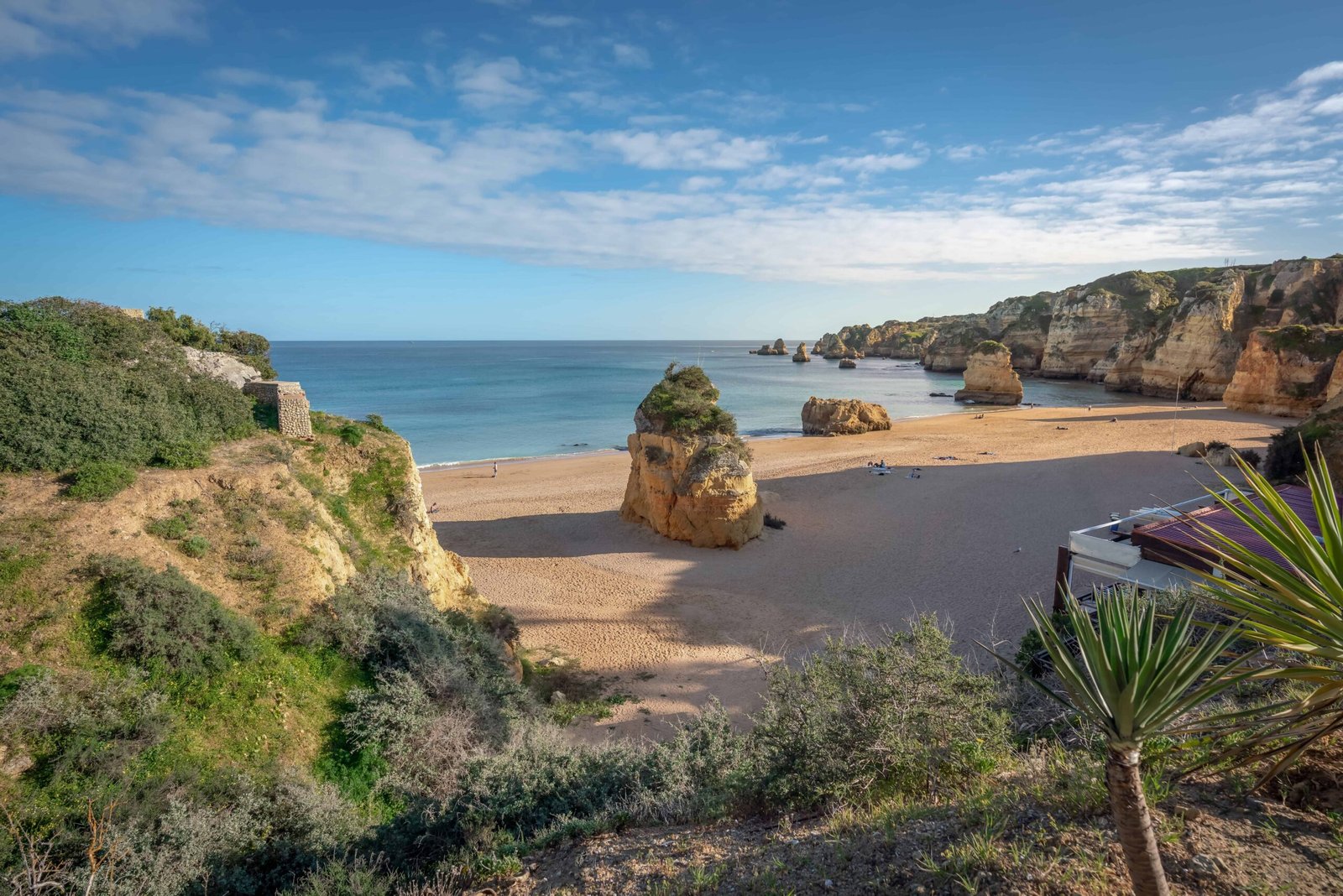
Portugal is one of the sunniest countries in Europe, with warm summers and mild winters that rarely feel harsh. Lisbon and the centre sit around 25-28°C in summer and 10-15°C in winter, while the Algarve in the south pushes above 30°C from June through September and stays pleasant well into autumn.
Best time to visit Portugal
May, June, and September hit the right balance: warm enough for beaches, without the peak summer crowds and prices that July and August bring to the Algarve and Lisbon. Winter is mild and quiet, and a good time for city breaks in Porto or Lisbon if beaches aren’t the priority.
🇵🇹
Best time to visit Portugal:
Jun–Sep
⏳
Faq’s
What time is it in Portugal?
Portugal follows Western European Time (WET, UTC+0) and switches to Western European Summer Time (UTC+1) during daylight saving months, making it one hour behind most of mainland Europe.
Is Portugal tourist-friendly?
Portugal is one of the easier countries in Europe to travel. English is widely spoken, the transport links between Lisbon, Porto, and the Algarve are straightforward, and locals are genuinely warm without being over the top about it.
What is Portugal best known for?
Portugal is known for its coastline, its food, and its history as one of the great seafaring nations, Vasco da Gama sailed from here. Lisbon and Porto both punch well above their weight as city destinations, and the Douro Valley is one of the best wine regions in Europe.
Can you drink the tap water in Portugal?
Yes, tap water is safe to drink across the country. It tastes slightly different in some regions, but it’s perfectly fine, no need to buy bottles.
What is the culture of Portugal?
Portugal moves at its own pace: meals are long, coffee is taken seriously, and fado music captures something about the national character that’s hard to explain until you’ve heard it in a small Lisbon restaurant. There’s a quiet pride in the country’s history that shows up everywhere from the azulejo tiles to the pastéis de nata.
Where are the airports in Portugal?
The main international airports are Lisbon (LIS), Porto (OPO), and Faro (FAO) for the Algarve, with smaller airports serving the Azores and Madeira for island trips.
What are the national dishes of Portugal?
Bacalhau (salt cod) is the most iconic: said to have over 365 recipes, one for every day of the year. Grilled sardines, caldo verde (a simple potato and kale soup), and pastéis de nata (custard tarts eaten warm from the oven) are all essential eating.
What are some interesting facts about Portugal?
Portugal is one of the oldest nation-states in Europe, with borders largely unchanged since 1139. It was also the starting point for some of the most significant voyages of the Age of Discovery: Vasco da Gama, Ferdinand Magellan, and Bartolomeu Dias all sailed from here. The country also has the longest coastline in mainland Europe.
Is it safe to travel in Portugal?
Portugal is consistently ranked among the safest countries in Europe. Petty theft can happen in busy tourist areas like Lisbon’s Alfama district and on popular tram routes, keep an eye on your belongings there, but serious crime affecting tourists is rare.
What are some famous landmarks in Portugal?
Belém Tower and the Jerónimos Monastery in Lisbon, Pena Palace in Sintra, Porto’s Ribeira district and Dom Luís I Bridge, and the cliffs and sea stacks along the Algarve coast at Ponta da Piedade.
Get Ready For Your Trip
Best places to visit in Portugal
Book popular activities in Portugal
Be prepared for Portugal
Language
Portuguese is the official language, and English is widely spoken in Lisbon, Porto, and the Algarve. In smaller towns and rural areas it gets less common, a few basic phrases are always appreciated.
Currency + How to Pay
The currency is the euro (EUR), and cards are accepted almost everywhere, including contactless. Cash is still worth having for small cafu00e9s, markets, and local spots that don't take cards. We recommend using Wise or Revolut to avoid hefty exchange fees on your day-to-day card payments.
Visa
Portugal is part of the Schengen Area, so EU travelers can enter freely, while many others can stay visa-free for up to 90 days. Always check current entry requirements before traveling.
Plugs
Portugal uses type C and F plugs with a standard voltage of 230V. European travelers typically won't need an adapter.
Safety
Portugal is one of the safest countries in Europe. Petty theft does happen in busy tourist spots, Lisbon's tram 28 and the Alfama district are the most common areas to watch your belongings, but serious crime affecting tourists is rare.
Driving & Fuel
Driving is one of the best ways to explore the Algarve coastline or the Douro Valley, and road conditions are generally good. Fuel sits around u20ac1.70-u20ac2.00 per litre, toll roads are common on motorways, so factor those costs in too if you're covering distance.