Welcome to French Polynesia.
In this blog post, we’ll cover EVERYTHING you need to know about French Polynesia.
We’ll go over the 26 Frequently Asked Questions.
Want to know what to expect from French Polynesia? Check out the video below!
KEY TAKEAWAYS:
- 🌍 Location: French Polynesia is a remote paradise between Australia and South America in the South Pacific Ocean, consisting of 118 islands spread across 5 archipelagos.
Dreaming of a French Polynesian vacation?
Fill in our SHORT FORM, and we will match you with trusted local tour operators who can build a personalized itinerary based on your STYLE, BUDGET, and TRAVEL DATES.
Our local partners create every itinerary with care. We kindly ask that you submit a request only if you’re considering traveling.
Where is French Polynesia located?
French Polynesia is located in the southern hemisphere in the central part of the South Pacific Ocean. It lies to the northeast of New Zealand, east of Australia, and south of Hawaii.
Geographically, it is positioned between latitudes 7° and 27° south and longitudes 134° and 155° west.
KEEP IN MIND: this is a remote place: 4,000 kilometers (2,485 miles) southwest of California and 6,000 kilometers (3,728 miles) east of Australia.
It’s made up of 118 Polynesian islands and atolls spread across over 2,000 kilometers.
What is an archipelago, and how many are there?
An archipelago is a group of islands clustered together in a body of water.
French Polynesia consists of FIVE ARCHIPELAGOS totaling 118 islands and atolls:
- Society Islands
- Tuamotu Archipelago
- Marquesas Islands
- Gambier Islands
- Austral Islands
INSIDER TIP: With the famous Aranui 5 cruise you can visit a mix if islands during one holiday!
What is the best time to visit French Polynesia?
The ideal time to visit French Polynesia is during its dry season (from MAY TO OCTOBER).
KEEP IN MIND: French Polynesia does not have winter and summer as the temperatures are pleasant throughout the year. They only have a rainy and dry season.
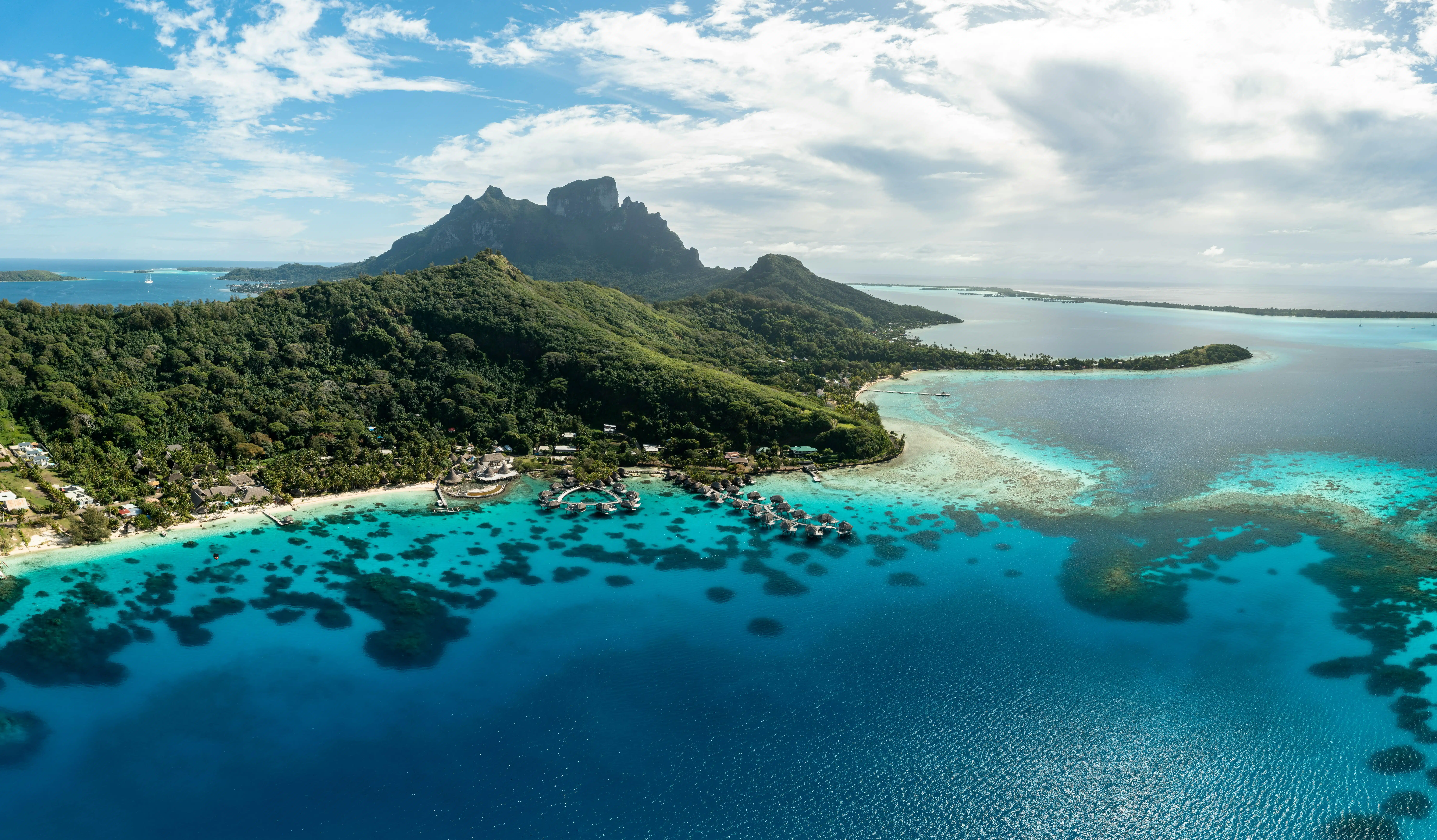
May to October (dry season): Average temperatures during this period range from 21°C (70°F) to 28°C (82°F).
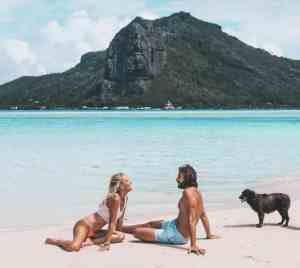
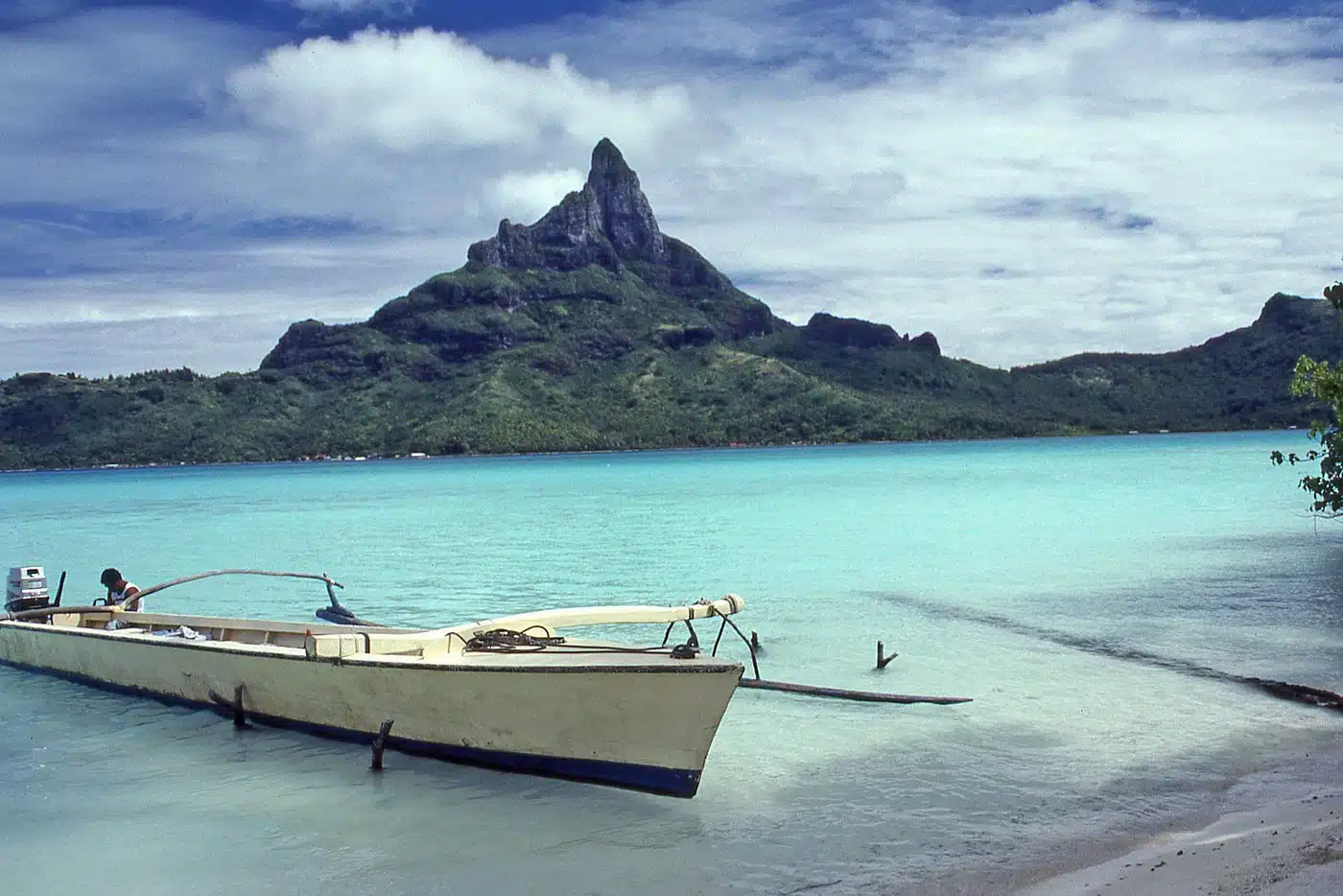
This season is when we see pictures like the one above. Sun, warm weather, a bit humid, calm seas… This is the PERCET TIME for Tahiti beach visits, snorkeling, and hiking.
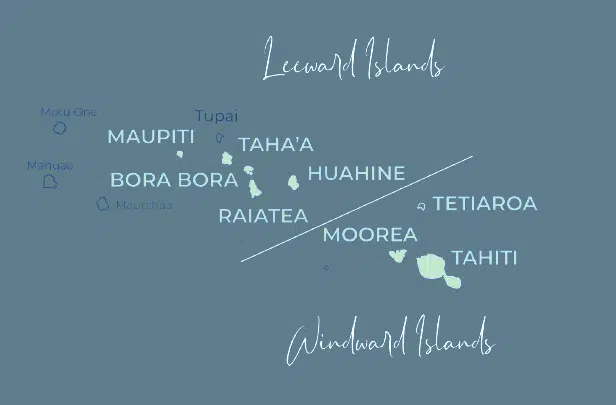
The days are longer with more consistent sunshine, especially in the LEEWARD Islands (islands that are sheltered from heavier currents and have less wind).
The WINDWARD Islands receive more rain but still offer plenty of sunny days during the dry season.
November to April (wet season): This is French Polynesia’s RAINY season, with temperatures ranging from 24°C (75°F) to 30°C (86°F).
The weather is warmer and more humid, with higher rain chances, especially from December through February.
EXCEPTION: The Marquesas Islands have inverted seasons. This means that when it’s dry season in the Society Islands, it’s the rainy season in the Marquesas Islands.
Simply fill in the form below to get a FREE QUOTE from trusted local travel specialists who know the islands inside out.
It only takes 60 seconds, and you’ll receive custom itineraries and pricing directly in your inbox or WhatsApp within
48 hours.
Free of charge. No pressure. No obligation.
*Our trusted local partners create every itinerary with care. We kindly ask that you submit a request only if you’re considering traveling.
How do you get to French Polynesia?
Getting to French Polynesia, particularly the famous Society Islands like Tahiti and Bora Bora, requires some time on the plane.
Here’s a STEP-BY-STEP guide:
From International Airports to Tahiti
- Main airport: The international airport in French Polynesia is Faa’a International Airport (PPT), in Papeete, on Tahiti. So wherever you come from, you will land at this airport. Faa’a is the only International airport in French Polynesia.
- From USA: Flights leave from Los Angeles (LAX) with carriers Air Tahiti Nui and Air France. The flight time is 8 hours, and ROUND-TRIP tickets cost between $800 to $1,500 USD. Don’t expect the biggest luxury on Air Tahiti as you get with Emirates for example.
- From EUROPE: The most common route from Europe includes flying to Los Angeles (LAX) or San Francisco (SFO) and then taking a connecting flight to Tahiti (PPT). The entire trip can take 20–24 hours, including layovers, with prices for a round-trip at around $1,500 to $2,000 EUR.
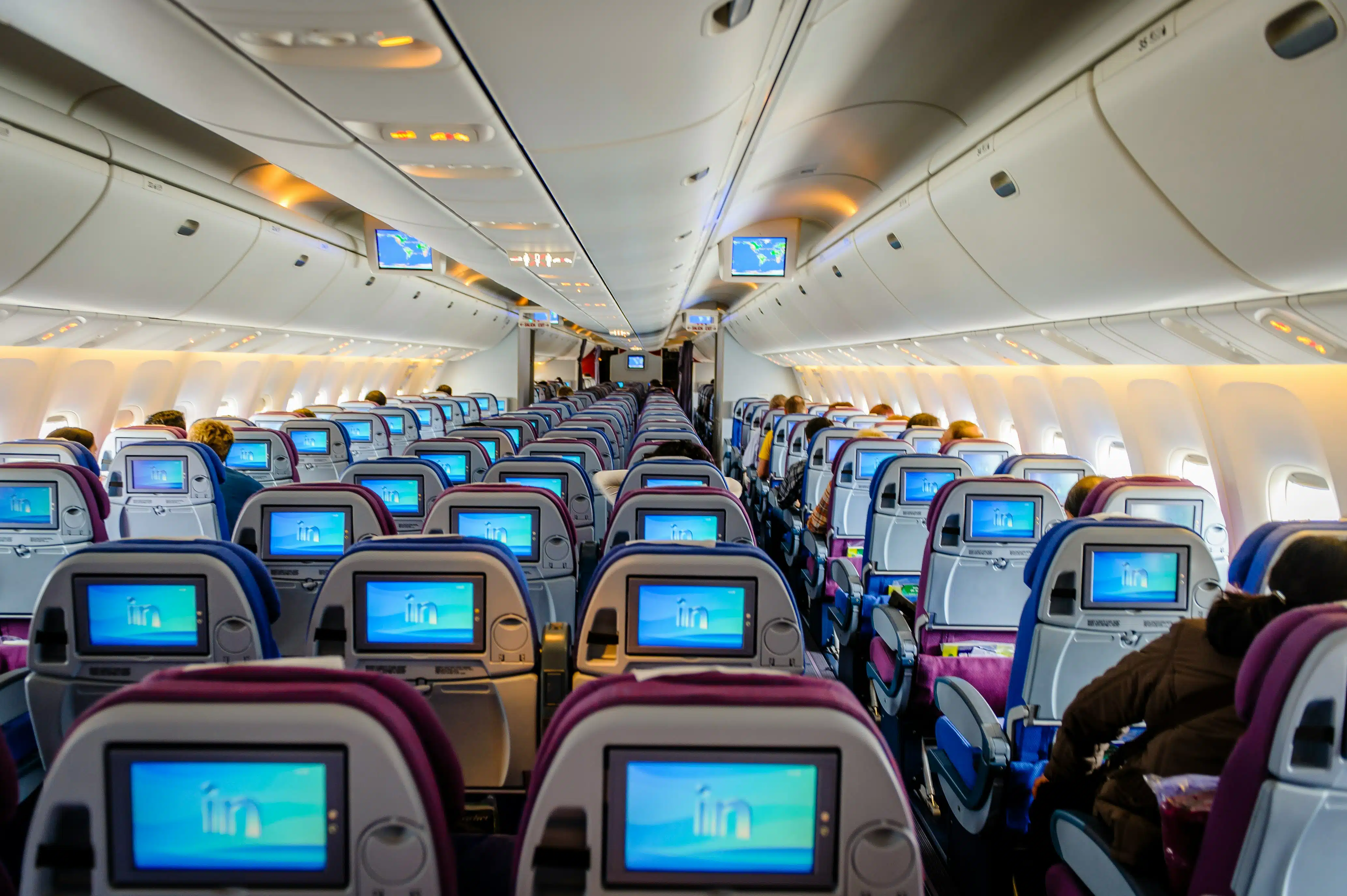
We always use Aviasales, the BEST organization for CHEAP FLIGHT prices and easy rebookings.
From Tahiti to Bora Bora
- Inter-island Flights: Once in Tahiti, you still need to get to Bora Bora. Do not think that all the islands are close to each other, some are spread 2000 kilometers (1243 miles) apart. In order to reach Bora Bora from Tahiti, you will need a short inter-island flight to Bora Bora Airport (BOB), located on a small islet off the main island. Air Tahiti or Air Moana are the only airlines flying domestic flights.
- Flight Duration and Cost: The flight from Tahiti to Bora Bora takes about 50 minutes. A round-trip ticket costs typically between $300 and $400 USD.
What are the visa requirements for French Polynesia?
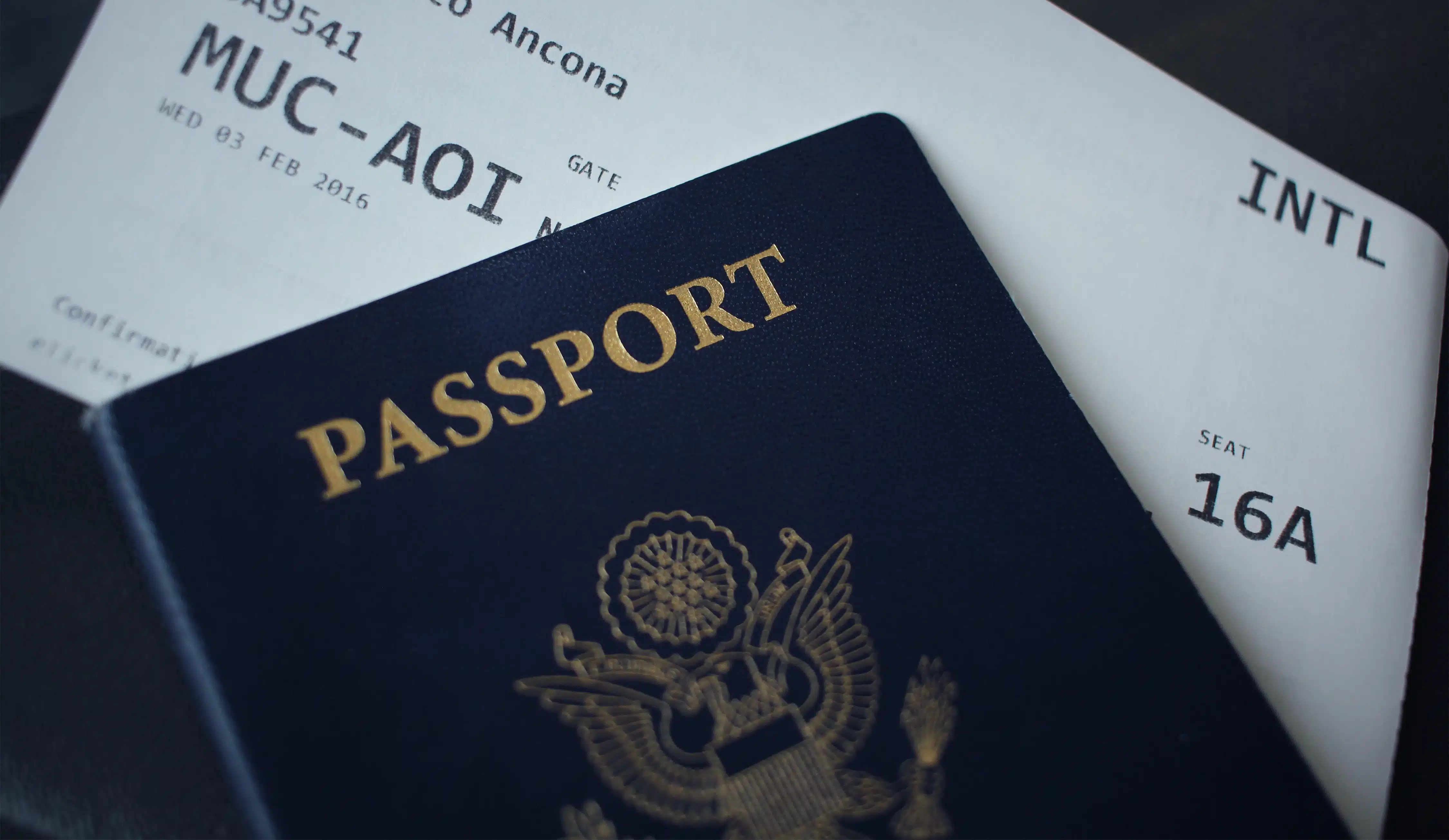
For many travelers, French Polynesia provides visa-free entry.
First, check to see if you need a visa for French Polynesia by visiting the official visa website for France.
Let’s take a look at the different nationalities:
- For EU CITIZENS: Since French Polynesia is an overseas French protectorate (a territory from France), European Union citizens DO NOT REQUIRE A VISA for short stays (up to 90 days). A valid passport is sufficient for entry. Ensure you possess a passport valid for at least three months beyond your intended departure date from French Polynesia. You can find all the necessary legal documents on the official website of the French government.
- For U.S. and CANADIAN Citizens: Citizens of the United States and Canada also do not need a visa for stays of up to 90 days. A passport valid for at least three months beyond the stay is required. You can find all the necessary legal documents on the official French government website.
What are the must-visit islands in French Polynesia?

French Polynesia is a collection of stunning islands, and among these, the SOCIETY ISLANDS are a must-visit.
Look below for the 14 Society Islands (one of the five archipelagos in French Polynesia).
Here are the TOP ISLANDS in the South Pacific Ocean:
Bora Bora
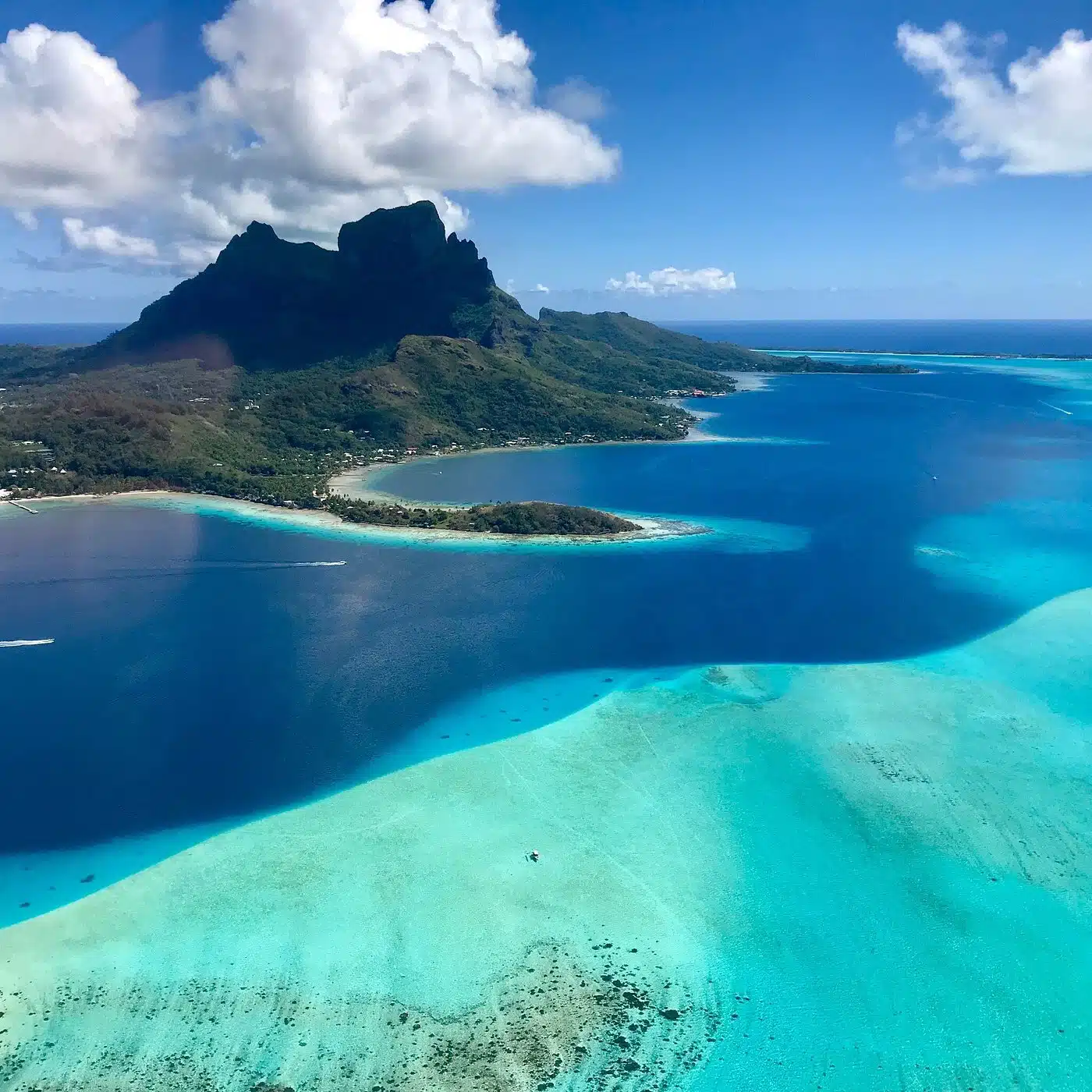
- Overview: Often referred to as the ‘PEARL OF THE SOUTH PACIFIC’, Bora Bora is famous for its turquoise lagoon, luxury overwater bungalows, and is one of the best honeymoon destinations in the world!
- Activities: Snorkeling and scuba diving in the Coral Gardens, a romantic sunset dinner cruise, 4×4 tours on the island, and hiking Mount Otemanu.
- Best for: Honeymooners and romantic getaways; luxury travel.

Maupiti
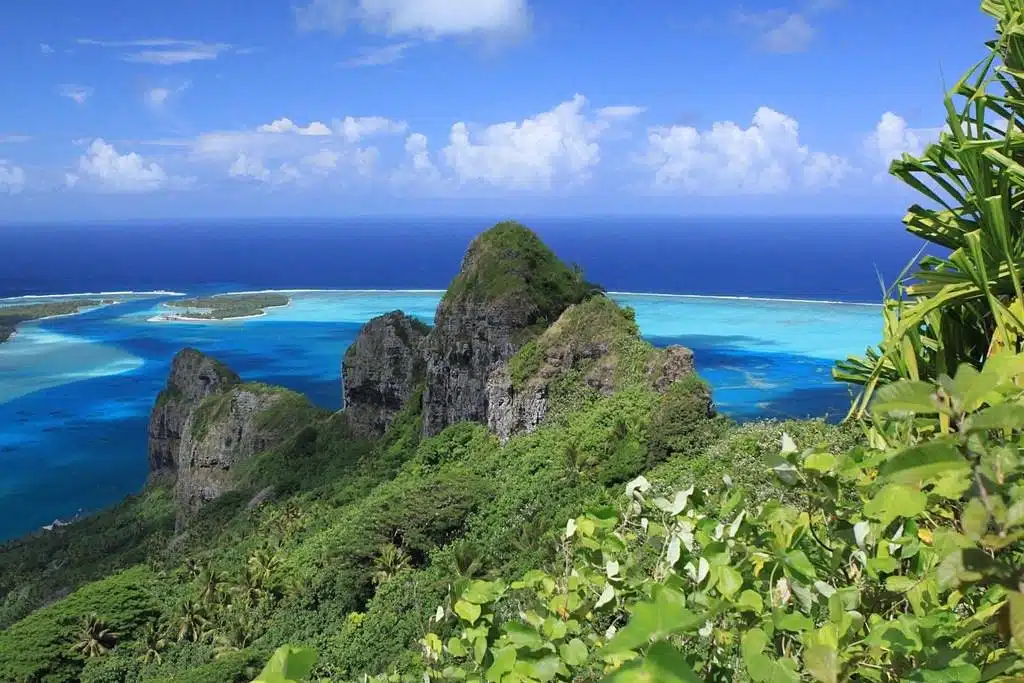
- Overview: Known as Bora Bora’s little sister, Maupiti is a small island and non-touristic island not too far from Bora Bora. You can basically expect everything from Bora Bora but with fewer tourists. The only ‘downside’ is that there are not that many luxurious overwater stays. This island is more famous for its guest houses.
- Activities: Visit the ancient marae (sacred temples), swim with manta rays in the lagoon, and climb to the top of Mount Teurafaatiu for panoramic views.
- Best for: Cultural enthusiasts, eco-tourists, and adventure seekers.
Taha’a
- Overview: Sharing a lagoon with Raiatea Island, Taha’a is shaped like a flower and is famous for its vanilla plantations. The island exudes a sweet, aromatic smell, earning it the nickname “Vanilla Island.”
- Activities: Tour a vanilla plantation to learn about the cultivation and processing of vanilla, kayak or paddleboard around the islets (motus), and snorkel in the Coral Garden. WE RECOMMEND A DAY TOUR from the bigger island Raiatea.
- Best for: Tahitian food lovers, families, and those interested in agritourism.

Huahine
- Overview: Known for its forests and sacred temples, Huahine is often referred to as the “GARDEN OF EDEN.” Its bays and white sandy beaches make it a picturesque retreat.
- Activities: Explore the Maeva archaeological site, snorkel in the pristine lagoon, and visit a black pearl farm.
- Best for: history buffs, nature lovers, and anyone looking to explore off the beaten path.
What are the top attractions in Tahiti?
The Black Sand Tahiti Beaches of Papenoo and Pointe Venus
- Overview: Tahiti is famous for its black sand beaches, which were created by volcanic activity. Among these, Papenoo and Pointe Venus beaches stand out for their beauty and historical significance.
- Activities: Sunbathing, swimming, and surfing. The black sand absorbs more heat, making the sand warm underfoot. The contrast of the black sand against the turquoise waters creates a visual effect PERFECT for Instagram pictures.
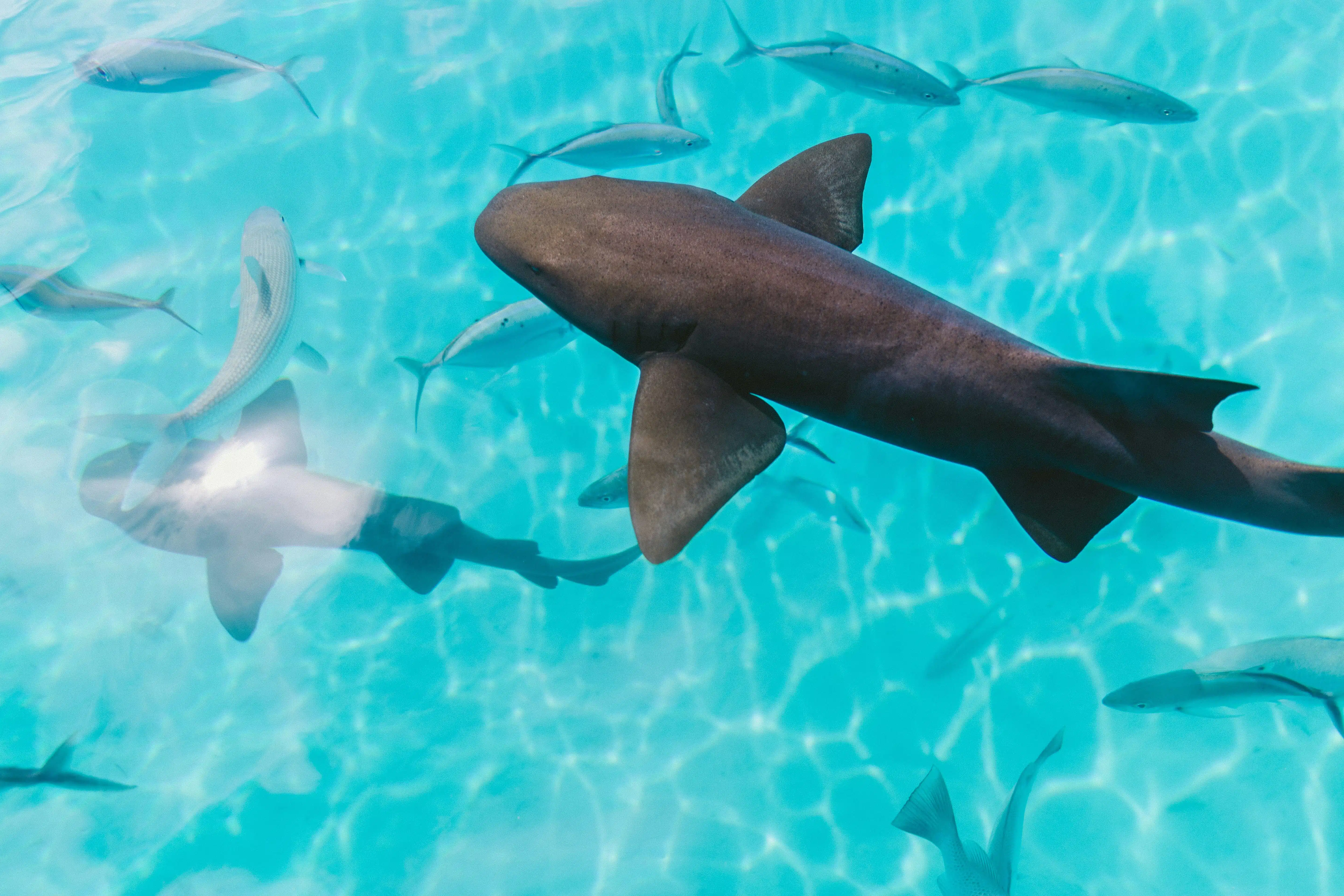
Arahoho Blowhole
- Overview: The Arahoho Blowhole is a natural wonder on Tahiti’s north coast. It’s created by waves crashing into a lava tube and forcefully shooting water up through a hole in the rocks.
Where can you find overwater bungalows in French Polynesia?
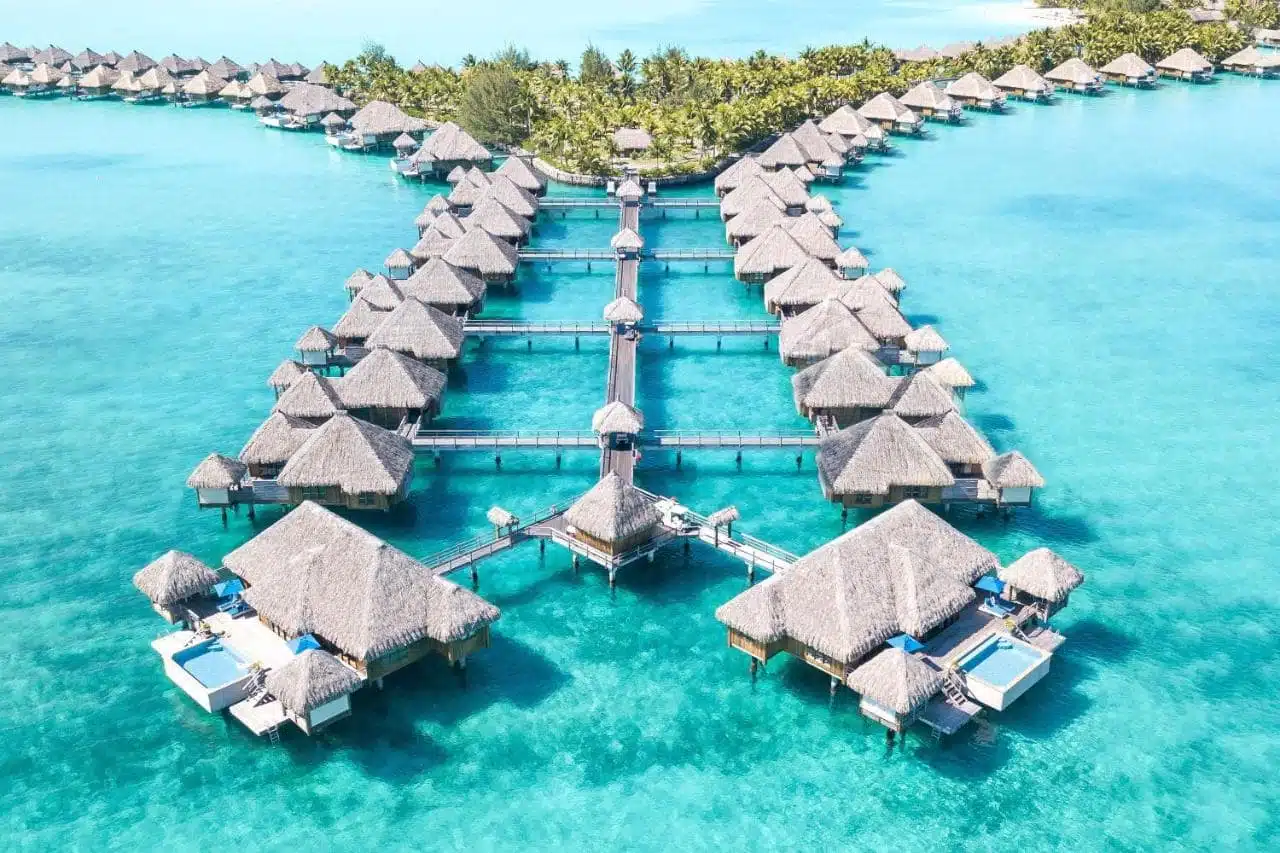
Bora Bora
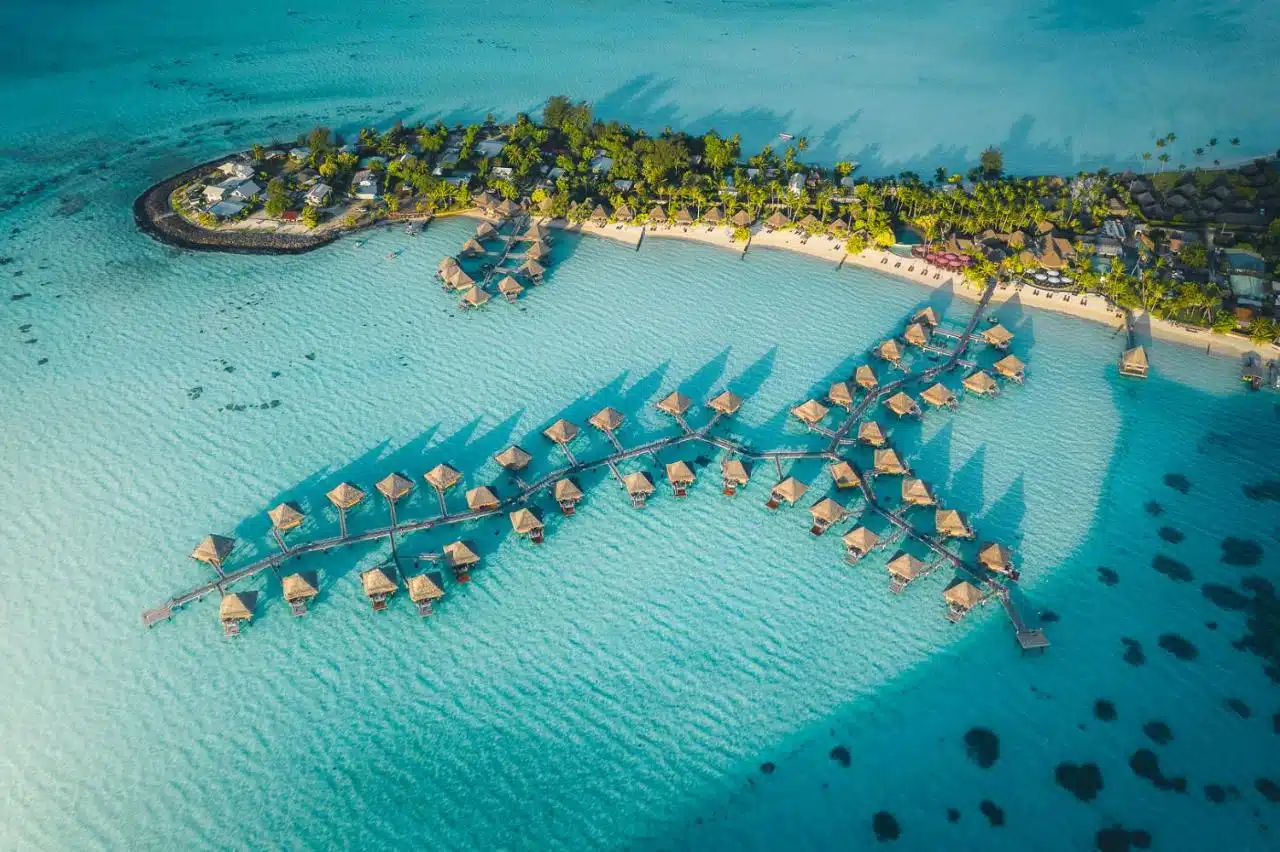
Overwater bungalows are synonymous with Bora Bora. Some of the most LUXURIOUS overwater bungalows are on Bora Bora!
They are the best places to stay in Bora Bora, below you can find our two recommendations!
- The St. Regis Bora Bora Resort: This resort features the largest overwater villas in the South Pacific, blending Polynesian decor with modern luxuries. Each villa has a private terrace.
- Four Seasons Resort Bora Bora: Offering a combination of overwater bungalow suites and beachfront villa estates, this resort emphasizes privacy and serenity. The overwater bungalows provide spectacular views of Mount Otemanu and are a perfect spot for snorkeling lovers, given the rich marine life beneath.
Maupiti
Maupiti island is smaller and more private than Bora Bora, it provides a more intimate overwater bungalow experience.
Do not expect any grand super luxurious overwater bungalows like on Bora Bora, but rather a more private boutique experience.
We recommend the Maupiti Residence: A boutique resort that offers an authentic French Polynesian experience.

Huahine
Huahine has a low profile in luxury travel, which is precisely its charm. The island only has a few overwater bungalow options.
We recommend staying at Hotel Le Mahana.
Located in Avea Bay, this hotel offers a selection of beach and overwater bungalows.
The overwater options are limited but exceptional, offering privacy and direct lagoon access.
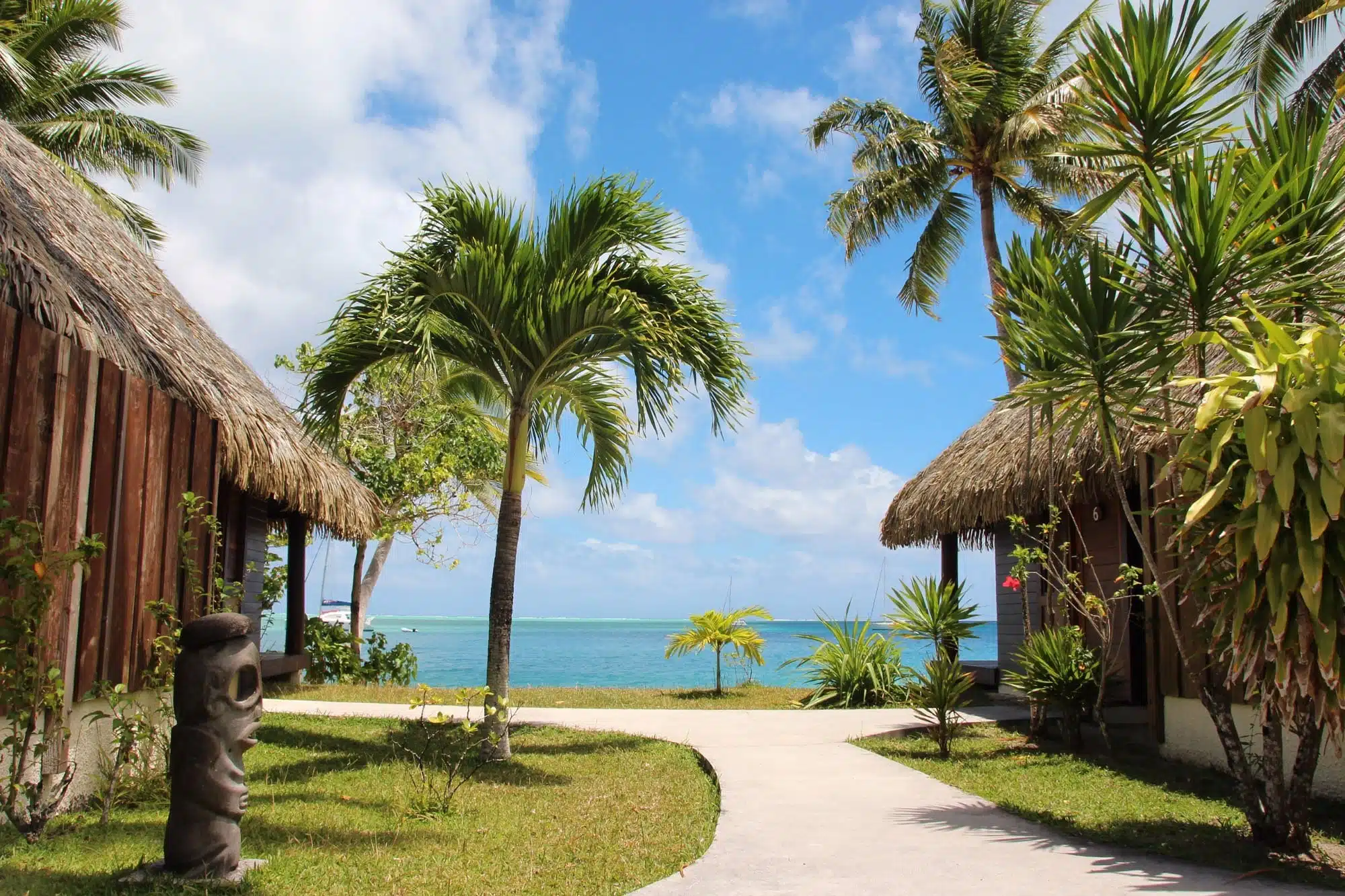
Moorea
Moorea is part of the big THREE (together with Bora Bora and Tahiti).
Just like Bora Bora, Moorea is also famous for its overwater bungalows that are a mix of luxury and adventure.
Moorea is a very popular destination in French Polynesia, as it is only a short ferry ride from Tahiti (30 mins)!
Key resorts include:
- Hilton Moorea Lagoon Resort & Spa: Located between two bays, this resort offers stunning overwater bungalows with glass floor panels. You literally have the oceans right below your feet to admire. Private terraces and direct lagoon access make it a favorite for couples and honeymooners.
- Sofitel Kia Ora Moorea Beach Resort: This resort features overwater bungalows with views of the lagoon and Tahiti in the distance. You can enjoy Polynesian-inspired decor, private decks, and easy access to pristine snorkeling spots.
Simply fill in the form below to get a FREE QUOTE from trusted local travel specialists who know the islands inside out.
It only takes 60 seconds, and you’ll receive custom itineraries and pricing directly in your inbox or WhatsApp within
48 hours.
Free of charge. No pressure. No obligation.
*Our trusted local partners create every itinerary with care. We kindly ask that you submit a request only if you’re considering traveling.
What are the local customs and cultural etiquette in French Polynesia?
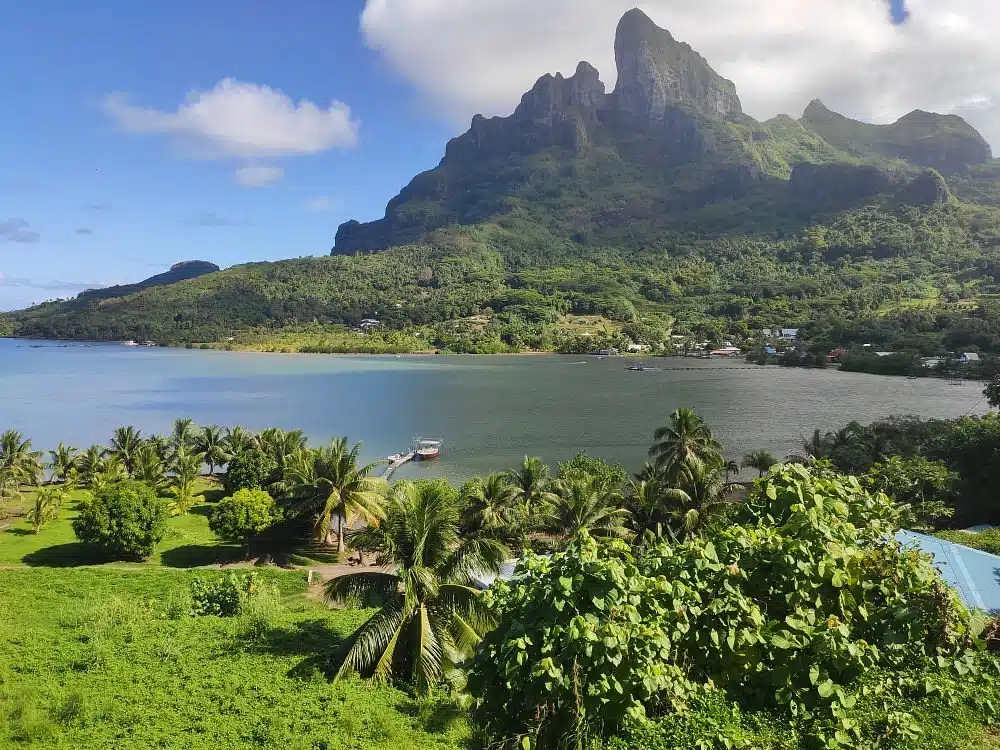
Greeting
In French Polynesia, the common form of greeting is the forehead-to-forehead touch accompanied by the word “Ia ora na” (Hello).
As tourists, you’ll always be welcomed by your accommodation with ‘la ora na’.
Dress Code
Even though French Polynesia is a french protectorate and you can absolutely wear European clothing, do not overdo it. Bikinis are acceptable in private resorts, but not so much when you leave the hotel.
Use your head, and you’ll be fine!
KEEP IN MIND: When you visit sacred temples, you’ll have to wear a SARONG, known locally as ‘pareu’. Both men and women have to wear this when your clothing does not cover below the knee.
Respect for Nature
The Polynesian culture has a deep respect for the land and sea, considering them even SACRED.
You’ll notice during your vacation that many of the ingredients you eat at local or fancy restaurants are locally grown or caught. Quite logical as everything, from fuel to milk has to be imported.
Eating Etiquette
Traditional Polynesian meals are served on the floor, and it’s customary to sit CROSS-LEGGED. But don’t worry, for tourists there are always tables available.
You’ll notice that Tahitian food is an important part of Polynesian culture.
The Concept of ‘Mana’
Mana is a core concept in Polynesian culture, referring to a spiritual energy or power that can be present in people, places, and objects.
Showing respect to natural sites, elders, and community leaders is crucial, as they are considered to possess more Mana.
What languages are spoken in French Polynesia?
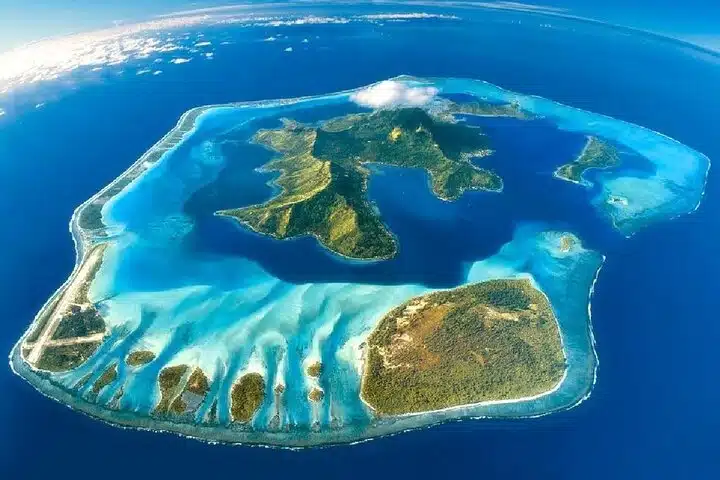
French Polynesia is a melting pot of cultures. There are TWO OFFICIAL LANGUAGES:
- French: As a territory of France, French is the official language used in government, education, and media. It is the language of formal communication and is spoken fluently by the population.
- Tahitian: Alongside French, Tahitian is also recognized as an official language. It is widely spoken among locals.
INSIDER TIP: if you need to speak with a local, use Google Translate on your phone! There is a voice recording feature, the app captures what the person is saying and will translate it to your language.

There are also local dialects spoken on the island archipelagos.
Across these islands, people speak:
- Marquesan: Used on the Marquesas Islands (like Ua Pou), it has two main dialects, North Marquesan and South Marquesan.
- Tuamotuan: spoken in the Tuamotu archipelago. It has several dialects, varying slightly from one atoll to another.
- Mangarevan: The language of Mangareva and surrounding islands is influenced by both Tahitian and Marquesan.
- Rapa: Exclusive to Rapa Iti, this language has elements distinct from other Polynesian languages.
- Paumotu is another term often used for the Tuamotuan language.
What is the currency in French Polynesia?

The currency used in Tahiti and French Polynesia is the FRENCH PACIFIC FRANC (XPF or CFP Franc).
Here are a few tips to take into account:
- Exchange rates: The French Pacific Franc is tied to the Euro, meaning its value is directly related to its value. Specifically, 1 euro is equal to 119 XPF.
- Where to exchange money: Currency can be exchanged at the Faa’a International Airport, banks, and some hotels. Banks usually offer the best exchange rates, but it’s wise to compare rates if possible.
- Use of credit cards and ATMs: Major credit cards are accepted across the islands, especially in tourist areas, hotels, and restaurants. ATMs are available in the larger towns and main islands.
- Tipping is not expected in French Polynesia. In restaurants, a service charge is often included in the bill (sometimes up to 21%), so keep that in mind.
INSIDER TIP: Use Wize to transfer funds, pay with your card, or take money from the bank. Wize ensures you have the best rates and don’t pay high fees.
Simply fill in the form below to get a FREE QUOTE from trusted local travel specialists who know the islands inside out.
It only takes 60 seconds, and you’ll receive custom itineraries and pricing directly in your inbox or WhatsApp within
48 hours.
Free of charge. No pressure. No obligation.
*Our trusted local partners create every itinerary with care. We kindly ask that you submit a request only if you’re considering traveling.
What are the best activities for families in French Polynesia?
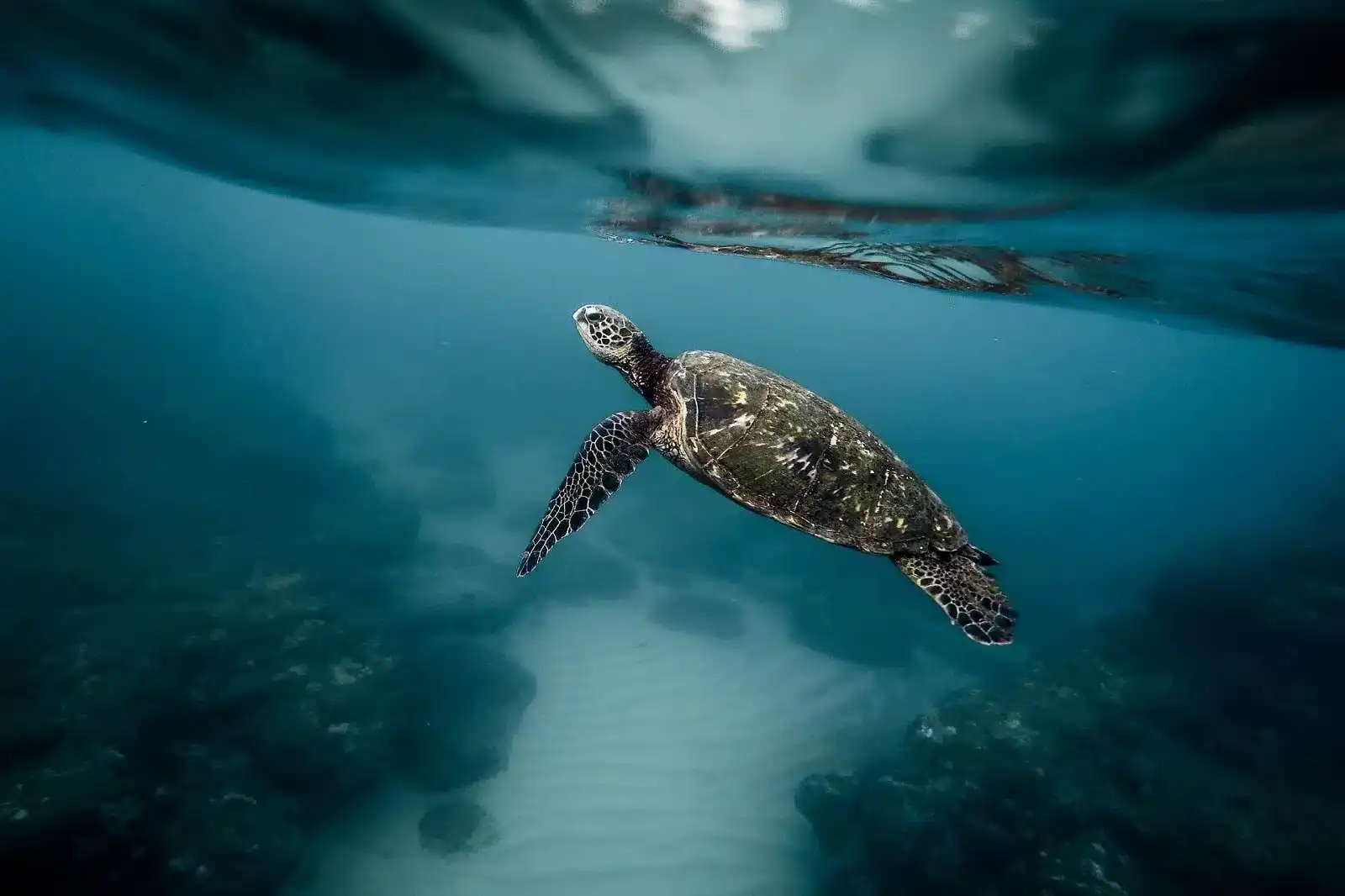
French Polynesia offers many activities for families:
- Snorkeling and diving: Explore the underwater world with colorful coral, tropical fish, and sharks and manta rays in the clear, warm waters. Many resorts offer family-friendly snorkeling and scuba diving tours.
- Lagoon excursions: Experience the beauty of the lagoons by taking a guided boat tour to both the Windward Islands and the Leeward Islands. These tours often include swimming, snorkeling, and sometimes even SHARK and RAY feeding experiences.
- Beach time: French Polynesia is famous for its STUNNING BEACHES. Spend a day or two relaxing on the white or black sand beaches, building sandcastles with the kids, and enjoying the serene environment.
- Hiking: If you are an adventurous family, hiking in the lush landscapes offers breathtaking views and encounters with local flora and fauna. There are trails suitable for various fitness levels.
- Island Tours: Take a guided tour of the islands to learn about their history, culture, and natural wonders. These tours can be by 4×4 vehicles, bikes, or even on horseback.
What is the average cost of a trip to French Polynesia?
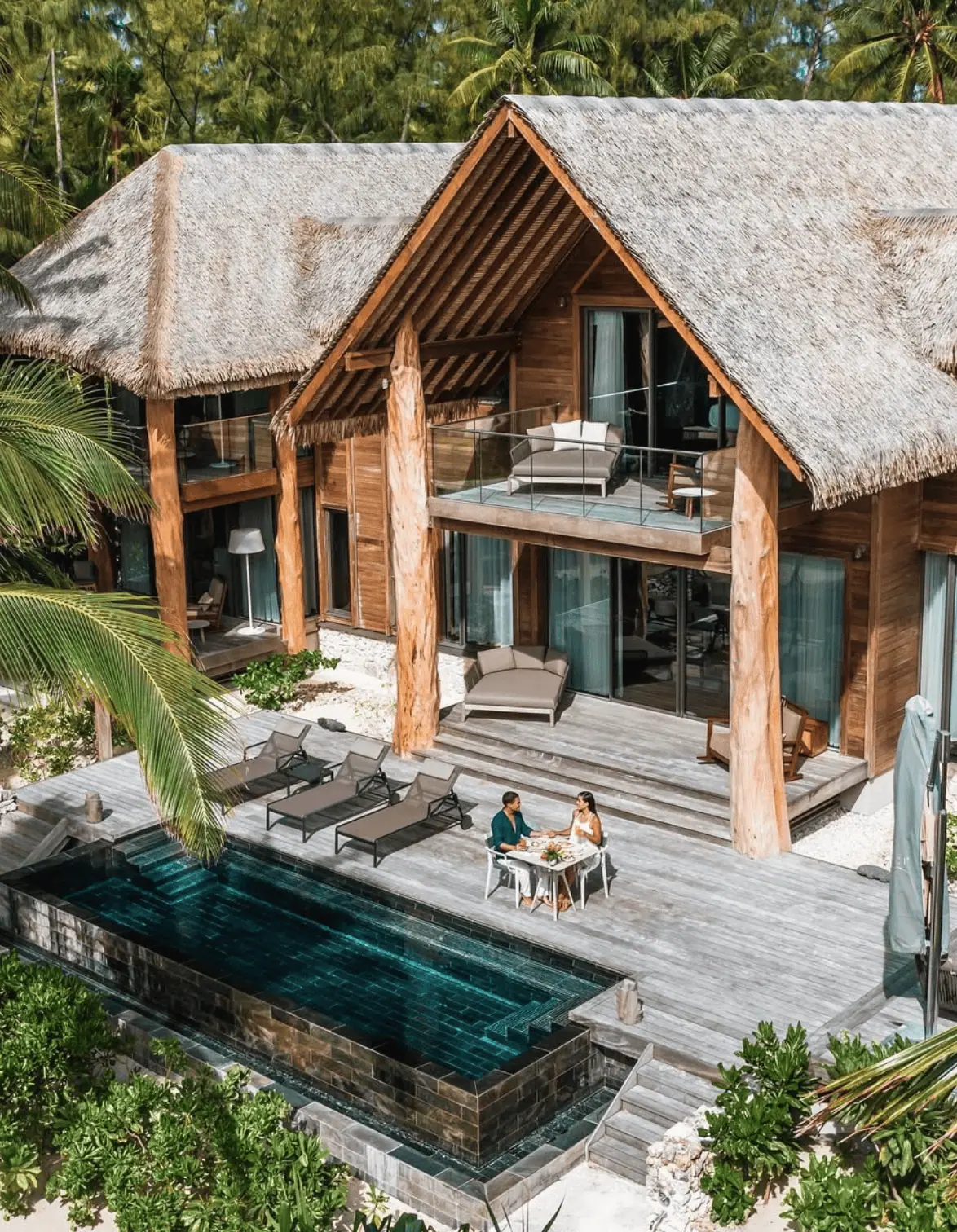
Measuring the exact amount for a week’s stay in French Polynesia is difficult.
Here’s a breakdown to help:
- Airfare: International flights to Tahiti (the main entry point) range from $800 to over $2,000 USD per person.
- Accommodation:
- Budget options such as guesthouses or B&Bs start around $100–$150 USD per night.
- Mid-range hotels and resorts range from $200 to $400 USD per night.
- Luxury resorts and overwater bungalows cost from $400 to over $1,000 USD per night.
- Food and Dining:
- Casual dining and street Tahitian food cost $10–$20 USD per meal.
- Mid-range restaurant meals range from $20 to $50 USD per person.
- High-end restaurants and dining at resorts exceed $50 USD per person, especially for dinners.
- Transportation within French Polynesia:
- Domestic flights between islands cost $50 to $400 USD, depending on the destinations.
- Ferry services are a more affordable option for some island transfers, with prices ranging from $15 to $70 USD.
- Car rentals are available on the larger islands, starting at about $80 USD daily.
- Activities:
- Guided tours such as snorkeling, hiking, or cultural tours range from $50 to $150 USD per person.
- Diving excursions can cost between $100 and $200 USD per person, including equipment rental.
For a 7-DAY TRIP, couples can expect to spend an average of $3,000 to $5,000 USD on the lower end for budget travel and $6,000 to $10,000 USD or more for a mid-range experience.
What are the best places to eat local cuisine in French Polynesia?
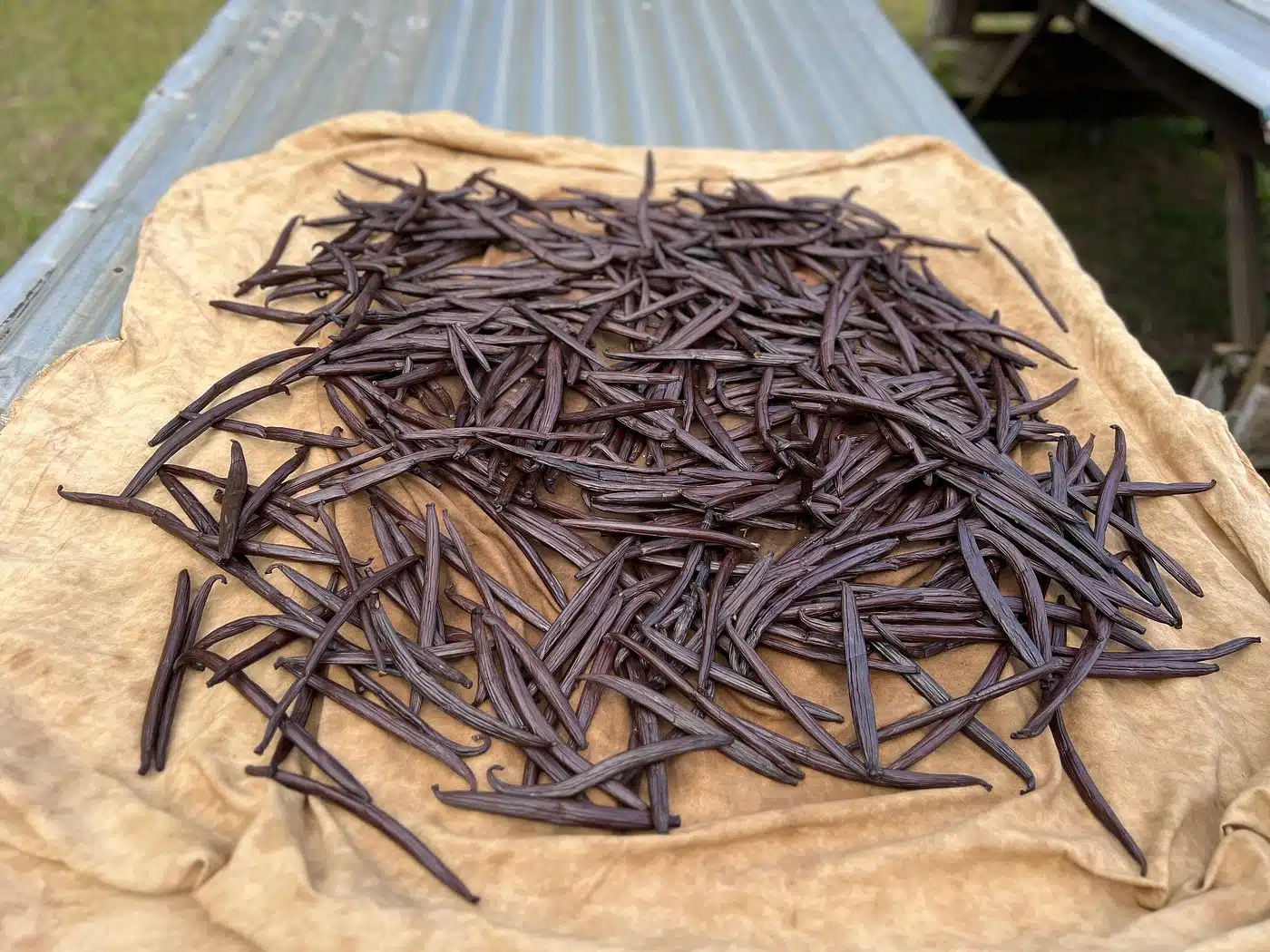
French Polynesia’s culinary scene is as diverse and vibrant as that of its Society Islands.
Here are some of the best places to sample local cuisine:
- Chez Mamy: Nestled in Papeete, Tahiti, this restaurant is famous for serving authentic Polynesian dishes like POISSON CRU (raw fish marinated in lime juice and coconut milk) and taro root dishes, providing a cozy atmosphere reminiscent of a Tahitian home-cooking experience.
- Le Coco’s: Situated on the west coast of Tahiti, Le Coco’s offers a fine dining experience with a menu that creatively blends French cuisine with local Tahitian flavors, set against stunning sunset views over the lagoon.
TRIPADVISOR REVIEW: It doesn’t get more friendly, casual and authentic than this Mom and Pop place in Mo’orea. No chichi, just simple friendly familial service. Fast, too, even though we went on Friday night and the place was nearly full.
- La Villa Mahana: Found on Bora Bora, this restaurant is a dining spot with just a few tables, offering a sumptuous Mediterranean-inspired Polynesian menu crafted by Chef Damien Rinaldi Dovio. Reservations are necessary.
TRIPADVISOR REVIEW: A beautiful location and spectacular experience in Bora Bora. The service was incredible, friendly, efficient and the food was good.
- Bloody Mary’s: A Bora Bora institution, Bloody Mary’s is not only famous for its food, such as freshly caught seafood, but also for its unique setting with a sandy floor and a list of CELEBRITY VISITORS. It provides a laid-back ambiance, perfect for a casual dinner.
TRIPADVISOR REVIEW: Great and iconic restaurant in Bora Bora. Atmosphere is fully island, with wood decorations and restaurant in the sand. No menu here, but a buffer of fresh and local fish and meat presented by the chef and then cooked immediately on the grill.
Simply fill in the form below to get a FREE QUOTE from trusted local travel specialists who know the islands inside out.
It only takes 60 seconds, and you’ll receive custom itineraries and pricing directly in your inbox or WhatsApp within
48 hours.
Free of charge. No pressure. No obligation.
*Our trusted local partners create every itinerary with care. We kindly ask that you submit a request only if you’re considering traveling.
Are there specific vaccinations needed for French Polynesia?
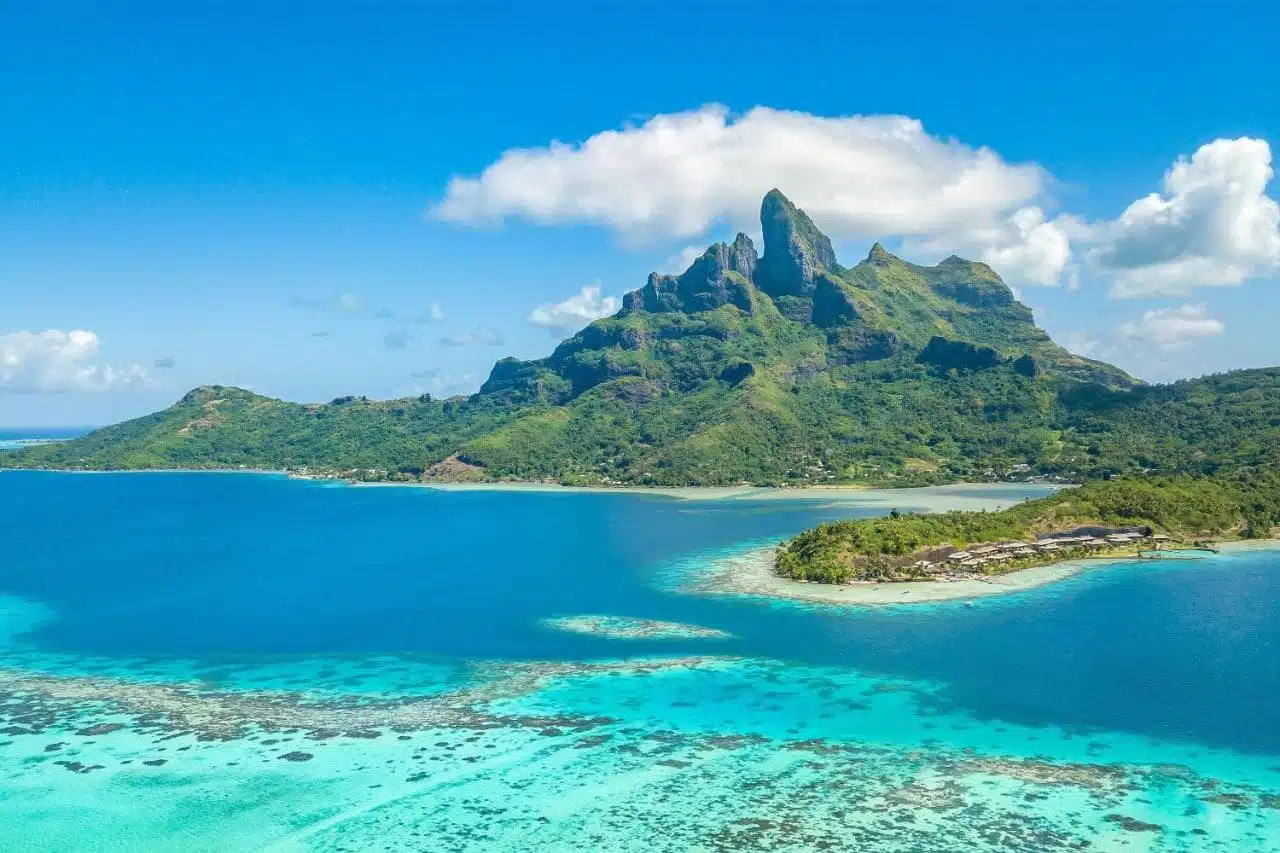
No, there are NO SPECIFIC VACCINATIONS NEEDED for entry into French Polynesia.
However, several vaccinations are recommended for your protection. Take a look at the official website of the Centers for Disease Control and Prevention.
Here’s a list of recommended vaccinations:
- Routine Vaccinations: Make sure you are up-to-date on your routine vaccines. These include measles-mumps-rubella (MMR), diphtheria-tetanus-pertussis, varicella (chickenpox), polio, and your yearly flu shot.
- Hepatitis A: Transmission of the hepatitis A virus can occur through consuming contaminated food or water.
- Hepatitis B: This virus is transmitted through contaminated blood products, unsafe sexual practices, or the use of unsterile needles. Vaccination is recommended, especially if you might be exposed to blood or bodily fluids, have sexual encounters with new partners, or get a tattoo or piercing.
- Typhoid: Typhoid fever can be contracted through contaminated food or water in French Polynesia. Vaccination is advised, especially if you are visiting smaller cities or rural areas or if you will be eating mostly in places where sanitation might be questionable.
What are the best beaches in French Polynesia?
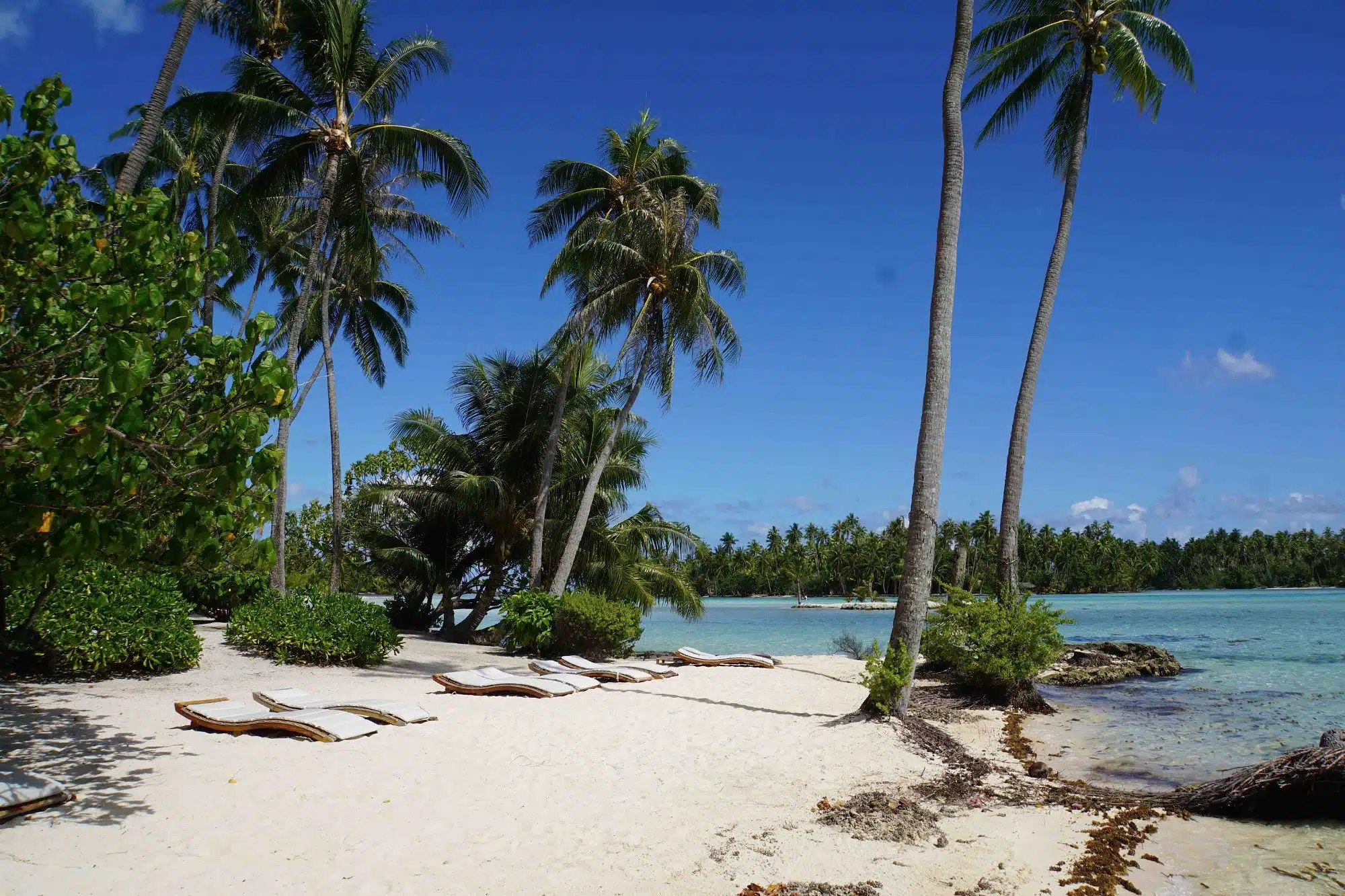
French Polynesia, and the Pacific Ocean in general, is world-famous for its idyllic beaches.
Here are some of the best beaches across five island groups (different archipelagos):
- 🐠 Snorkeling Paradise: Matira Beach – Bora Bora
- 🏄 Surf Spot: Temae Beach – Moorea
- 🐢 Wildlife Sanctuary: Tetiaroa – Tetiaroa Island
- 🌅 Sunset Views: Vaiava Beach at PK18 – Tahiti’s West Coast
- 🏝️ Scenic Nature: Avea Beach – Huahine Iti
- 🌋 Historical Black Sand: Venus Point Beach – Tahiti’s East Coast
- 🖤 Volcanic Black Sand: Lafayette Beach – Matavi Bay
How do I handle medical emergencies in French Polynesia?

Handling medical emergencies in French Polynesia requires some preparation and knowledge of the local healthcare system. Here is a list of steps to follow:
- Know the local emergency number. The emergency number for medical services in French Polynesia is 15!
- Travel insurance: Ensure you have comprehensive travel insurance covering medical emergencies and evacuation.
- Water safety: Only drink bottled or purified water and avoid ice in drinks to prevent waterborne illnesses.
- Sun protection: The sun in French Polynesia is powerful. Always apply reef-safe high-SPF sunscreen, wear a hat, and seek shade during peak sun hours to prevent sunburn or heatstroke.
What are the best diving and snorkeling spots in French Polynesia?
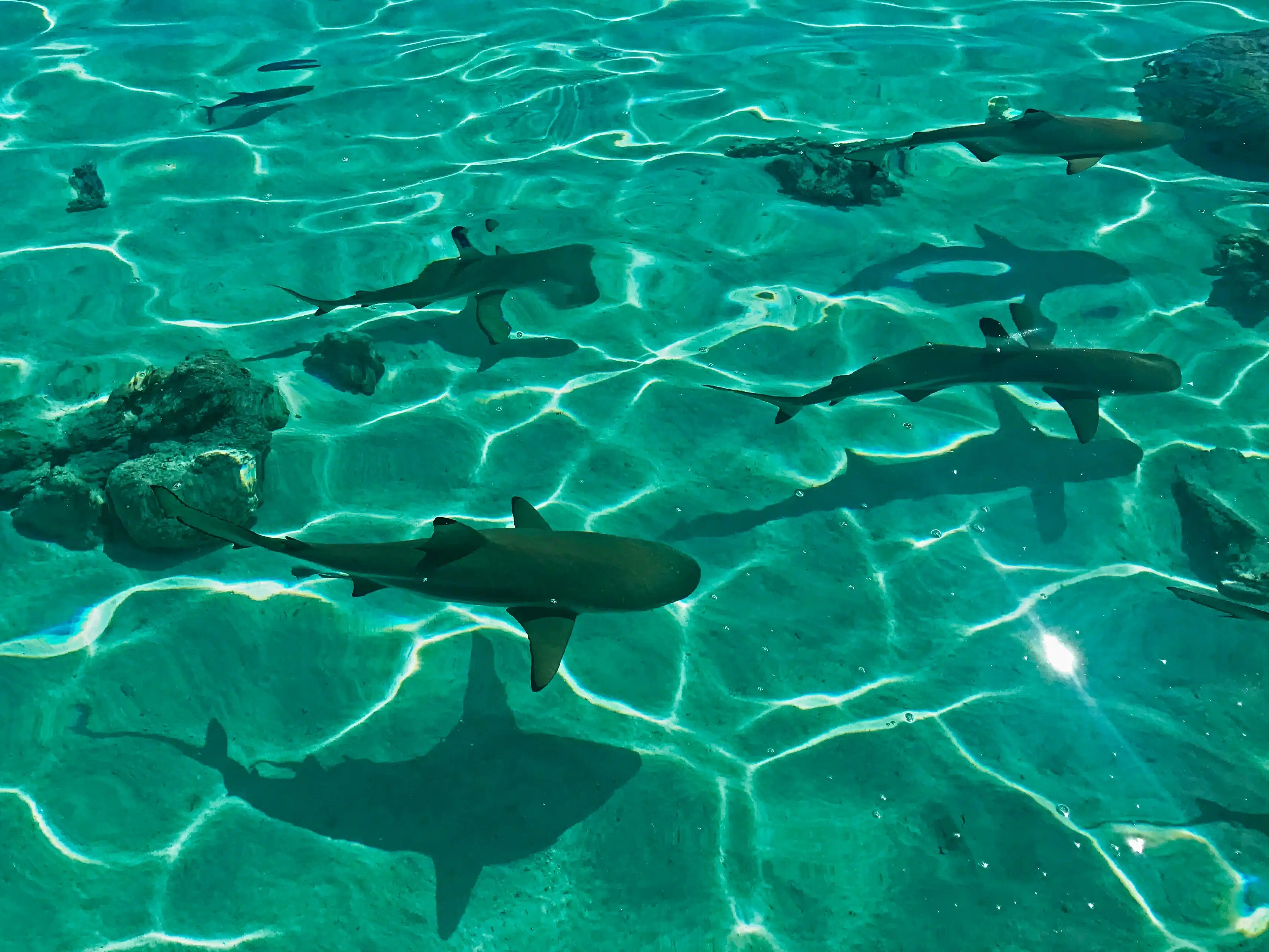
French Polynesia is ONE OF THE BEST DIVING LOCATIONS IN THE WORLD!
Here are some of the best spots for scuba diving in French Polynesia:
- Rangiroa’s Tiputa Pass: Known for its strong currents, this pass is ideal for experienced divers. It offers the chance to see dolphins, sharks, and manta rays.
- Bora Bora Lagoon: The lagoon, located in the Society Islands, with its clear, shallow waters, is perfect for snorkelers and beginner divers. It’s famous for its vibrant coral reefs and various species, such as stingrays and blacktip REEF SHARKS.
- Fakarava South Pass: Another UNESCO Biosphere Reserve, the South Pass of Fakarava is renowned for its “wall of sharks,” where divers can encounter over 700 (!) GRAY SHARKS, especially in June and July!
Detailed map of Fakarava Island including the best diving locations!
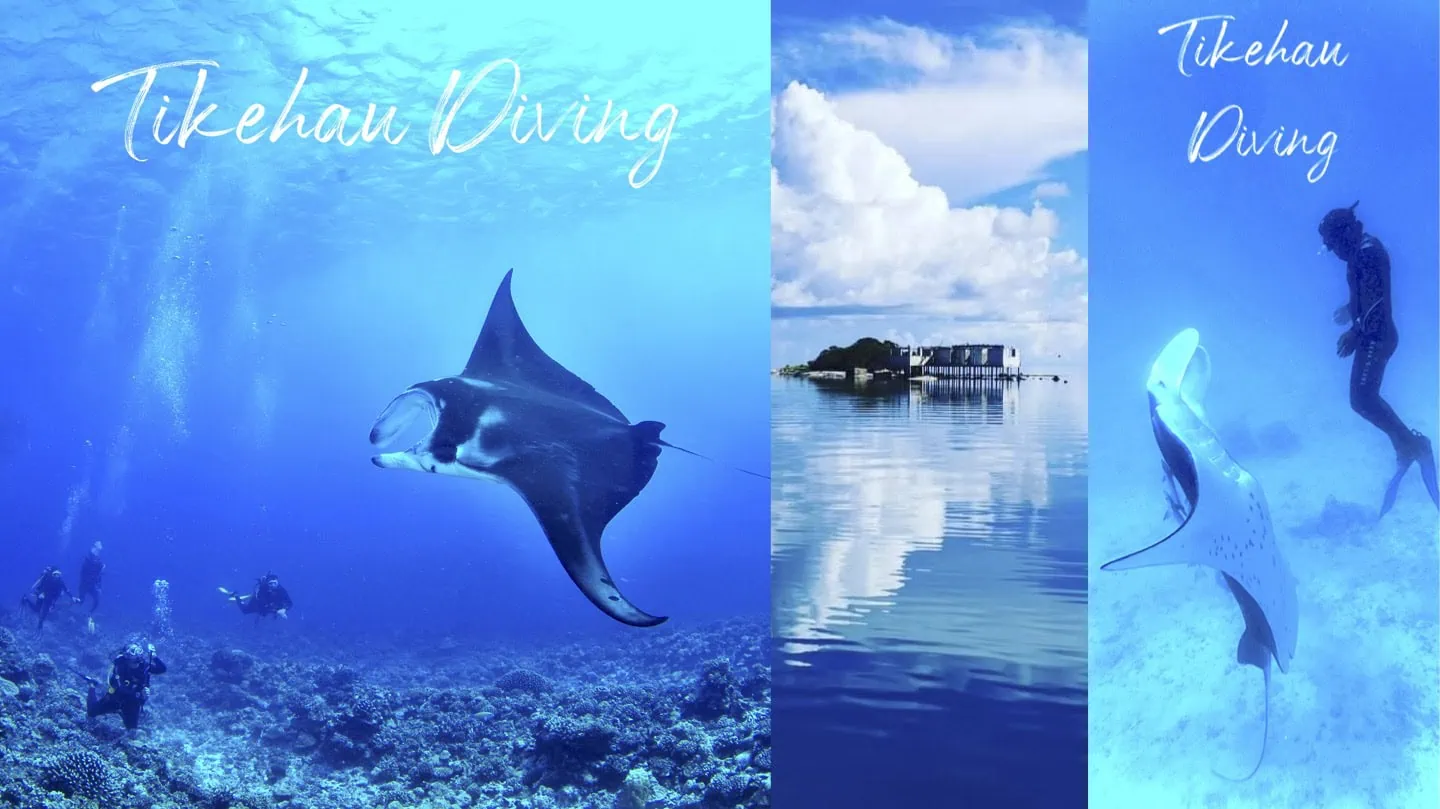
- Tikehau Atoll: Tikehau is famous for its dive sites on its unique pass and its snorkeling sessions at the MANTA RAYS SITE and CORAL GARDEN! You can expect to dive alongside tiger sharks, hammerheads, and many tropical fish… You can even swim with manta rays and see dolphins. We recommend booking Tikehau Diving, a trustworthy and reliable dive center on the island, for your diving or snorkeling activities.
- Moorea’s diving spots: Moorea’s lagoons are the perfect spot for snorkeling and diving. Snorkelers can enjoy close encounters with rays, sharks, and tropical fish. Highlights include encounters with lemon sharks, graceful stingrays, and, during July, majestic HUMPBACK WHALES.
- The Aquarium at Tahiti: Just off the coast of Tahiti, this shallow dive site is called the ‘Aquarium‘ due to its clear water and marine life.
- The Wrecks of Tahiti: For wreck diving, Tahiti offers several sites, including SUNKEN SHIPS AND AIRPLANES, which have become artificial reefs teeming with life.
What are the romantic activities for couples in French Polynesia?
French Polynesia is a paradise for honeymoon couples seeking romance and adventure.
These are the most romantic activities you’ll see couples doing. Almost all hotels offer these or can help you with booking.
- Sunset cruises: Embark on a private boat cruise to experience the beauty of a Polynesian sunset. With champagne, you can enjoy the waters and skyline as day turns to night.
- Overwater bungalow stays: Spend a night in an iconic overwater bungalow that offers direct access to the lagoon below.
- Couples spa treatment: Enjoy a couples spa treatment using traditional Polynesian techniques and local ingredients.
What are the top luxury resorts in French Polynesia?
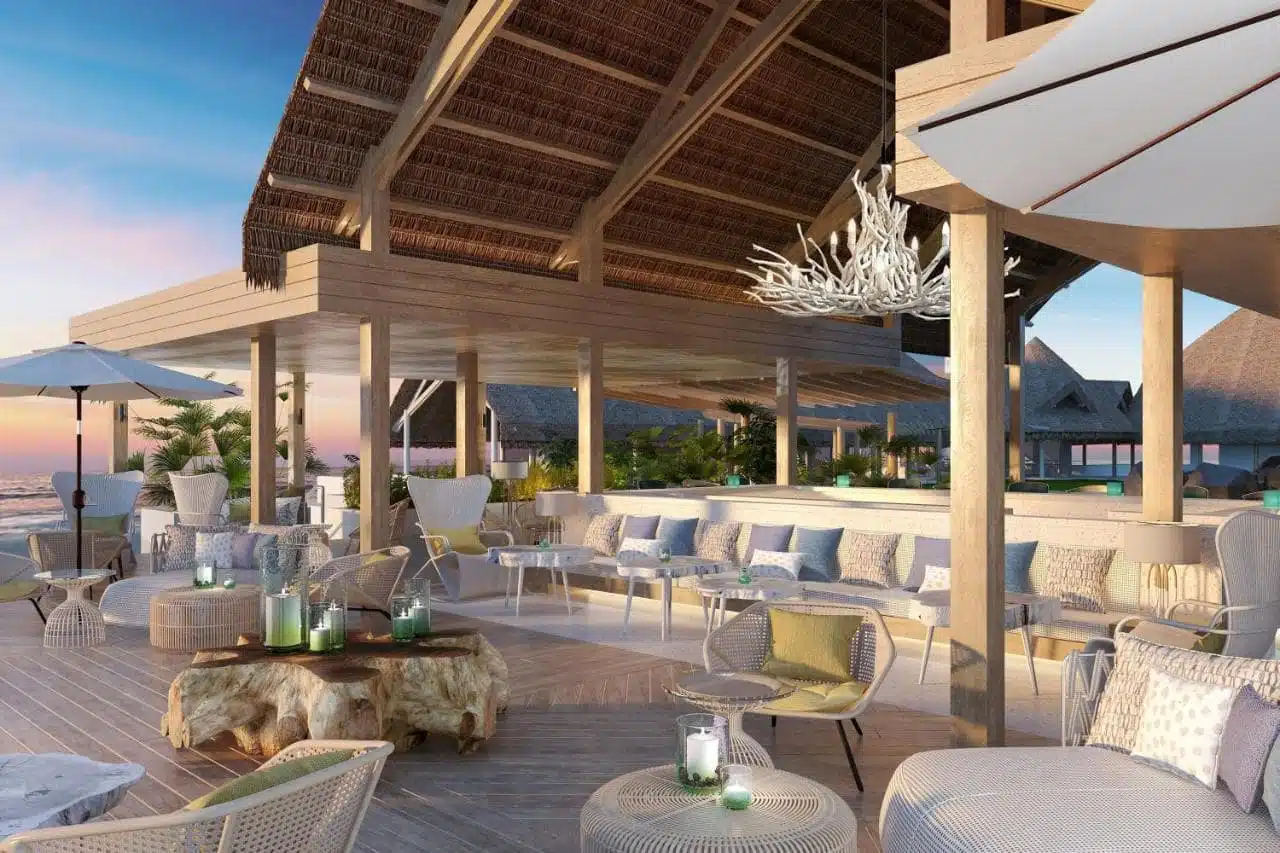
French Polynesia is home to some of the most luxurious resorts in the world, offering expensive accommodations, unparalleled service, and breathtaking natural beauty.
Check the interactive map below for the most luxurious stays in Bora Bora!
Here’s a list of the top luxury resorts where you can experience the ULTIMATE LUXURY STAY:
- The St. Regis Bora Bora Resort: This resort is the definition of luxury with its overwater villas, private beach access, and custom service. With views of Mount Otemanu, the resort offers multiple restaurants, a spa, and a lagoonarium.
- Four Seasons Resort Bora Bora: Known for its stunning overwater bungalows and beachfront villa estates, this resort combines Polynesian tradition with luxurious modern amenities. It features four restaurants, a holistic spa, and a range of water sports.
- InterContinental Bora Bora Resort & Thalasso Spa: This eco-friendly resort is famous for its overwater villas, deep ocean spa treatments, and the mesmerizing blue hues of its surrounding lagoon. It’s an ideal retreat for those seeking relaxation and wellness.
- The Brando, Tetiaroa: Offering the ultimate exclusivity and privacy, The Brando is situated on Marlon Brando’s private island. This eco-luxury resort features villas with private beaches, a research station, and a spa offering Polynesian therapies.
- Conrad Bora Bora Nui: Nestled in a cove of turquoise waters, this resort boasts luxe bungalows and villas, some featuring their own private plunge pools. Guests can enjoy a hilltop spa, a world-class restaurant, and a range of activities, from snorkeling to cultural tours.
- Le Taha’a Island Resort & Spa: Located on a secluded islet near Taha’a Island, this resort is inspired by Polynesian architecture and style, featuring overwater suites and beach villas. It offers three restaurants, a spa, and access to vanilla plantation tours and pearl farms.
Simply fill in the form below to get a FREE QUOTE from trusted local travel specialists who know the islands inside out.
It only takes 60 seconds, and you’ll receive custom itineraries and pricing directly in your inbox or WhatsApp within
48 hours.
Free of charge. No pressure. No obligation.
*Our trusted local partners create every itinerary with care. We kindly ask that you submit a request only if you’re considering traveling.
How can tourists respect and protect the natural environment in French Polynesia?

You play a crucial role in protecting and preserving the natural environment of French Polynesia.
Here are several ways you can contribute:
- Minimize plastic use: Avoid single-use plastics by carrying and using reusable water bottles, bags, and containers. Choose accommodations and services that support sustainable practices by minimizing plastic waste.
- Respect marine life: When snorkeling or diving, maintain a safe distance from coral reefs and marine life. Avoid touching, standing on, or collecting coral. Use reef-safe sunscreen to prevent chemical damage to the marine ecosystem.
- Leave No Trace: Practice the principles of Leave No Trace by taking all rubbish with you, staying on designated paths to reduce ecosystem disturbance, and not leaving any marks behind your visit.
What shopping options are available in French Polynesia?

Shopping in French Polynesia offers a unique blend of traditional craftsmanship and luxury.
Key shopping options include:
- Black pearl shops: French Polynesia, particularly the Tahiti and Bora Bora islands, are famous for their magnificent real BLACK PEARLS. Many boutiques offer workshops on building your own necklace or bracelet from a pearl.
- Local markets: A must-visit if you are interested in authentic Polynesian culture. The Papeete Market on Tahiti is one of the largest, where you can find handcrafted items such as woven baskets, traditional clothing, and local delicacies.
- Vanilla plantations: Visiting a vanilla plantation offers the chance to purchase some of the world’s most aromatic vanilla directly from the source. Taha’a, known as the Vanilla Island, is particularly famous for its high-quality vanilla pods.
What are the transportation options within French Polynesia?
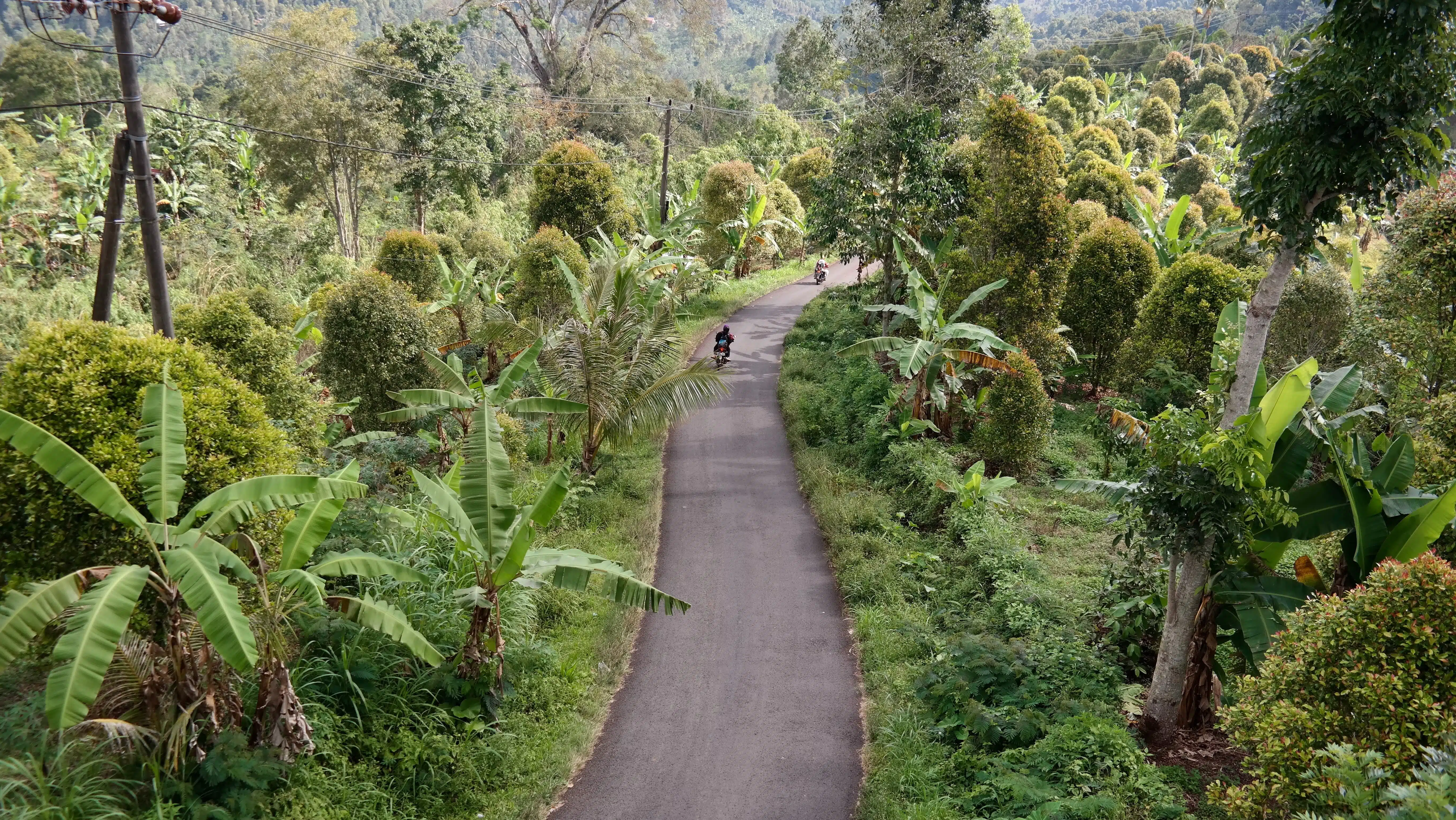
Transportation within French Polynesia varies across the islands, offering a mix of air, sea, and land options.
- Air Travel: Air Tahiti is the leading domestic airline, offering flights between the islands. It’s the most efficient way to travel long distances across the archipelago, connecting significant islands such as Tahiti, Bora Bora, Moorea, and Rangiroa.
- Ferries: For shorter distances and inter-island travel, ferries and boats are popular, especially between Tahiti and Moorea, or within the Leeward Islands. This option offers a scenic and leisurely way to move around, providing beautiful views of the ocean and islands.
- Private boat charters: Private boat charters are available if you want a more personalized and flexible sea travel experience. They provide an exclusive way to explore the lagoons, go on snorkeling excursions, and visit secluded beaches.
- Rental Cars and Scooters: Renting a car or scooter offers the freedom to explore the islands at your own pace. This is particularly advisable on larger islands, where attractions are spread out. Rental agencies are available at airports and in major tourist areas.
- Bicycles: For the eco-conscious traveler, bicycles are a splendid way to enjoy the islands’ natural beauty at a leisurely pace. They’re ideal for short trips and can be rented from various locations on the islands.
What are the best day trips from major islands in French Polynesia?
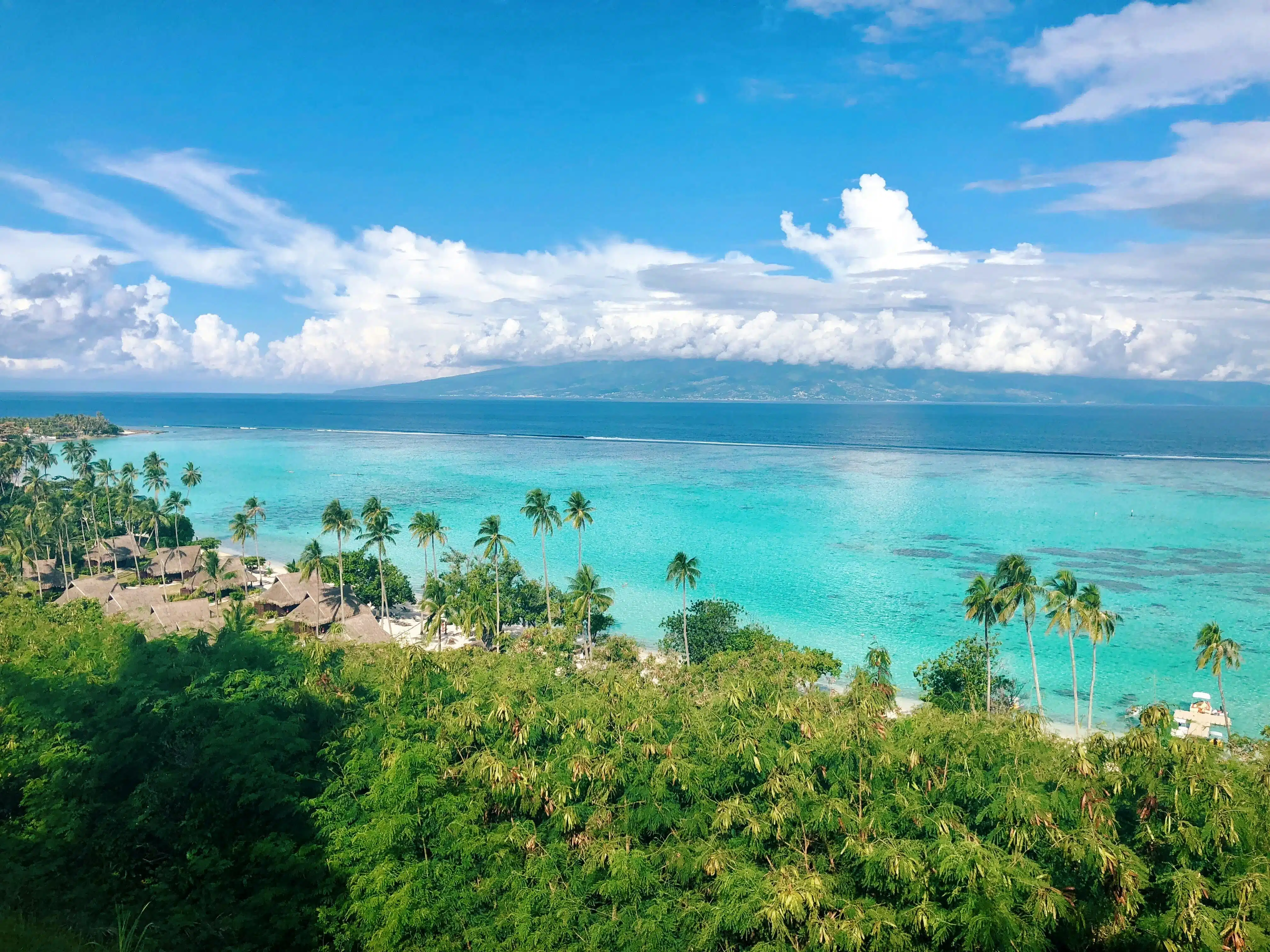
Exploring French Polynesia beyond the major islands reveals a world of beauty, adventure, and cultural richness.
Here are some of the best day trips:
- Moorea from Tahiti: Just a 30-minute ferry ride from Tahiti, Moorea is known for its stunning volcanic landscapes, Moorea overwater bungalows, turquoise lagoons, and friendly dolphins. A day trip can include activities like snorkeling, hiking to the Belvedere Lookout, or exploring the Moorea Dolphin Center.
- Motu Picnic from Bora Bora: Experience the quintessential Polynesian luxury by taking a boat to a private motu (small island) where you can enjoy a traditional Polynesian picnic, snorkel in crystal-clear waters, and relax on pristine white-sand beaches.
- Taha’a from Raiatea: Accessible via a short boat ride, Taha’a produces some of the world’s finest vanilla. Visitors can tour vanilla plantations, explore pearl farms, and snorkel in the Coral Garden, a shallow waterway teeming with vibrant marine life.

- Huahine from Raiatea: Huahine, often referred to as the Garden of Eden, is less than an hour away by boat. It’s famed for its lush forests, ancient Polynesian temples (marae), and tranquil lagoons. A day trip could include a guided island tour, archaeological visits, and kayaking.
- Maupiti from Bora Bora: A more secluded alternative to Bora Bora, Maupiti is a small island with a laid-back vibe, majestic mountains, and deep cultural roots. Visitors can climb Mount Teurafaatiu for panoramic views, swim with manta rays, or discover ancient petroglyphs.
- Fakarava from Rangiroa: A UNESCO Biosphere Reserve, Fakarava is renowned for its exceptional dive sites, including the famous South Pass, where divers can encounter schools of sharks and untouched coral reefs. A day trip from Rangiroa offers a deep dive into Polynesia’s undersea wonders.
- Tetiaroa from Tahiti: Once a getaway for Tahitian royalty and now home to The Brando, an exclusive resort, Tetiaroa is a haven for nature lovers. Day visitors can explore the atoll’s bird sanctuaries, pristine beaches, and rich marine life, often on guided tours emphasizing conservation.
Simply fill in the form below to get a FREE QUOTE from trusted local travel specialists who know the islands inside out.
It only takes 60 seconds, and you’ll receive custom itineraries and pricing directly in your inbox or WhatsApp within
48 hours.
Free of charge. No pressure. No obligation.
*Our trusted local partners create every itinerary with care. We kindly ask that you submit a request only if you’re considering traveling.
What should you pack for a trip to French Polynesia?

Packing for a trip to French Polynesia involves preparing for its TROPICAL weather, diverse activities, and cultural settings.
Here’s an essential packing list to ensure you have everything you need:
- Universal Adapter
- Osprey Backpack
- Power Bank
- Noise-Cancelling Headphones
- Traveler’s EHBO Kit
- Ebook reader
- Travel Bottles
- Multi-tool
- Packing Cubes
- Neck Pillow
- RFID Wallet
- Travel Umbrella
- Walking shoes
- Eye Mask
- Waterproof Phone Case
- Microfiber Towel
History of French Polynesia

Below, we’ll give you a short overview of the history of French Polynesia. Starting from when it was discovered, all the way up to 2004 when it inherited its current status.
- 1767 – British explorer Samuel WALLIS was the first European to visit Tahiti, followed by the European navigator Louis Antoine de BOUGAINVILLE in 1768 and British explorer James Cook in 1769.
- 1834 – French Catholic missionaries arrived on Tahiti. They are expelled two years later by Queen Pōmare IV.
- 1842 – France declares Tahiti a protectorate.
- 1844-47 – Franco-Tahitian War; the war ends when Queen Pōmare agrees to return from exile and rule under the French protectorate.
- 1880 – France declares Tahiti a colony.
- 1897 – Leeward Islands War: islanders resist French annexation with civil conflict between pro-French factions and the majority of anti-French sectors of the population. The rebellion is violently suppressed, and the rebels are exiled.
- 1946 – the French Republic made French Polynesia an OVERSEAS TERRITORY of France. It was provided with a territorial assembly and was allowed to elect one representative to the French National Assembly and one to the French Senate.
- 1957 – The islands’ name is changed to French Polynesia.
- 1962 – After Algeria became independent, France moved its nuclear testing ground to the Moruroa atoll in the Tuamotu Archipelago. In 2009, the French government offered approximately $10 million in compensation to those affected by the nuclear testing, but the offer was refused as insufficient.
- 2003 – France changed the classification of French Polynesia from overseas territory to overseas collectivity.
- 2004 – An organic act increased French Polynesia’s powers of self-government. French Polynesia’s constitutional status, its institutions, legal powers, and relationship with France are defined by statute, which has been amended several times since 1946 by the French Government and, most recently, in 2004. They are now seen as non-self-governing territories. French Polynesia is a parliamentary democracy, with a 57-seat Assembly and an executive headed by a President (akin to the Speaker), elected by a simple majority vote within the Assembly for a five-year term. Assembly members also serve five-year terms. Polynesians are now French citizens.
Simply fill in the form below to get a FREE QUOTE from trusted local travel specialists who know the islands inside out.
It only takes 60 seconds, and you’ll receive custom itineraries and pricing directly in your inbox or WhatsApp within
48 hours.
Free of charge. No pressure. No obligation.
*Our trusted local partners create every itinerary with care. We kindly ask that you submit a request only if you’re considering traveling.
Conclusion
Ready to plan your trip to French Polynesia?
This guide covered everything you need to know, including the top islands to visit, visa and travel requirements, water bungalow options, and essential tips for exploring the culture and landscape.
Use these insights to make your journey seamless and unforgettable.
Let us know in the comments how your trip went!