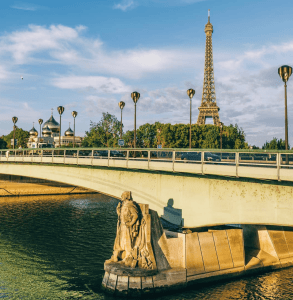

There are so many beautiful medieval villages in France.
You can expect to stroll down cobblestone lanes, past half-timbered houses and fortified walls.
In our 10+ years of traveling in France, we’ve found a few villages that offer the perfect mix of history, romance, and adventure.
So, let’s take a look at the most charming medieval villages in France below!
Medieval villages in France: An overview
MEDIEVAL VILLAGES IN FRANCE:
🏰 Carcassonne (Occitanie): A UNESCO-listed fortress city with massive double walls, towers, and a fairytale atmosphere.
🌊 Mont-Saint-Michel (Normandy): A tidal island crowned by a Gothic abbey, famous for its shifting tides and lantern-lit medieval streets.
🌹 Provins (Île-de-France): A former Champagne trade town with ramparts, underground tunnels, medieval festivals, and rose-flavoured treats.
🏘️ Pérouges (Auvergne-Rhône-Alpes): A tiny hilltop village near Lyon with cobbled lanes, half-timbered houses, and a strong movie-set feel.
🌸 Eguisheim (Alsace): A storybook wine village arranged in circular streets, overflowing with flowers, pastel houses, and Alsatian charm.
🌄 Saint-Cirq-Lapopie (Occitanie): A cliff-hugging village above the Lot River, offering views and beautifully preserved medieval architecture.
🌅 Èze (Côte d’Azur): An eagle’s-nest village located above the Mediterranean, known for Instagram-worthy sea views and romantic stone lanes.
Carcassonne, Occitanie
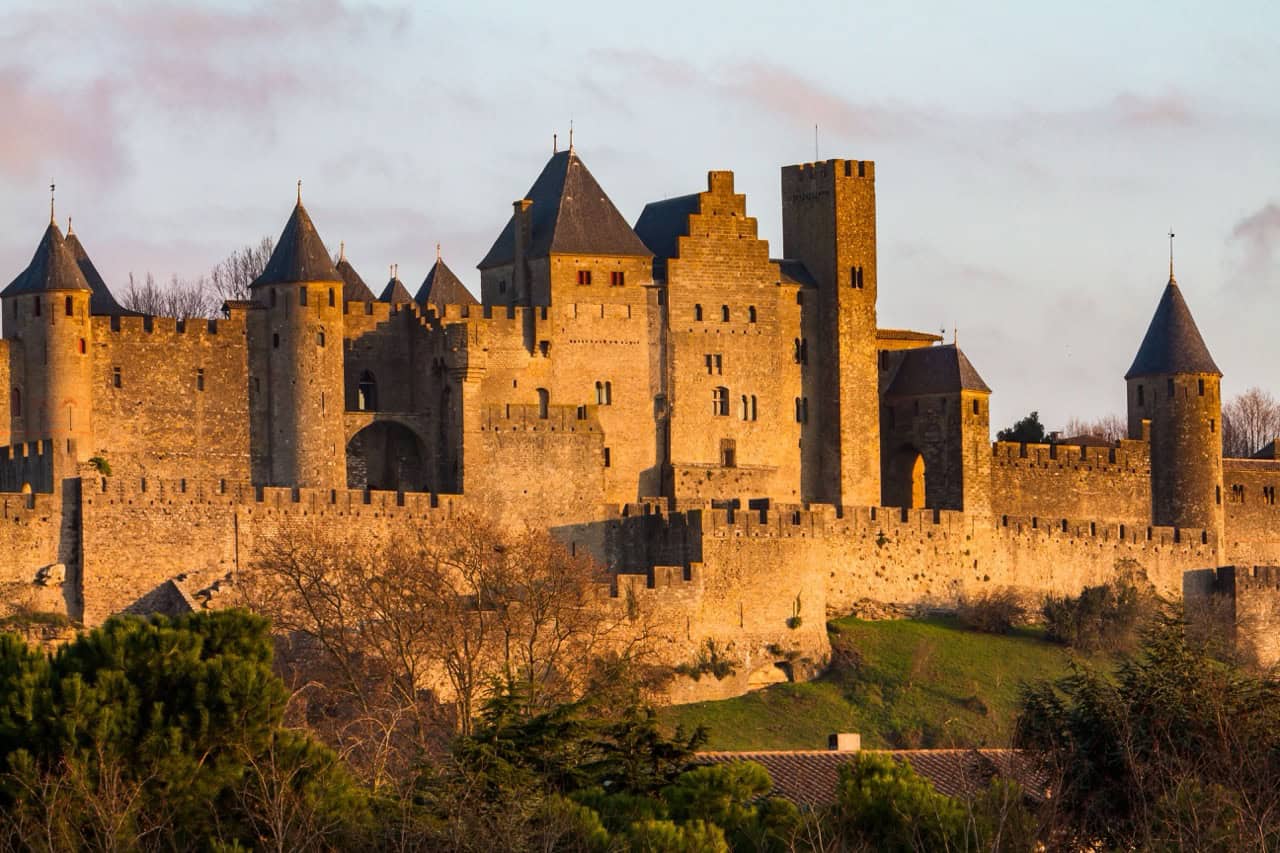
Carcassonne draws over 4 million visitors each year; the UNESCO-listed Cité de Carcassonne is one of France’s top attractions, on par with Mont-Saint-Michel.
So, with all those tourists, why do we like this medieval village in France so much?

WHY WE LIKE CARCASONNE
🏰 AMAZING FORTRESS: Encircled by thick stone walls and 52 towers, Carcassonne’s double fortifications date back to the 4th and 13th centuries. Walking its ramparts offers panoramic views of the Aude valley. Don’t miss the Château Comtal (the inner castle); it’s the main attraction, with an entrance fee of about $20 (19€) in summer.
🌟 FAIRYTALE NIGHTS: By day, Carcassonne bustles (it’s France’s second most visited spot after Paris), but at night it comes alive. Golden lights bathe the ramparts, creating a beautiful glow against the sky. Many couples (we as well) love an evening stroll on the cobbled lanes.
🍲 GASTRONOMY & WINE: In local restaurants, try the cassoulet, a hearty slow-cooked bean and meat stew that originated here. Pair it with robust Languedoc red wine for a true medieval feast. There are also casual wine bars like Comptoir de la Cité for post-sightseeing tastings.
👉 INSIDER TIP: Arrive by 9:00 AM to explore the citadel before tour buses pour in. Park outside the Narbonnaise Gate and discover the city at dawn. If you time it right, you can catch the Basilica’s stained glass in the morning light.
Mont-Saint-Michel, Normandy

Mont-Saint-Michel is a beautiful island village famous for its Gothic abbey, rising from tidal sands.
It’s so iconic that with around 2.8 million visitors in 2022, it’s officially FRANCE’S SECOND MOST VISITED MONUMENT (after the Eiffel Tower).
Despite the popularity, this UNESCO World Heritage Site offers a nice experience.

WHY WE LIKE MONT-SAINT-MICHEL
⛪ ABBEY IN THE SKY: The abbey on top of Mont-Saint-Michel dates back to the 8th century, with its spires visible for miles. We recommend climbing the steep village street to tour the abbey’s cloisters and refectory. The village’s winding lanes have museums, shops, and even hotels converted from old stone buildings.
🌊 TIDAL WAVES: Mont-Saint-Michel sits in a bay with Europe’s highest tides. At certain high tides, the ocean completely surrounds the mount, briefly turning it into an island as in centuries past. If you time it right, you can watch the tide rush in, just don’t attempt to walk the sands without a guide, as quicksand and fast waters are dangerous.
🍳 CULINARY HIGHLIGHTS: A fun tradition here is trying the fluffy omelette at La Mère Poulard, a famous inn dating to 1888. They whip the eggs in copper bowls. However, this is quite a tourist thing to do, as an omelette will set you back $30. Also, try some salted caramel candies in the village made with local butter. It’s a Normandy specialty.
👉 INSIDER TIP: Stay overnight on the Mont. After the last shuttle leaves, you’ll have the lantern-lit medieval streets nearly to yourself. Mont-Saint-Michel is our favorite medieval town in France!
Provins, Île-de-France

Provins is a medieval hidden gem just 60 miles (96 km) southeast of Paris, making it an easy day trip.
Once a prosperous trade fair town for the Counts of Champagne, today Provins is a UNESCO World Heritage site known for its impressive city walls and… roses!
WHY WE LIKE PROVINS
🏰 WALLS & TOWERS: Enter the Upper Town of Provins through 13th-century fortified gates and you’re in a mini-Carcassonne. Over 1,200 meters of ramparts with 22 towers still encircle the old town. Climb up Tour César, the 12th-century watchtower and Provins’ main icon, for a panoramic view of the town and Brie countryside. Beneath the streets, you can even tour underground tunnels that burrow for miles, once used by merchants (and smugglers). Definitely a must-visit medieval village in France!
🎭 MEDIEVAL FESTIVALS: Few places embrace their heritage like Provins. Every June, the town hosts Les Médiévales de Provins, a weekend festival where hundreds of locals don costumes for jousts, troubadour music, and a grand parade. The whole town becomes a scene from the 13th century. The city also puts on falconry shows and a themed medieval banquet (Le Banquet des Troubadours) in an old tithe barn!
🌹 ROSE CAPITAL: Provins is the “CAPITAL of rose-flavoured confectionery”. Legend says Crusader knights brought Damascus roses here, and the town’s been in love with them since. Don’t leave without trying local treats like rose petal jam, honey, or candy. You can find these in the medieval-themed shops or at the Rose Garden (which blooms each June). INSIDER FOODIE TIP: Also seek out Niflettes in autumn; these little custard tart pastries are a Provins specialty.
👉 INSIDER TIP: If you’re from outside Europe and you would like to wander the city, make sure to get a France travel eSIM.
Pérouges, Auvergne-Rhône-Alpes

Sitting on a hilltop about 20 miles (33 km) from Lyon, the walled village of Pérouges is like a movie set, so much so that it’s been used in films about medieval France (like The Three Musketeers).
This tiny city (population 1,000) is completely pedestrianized and enclosed by old stone walls.
If you and your partner love charming cobblestone mazes as we do, then Pérouges will steal your hearts.
WHY WE LIKE PÉROUGES
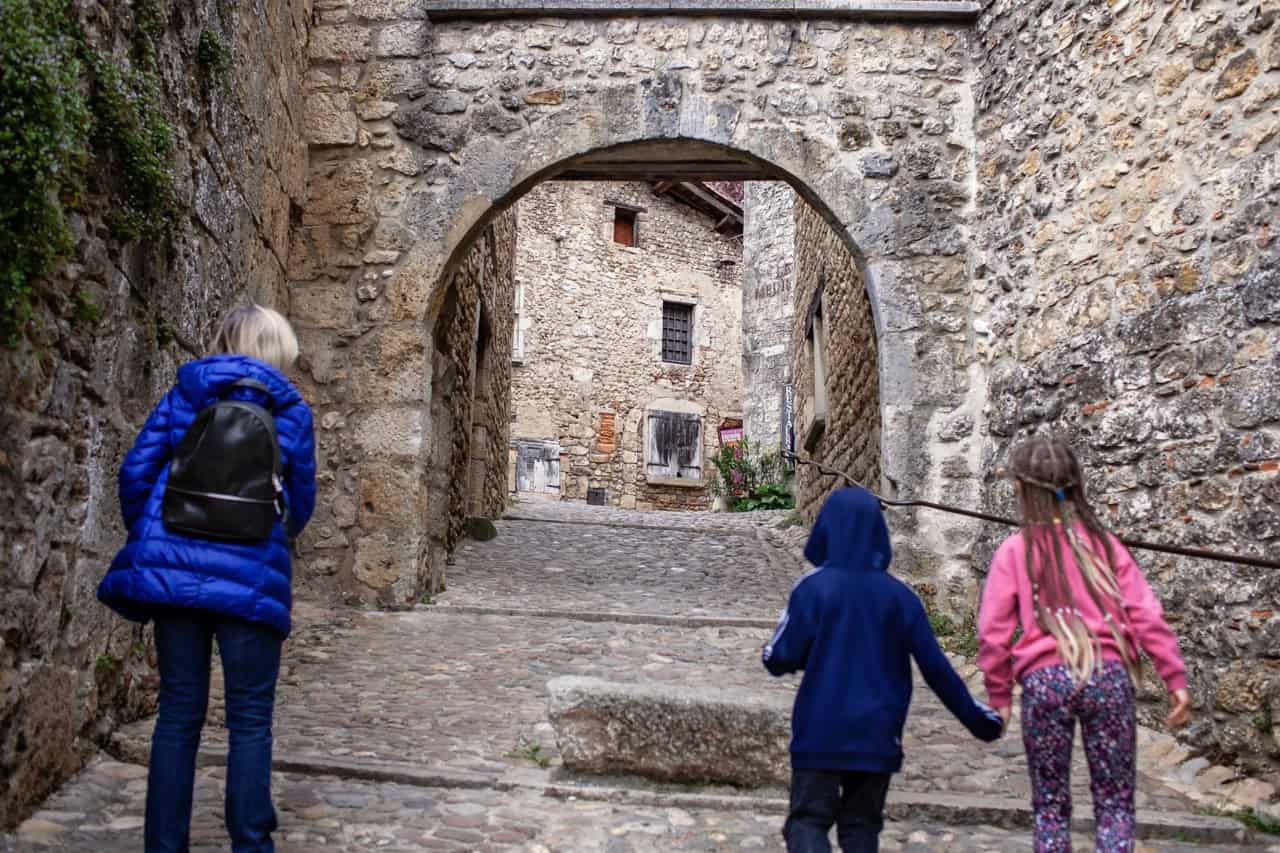
🏘️ TIMELESS CHARM: “Cité médiévale” is no exaggeration; EVERY building here seems centuries old. The lanes are all cobbled (wear comfy shoes) and lined with half-timbered houses. At the center lies Place du Tilleul, the main square, shaded by a 200-year-old linden tree.
🥧 FAMOUS GALETTE: Pérouges is famous for the Galette de Pérouges. Despite the name, it’s not a buckwheat crêpe but a thin, sweet brioche tart topped with butter, lemon, and sugar. Served warm, it’s super delicious (one of the highlights of our trip!). You can buy a slice from Ostellerie du Vieux Pérouges bakery right on the square.
🕍 LIVING HISTORY: The fortified church here has a wild history. During a 1468 siege, the villagers tore down their own church to use the stones to reinforce the walls, successfully fending off attackers. The church was later rebuilt by 1479. Walking the walls, you can still see arrow slits and battlements bearing scars of those times. Also worth a visit is the House of Princes museum, set in a 15th-century mansion, which recreates medieval interiors and a 13th-century garden.
👉 INSIDER TIP: Pérouges can be seen in half a day. Arrive early morning or late afternoon to have its romantic lanes to yourselves as the day-trippers from Lyon often come mid-day. If you drive, park in the lot below the village and walk up; no cars are allowed inside the walls.
Eguisheim, Alsace (Grand Est)

Eguisheim looks straight out of a Disney fairy tale.
In fact, it was voted “France’s Favorite Village” in 2013.
Located on the Alsace Wine Route just 4 miles (7 km) from Colmar, this tiny medieval village in France is arranged in concentric circles around a castle, overflowing with flowers and storybook charm.
You can expect pastel-colored, half-timbered houses with geraniums in the window boxes and storks nesting on rooftops.

WHY WE LIKE EGUISHEIM
🌸 FAIRYTALE STREETS: Strolling Eguisheim’s circular lanes feels like wandering inside a carousel of medieval homes. The streets spiral around the remains of an 8th-century castle in the center. Every turn reveals wrought-iron signs, cozy courtyards, and facades draped in blooming flowers come summer.
🍷 WINE & DINE: This village is the birthplace of Alsatian viticulture, surrounded by vineyards of Riesling and Gewurztraminer grapes. Many historic wine cellars offer tastings, so don’t be shy to step in and buy some wines. And if you’re hungry, follow your nose: the aroma of choucroute (Alsatian sauerkraut) and baeckeoffe stew often wafts from taverns. Try a tarte flambée (Alsatian flatbread pizza) or a pretzel with a glass of local wine for a casual meal. For dessert, the Kougelhopf, a bundt-shaped almond cake, is an Alsace classic you might find in Eguisheim’s bakeries.
🏅 MOST BEAUTIFUL VILLAGE: Eguisheim has been ranked among Les Plus Beaux Villages de France since 2003. What’s remarkable is how well-preserved it is, as the village escaped major damage in wars, so the medieval layout and even many 16th-century houses remain intact. Don’t miss the chapel fountain honoring Pope Leo IX, who was born here in 1002.
Saint-Cirq-Lapopie, Occitanie

Clinging to a cliff 100 meters above the Lot River, Saint-Cirq-Lapopie is another amazing medieval town in France.
This hilltop village in Southwest France (about 20 miles from Cahors) was elected “Most Beautiful Village in France” by a national vote.
With 13 historic monuments and stone houses dating from the 13th to 15th centuries, Saint-Cirq is a perfectly preserved medieval time capsule.

WHY WE LIKE SAINT-CIRQ-LAPOPIE
🌄 STUNNING VIEWS: Part of the thrill is the approach – you wind up narrow roads and suddenly medieval Saint-Cirq appears, perched on a rocky outcrop high above the river’s bend. From the ruined castle tower at the top (one surviving watchtower still stands), the views over the Lot Valley are Instagram-worthy.
🏚️ MEDIEVAL ARCHITECTURE: Wander the labyrinth of steep lanes, and it’s like time never touched this village. Half-timbered facades with carved wooden beams, Gothic arch doorways of former merchants’ shops, and mullioned windows transport you to the Middle Ages. We recommend visiting the 16th-century Church of Saint-Cyr (with a beautiful painted interior) and the fortified gates at the village entrances.
🎨 ARTISTIC SPIRIT: Long after its medieval heyday, Saint-Cirq-Lapopie became a magnet for artists and writers. In the 20th century, surrealist André Breton and others took residence here, drawn by its inspiring atmosphere. Today, you’ll find ateliers and galleries tucked along the lanes.
👉 INSIDER TIP: The village is pedestrianized, so park in designated lots below and wear good walking shoes. The climb up is steep on foot (and within the village, you’ll be tackling stone steps and slopes). Reward yourself after the hike with a cold drink at a café on Place du Sombral, the small central square, while taking in the view.
Èze, Côte d’Azur
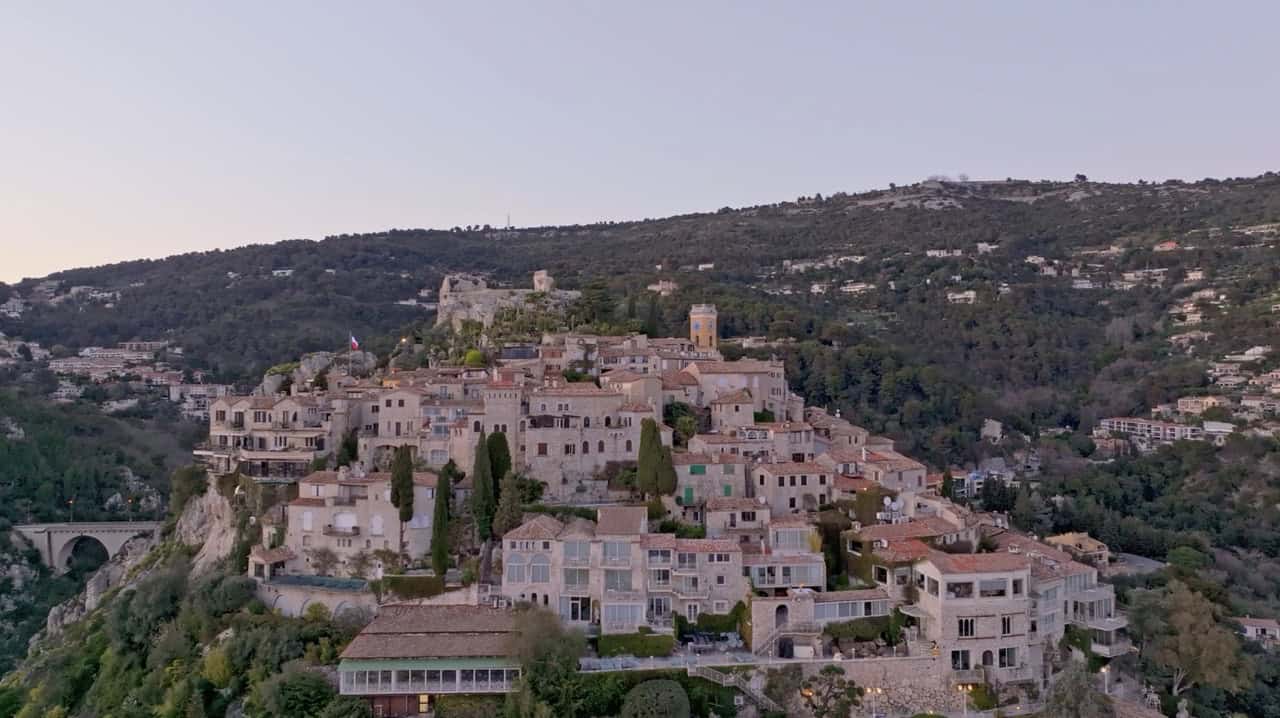
Between Nice and Monaco lies Èze, a medieval village 1,400 feet above the Mediterranean.
For us, it’s the most beautiful village on the French Riviera.

WHY WE LIKE ÈZE
🌅 VIEWS: Built like an eagle’s nest on a rocky peak, Èze Village has unreal 360° views of the Côte d’Azur. You can expect to see sparkling blue sea, coastline, and mountains. The village itself is like a castle with no end: narrow passages twist upward to the summit. At the very top, where a medieval fortress once stood, is the Jardin Exotique (Exotic Garden). For a fee ($6), you can wander among cacti and sculptures. Fun fact: philosopher Friedrich Nietzsche loved this view so much that it inspired him while writing Thus Spoke Zarathustra.
🏡 CHARMING LANES: Èze’s streets are pedestrian-only and steep, effectively stone staircases lined with vine-draped walls. Tucked in these alleys are art galleries, tiny souvenir shops, and perfumeries (the famous Fragonard and Galimard perfume factories are just below the village, and you can visit them to see how French fragrances are made). Despite the tourist boutiques, the village maintains its medieval character, with archways and old wells around every turn.
🍴 ROMANCE & CUISINE: Èze has attracted famous visitors for decades, even Walt Disney slipped away here for inspiration. Perhaps that’s due to its romantic aura. You can dine in centuries-old buildings turned restaurants; one spot, La Chèvre d’Or, is an ultra-luxury hotel restaurant where you can grab a cocktail on a terrace hanging over the sea (pricey, but what a memory). For a more casual bite, there are many crepe stands and cafés with cliff-edge patios. Don’t leave without trying Provençal specialties like socca (chickpea pancake) or a scoop of lavender gelato.
👉 INSIDER TIP: For adventurers, hike the Nietzsche Path. It’s a challenging footpath that connects Èze’s hilltop to the seaside (Èze-sur-Mer). In about an hour of switchbacks through fragrant pines, you’ll descend (or ascend) 1,300 vertical feet. It’s a workout, but the Mediterranean views and the sense of accomplishment are fantastic; just carry water and avoid the midday heat.