
Where Are We Now – January 2025 Update
This post has affiliate links. We earn a small commission, which helps us create better content and share amazing destinations with you at no extra cost.
On this page
Travel essentials we use
On this page
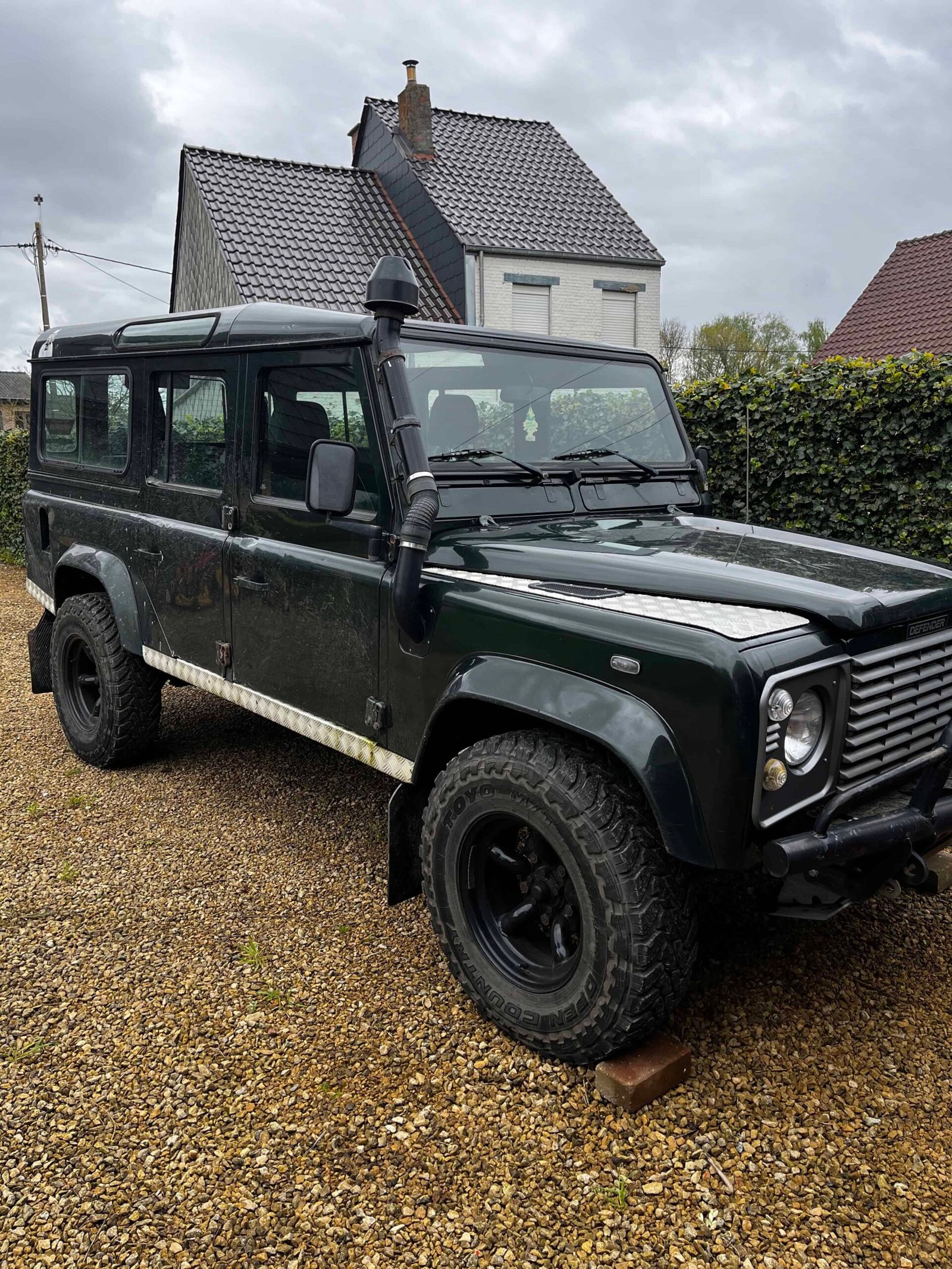
It is time for a 9-month Defender update. What has happened, and what is yet to happen?
A world expedition like ours deserves a Defender that can handle every challenge—DESERTS, MOUNTAINS, SNOW, and MUD.
Restoring our 2003 Land Rover Defender 110 TD5 wasn’t just about repairs; it was about preparing it to be reliable, rugged, and expedition-ready (to do another 250.000 kilometers).
This is how we took it apart the past few months, gave it a second life, and are rebuilding it for our global adventure.
Phase 1: breaking down the Defender
Before the rebuild could begin, we had to strip the Defender down to its core. This involved months of dismantling. Each part has its own story of wear, rust, and age.
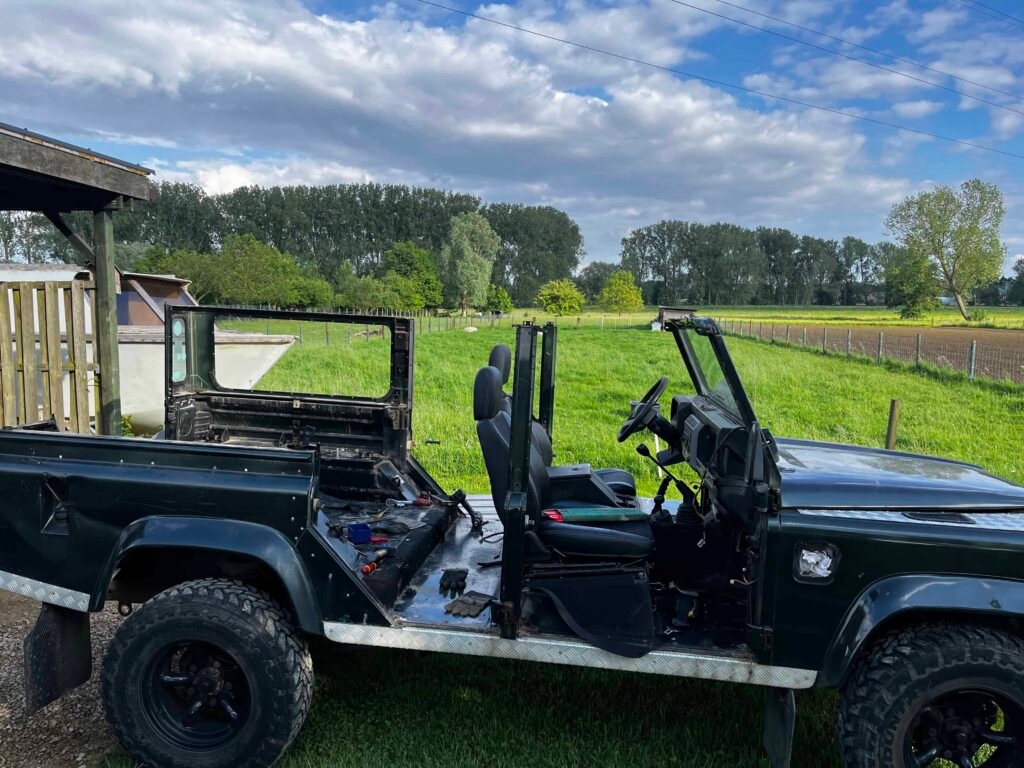
Clearing the inside
We began by removing the interior—seats, carpets, and panels. Two decades of dirt and grime had settled in, and some bolts were so rusted that they preferred to break than come loose. It required persistence and 2 liters of WD40.
Stuck doors and rusted bolts
The doors were one of the hardest challenges. The previous owner told us that some hinges and door strikers were stuck. Also, some bolts were rusted, and in many cases, the only solution was to drill through them. Eventually, we freed the doors and took them apart.

Removing the roof and rear tub
Taking off the roof was a turning point, as it felt like we were getting somewhere. The rear tub and front wings followed, but rusted bolts made the job tricky again.
Stripping the wiring and bulkhead
The final stages involved removing the electric cables and the bulkhead. Every wire was photographed and labeled to ensure a smooth rebuild later.
At the end of this phase, we were left with an engine and a bare chassis—a blank slate for the rebuild.

Phase 2: restoring the heart and soul
The Defender’s components were sent to workshops across Belgium with the breakdown complete. The body and engine began their transformations in different workshops.

Restoring the bodywork
We sent the bodywork to a technical school in Belgium, where students worked on its restoration. The process began with sandblasting to remove rust and old paint, exposing the original surface. Next, the panels were coated with epoxy for protection. Finally, the body was repainted in a color reflecting elegance and adventure.

Engine and chassis overhaul
The engine and chassis went to Vicious Offroad, a workshop specializing in Land Rover restorations. The chassis was sent for sandblasting and metallization, ensuring it could withstand the toughest terrains again. Meanwhile, the engine underwent a full inspection.

During this phase, we discovered a leak in one of the cylinders. The camshaft was also worn out and needed replacement. Every component was tested under pressure to ensure flawless performance during the expedition.
Our work
In the meantime, the school and workshop were working on the car, and we also worked on the brake calipers. They were disassembled, cleaned, and rebuilt with new pistons, seals, dust boots, and retaining pins.


In addition, we tackled the Defender’s 20-year-old winch, which needed serious attention.

We disassembled the gears, cleaned them thoroughly, and applied fresh grease. The electrical connections were cleaned, and a new rope was ordered to replace the worn one. After reassembly, the winch is now working like new and ready to pull us out of any tough spot.

Phase 3: rebuilding for adventure
Our current and most exciting phase comes: rebuilding the Defender into an overlander capable of taking us worldwide.
Engine upgrades for overlanding
Currently, Vicious Offroad is rebuilding the engine with key upgrades to improve performance and reliability:
- Hybrid turbo with software adjustments for better efficiency
- Upgraded intercooler and silicone turbo hoses
- Upgraded motor oil and filters
- A new heavy-duty clutch, sponsored by Clutchfix in the United Kingdom.
Suspension and chassis enhancements
For the suspension, we’re adding:
- Heavy-duty OME springs
- Fox 2.0 shocks (front and rear) with external reservoirs
- Shock turrets, dislocation cones, and extended bump stops
The chassis is also getting essential features for overlanding:
- Tree sliders for side protection
- A-frame ball joint for improved stability
- Stainless steel piping for brakes, fuel lines, and turbo
Preparing for the expedition
We will add the interior over the next few months and turn the Defender into a home on wheels. It will include:
- A rooftop tent
- Solar panels for off-grid power
- Water storage and extra fuel tanks
- Storage closets for gear and supplies

March 2026: the journey begins
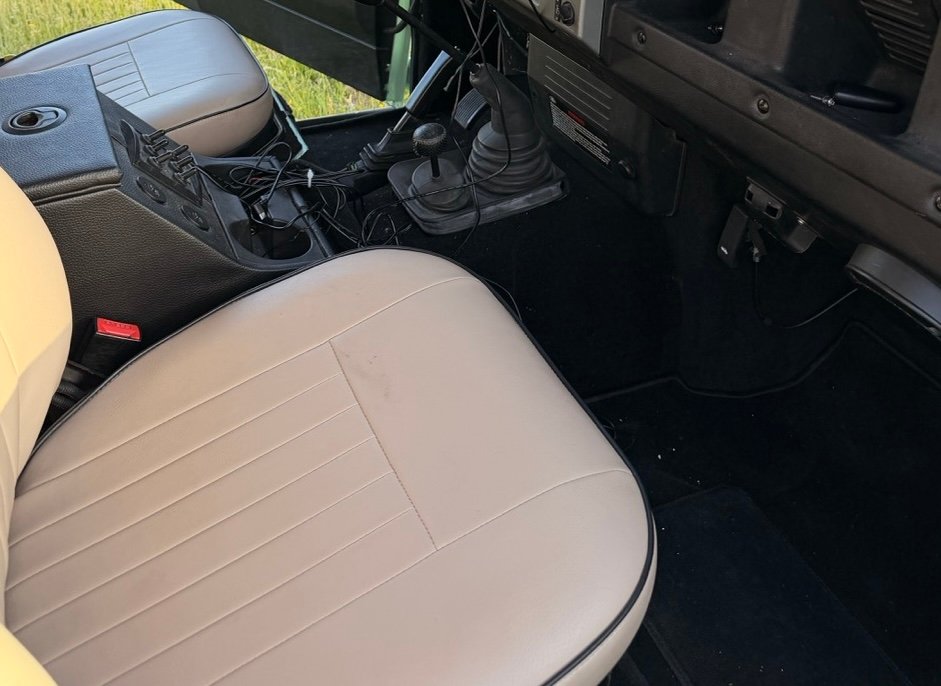
The Defender will be ready for its ultimate test in just a year. It will be shipped to Halifax, Canada, where our world expedition begins.
From Prudhoe Bay, Alaska, we’ll travel south along the Pan-American Highway, crossing Canada, the USA, Central America, and South America. Our journey will end in Ushuaia, Argentina, the southernmost city in the world, before shipping it to Australia for the second part of the world trip.
Related Posts



*If you purchase something through our links, we may earn a small fee. However, you still pay the same (or even get a discount). Win-win! And one day we may get to be full-time travel bloggers!
Please check our affiliate disclosure policy for more details. Your suppport is appreciated!
We share travel guides for couples who want a little luxury, a lot of heart and lifelong stories to tell!
Laura and Alexander
Founders of Lost Between Oceans

Reviews
Lost Between Oceans gave me and my husband the perfect tips and destinations to plan our dream honeymoon in French Polynesia, making the experience stress-free.

I never thought I’d dare to go diving in a cenote and surfing in Mexico. Their travel guides made me more confident and adventurous, overcoming my travel fear of the unknown. Thank you!
I looked up Lost Between Oceans for last-minute tips about my roadtrip in the Amalfi Coast. They showed me the best cliffside villages and hidden beaches. This saved me a lot of time researching everything myself!



Related Posts
Leave a Reply