
Welcome to Ua Pou (spoken as Wa Poo) in French Polynesia!
What to expect from this island? What are the best things to do, and what is its history?
By the end of this article, you’ll be a Ua Pou expert!
Let’s get started.
KEY TAKEAWAYS:
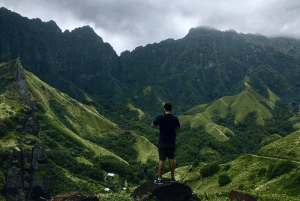
- Impressive Peaks and Rare Flower Stones: Ua Pou is famous for three basalt peaks (see pictures) and unique flower stones, which feature natural, flower-like patterns (only found in Brazil and here).
- A Hidden Part of French Polynesia: Declared a World Heritage Site, Ua Pou, as part of the Marquesas Archipelago, is among ‘the world’s last marine wilderness areas’, according to UNESCO.
- A Variety of Experiences: From hiking peaks and exploring ancient archaeological sites to enjoying craft wood workshops and relaxing on beaches, Ua Pou has a lot to offer!
Dreaming of a French Polynesian vacation?
Fill in our SHORT FORM, and we will match you with trusted local tour operators who can build a personalized itinerary based on your STYLE, BUDGET, and TRAVEL DATES.
Our local partners create every itinerary with care. We kindly ask that you submit a request only if you’re considering traveling.
Ua Pou: An Overview
Ua Pou has the highest elevation of any of the Marquesas Islands and is known as The Cathedral Island for its many peaks.
Most tourists skip this island and go to Hiva Oa to see the tomb of Jacques Brel and Paul Gauguin, or to Nuku Hiva because it is the main island. Very few people dare to deviate from this “classic route.”
Location
Ua Pou is a beautiful small island in the Marquesas Archipelago, French Polynesia.
The island lies 50 kilometers (31 miles) south of Nuku Hiva and about 1,250 kilometers (777 miles) northeast of Tahiti (the capital of French Polynesia).
Accessible only by air via the Ua Pou Airport (UAP) or by sea, this island remains untouched by mass tourism. The official Tahiti tourism website says that this is one of the best HIDDEN DESTINATION in the world!
You can explore multiple islands by getting a Marquesas Pass through Air Tahiti, which allows for easier travel across the archipelago.

If you’re focusing solely on Ua Pou, you’ll need to do a layover from Tahiti in Hiva Oa or Nuku Hiva, as only these islands have direct flights to Ua Pou.
A round trip from Tahiti with Air Tahiti costs around 100,000 XPF (approximately €850).
DID YOU KNOW: Ua Pou has a famous airport runway that runs uphill to a mountain. You need a special license for takeoff and landing!
Air Tahiti offers 5 to 6 flights weekly between Nuku Hiva and Ua Pou.
Regular service is available on Monday, Tuesday, Friday, Saturday, and Sunday, with an extra flight on Wednesday during school vacation periods.
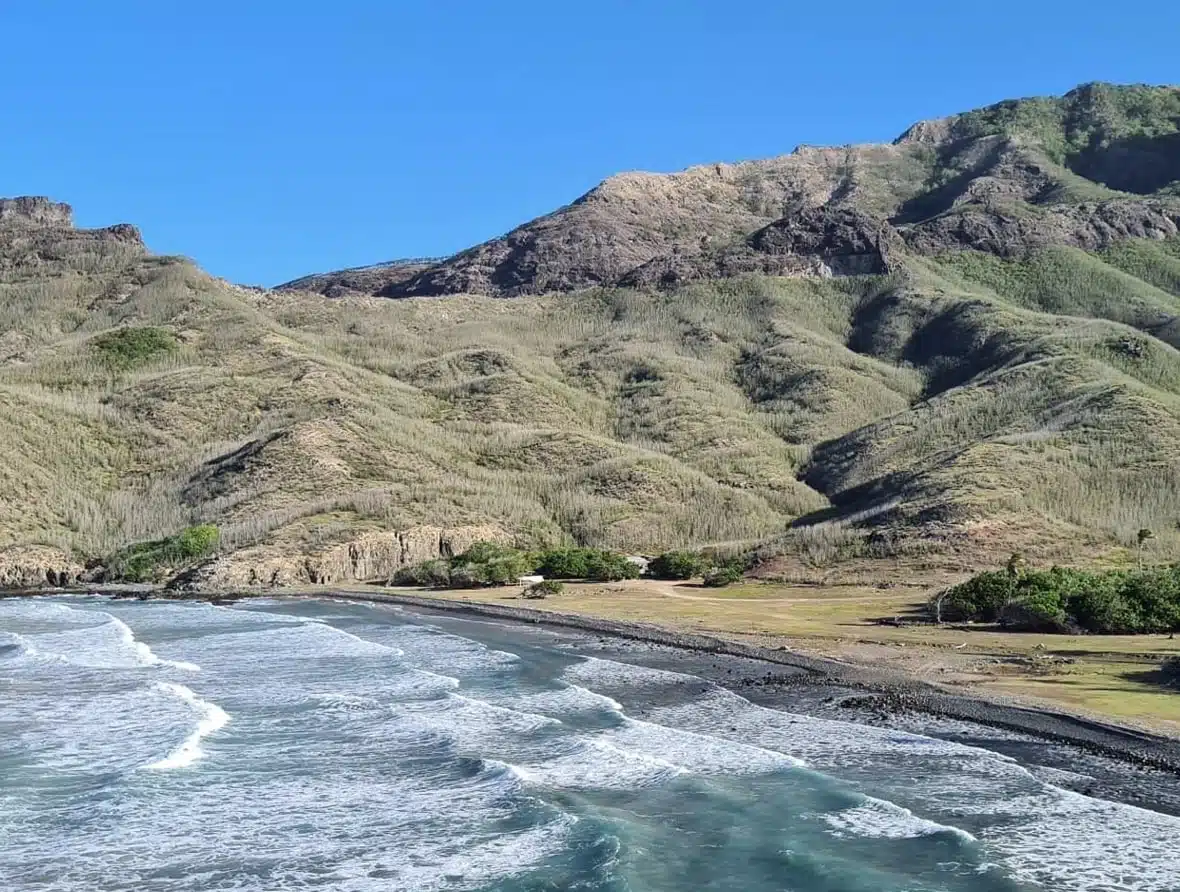
These flights connect with services to Papeete and are operated by Zimex Aviation on Twin Otter aircraft, with 15 to 17 passengers.
Additionally, several weekly flights operate between Ua Huka and Ua Pou, with a flight time of around 25 minutes.
INSIDER TIP: If you arrive by boat, you’ll dock in Hakahau Bay, the island’s main harbor; from there, you can reach all parts of the island, but only with a 4×4!

For rentals, Ua Pou Location offers 4×4 vehicles at around 13,000 XPF (approximately €110) per day. The prices are high, but unfortunately, you do not have many alternatives!
For accommodations, you can use our interactive widget below to discover the few places to stay on the island!
KEEP IN MIND: there are only very limited options (4 guesthouses in the whole island), so don’t expect any luxury.
Simply fill in the form below to get a FREE QUOTE from trusted local travel specialists who know the islands inside out.
It only takes 60 seconds, and you’ll receive custom itineraries and pricing directly in your inbox or WhatsApp within
48 hours.
Free of charge. No pressure. No obligation.
*Our trusted local partners create every itinerary with care. We kindly ask that you submit a request only if you’re considering traveling.
Demographics and population
With a population of only 2,200 residents, Ua Pou has a small local community.
Most locals live in Hakahau, Hakahetau, and Hakamaii (see the video above to get an idea of the villages), where the local culture is strong, mixing original Polynesian and Marquesan traditions.
DID YOU KNOW: The Marquesian islands are so famous for their traditional body decoration (tattoos, clothing, necklaces, etc.) that the Guardian even wrote a piece on them!
The primary language spoken is Marquesan, but many locals also speak French (and sometimes English).
Best time to visit Ua Pou

Ua Pou, just like all islands in French Polynesia, has a tropical climate with two seasons.
The DRY SEASON runs from May to October, offering calmer, warm temperatures around 26°C (78.8°F)—perfect for outdoor activities (see below). We recommend visiting during the dry season.
During the WET SEASON from November to April, temperatures rise to 30°C (86°F), with many but short tropical rains, creating a lush and green landscape.
Make sure you have travel insurance to avoid EXPENSIVE medical bills in case of an injury! You can check out below how expensive it would be for your holiday! Lucky for you, we partner with VisitorsCoverage, which offers the lowest medical insurance!
3-day itinerary
Now, what would a 3-day itinerary look like? What are the best activities to do on the island of Ua Pou?
Let’s explore the adventurous activities available, from hiking the basalt pillars to discovering the unique flower stones and engaging with the vibrant local culture.
Day 1: exploration and adventure
Morning – Hike to the Basalt Pillars
- Begin your morning by hiking to Ua Pou’s basalt pillars, including Mount Oave and Poutetaunui. These volcanic spires, reaching up to 1,230 meters (4,035 feet) above sea level, are the highest in Colynesia and offer visitors stunning views over the whole island. While the trail is steep and challenging, the views at the top are worth the effort!
INSIDER TIP: Bring sturdy hiking shoes, plenty of water, and a packed lunch, as there are no facilities along the trail.
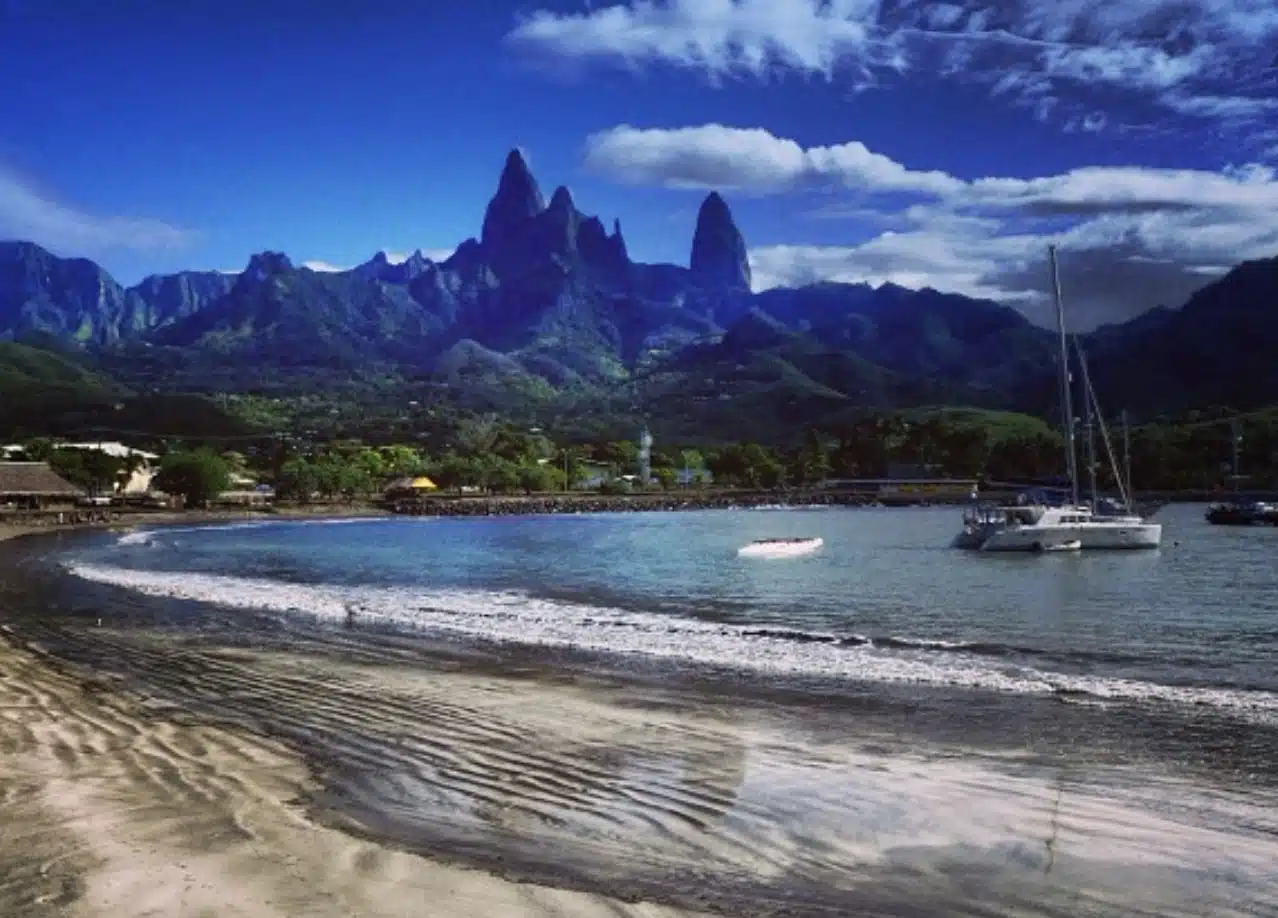
Afternoon – Hakahau Bay
- After your hike, head to Hakahau Bay, the island’s main village and harbor. Here, you can shop in local stores, look at the traditional Marquesan wood carvings and tapa cloth, and visit the local market for fresh tropical fruits.
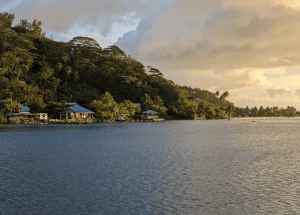
You’ll often see several sailboats anchored in bays around Ua Pou. These ships seek shelter from the ocean swell.
- For lunch, try Chez Rosie, a popular spot with locals, serving delicious Polynesian fare. Expect to pay around €15-20 ($16-22) for a meal.
INSIDER TIP: If you’re up for a scenic walk with some elevation, consider hiking up to the crucifix that sits above the village. Visible from below, the crucifix is near the antennas on the right side as you face the sea. Starting from the beach, follow the paved road uphill, passing a guesthouse, and continue as it turns into a dirt trail.
Don’t forget to look back for breathtaking views of the mountain. Eventually, you’ll reach a fork—take the path to the right to ascend to the crucifix. The climb is absolutely worth it, offering spectacular views of the pillars and the entire village below. For the best photos of the pillars, head up in the early morning when the light is optimal, rather than the afternoon, when the sun may be in your eyes.

Evening – Sunset at Anahoa Beach
- Wrap up the day at Anahoa Beach, a spot known for its black sand and gentle waves. It’s an ideal location for a quiet sunset view.
Day 2: cultural experiences
Day 2 will focus on the Marquesan culture.
Morning – Visit to the Archaeological Sites
- Start with a tour of Paeke, an ancient Marquesan ceremonial site featuring stone tikis and petroglyphs. A guide can provide insights into the meanings behind these carvings, explaining the islands past.
- Guided tours typically cost €30 ($32), and the trip from Hakahau village to Paeke takes around 20 minutes by car.
Afternoon – Craft Workshop and Local Cooking Class
- In the afternoon, take part in a traditional craft workshop, where you’ll learn about the art of tapa cloth making or wood carving from artists. Many of these crafts are passed down through generations.
- After the workshop, join a local cooking class to prepare traditional Polynesian dishes like poisson cru (marinated raw fish) and uru (breadfruit) dishes. Expect to pay around €50 ($55) for both activities, including the meal.
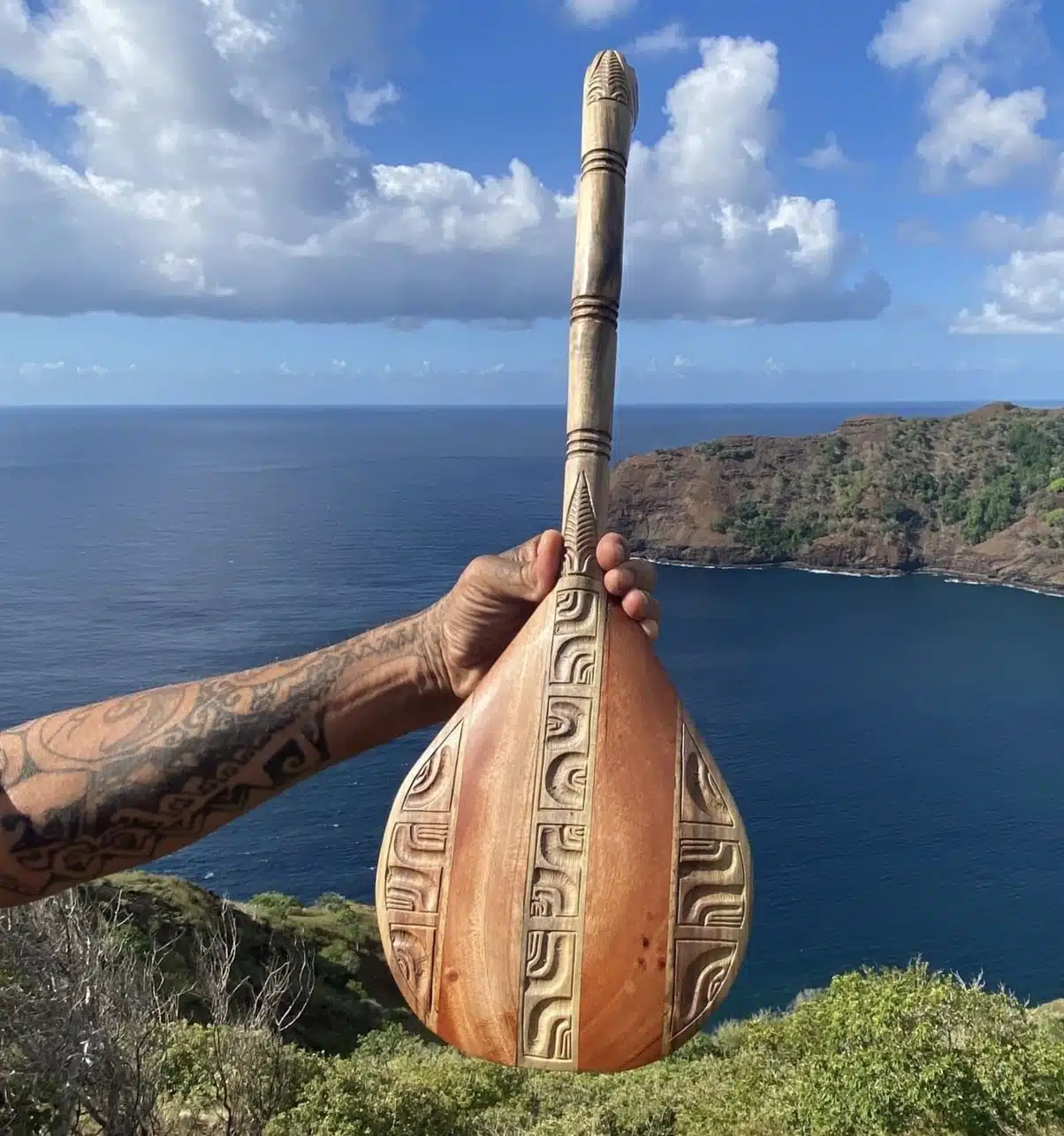
Evening – Marquesan Dance Performance
- End the day with a Marquesan dance performance. The performances, with drums and chanting, tell stories from Marquesan folklore. Check with local hotels or community centers in Hakahau for scheduling; tickets are generally €15 ($16).
Day 3: relaxation and scenic views
Lastly, after two full days of exploring, day 3 is the day to relax and enjoy the island in the Pacific Ocean.
Morning – Scenic Drive to Hakahetau
- Begin with a scenic drive along the coastline toward Hakahetau, a small village between the ocean and the mountains, with Mont Oave, the volcano, towering at 1,230 meters and surrounded by three basalt columns. The drive is about 20 kilometers (12.4 miles) from Hakahau and takes around 45 minutes. Along the way, you’ll pass through lush valleys and have multiple scenic lookout points for photo stops.
- INSIDER TIP: Stop at the Hakahetau viewpoint for a fantastic panoramic view of the coastline and the dramatic peaks of Ua Pou.
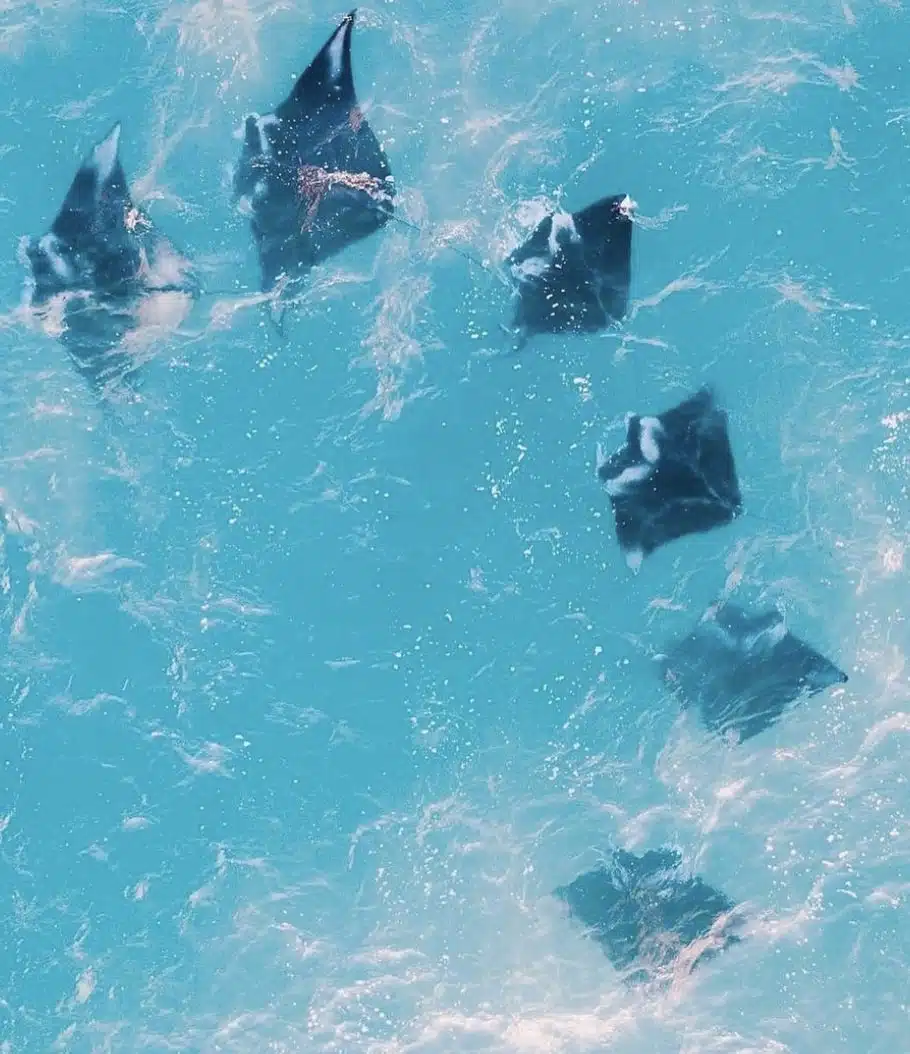
Afternoon – Swimming and Snorkeling at Hakahetau Beach
- Spend the afternoon relaxing on Hakahetau Beach. The waters here are calm and clear, ideal for swimming and snorkeling.
Evening – Dinner with a View
- For your final evening, enjoy a special dinner at one of the pensions (guesthouses) in Hakahau or Hakahetau, where you can take a menu with fresh seafood. Meals are typically €20-25 ($22-27) per person.
PS: If you have some time left over, you must go to the famous Hohoi Beach, famous for its flower stones along the shore. Local artisans often collect these stones here and in the nearby mountains for their sculptures, making it a place of natural beauty and cultural significance.
Simply fill in the form below to get a FREE QUOTE from trusted local travel specialists who know the islands inside out.
It only takes 60 seconds, and you’ll receive custom itineraries and pricing directly in your inbox or WhatsApp within
48 hours.
Free of charge. No pressure. No obligation.
*Our trusted local partners create every itinerary with care. We kindly ask that you submit a request only if you’re considering traveling.
Pillars

If you want to get closer to Ua Pou’s basalt pillars, you’ll be glad to know there are at least TWO ACCESSIBLE TRAILS that lead into the island’s interior.
The first and most popular route, known as the “traversière,” begins in Hakahau and connects to the village of Hakahetau.
Many hikers choose to complete just the first half of this trail, ascending to the pass where you can enjoy spectacular views of the pillars without continuing the descent to Hakahetau, as the primary reward is the panoramic view at the top.
To make the trek easier, ask your guesthouse to drop you at the trailhead, which saves time and energy for the climb. For guidance, you can DOWNLOAD the GPS track from Wikilocs to stay on course.
If you’d prefer company, Jerome from Pension Pukuee is a local guide who can accompany you. However, the trail is generally manageable alone, with only a few steep sections near the end. Please note that the trail crosses some private land, so it’s courteous to confirm access with your guesthouse before starting; respectful behavior is usually all that’s required for passage.

Depending on your pace and fitness level, the ascent to the pass typically takes around 45 minutes to 1 hour. The trail is well-marked, winding through a forest of pandanus, banana, and coffee trees, leading to a truly rewarding view of the pillars at the top.
If you want to continue, you can descend toward Hakahetau, passing an archaeological site along the way. However, be prepared to arrange transportation back to your starting point—either by hitchhiking or coordinating a pickup in advance.
Travel planning tips
Importance of a travel agent
While traveling yourself to Ua Pou is possible, you’ll have to overcome a few hurdles, it is one of the most remote places on earth.
There are very few tourists on this island off the main island of Nuku Hiva. The majority of tourists come on the Aranui cruise ship when they do a tour of the Marquesas Islands!
To not have the travel stress, we recommend working with a travel agent experienced in Polynesian destinations can enhance your visit.
Travel agents familiar with the Marquesas Islands arrange flights, accommodations, and guided tours—saving you time and effort.
They can also provide insights with local guides, cultural experiences, and places where you can access exclusive activities.
INSIDER TIP: Some agencies specialize in French Polynesia, like Tahiti Tourisme (tahititourisme.com).
Simply fill in the form below to get a FREE QUOTE from trusted local travel specialists who know the islands inside out.
It only takes 60 seconds, and you’ll receive custom itineraries and pricing directly in your inbox or WhatsApp within
48 hours.
Free of charge. No pressure. No obligation.
*Our trusted local partners create every itinerary with care. We kindly ask that you submit a request only if you’re considering traveling.
Essential packing list for Ua Pou
In order to enjoy your holiday, you should have a basic idea of what to pack for a trip like this.
Based on our experience in French Polynesia, the items below are necessary.
- Lightweight, breathable clothing – Opt for loose, light fabrics like cotton to stay comfortable in the tropical climate.
- Sturdy hiking shoes – Necessary for exploring trails and uneven paths.
- Swimwear and beach gear – Pack a swimsuit, snorkeling mask, and reef-safe sunscreen to make the most of Ua Pou’s beaches.
- Rain jacket or poncho – A lightweight, waterproof layer is helpful (even during dry season)
- Insect repellent
- Reusable water bottle – Stay hydrated during hikes and long days; only drink bottled water, never from the tap.
INSIDER TIP: Bring cash in CFP francs (XPF), as ATMs are scarce on the island. Many local businesses and guesthouses only accept cash.
History of Ua Pou
Pre-European history of Ua Pou
Before European contact, Ua Pou was inhabited by the Marquesan people, who developed a sophisticated society with social hierarchies and spiritual beliefs.
Archaeological sites, such as Paeke, reveal ancient stone tikis and petroglyphs integral to religious ceremonies and rituals.
The island’s communities were organized around powerful chiefs and warrior classes, with TATTOOING holding deep significance as a marker of social status and personal achievements.
INSIDER TIP: To delve into these ancient practices, visit the Paeke archaeological site on day 2 of your visit to observe original stone carvings.
Impact of exploration and colonization in Ua Pou
European contact began in the late 16th century, with Spanish explorers first sighting the Marquesas Islands.
Significant interaction occurred in the 18th century when Captain James Cook in 1774, documented the islands and their inhabitants.
This period introduced new customs, diseases (smallpox and influenza), and religious practices to Ua Pou.
By the 19th century, Ua Pou and the Marquesas Islands became a French colony, leading to cultural and political transformations.
Traditional practices were discouraged, and many islanders converted to Christianity under missionary influence.
INSIDER TIP: The local museum in Hakahau village offers exhibits on Ua Pou’s colonial history and the islanders’ adaptation to European influences. Entry is free, but donations are welcome.
Administrative structure
Governance and local administration
Ua Pou is part of French Polynesia, an overseas collectivity of France. As such, it falls under the administrative jurisdiction of the Marquesas Islands subdivision.
Local governance is managed through a communal council based in Hakahau, the island’s primary village.
This council handles daily administrative tasks, such as maintaining local order, managing community services, and overseeing development projects.
For broader governance issues, Ua Pou is represented in the Assembly of French Polynesia, located in Papeete, Tahiti.
More information can be found on the official government website of France.
Infrastructure overview
While Ua Pou is remote, it has essential infrastructure to support residents and travelers like yourself.
Ua Pou Airport (UAP) provides regular flights to Tahiti and other Marquesan islands, and Hakahau Bay serves as the main port for ferry and cargo arrivals.
Roads connect the island’s main villages, but they are unpaved, so 4×4 vehicles are often necessary.
For healthcare, there is a medical center in Hakahau, though patients are transported to Nuku Hiva or Tahiti for serious medical cases.
While accommodations and amenities are modest, the island has a few guesthouses (pensions), small shops, and basic services to meet your needs.
Simply fill in the form below to get a FREE QUOTE from trusted local travel specialists who know the islands inside out.
It only takes 60 seconds, and you’ll receive custom itineraries and pricing directly in your inbox or WhatsApp within
48 hours.
Free of charge. No pressure. No obligation.
*Our trusted local partners create every itinerary with care. We kindly ask that you submit a request only if you’re considering traveling.
Cultural significance
Traditional practices and festivals
Ua Pou is deeply rooted in Marquesan culture, with traditions that have been preserved for centuries.
The island celebrates Heiva I Ua Pou each July, a lively festival showcasing traditional dance, music, and sports unique to the Marquesas.
Traditional tattooing, which symbolizes social status and personal milestones, remains a revered practice and is often featured in festivals.
Flower stones, also known as “pierre fleurie” in French, are a type of rock embedded with natural flower-like patterns created by mineral inclusions.
The “flowers” are actually crystalline formations, typically in shades of white, pink, or beige, contrasting against the dark volcanic rock.
You should also go to Monfred’s house in the village of Haaketau. This German chocolatier, married to a Marquesan, produces chocolate that you can purchase right on the island.
DON’T FORGET TO TRY the dishes with leaves as plates, a common practice in French Polynesia.
Art and craftsmanship
Ua Pou is famous for its wood carving and tapa cloth.
Local artisans craft these items, often showing Marquesan symbols and legends.
INSIDER TIP: The Hakahau market offers handcrafted items like tiki statues and decorated tapa cloth, providing a direct connection to Ua Pou’s artistic heritage.
Simply fill in the form below to get a FREE QUOTE from trusted local travel specialists who know the islands inside out.
It only takes 60 seconds, and you’ll receive custom itineraries and pricing directly in your inbox or WhatsApp within
48 hours.
Free of charge. No pressure. No obligation.
*Our trusted local partners create every itinerary with care. We kindly ask that you submit a request only if you’re considering traveling.
Conclusion
Ua Pou is an ideal destination if you want a blend of adventure, culture, and relaxation in one of French Polynesia’s most hidden islands.
Known for its basalt pillars and the unique flower stones, Ua Pou stands out as both a geological wonder and a cultural gem within the Marquesas Archipelago.
This guide introduced Ua Pou’s history and cultural significance: from its early Marquesan roots, rich with spiritual practices and intricate tattooing, to the impacts of European colonization that shaped its modern identity. Today, Ua Pou remains a cultural stronghold, with vibrant festivals like Heiva I Ua Pou celebrating Marquesan heritage through dance, music, and art.
Planning tips, including the best time to visit and an essential packing list, prepare travelers for the island’s tropical climate and limited infrastructure, emphasizing the importance of cash and sturdy hiking gear.
The 3-day itinerary offers a mix of exploration, with hikes to the towering peaks; cultural immersion, with visits to ancient ceremonial sites and local workshops; and relaxation, with scenic drives, tranquil beaches, and authentic Polynesian cuisine.
Leave us a comment to share your experience about your holiday!
FAQ
What does Ua Pou mean?
In the Marquesan language, "Ua Pou" translates to "Two Pillars," a name inspired by the island's two iconic, towering basalt peaks that dominate its landscape.
How do I get to Ua Pou?
To reach Ua Pou, fly from Tahiti (Papeete) to either Nuku Hiva or Hiva Oa and connect via an Air Tahiti flight. There are also several weekly ferries and private boat options from nearby Marquesas islands.
How do you pronounce Ua Pou?
Ua Pou is pronounced as "wah poo," with a soft emphasis on each syllable.
Where is Ua Pou?
Ua Pou is part of the Marquesas Islands in French Polynesia, located roughly 1,250 kilometers (777 miles) northeast of Tahiti, in the South Pacific Ocean.
Does anyone live on the Marquesas Islands?
Yes, the Marquesas Islands have a permanent population of around 9,000 people, with approximately 2,200 residents on Ua Pou, primarily in villages like Hakahau and Hakahetau.




2 Responses
Hello,
Do you still have the location where you took the photo in Ua Pou on the front page and would you mind sharing?
Kind regards,
Marceli
Hi Marceli, I believe it was the Poumaka piton hike, but I’m not super sure. When you get there, you can ask your accommodation where it is, and perhaps a guide can take you there as they don’t use signages for the hikes.