What to Wear on Safari in Kenya? Expert Tips and Packing List!
Written by:
Laura and Alexander
Last updated:
This post has affiliate links. We earn a small commission, which helps us create better content and share amazing destinations with you at no extra cost.
Going on a safari in Kenya is the ADVENTURE OF A LIFETIME. But we made some CLOTHING MISTAKES during our first African safari.
We didn’t understand the golden rules of safari clothing and didn’t realize that temperatures can swing from 7°C (45°F) in the early morning to 35°C (95°F) by the afternoon.
This guide shows exactly WHAT TO WEAR ON SAFARI IN KENYA, based on our 10+ years of safari experience, so you stay comfortable from cold sunrise game drives to hot afternoons.
KEY TAKEAWAYS:
👕 Clear safari clothing rules: We explain the golden rules for what to wear on safari in Kenya, including layering, neutral colors, and breathable fabrics that keep you comfortable on game drives and in the heat.
🧳 Ready-to-use packing list: Our Kenya clothing guide includes a practical safari packing list you can follow step by step, so you know exactly what to pack and what to leave at home.
💊 Medical essentials not to forget: We cover the medical items you should bring to Kenya, including basics for stomach issues, dehydration, and malaria prevention.
Your packing list for Kenya
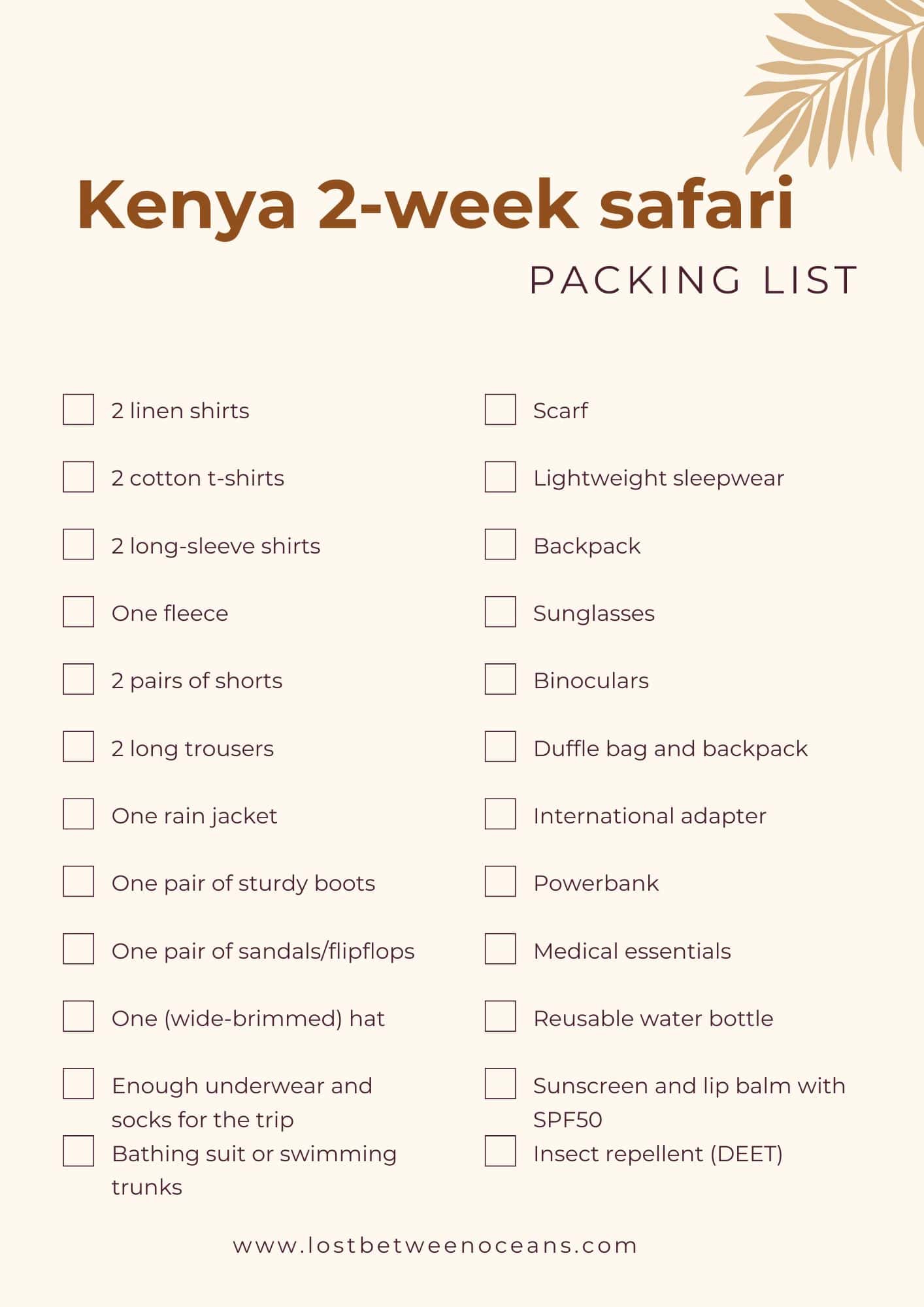
Before diving into each item, we made a quick OVERVIEW OF WHAT TO PACK for a safari in Kenya (for 2 weeks).
Our 2-week Kenya safari packing list
👉 INSIDER TIP: Download this image and print it, so you do not miss a thing while packing for your safari in Kenya.
Recommended SAFARI ESSENTIALS we personally use and trust
Kenya’s climate varies a lot by region and season, so WHEN and WHERE you travel will influence what you should pack.
There are TWO MAIN SEASONS, the DRY and the WET season.
The dry (and hot) season runs from January to March and from June to October, and these months are the BEST for WILDLIFE (like the great migration in June).
The great migration
Even outside the rainy months, temperatures shift within the same day, from 7°C (45°F) in the early morning to 35°C (95°F) by the afternoon. More information in our post about the seasons in Kenya and when to go.
You can be prepared for these fluctuations if you follow the GOLDEN RULES OF KENYA SAFARI CLOTHING.
Ready to plan your dream Kenya safari?
Prices for an itinerary like ours start from $360 per person per day (all-inclusive).
Simply fill in the form below to get FREE QUOTES from our trusted local tour companies that we’ve personally traveled with.
It only takes 60 seconds, and you’ll receive custom itineraries and pricing directly in your inbox within 48 hours.
Free of charge. No pressure. No obligation.
*Our trusted local partners create every itinerary with care. We kindly ask that you submit a request only if you’re considering traveling.
The golden rules of Kenya safari clothing
There are FOUR RULES to have the right clothing for your Kenya safari: layering, neutral colors, linen, and sun protection.
1) Layering
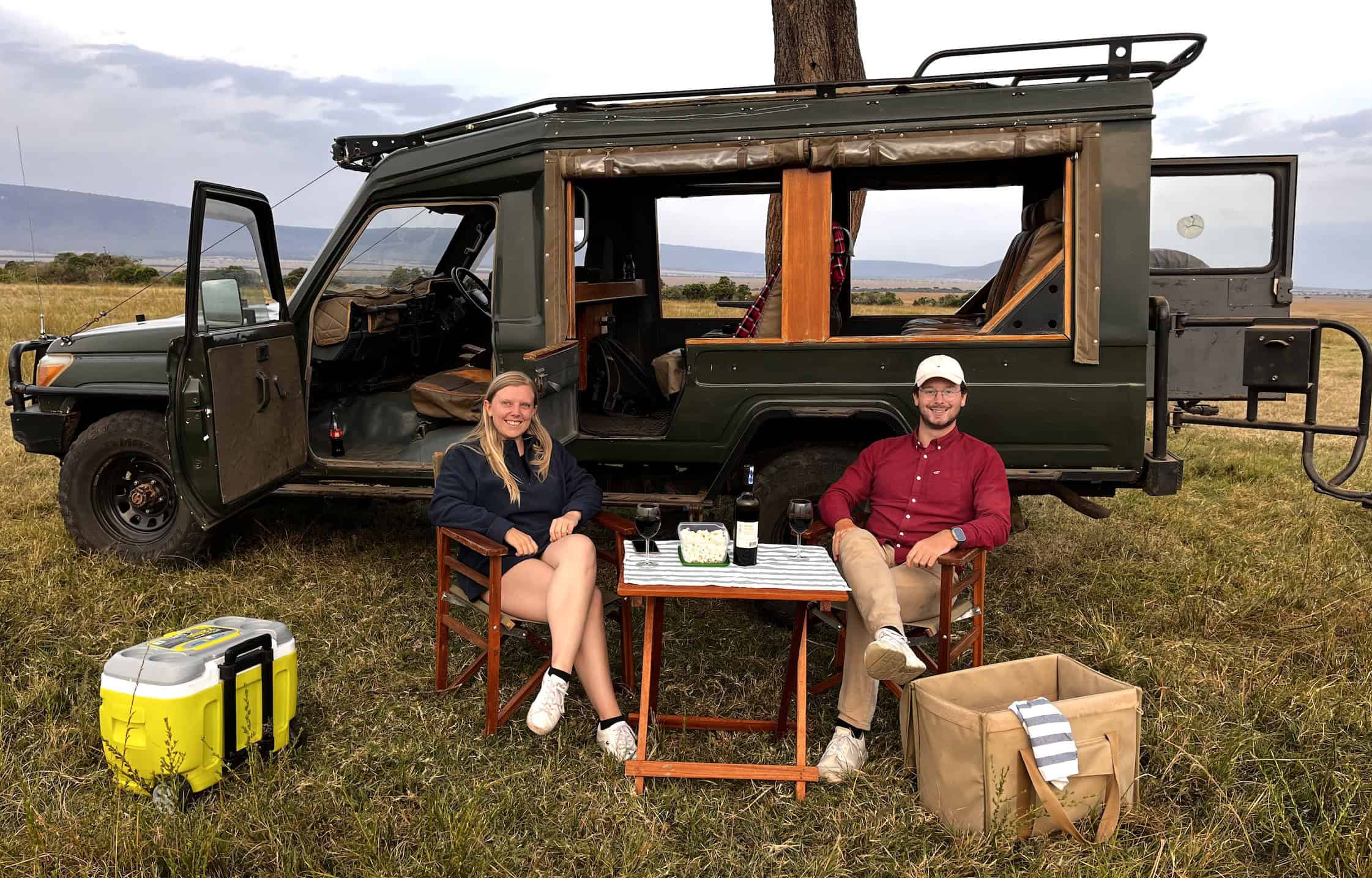
Us enjoying a sundowner in the Maasai Mara
As mentioned, temperatures swing from 7°C (45°F) in the early morning to 35°C (95°F) by the afternoon.
So dress in layers that you can peel off as it warms up.
Start your 5:30 AM game drive in a fleece and/or hoodie over our safari shirt.
👉 INSIDER TIP: We often take a BLANKET with us as part of our packing list for a Kenya safari. WHY? When the vehicle is driving around 40 km/h, with the roof open or the windows down, and the outside temperature is only 7°C (45°F), it gets extremely CHILLY and WINDY. That’s when we throw a blanket over our fleeces for extra warmth and comfort (and even then, it is still quite cold!).
Around 10 am, the sun comes through, and the heat starts to come. The perfect moment we take our fleeces off. This should already give you a good idea of what clothes to wear on safari in Kenya.
2) Neutral colors
Ever seen a movie where the actors are on safari and you wonder why they are always wearing NEUTRAL, earthy tones, like KHAKI, OLIVE, TAN, BROWN, or GRAY?
These colors BLEND INTO THE BUSH.
Bright colors like RED or YELLOW attract attention (or even aggression) from animals, and BLUE and BLACK lure tsetse flies that bite painfully (we can both testify).
WHITE CLOTHES are also NOT GOOD. WHY NOT?
They’ll turn the color of Kenya’s RED DUST in about two hours of driving on the dusty roads.
The best clothing for a Kenya safari keeps a LOW PROFILE.
3) Cotton and linen
Choose LIGHTWEIGHT and BREATHABLE FABRICS for your Kenya safari clothes, like cotton and linen.
In the EQUATORIAL HEAT, natural fabrics keep you cooler and wick sweat.
Long sleeves and pants made of moisture-wicking or ventilated fabric are perfect, as they protect you from the sun and bugs while staying airy.
👉 AVOID HEAVY MATERIALS like jeans as they get sweaty and dry slowly in Kenya’s heat. Jeans are not appropriate clothes for a kenya safari.
4) Sun protection
Kenya’s sun is quite intense the whole year (a lot more compared to Europe and the USA).
Kenya lies on the EQUATOR, and at high altitude, the UV index is often “Very High” 8 to 11 (out of 12).
We recommend covering up with a (wide-brimmed) hat, sunglasses, and a high-SPF sunscreen on exposed skin.
A breathable BUFF is handy too; it protects your neck from the sun, and you can pull it over your nose when the safari jeep kicks up dust (which happens a LOT).
👉 INSIDER TIP: Don’t forget your lip balm with SPF50!
What NOT to pack for your Kenya safari
Now, there are also some items YOU SHOULD NOT put on your packing list for Kenya.
AVOID THESE ITEMS:
CAMOUFLAGE or military print: In Kenya, wearing camouflage is illegal for civilians under the Defence Forces Act, with penalties up to 1 YEAR IN PRISON. No exceptions exist, even for hunting. However, we have seen people and guides wearing it without consequences. But better safe than sorry.
DRONES: Drones are BANNED IN KENYAN NATIONAL PARKS without special permits, and these permits are quite hard to get as well. Drones are often used by poachers to locate animals; hence, there is a complete ban, and the authorities take it very seriously. To fly legally in Kenya, you must follow the KCAA drone permit application process.
HAIRDRYERS: Hairdryers aren’t very useful either, as many safari camps don’t even have power outlets in tents, or the generators can’t handle high-wattage appliances.
HARD-SIDED LUGGAGE: Safari vehicles and small bush planes have very limited luggage space. We prefer to use a soft duffel bag that can squeeze into a Land Cruiser trunk rather than a big Samsonite case. FYI: Many local flights (like from Nairobi to Diani) within Kenya only have a 33 lb (15 kg) baggage limit in soft bags.
PERFUMES: Skip perfume or cologne on safari. Sweet or strong scents LITERALLY ATTRACT BUGS. Just use some deodorant.
SINGLE-USE PLASTICS: Kenya has one of the STRICTEST PLASTIC BAG BANS IN THE WORLD since 2020 (source)! All single-use plastic bags are ILLEGAL to bring in. The flight attendants will announce that passengers should leave any plastic bags on the plane.PLEASE NOTE: The zip-lock bags for carrying your liquids through security are classified as durable plastic bags and are allowed, as these bags are part of the security process. We recommend using REUSABLE PACKING CUBES.
Also note that since 2020, disposable plastic water bottles have been BANNED IN NATIONAL PARKS. Bring a refillable water bottle (and refill at lodges) to stay hydrated sustainably. HOWEVER, we still receive plastic bottles in our safari 4x4s, so we’re not sure whether the government is actually enforcing this.
Now that you know what NOT TO BRING, let’s look at what to take on safari in Kenya for a comfortable trip.
Travel duffle bag
Our number one item on our packing list for Kenya is a duffle bag, this is the BEST TYPE OF BAG TO BRING.
A duffle bag is much EASIER TO HANDLE than a hard-sided Samsonite luggage, which is not made for uneven African terrain.
We recommend the Element Equipment Waterproof Duffel Bag: This waterproof bag has a RUGGED EXTERIOR and a large main compartment, perfect for clothes, shoes, and gear for weekend trips or longer adventures.
The SHOULDER STRAP is comfortable and adjustable, and the WATERPROOF BUILD protects your stuff if you hit rain or wet conditions.
Safari tops
For tops, layering is SUPER IMPORTANT. We recommend mixing long-sleeved and short-sleeved shirts.
Long sleeves keep you warm, while short sleeves are great when it’s hot.
Long-sleeved shirts
MEN:Mixtiq Men’s UPF 50+ Safari Shirt. It’sa quick-dry long-sleeve with ventilation zippers and sun protection. This breathable shirt keeps you cool and covered on game drives.
WOMEN:Jessie Kidden Women’s UV Safari Shirt, a moisture-wicking long-sleeve shirt with roll-up sleeves. It’s light, neutral-colored, and protects your arms from the sun without making you overheat.
We love both, and they also have hundreds of amazing reviews on Amazon.
👉 INSIDER TIP: Many people wear long-sleeved shirts, even when it’s hot, as they help against sunburn and mosquito bites.
Short-sleeved shirts
For afternoons and travel days, pack a couple of short-sleeved shirts.
We recommend neutral t-shirts made of quick-dry fabric or even thin merino wool, as they will keep you cool during the hot afternoons.
👉 INSIDER TIP:AVOID JEANS on your packing list for Kenya as they’re heavy and uncomfortable in the heat.
Fleece and jackets
LIGHT FLEECE JACKET: During the chilly mornings, a fleece will keep you warm. For example, bring a lightweight Columbia FLEECE (Link for men) (Link for women), so you can stay warm without overpacking. They are affordable and warm choices. A fleece was our most-used item on safari.
RAIN JACKETS: If you’re visiting during a rainy season (March–May or Nov), a thin waterproof jacket is a must-have. We recommend these from Columbia for MEN and these for WOMEN.
With their WATERPROOF NYLON SHELL, they are durable enough to withstand a drizzle and downpour. Many lodges provide CHEAP PONCHOS, but they get soaked rapidly, and the quality is very low.
Safari shoes for Kenya
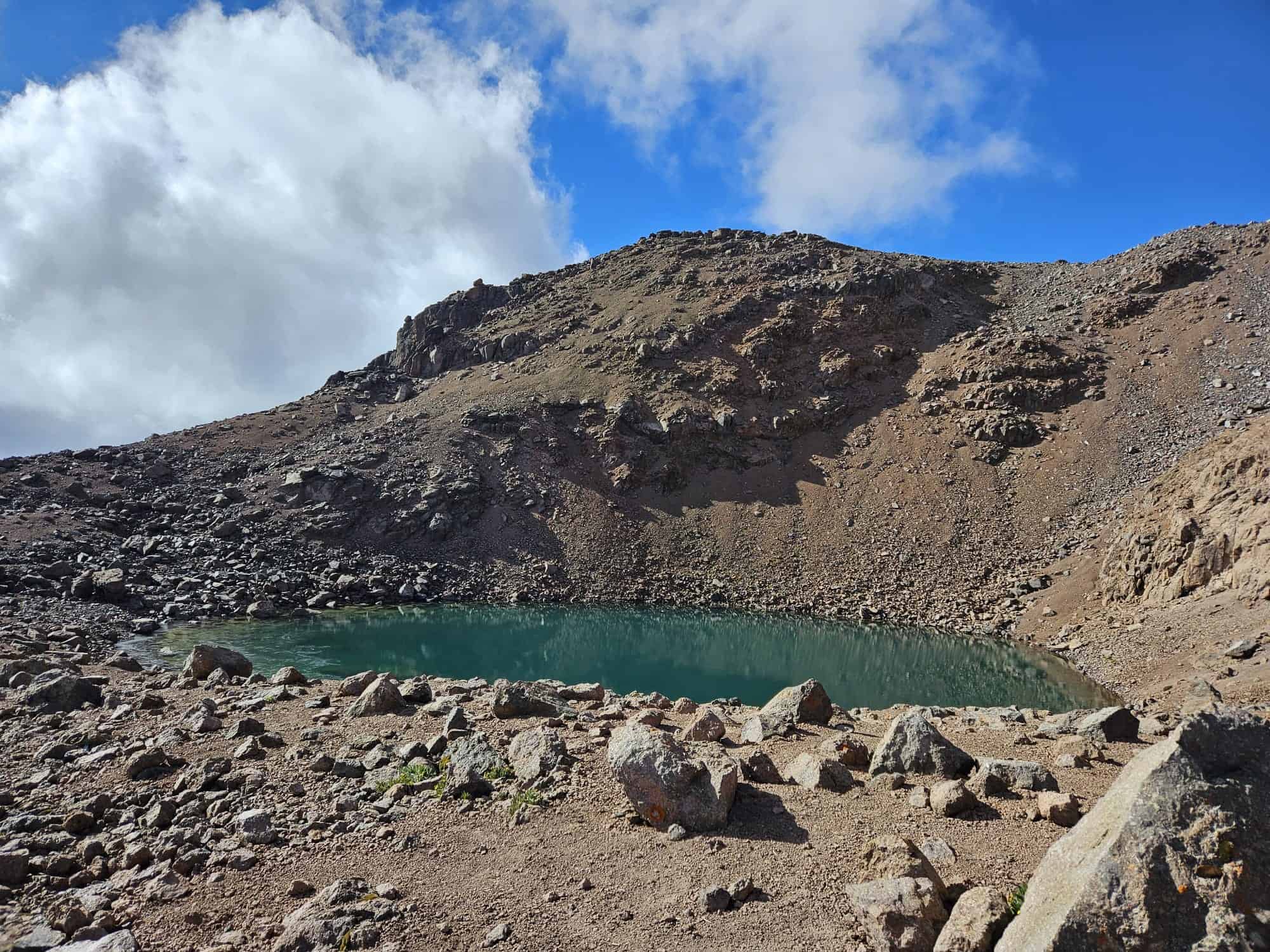
You need sturdy shoes to climb Mount Kenya. This picture was taken nearly at the top (Point Lenana)
When it comes to safari shoes in Kenya, you must prioritize comfort, support, and closed toes.
You’ll be standing up in the vehicle, maybe doing short bush walks, or even hiking Mount Kenya.
Walking shoes: We recommend mid-weight hiking shoes that are well broken-in.
We love these choices, thelink for men, and the link for women. Both have a lightweight, durable midsole for comfort, nice cushioning, and an advanced traction rubber sole for slip-free movement on rough ground.
Why not wear sandals on safari in Kenya?
Not the best idea to hike with sandals…
You cannot wear sandals on safari in Kenya as it’s NOT SAFE. Tsetse flies LOVE FEET IN OPEN SANDALS, and you don’t want mosquito bites around your ankles.
Also, if you step out into the bush, closed shoes protect against SCRATCHES.
Save the flip-flops for the hotel or BEACH after your safari.
HOWEVER, we always wear sandals after our safari in the EVENING when we go for dinner or when we chill at a swimming pool in the lodge. They are a nice change from the shoes.
Underwear & sleepwear
UNDERWEAR: Bring enough for your Kenya safari, especially if you stay for two weeks in Kenya. You can always have them washed by the laundry service, but it’s quite expensive.
BRA: The roads are BUMPY, so if your girls are bigger than a size C, you will need a sports bra. You can use any sports bra, but if you are in the market for super cute and high-quality ones, we recommend the CRZ YOGA Butterluxe Back Sports Bra. It’s super comfortable yet still looks very fashionable.
SLEEPWEAR: It gets chilly at night, so we always wear a pair of lightweight long pajama pants and a T-shirt.
Many camps provide HOT WATER BOTTLES in bed during the cold season!
Headwear & eye protection
We love the African sun, but it’s super harsh.
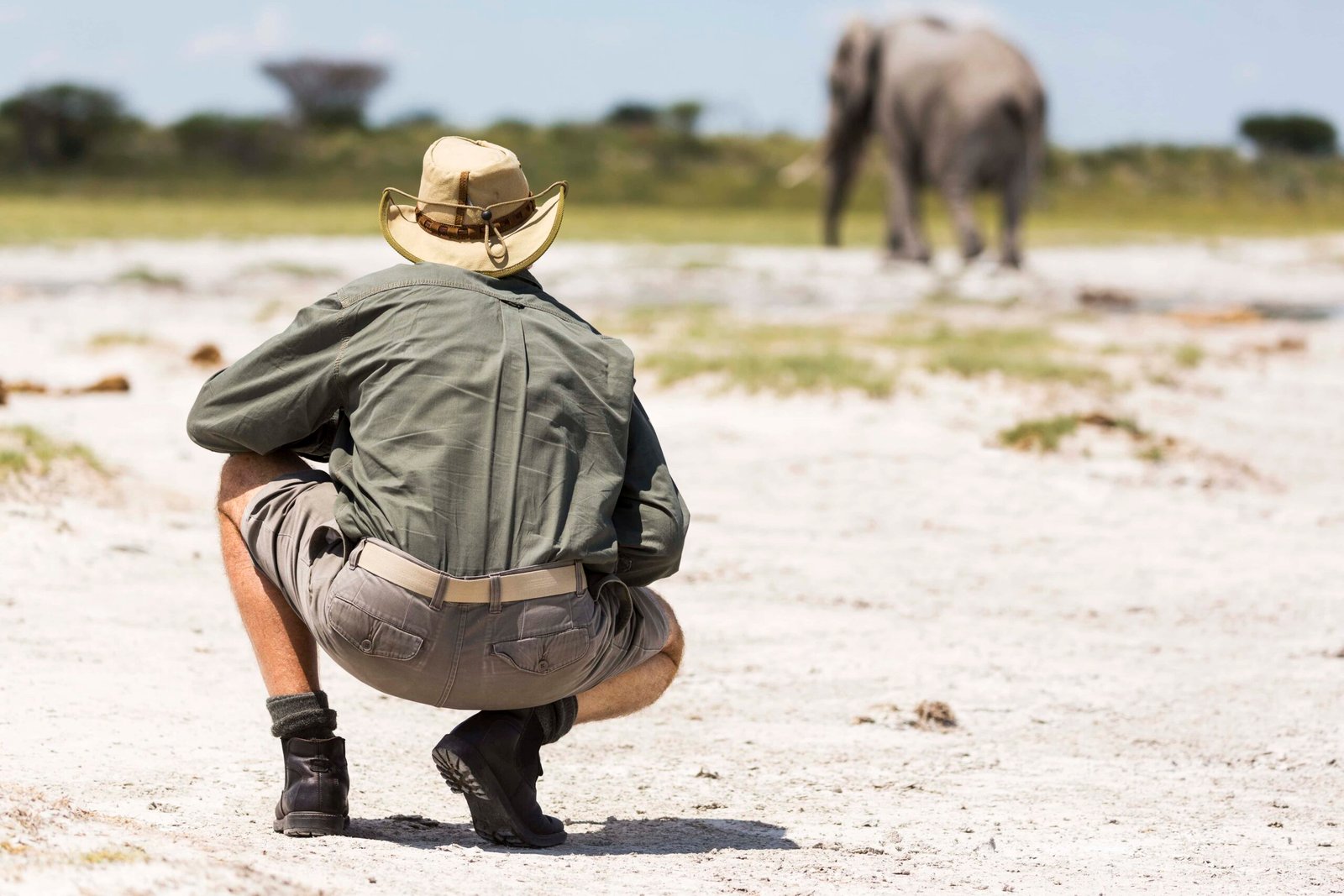
The sun, combined with your open-top Land Cruiser, means you need to take sunglasses and a hat on safari in Kenya.
WIDE-BRIMMED HAT: A wide-brimmed hat with a chin strap is perfect. The strap is important so it doesn’t fly off when the jeep speeds up, or the wind blows (happens more than you think). We like the style of the ZOORON UPF 50+ safari sun hat, which works for men or women.
SUNGLASSES: The sun glare is strong during a Kenya safari. Polarized sunglasses cut the sunlight and let you spot animals without squinting. Bring a pair you wouldn’t be heartbroken to scratch, as the dust can be rough on lenses.
Insect protection
Kenya’s wildlife is amazing, except for all the tiny tsetse flies and mosquitoes that are a real nuisance, as some of them might give you MALARIA, especially in regions where there are many mosquitoes, like Naivasha and Nakuru.
We ALWAYS take MOSQUITO REPELLENTwith us on safari in Kenya. We pack a reliable repellent with at least 30% DEET, like this Insect repellent DEET 100from Amazon.
👉 INSIDER TIP: Make sure to apply it everywhere, as mosquitoes can still bite you on a surface (the size of a dime) where you did not apply the repellent.
After bite & anti-itch: Throw in a small tube of after-bite cream or hydrocortisone. If you do get a few bites, you’ll be glad to have relief from the itch.
Daypack
Every time you go on a Kenyan game drive, you should bring a small backpack with you.
This stays with you in the vehicle and contains your daily essentials:
What to pack in your backpack
Camera, spare battery or power bank, binoculars, sunscreen, bug spray, water bottle, snacks, a rain jacket, tissues/toilet paper (for bush toilet stops!), hand sanitizer, and personal medicine.
We recommend a backpack of 20 to 25 liters, which is big enough for all that, but not too bulky.
We use the 24L Vaude backpack, which is tough, comfortable, and fits camera gear well. We have used it for over 3 years, and it is still working very well!
Ready to plan your dream Kenya safari?
Prices for an itinerary like ours start from $360 per person per day (all-inclusive).
Simply fill in the form below to get FREE QUOTES from our trusted local tour companies that we’ve personally traveled with.
It only takes 60 seconds, and you’ll receive custom itineraries and pricing directly in your inbox within 48 hours.
Free of charge. No pressure. No obligation.
*Our trusted local partners create every itinerary with care. We kindly ask that you submit a request only if you’re considering traveling.
Camera & electronics
Of course, when you go on an African safari, you’re likely to bring some electronics along.
Let’s look at some of the items that WE ALWAYS BRING on our Kenyan safaris.
Camera
If you have a good camera (like the Sony ZVE10 II), definitely bring it with a telephoto lens.
Also pack extra memory cards and an extra battery, just in case!
👉 INSIDER TIP: If you rely on your smartphone for photos, it’s worth investing in a small camera or telephoto attachment. Phone cameras struggle to capture animals far away.
Power bank
You will spend a lot of time in jeeps, whether it is a 5-hour drive to the Maasai Mara or an 8-hour safari day, and you will take plenty of photos, so make sure you bring a power bank to keep your devices charged. We used it at least once a day.
It has three 100W USB-C ports for charging several devices at the same time (even your laptop).
With thousands of good reviews, Anker is the way to go!
Keep it charged at the lodge each night (some lodges turn off generators late at night, so charge during available hours).
Binoculars
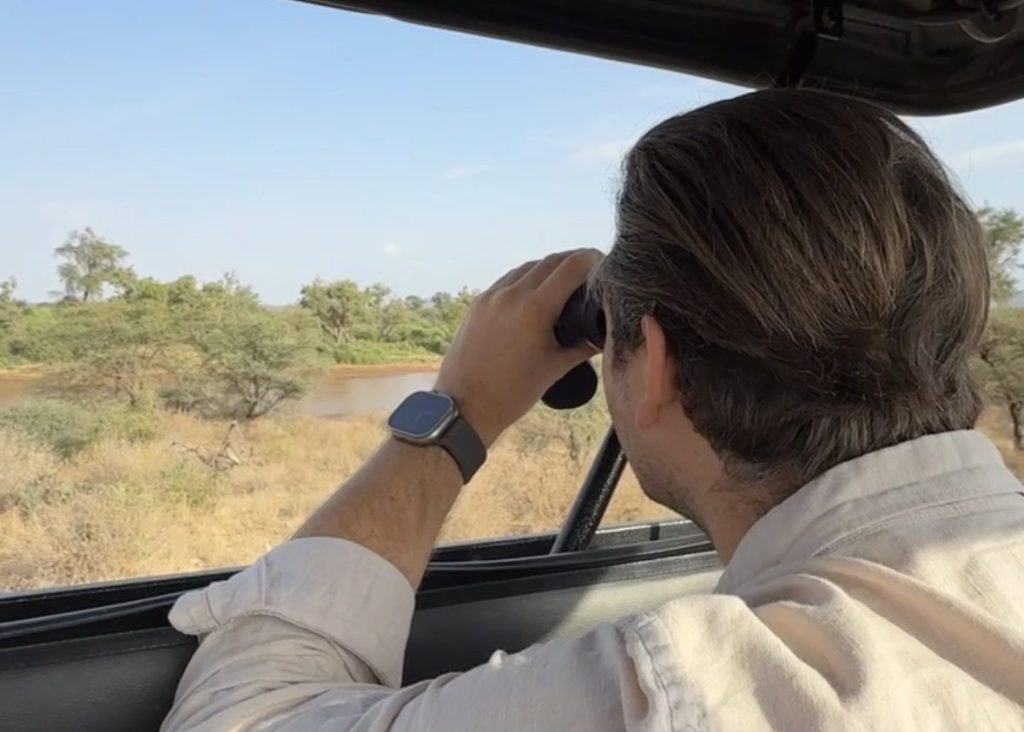
Alexander looking through binoculars in Kenya with a linen shirt.
You’ll definitely need binoculars. In many national parks, you are not allowed to go off the roads, meaning that animals sometimes are 50 meters (150 feet) away.
Without binoculars, you’ll not spot them, and it’s not customary for the guide to have one for you.
A compact pair like these 10×42 Binoculars is NOT EXPENSIVE yet EFFECTIVE.
Headlamp
Many smaller safari camps don’t have proper lighting at night.
A small LED headlamp is useful for finding your way around camp or a tent after dark.
Ready to plan your dream Kenya safari?
Prices for an itinerary like ours start from $360 per person per day (all-inclusive).
Simply fill in the form below to get FREE QUOTES from our trusted local tour companies that we’ve personally traveled with.
It only takes 60 seconds, and you’ll receive custom itineraries and pricing directly in your inbox within 48 hours.
Free of charge. No pressure. No obligation.
*Our trusted local partners create every itinerary with care. We kindly ask that you submit a request only if you’re considering traveling.
International adapter
Kenya’s plugs are Type G (the same as UK/Ireland).
Voltage is 240V, which most modern chargers handle automatically.
See your doctor 4 to 6 weeks before your trip to get a prescription for antimalarial medication (common ones are Malarone (atovaquone-proguanil), doxycycline, or mefloquine).
Prescription medications
Bring all your regular meds (enough for the entire trip, plus a few extra days in case of delays).
First aid kit
Accidents can happen in seconds, for example, brushing past a branch with a sharp edge.
A compact first aid kit with band-aids, antiseptic wipes, gauze, tweezers, etc., is great for treating minor cuts or blisters.
Compression socks
If you have a long international flight, wearing compression socks prevents swollen ankles or deep vein thrombosis (DVT).
Travel insurance
Make sure you have travel insurance that covers medical evacuation, just in case.
Safaris are generally safe, but you can still contract harmful bacteria from contaminated food or be involved in a car accident. Without travel insurance, medical bills in Kenyan hospitals add up quickly, hence we NEVER TRAVEL WITHOUT TRAVEL INSURANCE.
Quick checklist: What to wear on safari in Kenya?
To conclude, a quick checklist on what to take on safari in Kenya.
Dress in layers to handle cold early-morning game drives and hot afternoons
Stick to neutral, earthy colors like khaki, olive, beige, or brown
Choose lightweight, breathable fabrics such as cotton or linen
Pack long sleeves and long pants for sun protection and insects
Bring a warm fleece or jacket for chilly mornings
Wear sturdy, closed shoes for game drives and bush walks
Add a wide-brimmed hat and sunglasses for the strong equatorial sun
Use a soft duffle bag and a small daypack for safari logistics
Now, let’s answer some common FAQs about Kenya.
FAQs about Kenya
Do I have to tip in Kenya?
Yes, tipping is a expected when you’re on safari in Kenya (on restaurants it is not expected). Safari guides, drivers, and camp staff often rely on tips to supplement their modest wages. As a guideline, tip around $10 per guest per day for your safari driver-guide. For lodge/camp staff, there’s usually a communal tip box, which is about $5–$10 per guest per day (or KSh 500–1000) is appropriate, left at the end of your stay.
How to get mobile phone data when visiting from abroad?
Staying connected in Kenya is easy, and the most convenient option is using an eSIM. Instead of buying a local SIM card and dealing with registration or swapping physical cards, an eSIM lets you connect as soon as you land. We recommend Holafly, which offers unlimited data eSIMs for Kenya that you can install before your trip and activate on arrival. There is no need to search for SIM booths at the airport or show your passport, and you keep your regular SIM active for calls or WhatsApp. Coverage is excellent in cities and surprisingly reliable in safari areas, where we often still had 3G or 4G signal. While many lodges offer Wi-Fi, it is usually limited to common areas and can be slow or unreliable, so having your own mobile data is very useful.
Do you need to dress for Kenyan culture?
No, you do not need to dress specifically for Kenyan culture. Western clothing is perfectly acceptable throughout the country, and bikinis are allowed on the beach and at coastal resorts. Kenya does have a large Muslim community, especially along the coast, but this does not affect how tourists are expected to dress unless you visit a mosque, where modest clothing is required. During a Maasai village visit, we did not experience any issues either, and in some cases, you may be offered a traditional sarong to wear, mainly for photos rather than out of necessity.
Do people speak English in Kenya?
Yes, English is an official language of Kenya, and it’s widely spoken, especially in the cities and by those working in tourism. You will have no communication problems at hotels, lodges, airports, etc., since most staff speak fluent English. In fact, many Kenyans are trilingual (speaking English, Swahili, and their ethnic group’s language). On our safari, our guide spoke excellent English and taught us some fun Swahili phrases. Learning a bit of Swahili is appreciated, like “Jambo” (hello) or “Asante sana” (thank you very much).
What is the best time to visit Kenya?
The best time to visit Kenya for a safari is generally during the dry season, June through October. This is when the weather is sunny, wildlife is easier to spot (vegetation is thinner and animals gather at water sources), and it coincides with the Great Migration in the Masai Mara (usually August–September). Specifically, June is fantastic; it’s dry, not too hot, and less crowded than peak summer. Another great period is January to February, Kenya’s short dry season (and summer). The wet seasons (March–May “long rains” and Nov–Dec “short rains”) are less ideal for safaris, some lodges close, roads can become muddy, and wildlife disperses with the abundance of water. That said, if you don’t mind some rain, you’ll enjoy lower prices and lush green landscapes in those months. Birdwatching is actually best in the wet season due to migratory birds arriving. But for most travelers, July–September is the dream window with peak safari action, including large predator sightings and the GREAT MIGRATION.
How long should I stay in Kenya?
For a well-rounded trip, we recommend at least 10 days in Kenya, but you’re safer with 2 weeks or even 3 weeks to see it all! This allows you to experience multiple safari parks and some beach time. However, many first-time visitors do a week or 10-day safari split between 2 to 3 parks, plus a couple of days for arrival, transit, or relaxation.
Which company did you use for your trip to Kenya?
We arranged our safari through a local Kenyan tour operator. We highly recommend joining a small group or private safari with a trusted local outfitter rather than a big overseas tour operators that cost a lot more.
Ready to plan your dream Kenya safari?
Prices for an itinerary like ours start from $360 per person per day (all-inclusive).
Simply fill in the form below to get FREE QUOTES from our trusted local tour companies that we’ve personally traveled with.
It only takes 60 seconds, and you’ll receive custom itineraries and pricing directly in your inbox within 48 hours.
Free of charge. No pressure. No obligation.
*Our trusted local partners create every itinerary with care. We kindly ask that you submit a request only if you’re considering traveling.
Do you know what we love about our life? We get to inspire you to experience once-in-a-lifetime destinations. In fact, the most rewarding part of our journey is learning about new cultures and sharing them with you. We hope you like our blog posts! Love x
[…] drives, dusty roads, intense equatorial sun, and cooler evenings at higher altitudes all influence what travelers should pack for Kenya. Being properly equipped not only enhances comfort while enjoying Kenya’s landscapes but also […]
[…] drives, dusty roads, intense equatorial sun, and cooler evenings at higher altitudes all influence what travelers should pack for Kenya. Being properly equipped not only enhances comfort while enjoying Kenya’s landscapes but also […]
[…] drives, dusty roads, intense equatorial sun, and cooler evenings at higher altitudes all influence what travelers should pack for Kenya. Being properly equipped not only enhances comfort while enjoying Kenya’s landscapes but also […]
[…] drives, dusty roads, intense equatorial sun, and cooler evenings at higher altitudes all influence what travelers should pack for Kenya. Being properly equipped not only enhances comfort while enjoying Kenya’s landscapes but also […]
*Disclosure: Please note that some of the links on our site are affiliate links, and at no additional cost to you, we may earn a commission of you decide to make a purchase after clicking through the link.
We only recommend products and services that we use and love ourselves, so we know you’ll be in good hands. The commission we receive helps us to maintain our website and continue to provide high quality content for our readers.
We share travel guides for couples who want a little luxury, a lot of heart and lifelong stories to tell!
Laura and Alexander Founders of Lost Between Oceans
AS SEEN ON
Reviews
Lost Between Oceans gave me and my husband the perfect tips and destinations to plan our dream honeymoon in French Polynesia, making the experience stress-free.
Ella Grace
United States
I never thought I’d dare to go diving in a cenote and surfing in Mexico. Their travel guides made me more confident and adventurous, overcoming my travel fear of the unknown. Thank you!
Amelia Harper
United Kingdom
I looked up Lost Between Oceans for last-minute tips about my roadtrip in the Amalfi Coast. They showed me the best cliffside villages and hidden beaches. This saved me a lot of time researching everything myself!












Leave a Reply