
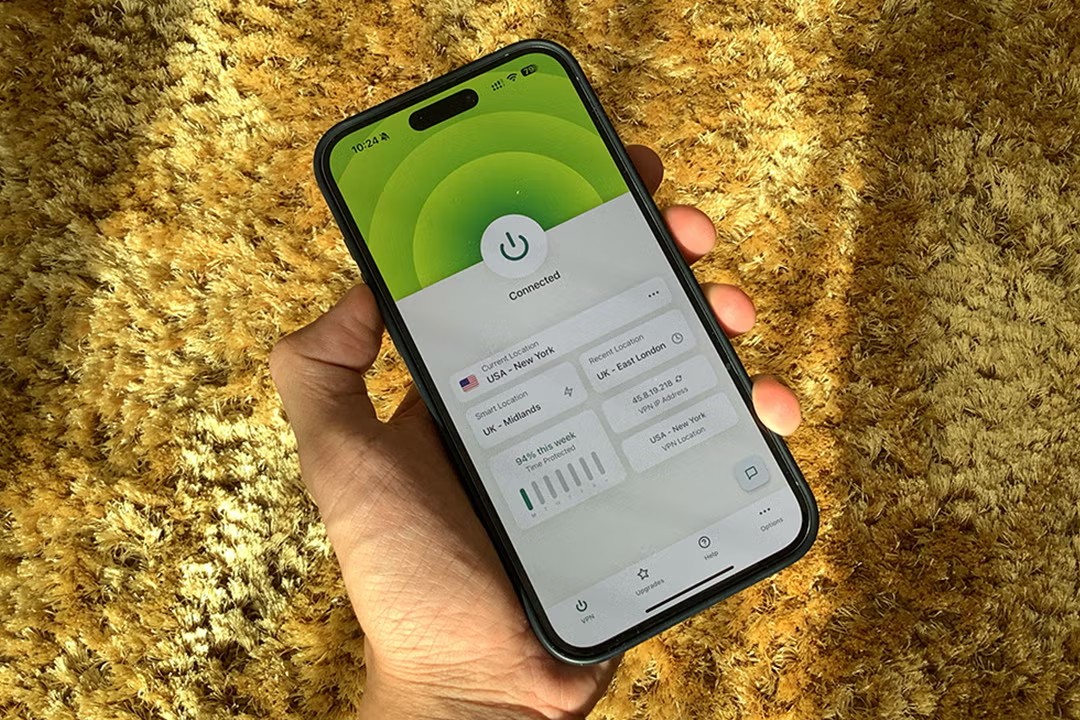
Are you hoping to access all your favourite TV shows whilst travelling and scoring cheaper flight tickets? Or, are you simply looking to stay protected online?
You can do that, and more, with VPN services. We TRIED, TESTED, AND COMPARED the most popular VPNs in the world!
A VPN is an ESSENTIAL TRAVEL TOOL. As travel experts, we’ll guide you through what a VPN is, why you need one, and how to choose the best VPN for travel.
👉 INSIDER TIP: Never connect to public Wi-Fi overseas without a VPN! According to a 2025 McAfee.com study, 25% (!) of travelers have been hacked via public Wi-Fi abroad, and 40% have had personal data compromised on open networks. Yet 78% of people still don’t use a VPN on public hotspots while traveling.
KEY TAKEAWAYS:
🛡️ WHAT IS A VPN? A Virtual Private Network encrypts your internet connection and hides your IP address by routing your traffic through a secure server, so your data and real location stay private online.
🌍 IMPORTANT FOR TRAVEL: A VPN keeps you safe on public Wi-Fi (airports, hotels, cafes), helps you access geo-blocked shows and sites (like Netflix), bypasses restrictions in some countries, and can even help you compare prices for flights or hotels from different locations.
🚀 OUR RECOMMENDATIONS: ExpressVPN is one of our best all-around picks for travelers because it’s fast, super reliable for streaming, and offers great value.
What is a VPN?
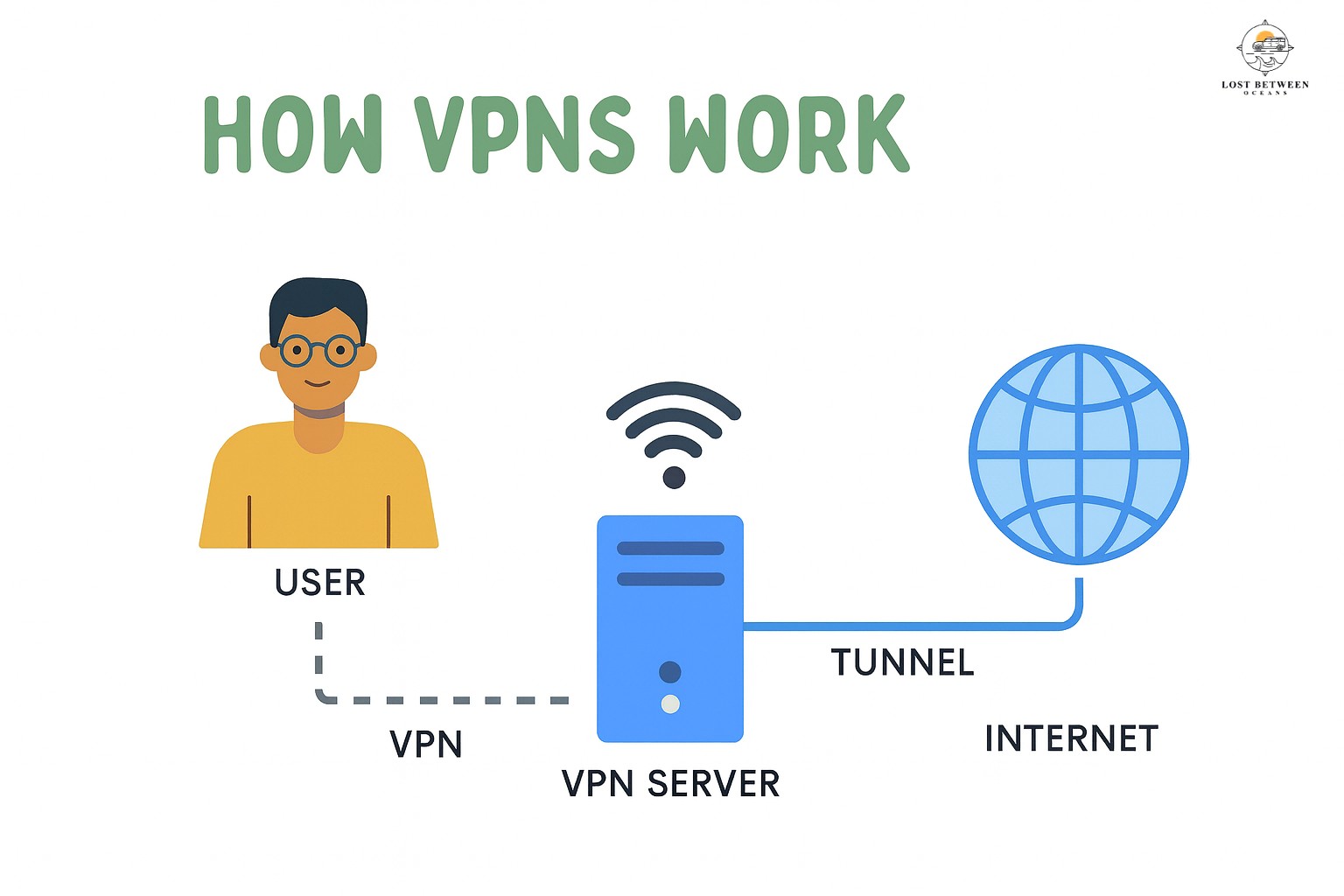
A VPN (Virtual Private Network) is an online security service that encrypts your internet connection and hides your IP address.
In basic terms, a VPN creates a safe “tunnel” between your device and a VPN server in another location.
All your internet traffic travels through this encrypted tunnel, so outsiders DON’T KNOW YOUR TRUE LOCATION (they will only see the location of the VPN server you are using).
Hence, this makes it possible to see Netflix shows from the US that are not available in England, or put your location to Indonesia to score cheaper flight tickets.
Best VPNs for travel in 2026
Not all VPNs are the same. Some are safer, faster, and cheaper than others.
After 3 years of experience and testing dozens of VPN services, we’ve narrowed it down to the best VPNs for travel that excel in SPEED, SECURITY, and USABILITY.
These are VPNs we trust and use on the road ourselves to keep us safe.
VPN comparison table for travel
To help you compare, here’s a quick VPN comparison table highlighting key features of our top picks for travel:
ExpressVPN
- Connection speed: Great (no noticeable delay)
- Server network: 3,000+ servers in 105 countries
- Devices: Up to 14 devices
- Cost: From $3.49 a month
👉 DID YOU KNOW: ExpressVPN has been chosen as the BEST OVERALL VPN by CNET for 2025?

If you want a great VPN that “just works” with minimal hassle, ExpressVPN is a fantastic choice.
It has been one of the top VPNs for years, known for its reliability and simplicity. It’s popular among people who aren’t very tech-savvy.
- User-friendly apps: ExpressVPN’s apps have a clean, intuitive interface that anyone can navigate. A big friendly ON/OFF button and a quick location chooser.
- Fast and consistent speeds: ExpressVPN delivers excellent speeds across its network. While NordVPN edged it out in raw speed tests, in daily use, you likely won’t notice a difference for most tasks. In CNET’s 2025 tests, ExpressVPN showed about 18% speed loss on average, according to cnet.com, which is still a strong result that keeps it in the top tier for performance.
- Top-notch streaming: ExpressVPN is famous for its ability to bypass geo-blocks. It reliably unblocks Netflix, Hulu, HBO Max, BBC iPlayer, Disney+, and many more.
👉 DID YOU KNOW: ExpressVPN is also one of the few VPNs that still works in RESTRICTIVE COUNTRIES? It can do so because of its obfuscated “Stealth” servers, which can evade VPN bans in places like China or the UAE.
These are the ExpressVPN servers for unblocking popular content around the world:
- For American content: New Jersey – 1
- For Australian content: Australia – Melbourne
- For British content: UK – Docklands
- For Canadian content: Canada – Toronto
- For Indian content: India (via Singapore)
- For Japanese content: Japan – Tokyo
- Strong security: Based in the British Virgin Islands, ExpressVPN is outside any intelligence-sharing jurisdiction and has a proven no-logs policy. In fact, in 2017, a high-profile case in Turkey demonstrated that ExpressVPN kept no logs when servers were seized (a good sign for privacy). All servers run on RAM (called TrustedServer tech), meaning data is wiped on every reboot, and there are no remaining logs. ExpressVPN undergoes regular independent audits (by firms like PwC and KPMG) and even publishes portions of the results.
CyberGhost
- Connection speed: Fair (they focus on reliable speed for streaming)
- Server network: 11,500+ servers in 100+ countries (huge global coverage)
- Devices: 7 devices simultaneously (on standard plan)
- Cost: From $2.19 a month (2-year plan + often extra months free)
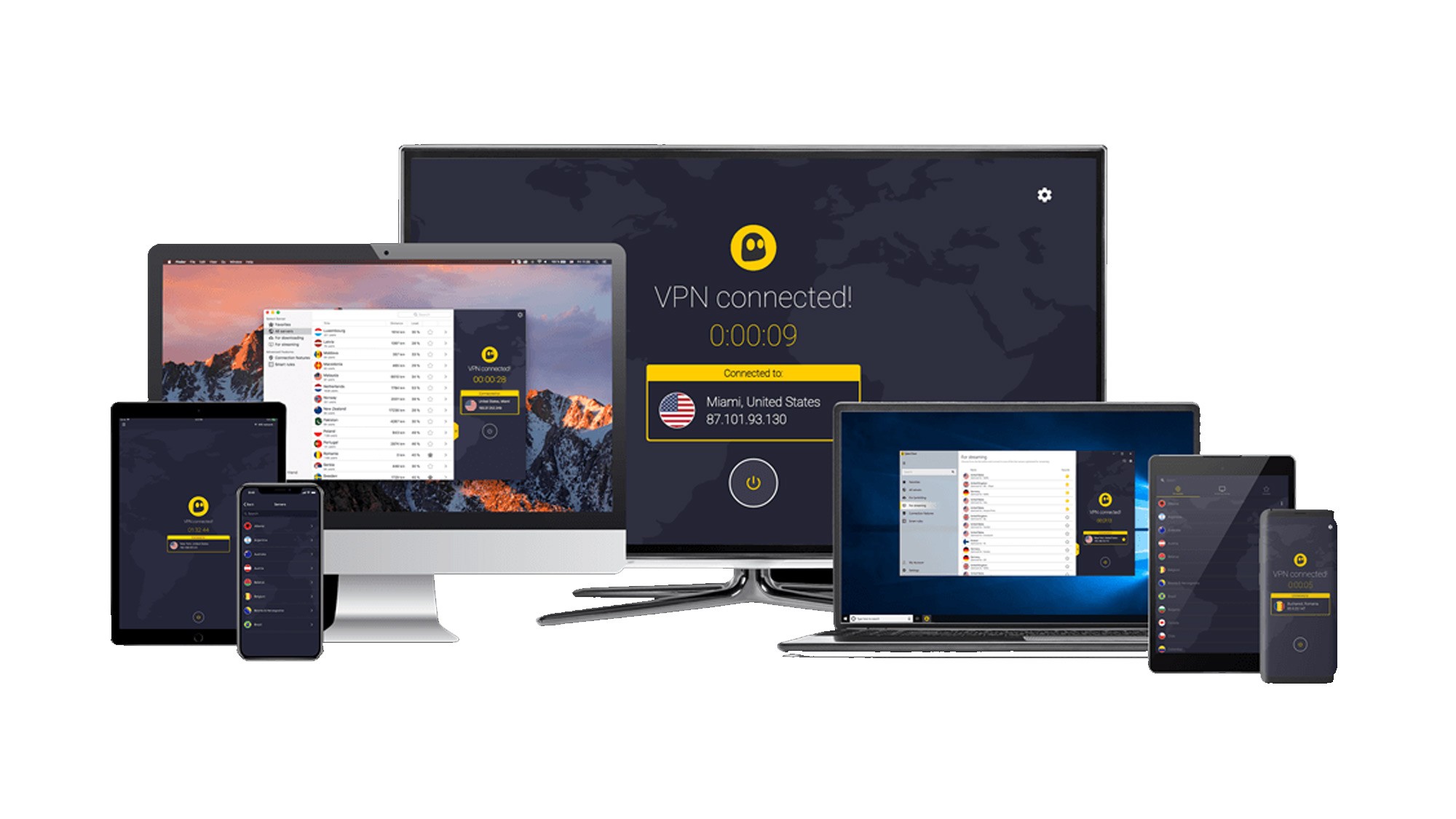
CyberGhost is a popular VPN, especially in Europe, famous for its user-friendly interface and STREAMING features.
It offers one of the largest server networks and is quite affordable on long-term plans.
Private Internet Access
- Connection speed: Okay (but can drop on some servers with an average loss of 49% speed)
- Server network: 35,000+ servers in 91 countries (servers in all 50 U.S. states)
- Devices: Unlimited devices simultaneously (no fixed limit)
- Cost: From $2.03 a month (on 3-year plan). Cheapest option long-term
If you’re a traveler on a tight budget or someone who needs to connect a ton of devices, Private Internet Access (PIA) is a compelling option.
PIA is a veteran VPN provider famous for its affordability and massive server network.
It undercuts most competitors on price while still delivering solid security features:
- Affordable long-term plans: PIA is one of the most budget-friendly VPNs out there. Its 3-year plan often costs around $79 total (which breaks down to just $2.19 per month).
- UNLIMITED devices: While most VPNs cap simultaneous connections at 5-10, PIA recently went unlimited on device connections(like Surfshark). This means you can install and use PIA on EVERY device in your household without worrying about a limit.
- Enormous server network: PIA has over 35,000 servers across 91 countries, by far the largest server count in the industry. While server count isn’t everything, it does help reduce congestion.
- Strong privacy stance: Despite being based in the U.S., PIA has a solid track record of protecting user privacy. Its apps are 100% open-source, meaning anyone can inspect the code for security (transparency is a big plus). PIA also has a very reader-friendly no-logs policy and has proven in court multiple times that it keeps no logs (they’ve had subpoenas where they could provide no data). Furthermore, PIA offers split tunneling on macOS, something few VPNs do (great for Mac users who want only certain apps through the VPN).
- Capable for Streaming & Torrenting: Historically, PIA wasn’t the best for streaming, but it has improved. In our tests, PIA could unblock Netflix, Amazon Prime Video, Disney+, BBC iPlayer, Max, and more.
Now, let’s address the negatives!
PIA’s SPEEDS are decent but not top-tier. In 2025 speed tests, PIA showed 49% average internet speed loss, according to cnet.com, meaning connections slowed to half the base speed.
On fast home internet that might be fine (50% of 100 Mbps is still 50 Mbps), but on already slow networks (e.g., a 10 Mbps hotel Wi-Fi), losing half will be super slow.
Another annoyance: PIA’s IP addresses sometimes trigger frequent CAPTCHA (e.g., Google searches asking “I’m not a robot”), likely because their IP range is widely used. It’s not a deal-breaker, but it is a bit irritating.
For the price, though, PIA offers amazing value.
It’s a great “STARTER VPN” or budget pick for travelers who want solid protection without spending much money.
NordVPN
- Connection speed: Excellent (THE FASTEST!)
- Server network: 7,800+ servers in 171 locations
- Devices: Up to 10 devices simultaneously
- Cost: From $3.39 a month (on a 2-year plan)

NordVPN is another top choice for a travel VPN.
It hits the sweet spot of speed, security, and value. This is why NordVPN stands out for us:
- Fast speeds: NordVPN was the FASTEST VPN in 2025, with only 3% average download speed loss, according to cnet.com. In practice, this means you can stream 4K videos, video-call, or upload travel vlogs with virtually no lag.
- Huge server network: With over 7,800 servers in 118 countries, NordVPN offers the LARGEST GLOBAL COVERAGE of any major VPN.
- Security and privacy: NordVPN has a strict no-logs policy audited by third parties. Its servers run on volatile RAM only, so no data gets stored long-term. For advanced privacy, NordVPN offers specialty servers:
- Double VPN (routes your traffic through two VPN servers for double encryption)
- Onion over VPN (combines VPN with the Tor network for maximum anonymity).
- Automatic ad blocker: A killer feature for travelers is NordVPN’s built-in Threat Protection, which includes an ad blocker and malware shield. It actively blocks ads, trackers, and malicious websites even when the VPN is off.
- Stream anything, anywhere: In our experience, NordVPN is the most reliable VPN for unblocking streaming services. Netflix, Disney+, Amazon Prime Video, etc.
Benefits of VPNs for travel
When you’re traveling, using a VPN is crucial for several reasons:
- Secure your data on public wi-fi: Airports, cafes, and hotel Wi-Fi hotspots are famous hunting grounds for hackers. Without a VPN, attackers can intercept your emails, passwords, and credit card info via man-in-the-middle attacks on these unsecured networks. A VPN’s encryption scrambles your data, making it unreadable to anyone trying to snoop.
- Access geo-blocked content: A VPN lets you virtually “appear” in another country by routing your traffic through a server there. This is a game-changer for streaming and browsing. For example, you can watch your US Netflix or Hulu library while in Europe by connecting to a U.S.-based VPN server, or stream BBC iPlayer by choosing a UK server. VPNs help travelers bypass geographical restrictions on streaming services and websites.
- Avoid internet censorship & restrictions: In some countries, services like WhatsApp, Google, or certain news sites may be blocked or heavily monitored. A VPN can circumvent government-imposed internet restrictions by tunneling your traffic through an overseas server, making it appear as if you’re browsing from elsewhere.
- Privacy: Even if you’re not on public Wi-Fi, a VPN keeps your online activities private. It prevents your ISP (or a random network provider abroad) from logging what you do online. Top VPNs have strict no-logs policies (audited by third parties) and operate in privacy-friendly jurisdictions outside invasive surveillance alliances. This means your browsing history, personal data, and online communications stay confidential.
- Save money on travel bookings: Here’s a sneaky insider trick we as travelers swear by: using a VPN to compare prices. Airlines and booking sites show different prices based on your location or browsing history. By changing your IP address with a VPN, you can try searching flight or hotel rates from different country servers to find potential discounts. For example, the same hotel might appear cheaper when “booking from” a lower-income country.
- Safe remote work on the go: If you’ll be working while traveling (hello, digital nomads!), a VPN is necessary to protect sensitive work data. It encrypts your office emails, cloud drive access, video calls (e.g., Google Meet), and other remote work activities.
As full-time travelers, our VPN is always on. It connects from the moment we connect to a wifi that is unknown, and we have not confirmed its trustworthiness.
Written by Laura and Alexander, an experienced travel couple specializing in adventurous travels all around the world, making a VPN one of their must-have travel hacks.