
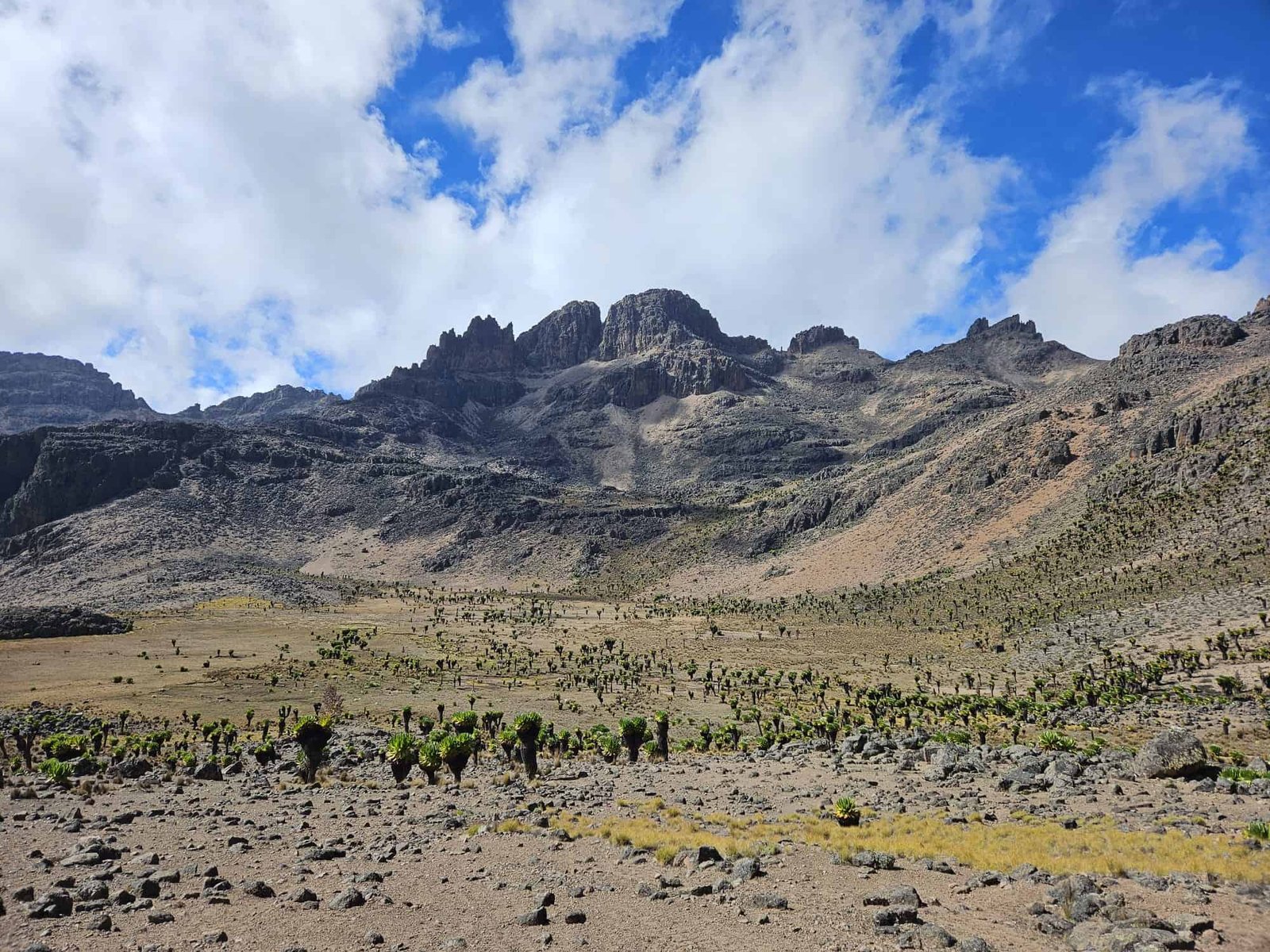
Welcome to the COMPLETE Mount Kenya hiking guide.
How does it feel to be climbing Mount Kenya? How much does it cost, and can I fit it into my 3-week Kenya itinerary?
Take a look below for the answers!
KEY TAKEAWAYS:
📏 Height: Mount Kenya stands at 17,057 ft (5,199 m), making it Africa’s second-highest peak after Kilimanjaro, with Point Lenana as its main summit.
🗺️ Routes: The best combination is Sirimon up and Chogoria down, offering a gradual ascent and amazing views, including Gorges Valley and Lake Michaelson.
💰 Cost & Time: Most Mount Kenya hikes last 4–5 days, with prices between USD 1.000 – 1,400 (€860 – 1,200) depending on route, group size, and accommodation.
*With more than a decade of experience in Kenya, Laura has hiked to the summit of Mount Kenya twice. It’s her knowledge and practical insights you will find in this guide.
Where is Mount Kenya located?
Mount Kenya is located in central Kenya (at the equator), around 120 mi (193 km) northeast of Nairobi and 298 mi (480 km) from the Kenyan coast.
From Nairobi, it’s about 4 hours by car on paved roads.
Looking to book your Mount Kenya trip with a trustworthy local tour operator? Fill in our form below and get their answer within 48 hours! This includes your itinerary, cost, and so much more! No obligation.
Simply fill in the form below to get FREE QUOTES from trusted Kenyan local tour companies that we’ve personally traveled with.
It only takes 60 seconds, and you’ll receive custom itineraries and pricing directly in your inbox within 48 hours.
Free of charge. No pressure. No obligation.
*Our trusted local partners create every itinerary with care. We kindly ask that you submit a request only if you’re considering traveling.
How high is Mount Kenya?
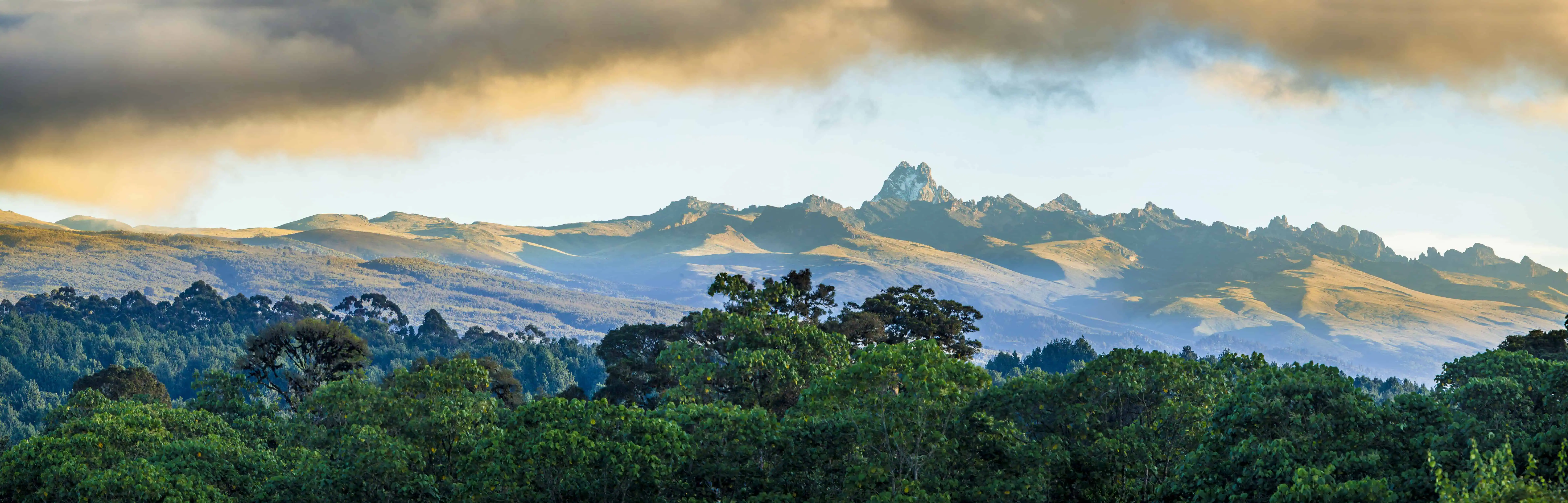
Mount Kenya is the SECOND-HIGHEST mountain in Africa, surpassed by only Mount Kilimanjaro.
👉 IMPORTANT TO KNOW: There are 3 peaks of Mount Kenya!
The 3 Mount Kenya peaks are:
- Batian (17,057 ft / 5,199 m)
- Nelion (17,021 ft / 5,188 m)
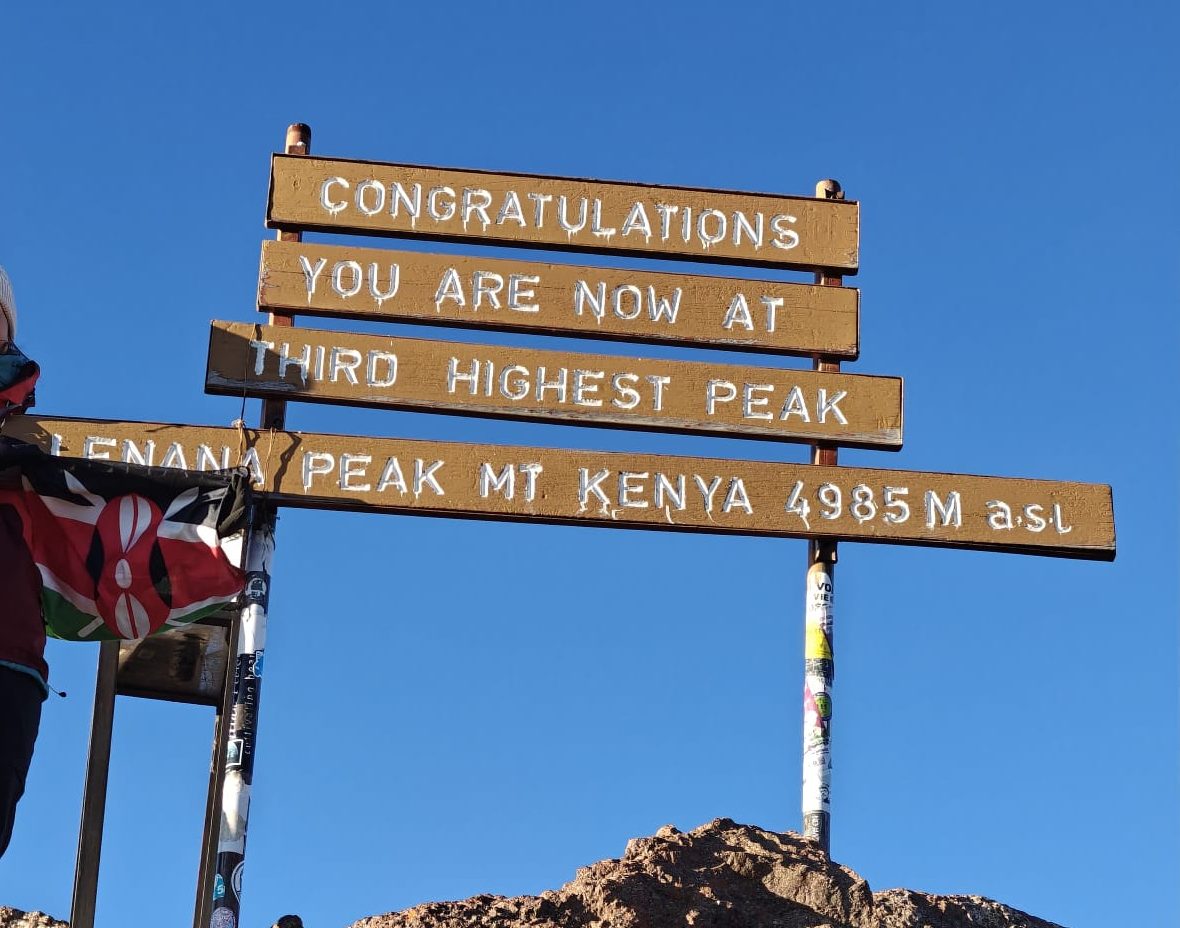
- Point Lenana (16,355 ft / 4,985 m)

Mount Kenya’s TALLEST summit is Batian and reaches 17,057 ft (5,199 m), according to UNESCO. This is also the official Mount Kenya summit.
The two highest peaks are the remains of the VOLCANIC MAGMA that solidified in the main vent. Only the Summit Circuit route is a circular path that goes around them.
👉 KEEP IN MIND: The two highest Mount Kenya peaks (Batian and Nelion) are highly technical and are rarely climbed! YOU WILL BE CLIMBING POINT LENANA, which is the most popular trekking peak.
What is Mount Kenya?
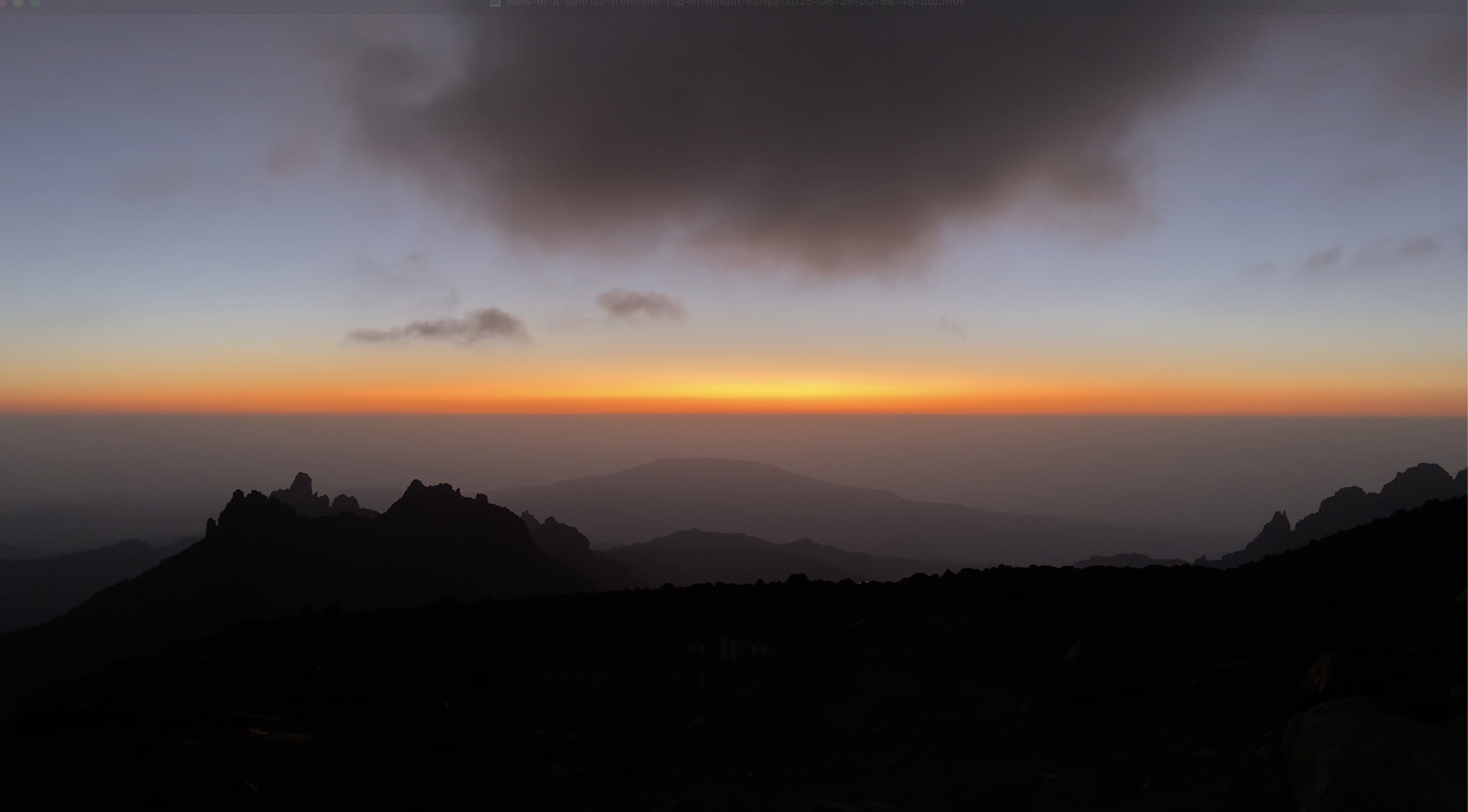
Mount Kenya is an extinct stratovolcano, believed to have been active between about 3.1 and 2.6 million years ago.
According to UNESCO, scientists estimate it may once have been as high as 6,500 m (21,325 ft).
Over millennia of EROSION AND GLACIATION, the mountain’s original peak shape was carved into the ridges and valleys you see today.
As you climb Mount Kenya, you’ll see 3 different ecological zones:
- At the lowest slopes, the land is forested and fertile, with agriculture and indigenous forests.
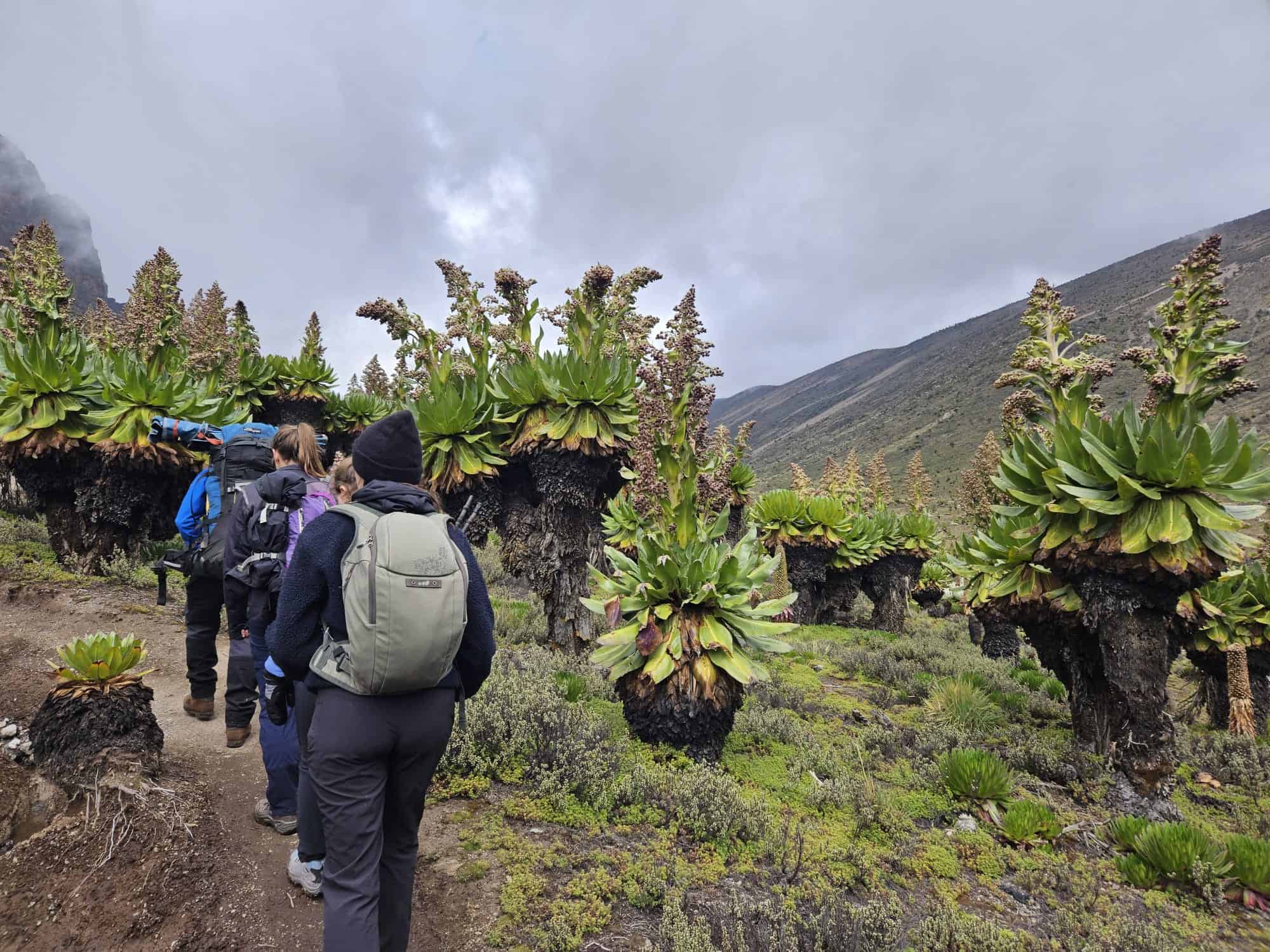
- Above that, montane and bamboo forests give way to moorland zones of giant lobelia and senecio species.
- Higher still, alpine and nival zones appear, which are characterized by rocks, lichens, sparse vegetation, and are used to have permanent snow in some places.
| Recommended SAFARI ESSENTIALS we personally use and trust | ||
| 🧳 Travel duffle bag | 👕 Long shirt: Men | Women | 👕 Short shirt: Men | Women |
| 👖 Pants: Men | Women | 🧥 Light fleece: Men | Women | 🌧️ Rain jacket: Men | Women |
| 🥾 Shoes: Men | Women | 🧢 Safari sun hat | 🕶️ Sunglasses |
| 🔋 Power bank | 🔭 Binoculars | 🔌 Universal plug adapter |
| 🦟 Insect repellent (DEET) | 💧 Electrolyte tablets | 🎒 Daypack |
More information in our complete post about Kenya safari clothing.
Park fees for Mount Kenya National Park
Now, let’s talk about the national park and the necessary logistics before we cover your multi-day Mount Kenya hike!
Park entrance fees and multi‑day packages
It’s important to know that the Kenya Wildlife Service (KWS) regulates access to all national parks, including Mount Kenya National Park.
Mount Kenya National Park entry fees (2024–2025):
| Category | Entry fee | Notes |
|---|---|---|
| Day-trip (Non-Resident Adult) | USD 80 (EUR 70) | Valid for 1 calendar day; includes access to Mount Kenya National Park trails and viewpoints. |
| Day-trip (Child/Student Non-Resident) | USD 35 (EUR 30) | Reduced rate for children under 18 and international students with valid ID. |
| 3-Day Multi-Day Pass | USD 156 (EUR 132) | Ideal for short climbs via the Naro Moru route. |
| 4-Day Multi-Day Pass | USD 208 (EUR 176) | Recommended for Sirimon route ascents with acclimatization day. |
| 5-Day Multi-Day Pass | USD 260 (EUR 220) | Covers Sirimon-Chogoria hike, the BEST combination. |
| 6-Day Multi-Day Pass | USD 312 (EUR 264) | Best for extended climbs or Peak Circuit Path trekkers. |
*Mount Kenya National Park only has one entry fee all year round (no high or low season), according to the Kenya Wildlife Service. More information in our Kenya National Park entry fee blog post!
👉 KEEP IN MIND: If you book your multi-day hike to Mount Kenya via a local tour operator, your national park fees are included, and the tour operator will take care of this for you!
Camping is available with these entrances; the non‑resident adult camping fee is included in the package or USD 35 (EUR 30) per night when booked separately.
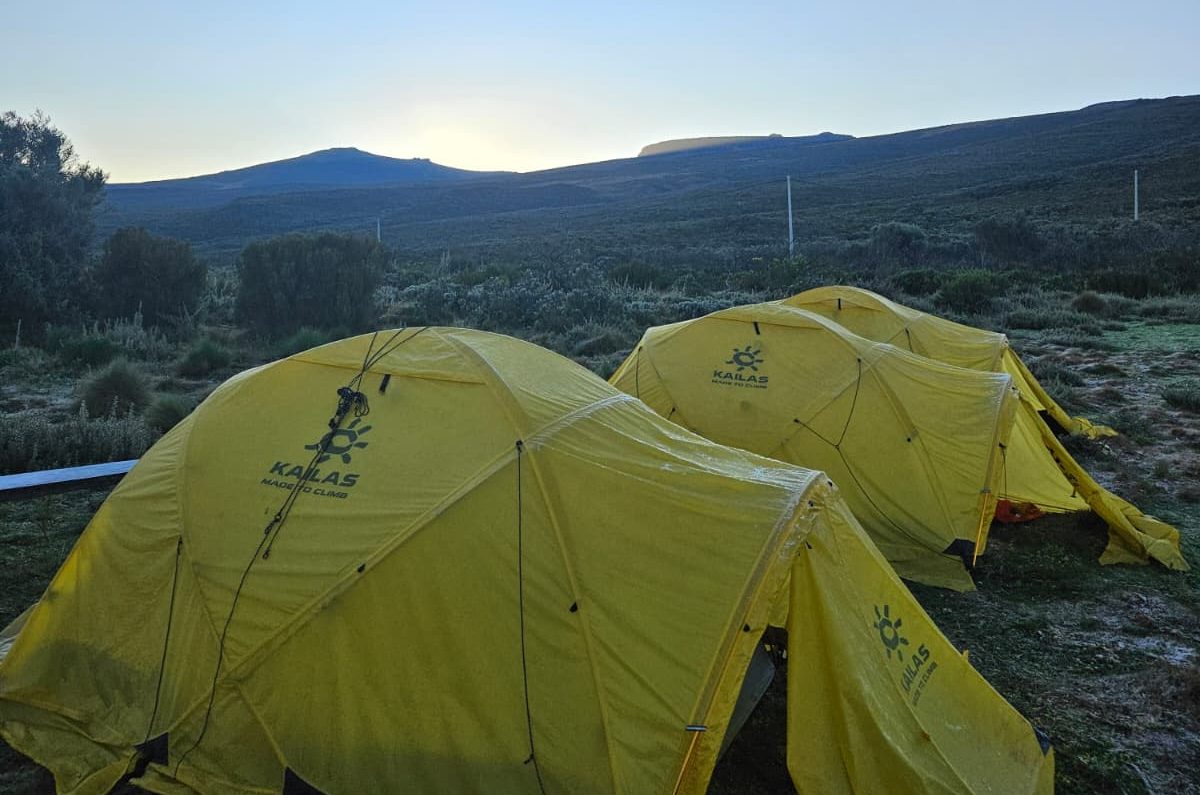
Kenyan citizens and residents pay heavily reduced rates.
Looking to book your Mount Kenya trip with a trustworthy local tour operator? Fill in our form below and get their answer within 48 hours! This includes your itinerary, cost, and so much more! No obligation.
Simply fill in the form below to get FREE QUOTES from trusted Kenyan local tour companies that we’ve personally traveled with.
It only takes 60 seconds, and you’ll receive custom itineraries and pricing directly in your inbox within 48 hours.
Free of charge. No pressure. No obligation.
*Our trusted local partners create every itinerary with care. We kindly ask that you submit a request only if you’re considering traveling.
How much does it cost to climb Mount Kenya?
The Mount Kenya hike price depends on the route length, accommodation, and whether you choose group or private logistics.
A typical five‑day trek via the popular Chogoria Sirimon or Naro Moru routes costs around USD 1,000 – 1,400 (€860 – 1,200) per person (including transport from and to Nairobi and food).
What is INCLUDED in my Mount Kenya hiking cost?
- Park fees
- rescue insurance
- Transport from and to Nairobi
- Guide
- Porter wages
- Camping gear (tent, trekking poles…)
- Accommodation (tents)
- Meals (breakfast, lunch, and dinner)
All in all, this is an all-inclusive price except for the TIPS for your porter and guide (around 10 % of the trek cost).
👉 KEEP IN MIND: For 1,100 USD, you will get a budget camping option (sleeping in a tent). If you want to stay at basic cabin lodges on the trail, such as Shipton’s Camp, with its dormitory-style wooden houses. Then you should account for around 1,400 USD.
Cost of a PRIVATE Mount Kenya climb
Below you can find an overview of the average current prices for a PRIVATE option to climb Mount Kenya according to the different routes and different lengths of the trek.
| Private trek option | Duration | 2 Pax (USD per person) |
|---|---|---|
| Sirimon up – Chogoria down | 4 Days | 800 |
| Chogoria up – Sirimon down | 4 Days | 800 |
| Sirimon up – Chogoria down | 5 Days | 950 |
| Chogoria up – Sirimon down | 5 Days | 950 |
| Sirimon up – Chogoria down | 6 Days | 1200 |
| Chogoria up – Sirimon down | 6 Days | 1200 |
Cost of a GROUP Mount Kenya climb
Below you can find an overview of the average current prices for a GROUP option to climb Mount Kenya according to the different routes and different lengths of the trek.
| Group trek option | Duration | Type (USD) pp |
|---|---|---|
| Chogoria up – Sirimon down | 5 Days | 900 |
| Sirimon up – Chogoria down | 5 Days | 1,000 |
Mount Kenya hiking routes
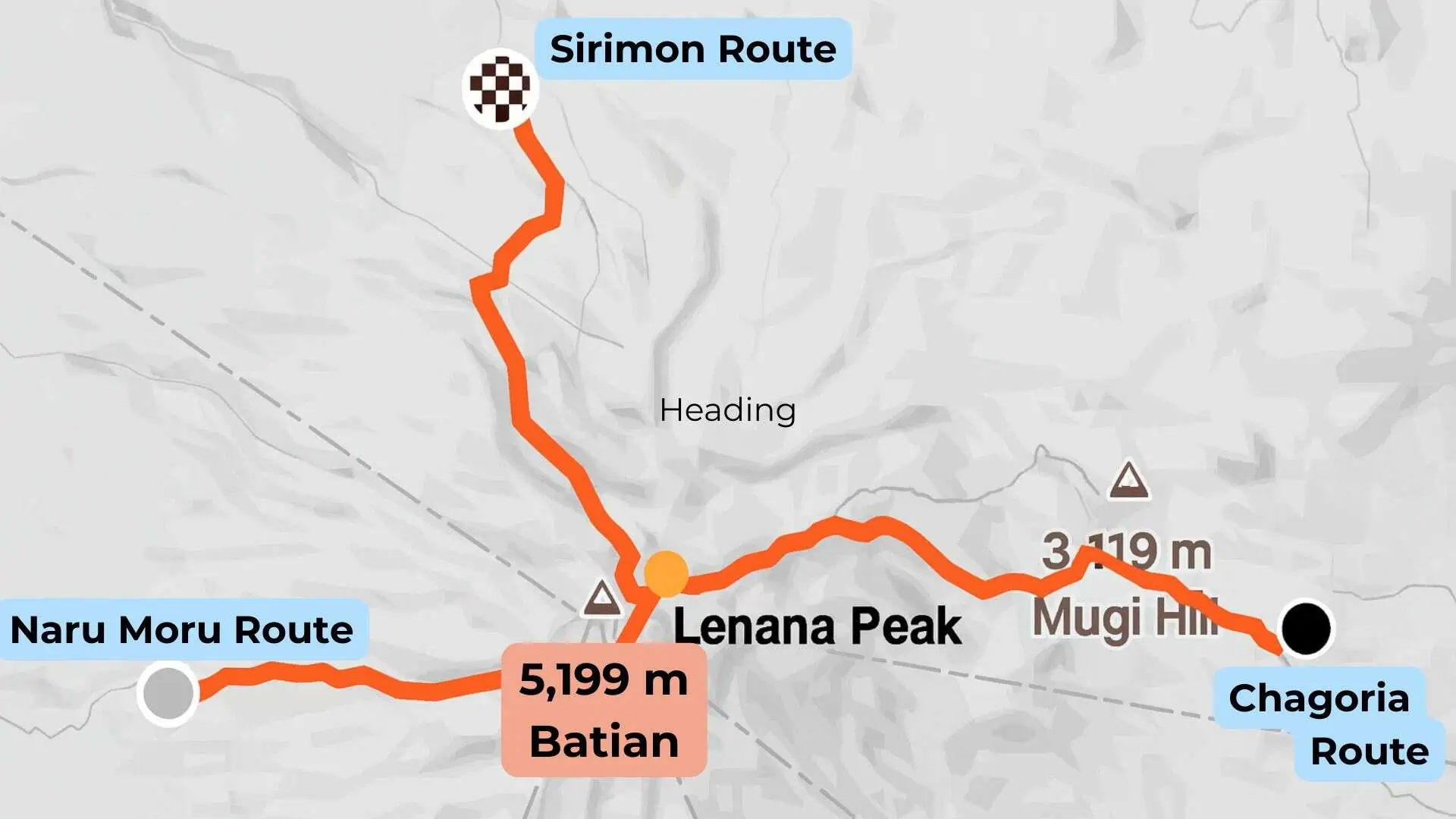
It’s important to know that there are THREE PRIMARY MOUNT KENYA CLIMBING ROUTES that lead to Point Lenana: Naro Moru route, Chogoria route, and the Sirimon route.
Take a look at our comparison table below for more information.
| Route | Duration & Distance | Highlights |
|---|---|---|
| Naro Moru Route | 3 – 4 days 25 mi (40 km) round trip |
Fastest ascent, forest trails, Vertical Bog, Mackinder’s Camp, Austrian Hut |
| Sirimon Route | 4 – 5 days 31–36 mi (50–58 km) |
Gradual ascent, Mackinder Valley, Shipton’s Camp, Hausberg Col |
| Chogoria Route | 5 days 40 mi (64 km) including descent |
Most scenic route, Gorges Valley, Lake Ellis, Lake Michaelson, Hall Tarns |
Now, let’s look at them in detail!
Sirimon route
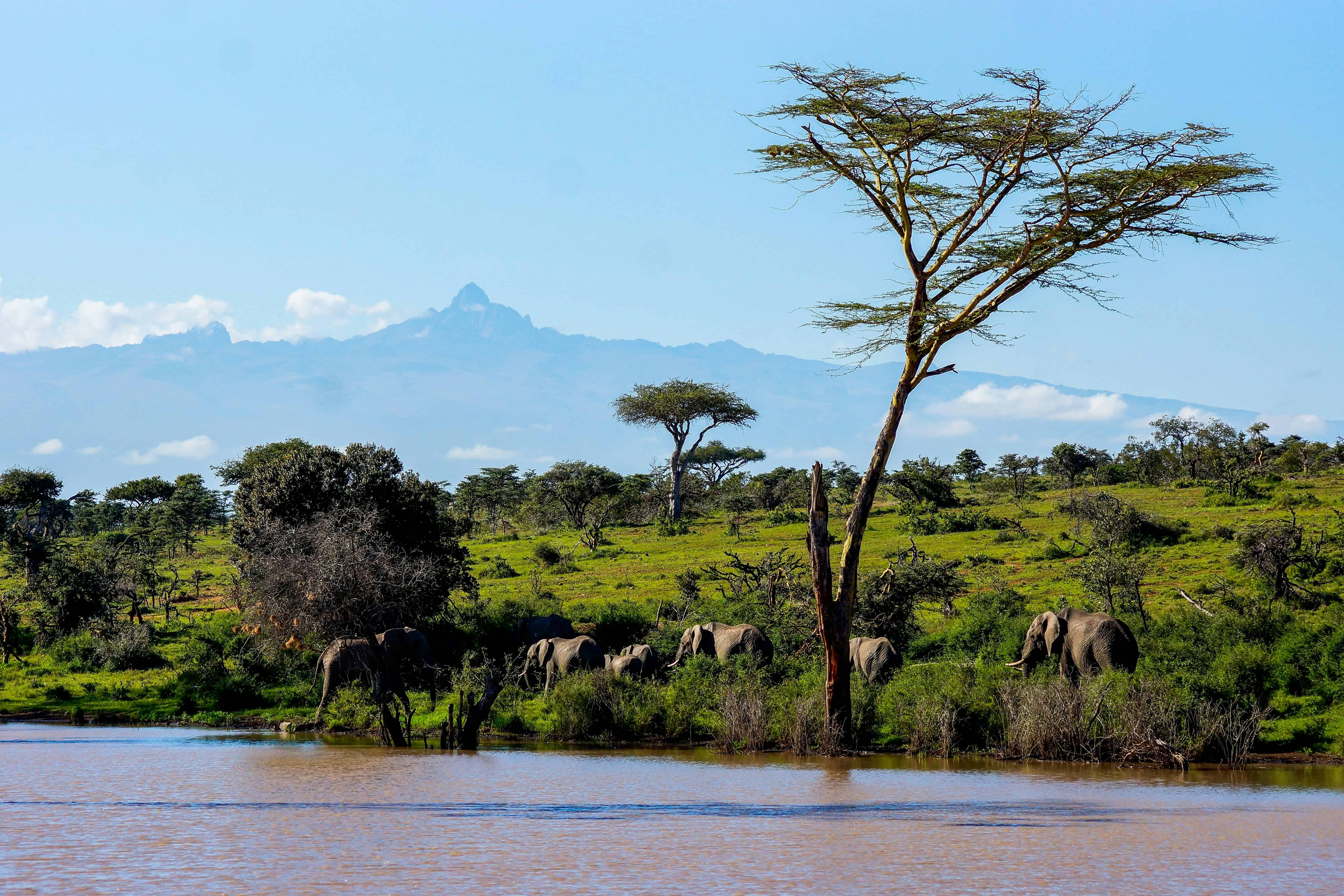
The Sirimon route is the EASIEST approach to Point Lenana.
It is famous for slow altitude gain and wide open valleys.
Most teams finish in 4 days, or 5 days if you add an acclimatization day at Shipton’s.
The total distance is about 31 mi (50 km) if you ascend and descend on Sirimon, or about 36 mi (58 km) if you descend on Naro Moru for a hike.
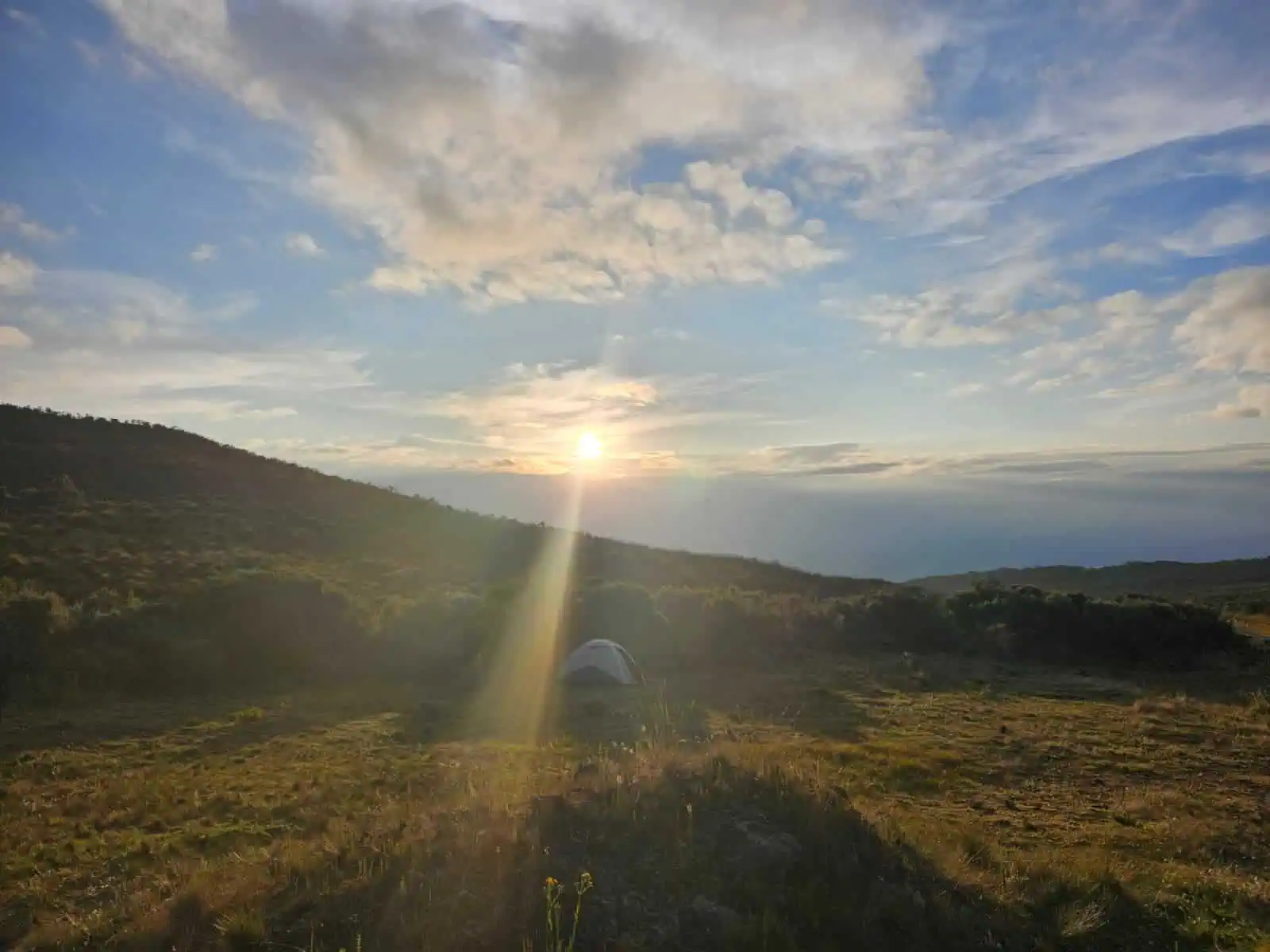
DAY ONE
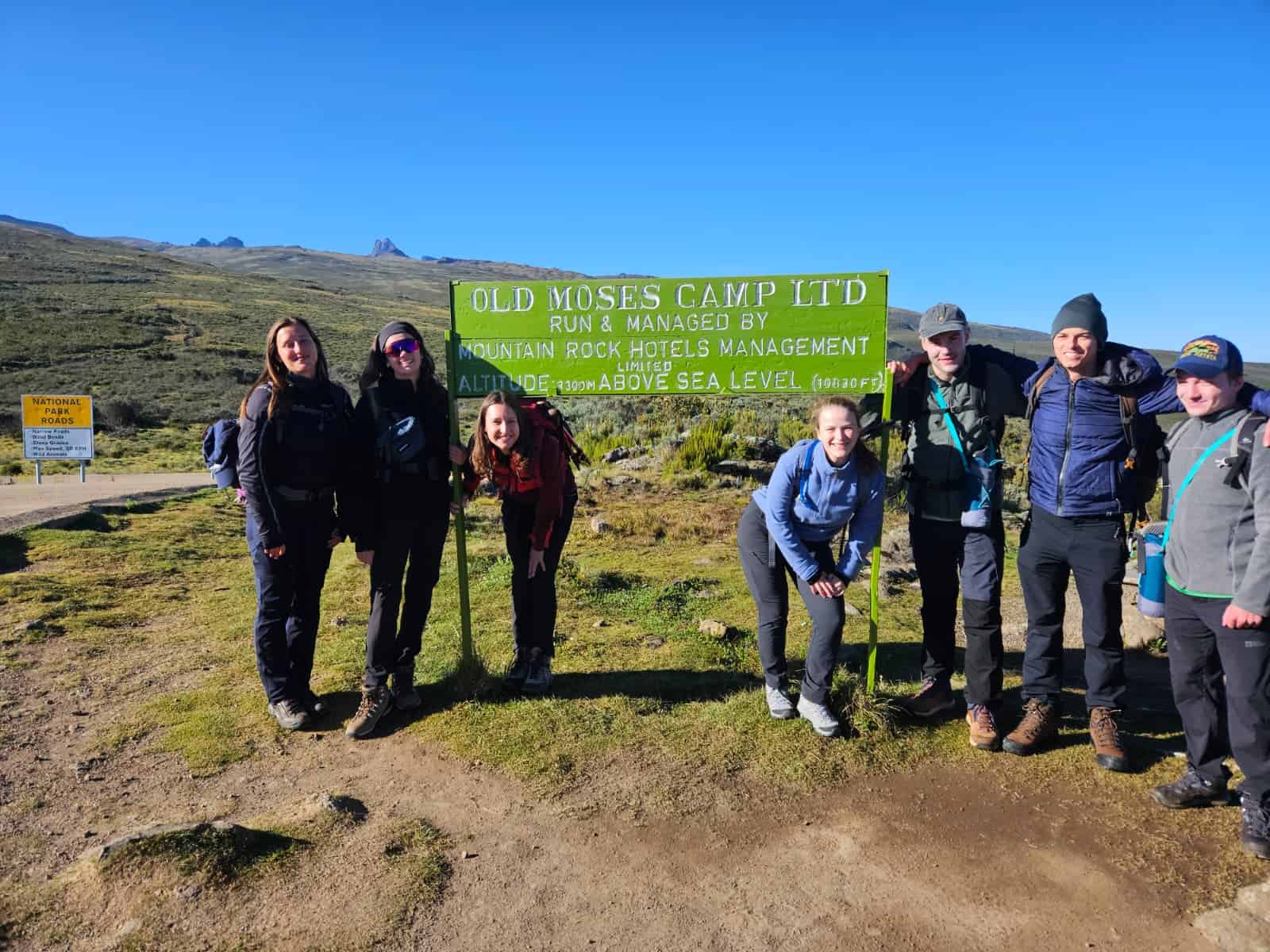
Starting at the Sirimon Park Gate, you’ll make your way all the way up to the Old Moses Hut (also called Judmaier Camp) at 10,660 ft (3,250 m).
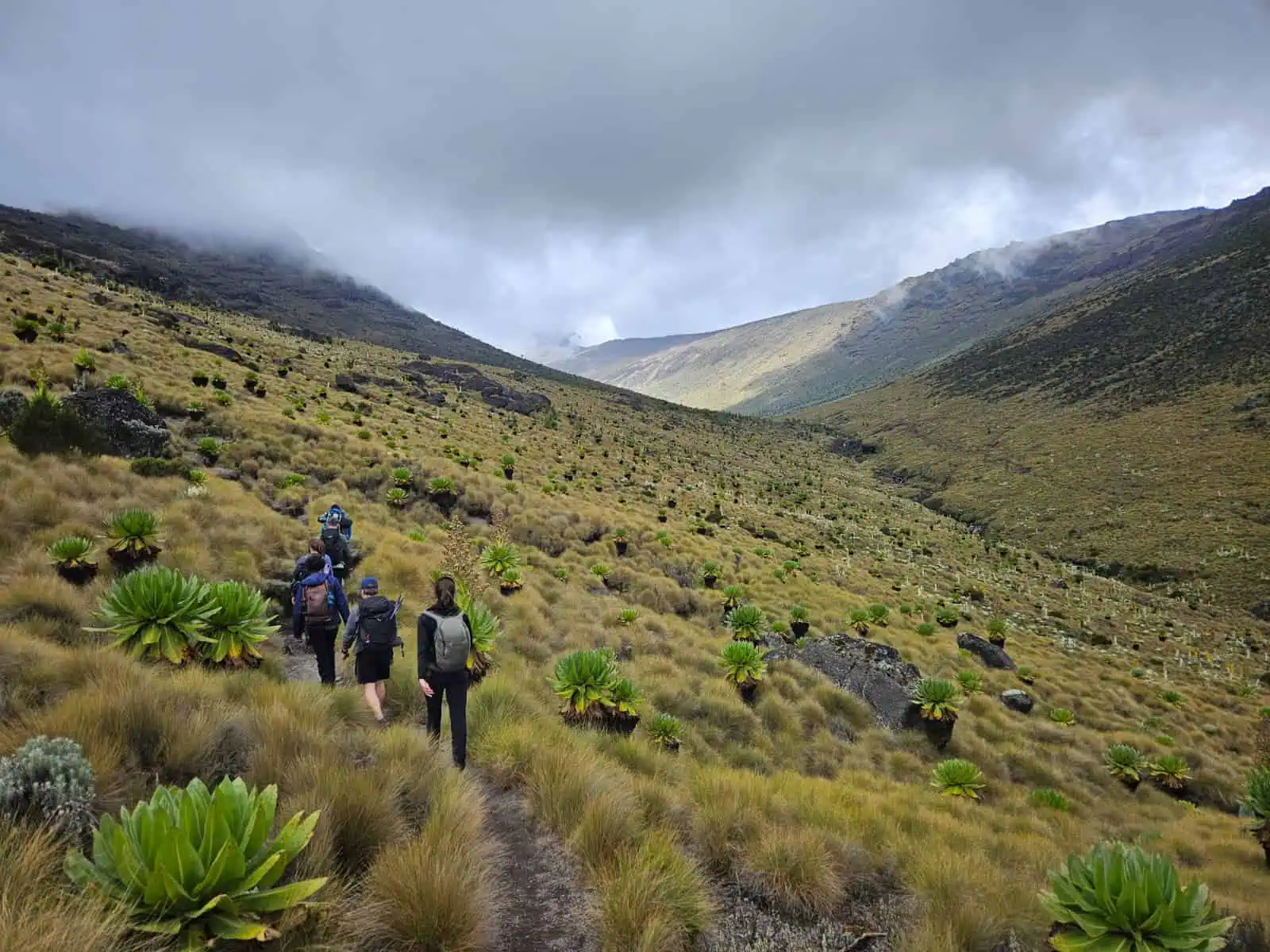
This is a four-hour trek up a fairly steep vehicle track through the forest where you might see elephants and buffalos and maybe even bushbucks and baboons.
WHAT CAN YOU EXPECT? The trail climbs from montane forest into heather moorland, so you skip the bamboo zone that the other routes cross.
Summary:
- Distance: 5.6 mi (9 km)
- Time on trail: 3 to 4 HOURS
- Elevation gain: about 1,970 ft (600 m)
- Difficulty: easy to moderate
DAY TWO
On day 2, you’ll hike from the Old Moses Hut to Shipton’s Camp at 13,780 ft (4,200 m) through the Mackinder Valley.
After breakfast, you leave at around 7.30. It’s always an early start, as the weather worsens throughout the day with clouds coming in at around lunchtime.
The hike towards Shipton’s Camp is gradual. There is only one steeper part near the camp.
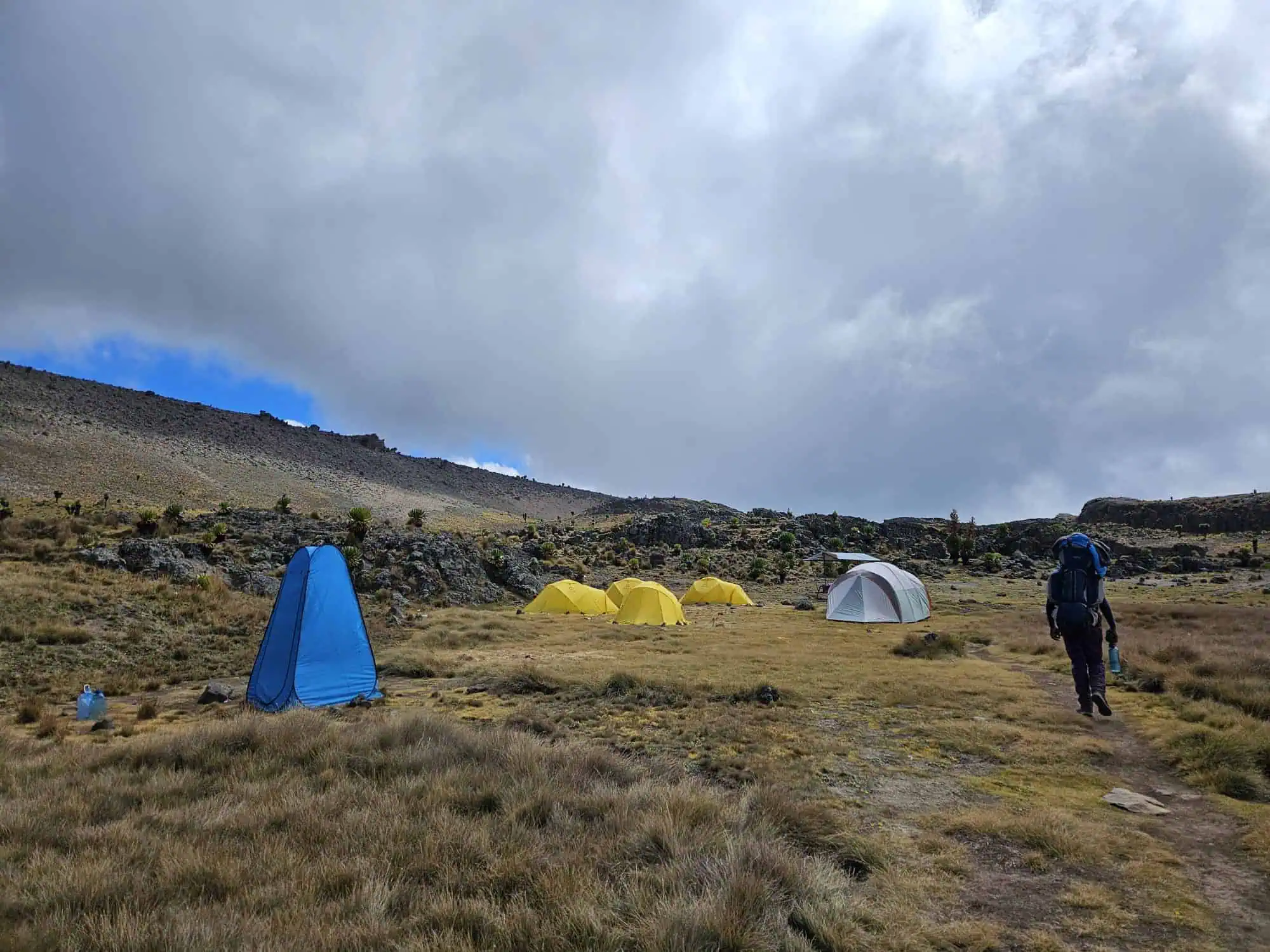
You’ll arrive by mid-afternoon.
Summary:
- Distance: 8.7 mi (14 km)
- Time on trail: 6 to 7 HOURS
- Elevation gain: about 3,120 ft (950 m)
- Difficulty: moderate

DAY THREE
Shipton’s Camp to Hausberg Col and return to Shipton’s.
This short climb and return improve the acclimatization before the summit night.
Sometimes this day is SKIPPED, depending on how you feel and your oxygen saturation in your blood (which is measured daily).
👉 DID YOU KNOW: Oxygen saturation goes down on Mount Kenya due to the lower air pressure at high altitudes, which means there is less oxygen available to breathe.
Summary:
- Distance: 3.1 to 4.3 mi (5 to 7 km) round trip
- Time on trail: 3 to 5 HOURS
- Elevation gain: about 1,150 ft (350 m)
- Difficulty: moderate
DAY FOUR
You’ll have a 2.30 am start to Point Lenana (the summit) at 16,355 ft (4,985 m).
This 4 km walk takes around 3 to 4 hours due to poor light and high altitude.
The aim is to reach the summit by sunrise.

Then it’s a steep descent down a scree slope towards the spectacular Gorges Valley.
After breakfast, begin a 4 – 5-hour descent via Mackinder`s valley to Old Moses camp (3,300m).
The descent is easy, and it offers enough time to enjoy the fascinating landscapes, which include the moorlands, before reaching the Old Moses camp again.

This is a long day as the walk covers 8 miles / 14 km and takes about 6 to 7 hours, but the rewards are a hot shower and supper in front of the lodge.
In total, you’ll be walking for about 10-12 hours.
DAY 5
Advantages and disadvantages of the Sirimon route
Pros:
- GRADUAL GRADE makes acclimatization smoother than Naro Moru.
- Scenic valleys and excellent high-alpine plant life in the Mackinder Valley.
- Less busy than Naro Moru, so camps feel calmer.
Cons:
- Huts are basic and cold; bring a warm sleeping bag and a liner.
- Longer drive from Nairobi to the Sirimon side, so plan arrival timing carefully.
Looking to book your Mount Kenya trip with a trustworthy local tour operator? Fill in our form below and get their answer within 48 hours! This includes your itinerary, cost, and so much more! No obligation.
Simply fill in the form below to get FREE QUOTES from trusted Kenyan local tour companies that we’ve personally traveled with.
It only takes 60 seconds, and you’ll receive custom itineraries and pricing directly in your inbox within 48 hours.
Free of charge. No pressure. No obligation.
*Our trusted local partners create every itinerary with care. We kindly ask that you submit a request only if you’re considering traveling.
Naro Moru route
The Naro Moru route is the FASTEST and most popular path to reach Point Lenana, and it typically takes 3 to 4 days to complete.
The total Mount Kenya hike covers about 25 mi (40 km) round trip, depending on your return route.
Starting in Naro Moru town, the access road BY CAR climbs 10 mi (17 km) to the park gate at 7,874 ft (2,400 m). This means you do not have to walk this distance; your driver will drop you off at the park gate!
DAY ONE
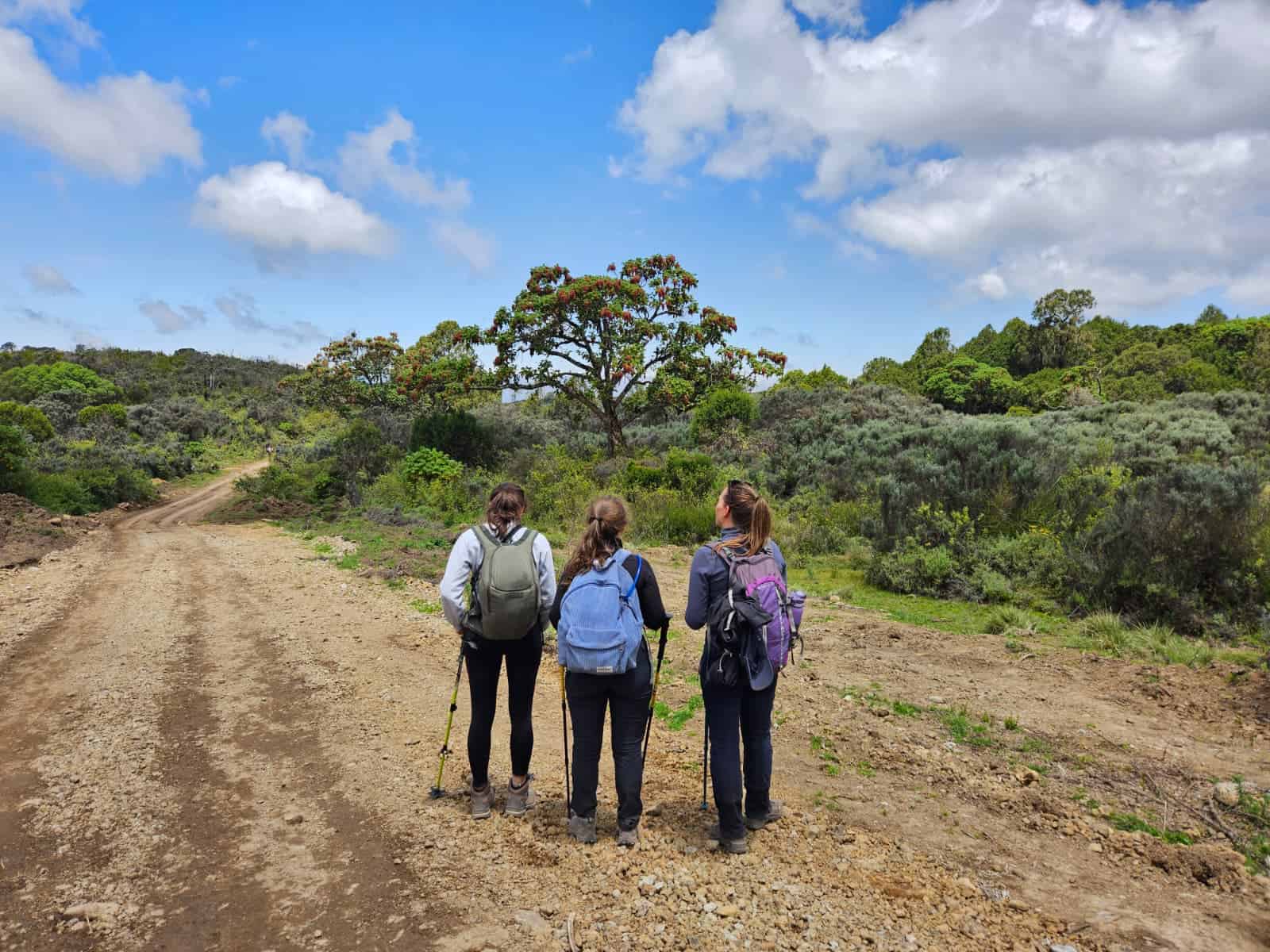
The trail begins at the park gate through dense montane forest filled with colobus monkeys and giant trees draped in moss.
You’ll walk 5 mi (8 km) to the Met Station (10,006 ft / 3,050 m). This will take around 3-4 HOURS.
It’s a gentle first day that helps with acclimatization.
DAY TWO
You’ll cross the infamous Vertical Bog, a stretch of muddy, energy-draining moorland.
From there, the path climbs steeply to Mackinder’s Camp (13,780 ft / 4,200 m), sitting between the Naromoru Rivers.
Expect to walk 7 mi (11 km) and gain over 3,700 ft (1,150 m) (!) of elevation. This will take around 6-7 hours!
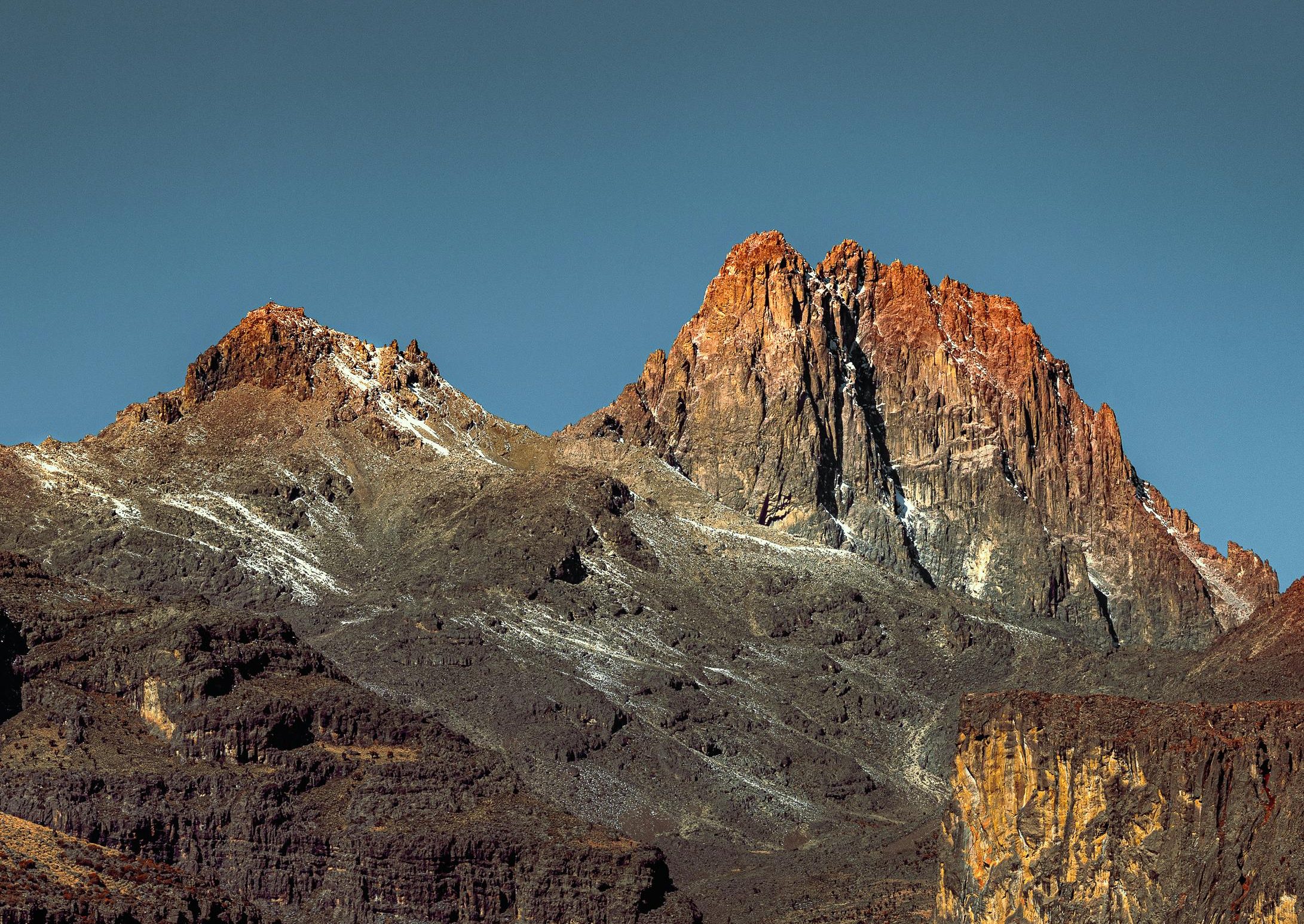
The evening offers amazing views of Batian and Nelion glowing in the sunset. Prepare for a short night’s sleep.
DAY THREE
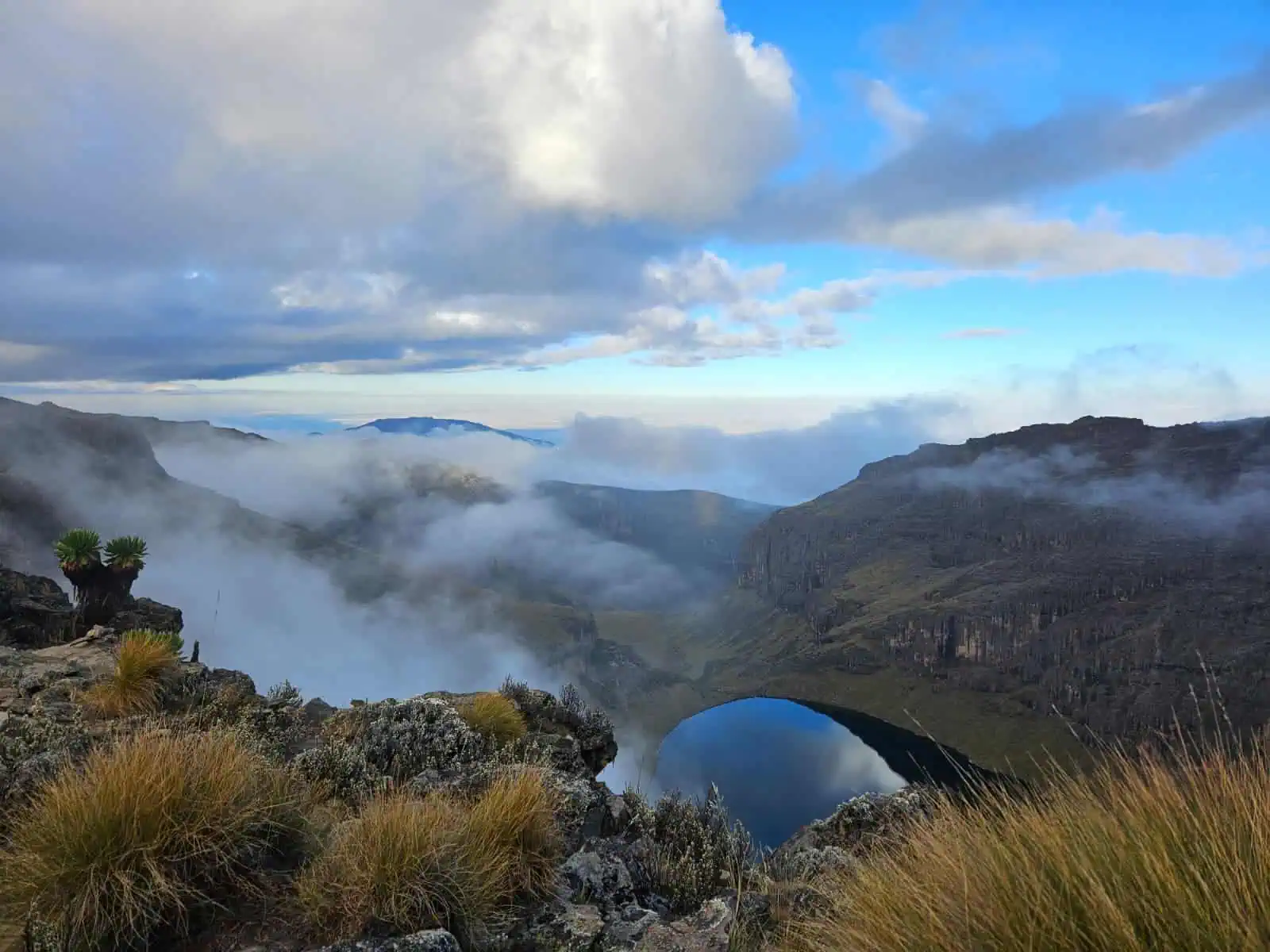
Summit day starts around 2 a.m., when the stars are at their brightest.
The climb from Mackinder’s Camp to Point Lenana (16,355 ft / 4,985 m) follows a rocky ridge to the Austrian Hut, then ascends steep scree slopes to reach the top in time for sunrise.
The total ascent and descent today is about 9 mi (14 km) and takes 3-4 hours.
From mid-morning onward, clouds often roll in quickly, so summiting early ensures clear skies and panoramic views of the peaks and glaciers.
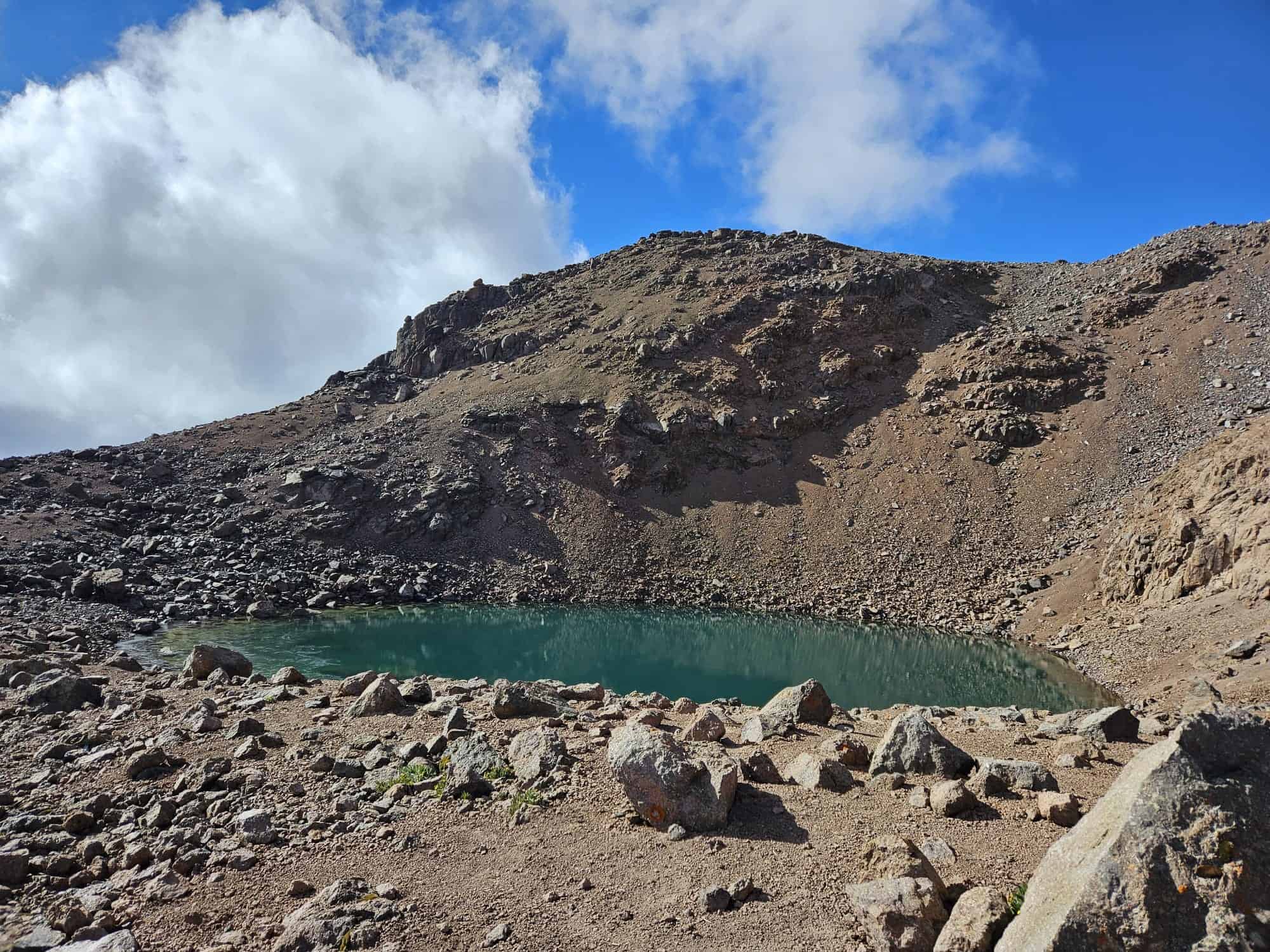
After celebrating the summit, you’ll descend the same route, stopping again at Met Station (5 – 6 hours of walking) or continuing all the way down to the Naro Moru Gate (8 – 9 hours of walking) by late afternoon for the full descent.
A driver will pick you up at the park entrance and drop you off in Nairobi in the late evening.
Advantages and disadvantages of the NaroMoru route
Pros:
- Shortest route
- Hut accommodation at each camp (at a premium)
- Frequent rescue access
Cons:
- Vertical bog is exhausting
- The path is crowded and less scenic compared with other routes.
Looking to book your Mount Kenya trip with a trustworthy local tour operator? Fill in our form below and get their answer within 48 hours! This includes your itinerary, cost, and so much more! No obligation.
Simply fill in the form below to get FREE QUOTES from trusted Kenyan local tour companies that we’ve personally traveled with.
It only takes 60 seconds, and you’ll receive custom itineraries and pricing directly in your inbox within 48 hours.
Free of charge. No pressure. No obligation.
*Our trusted local partners create every itinerary with care. We kindly ask that you submit a request only if you’re considering traveling.
| Recommended SAFARI ESSENTIALS we personally use and trust | ||
| 🧳 Travel duffle bag | 👕 Long shirt: Men | Women | 👕 Short shirt: Men | Women |
| 👖 Pants: Men | Women | 🧥 Light fleece: Men | Women | 🌧️ Rain jacket: Men | Women |
| 🥾 Shoes: Men | Women | 🧢 Safari sun hat | 🕶️ Sunglasses |
| 🔋 Power bank | 🔭 Binoculars | 🔌 Universal plug adapter |
| 🦟 Insect repellent (DEET) | 💧 Electrolyte tablets | 🎒 Daypack |
More information in our complete post about Kenya safari clothing.
Chogoria route
The Chogoria route is the MOST SCENIC way to reach Point Lenana.
It usually takes 5 days when you descend on Naro Moru.
The total Climbing Mount Kenya distance is about 40 mi (64 km), including the hike to the Naro Moru gate.
DAY ONE
Starting in Nairobi, a driver will pick you up in a 4×4 CAR and drive you to the star point of the BAMBOO FOREST near Chogoria town.
Your driver drops you at the forest edge, not at the gate in town.
The trail begins at the star point and follows easy ascending paths to Meru Mount Kenya Bandas, 9,678 ft (2,950 m).
You will walk 7 mi (11 km). This takes around 4 HOURS.
It is an easy acclimatization day with shaded forest, cool air, and (hopefully) beautiful wildlife sightings.
DAY TWO
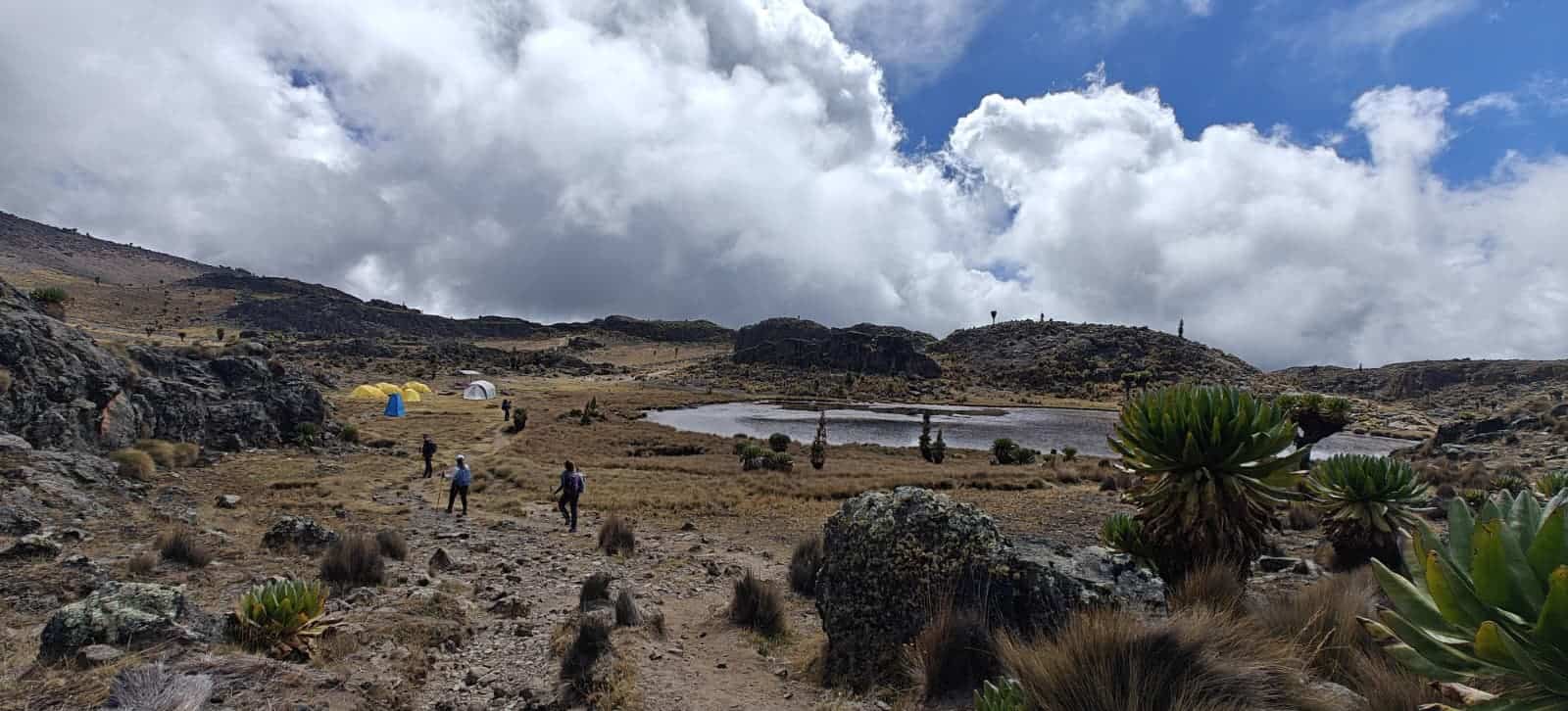
You leave the bandas and head out on open moorland to Lake Ellis, 11,350 ft (3,460 m).
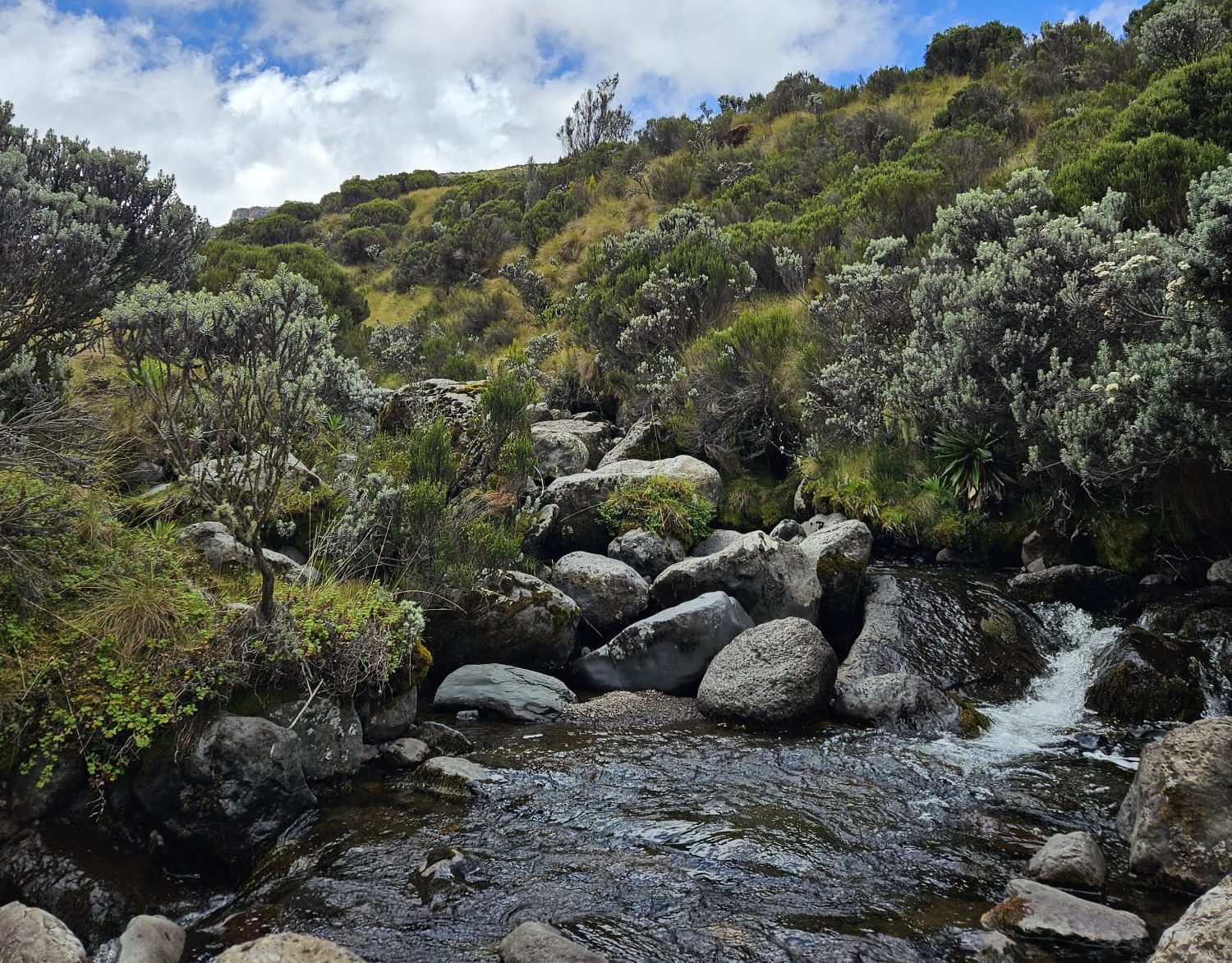
You will walk 6.2 mi (10 km). This takes 3 to 4 HOURS.
There is a lunch foreseen by a nice crossing stream, and you get to enjoy the views of the moorland and a beautiful view of the Mugi, Inthanguni, and Giant Billiards.
At Lake Ellis, you’ll have clear views of the summits Batian and Nelion.
The afternoon is perfect for a short ACCLIMATIZATION hike around the lakeshore.
DAY THREE
From Lake Ellis, you hike the rim above the Gorges Valley to Mintos Camp, 13,780 ft (4,200 m).
You will walk 7.5 mi (12 km). This takes 6 to 7 HOURS.
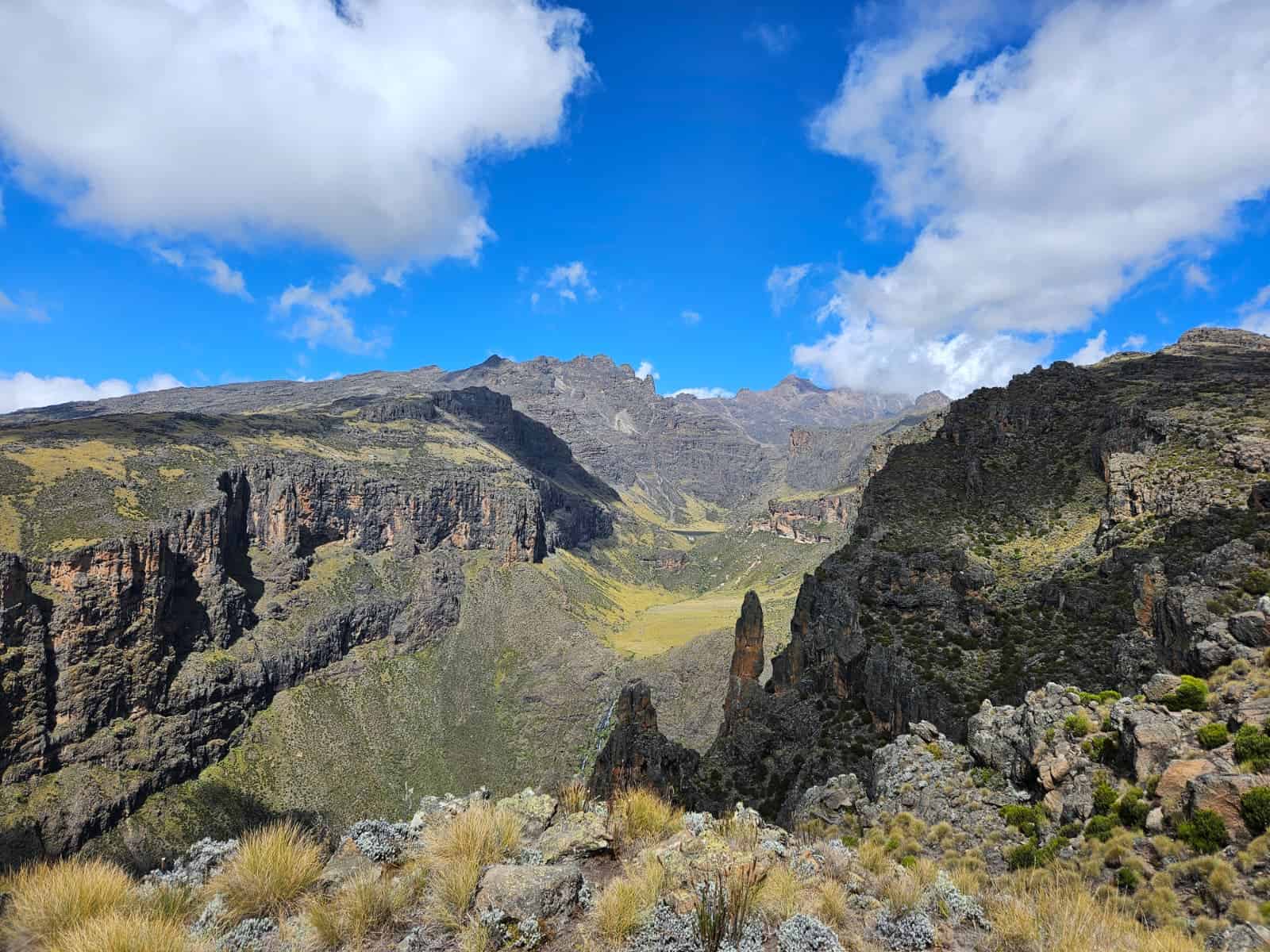
Detours to Hall Tarns and the Temple viewpoint give views over Lake Michaelson. Eat early, pack summit layers, and try to sleep by 7:30 p.m.
This is your final ACCLIMATIZATION night.
DAY FOUR
Summit day starts at MIDNIGHT.
You climb via Simba Col to Point Lenana, 16,355 ft (4,985 m) for sunrise. The summit push takes 3 to 4 HOURS from Mintos Camp to the Lenana summit.
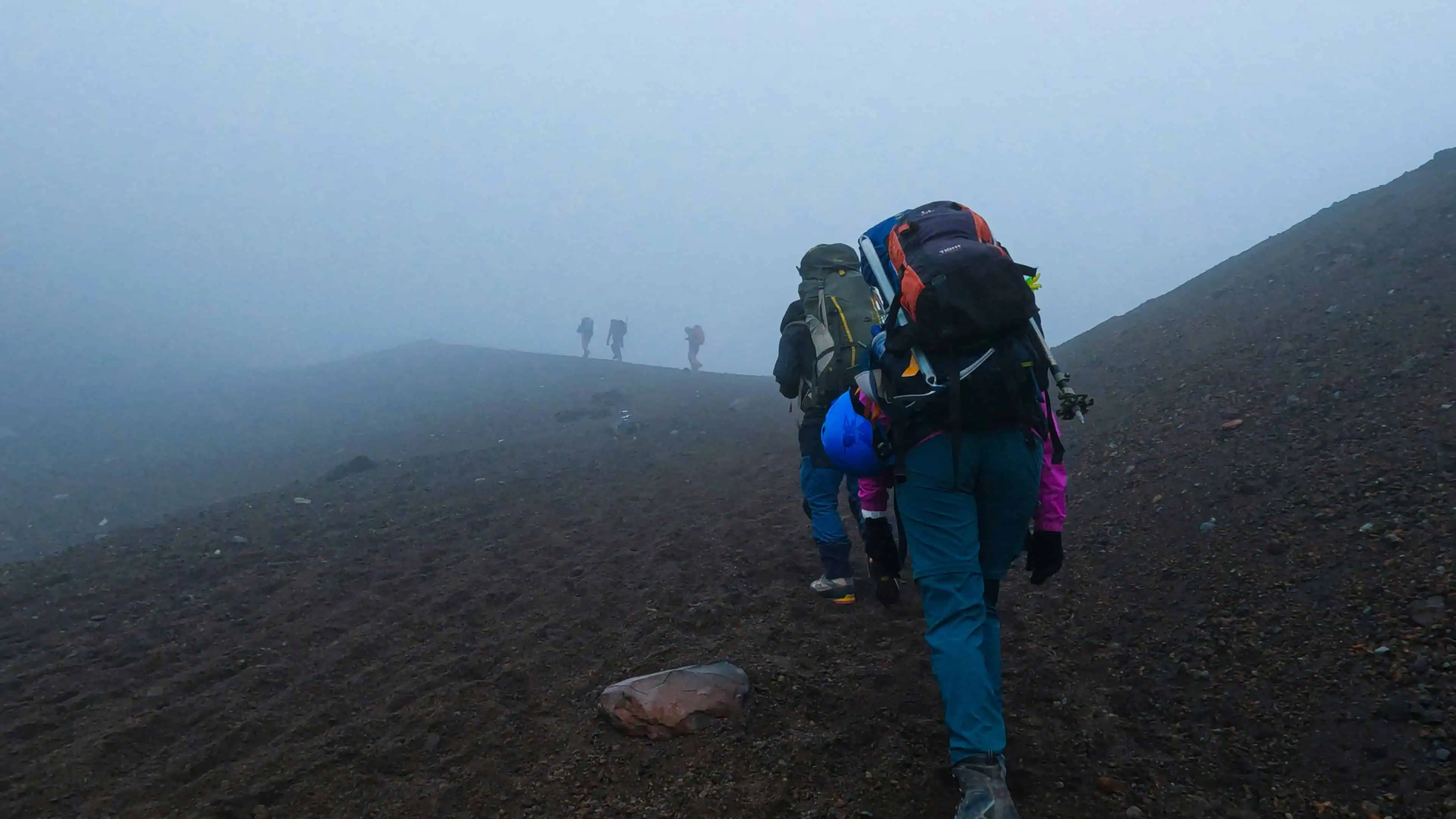
Expect a tough night climb, cold wind near the ridge, and a steep section close to the top.
Then you descend to Mackinder’s Camp and continue across moorland to Met Station, 10,006 ft (3,050 m) on the Naro Moru side.
Total distance today is 14.3 mi (23 km).
DAY FIVE
From Met Station, you finish through montane forest to the Naro Moru Gate, 8,530 ft (2,600 m).
You will walk 5.6 mi (9 km). This takes 2 to 3 HOURS.
Your driver will be waiting at the Naro Moru gate and will take you back to Nairobi in the afternoon.
Advantages and disadvantages of the Chogoria route
Pros:
- SCENERY, TOP TIER with the Gorges Valley, Lake Ellis, Lake Michaelson, and alpine tarns.
- Fewer crowds than Sirimon or Naro Moru.
- A true hike through forests, moorland, and high alpine ridges, which felt to us like a complete mountain journey.
Cons:
- Higher logistics cost, since you camp and the itinerary is longer.
- No huts on the Chogoria side, so you need reliable tents and a warm sleep system.
- Wind exposure near Mintos, so bring solid layers, a good hood, and warm gloves.
Looking to book your Mount Kenya trip with a trustworthy local tour operator? Fill in our form below and get their answer within 48 hours! This includes your itinerary, cost, and so much more! No obligation.
Simply fill in the form below to get FREE QUOTES from trusted Kenyan local tour companies that we’ve personally traveled with.
It only takes 60 seconds, and you’ll receive custom itineraries and pricing directly in your inbox within 48 hours.
Free of charge. No pressure. No obligation.
*Our trusted local partners create every itinerary with care. We kindly ask that you submit a request only if you’re considering traveling.
The Peak Circuit Path
The Peak Circuit Path is Mount Kenya’s most challenging and rewarding trail, a full loop around the summit massif that connects all major valleys, glaciers, and high camps.
This route is designed for experienced trekkers who have already acclimatized to reaching Point Lenana.
Unlike the standard ascent routes, the Peak Circuit STAYS HIGH, circling between 14,100 ft (4,300 m) and 15,750 ft (4,800 m).
It provides close-up views of Batian, Nelion, and the shrinking glaciers that cling to their flanks.
Total distance is about 28 mi (45 km), depending on the side trips you include, and most hikers take 3 to 4 days to complete the circuit.
Other routes
Lesser‑used routes such as Burguret, Timau, Kamweti, and Meru are overgrown and poorly maintained.
They demand strong navigation skills, self‑sufficiency, and time.
For reference, only about 5 % of climbers use them, making them suitable only for experienced adventurers who explicitly want to do that trail.
Looking to book your Mount Kenya trip with a trustworthy local tour operator? Fill in our form below and get their answer within 48 hours! This includes your itinerary, cost, and so much more! No obligation.
Simply fill in the form below to get FREE QUOTES from trusted Kenyan local tour companies that we’ve personally traveled with.
It only takes 60 seconds, and you’ll receive custom itineraries and pricing directly in your inbox within 48 hours.
Free of charge. No pressure. No obligation.
*Our trusted local partners create every itinerary with care. We kindly ask that you submit a request only if you’re considering traveling.
| Recommended SAFARI ESSENTIALS we personally use and trust | ||
| 🧳 Travel duffle bag | 👕 Long shirt: Men | Women | 👕 Short shirt: Men | Women |
| 👖 Pants: Men | Women | 🧥 Light fleece: Men | Women | 🌧️ Rain jacket: Men | Women |
| 🥾 Shoes: Men | Women | 🧢 Safari sun hat | 🕶️ Sunglasses |
| 🔋 Power bank | 🔭 Binoculars | 🔌 Universal plug adapter |
| 🦟 Insect repellent (DEET) | 💧 Electrolyte tablets | 🎒 Daypack |
More information in our complete post about Kenya safari clothing.
Which Mount Kenya hiking route should I choose?
We prefer to have the best of both worlds and have different views when we descend again.
That is why we chose the Sirimon route to go up and the Chogoria route to go down.
This combo keeps the climb gradual on the way to the summit, then rewards you with Gorges Valley, Lake Michaelson from the Chogoria route, and a 4×4 exit that saves your knees.
Many tour operators also offer this 5-day package.
Why this combo works:
- Acclimatization first: Sirimon’s grade is gentle, so your body adjusts before summit night.
- Scenery second: Chogoria delivers Kenya’s top alpine vistas, lakes, and cliffs on the way out.
- Logistics that make sense: Start and finish at different gates, see more of the mountain, and avoid repeating trails.
How long does it take to climb Mount Kenya?
The duration depends on the route and your acclimatization strategy.
Most climbers take 4 – 6 days to reach Point Lenana and descend.
The Naro Moru route can be done in 3 – 4 days if you’re well acclimatized, while combined Chogoria or Sirimon routes typically require 5 days.
Adding an acclimatization day increases your chances of success and allows side trips to tarns or cols.
Looking to book your Mount Kenya trip with a trustworthy local tour operator? Fill in our form below and get their answer within 48 hours! This includes your itinerary, cost, and so much more! No obligation.
Simply fill in the form below to get FREE QUOTES from trusted Kenyan local tour companies that we’ve personally traveled with.
It only takes 60 seconds, and you’ll receive custom itineraries and pricing directly in your inbox within 48 hours.
Free of charge. No pressure. No obligation.
*Our trusted local partners create every itinerary with care. We kindly ask that you submit a request only if you’re considering traveling.
When is the best time to climb Mount Kenya?
Kenya experiences two rainy seasons: long rains from March to June and short rains in September and October.
During the rainy season, trails become muddy, and some routes are impassable during heavy rain. More information in our weather Kenya guide, which also explains when to see the most animals!
The best months to climb are July–August and November–February, when conditions are drier and skies clearer.
At high altitude, the temperatures can drop to –15 °F (–26 °C) before dawn, so carry thermal layers even in the dry season!
How busy is it on Mount Kenya?
Around 15,000 people climb Mount Kenya each year, according to Africa Outdoors, with roughly 95 % of walkers using the Naro Moru, Sirimon, and Chogoria routes.
The number has been stable over the years, with a short decline during the COVID period.
Only a few hundred attempt the technical peaks each year, with approximately 200 reaching Nelion and 50 people reaching Batian.
To avoid crowds, opt for shoulder seasons like early November or mid‑August and consider using the Sirimon or Chogoria routes.
How dangerous is it to climb Mount Kenya?
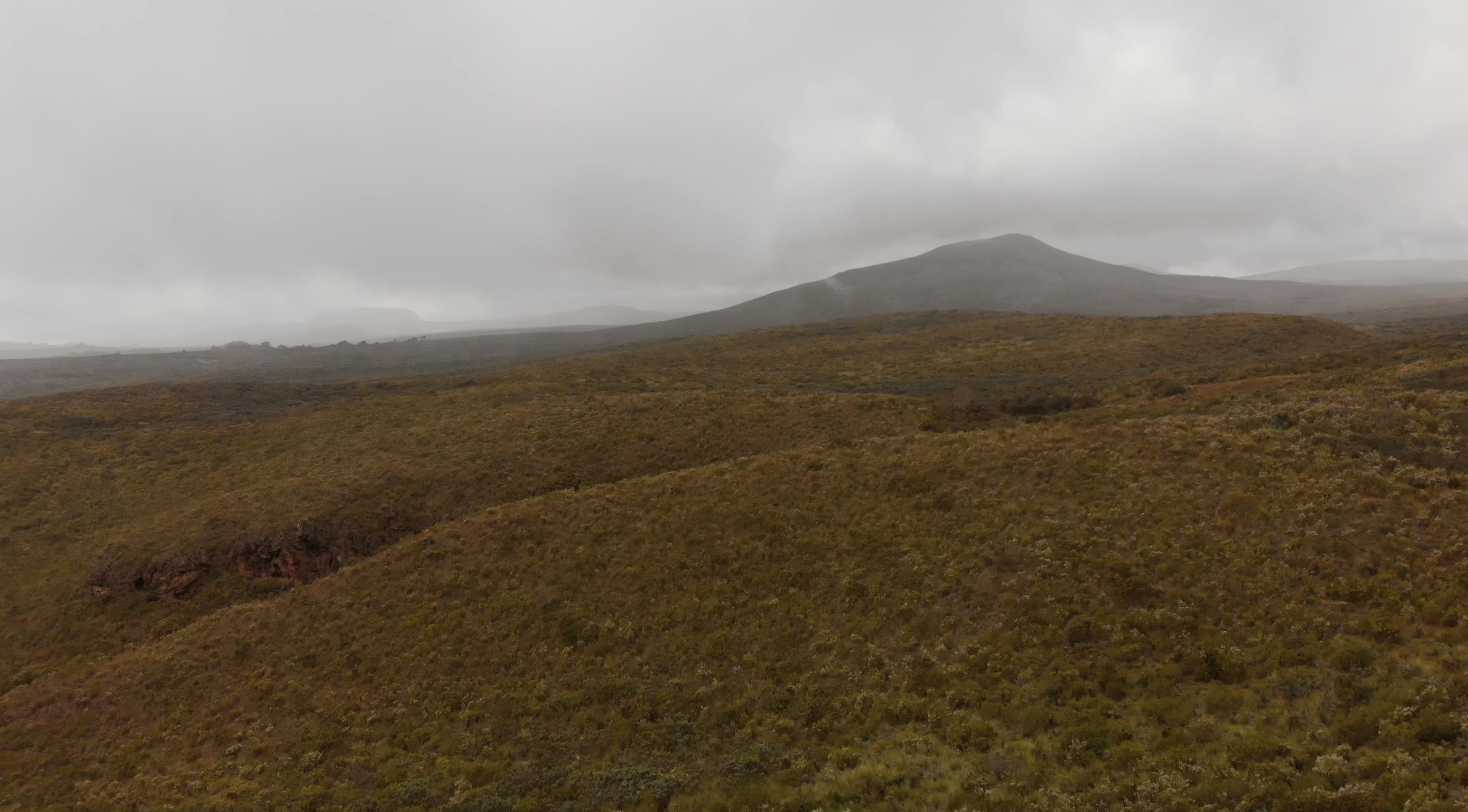
Mount Kenya is quite dangerous to climb; there are a few things you must be aware of before hiking Mount Kenya.
Dangers of Mount Kenya:
- Altitude sickness
- Cold exposure
- Glacier melt and rockfall
- Slippery, unstable terrain
The three and four-day Mount Kenya hiking tours require rapid altitude gain, which can cause (acute) mountain sickness. You’ll need to hike Mount Kenya gradually and drink plenty of water.
Every day, the guides will measure your oxygen saturation to make sure your levels are ok (everything below 80% will be monitored closely).
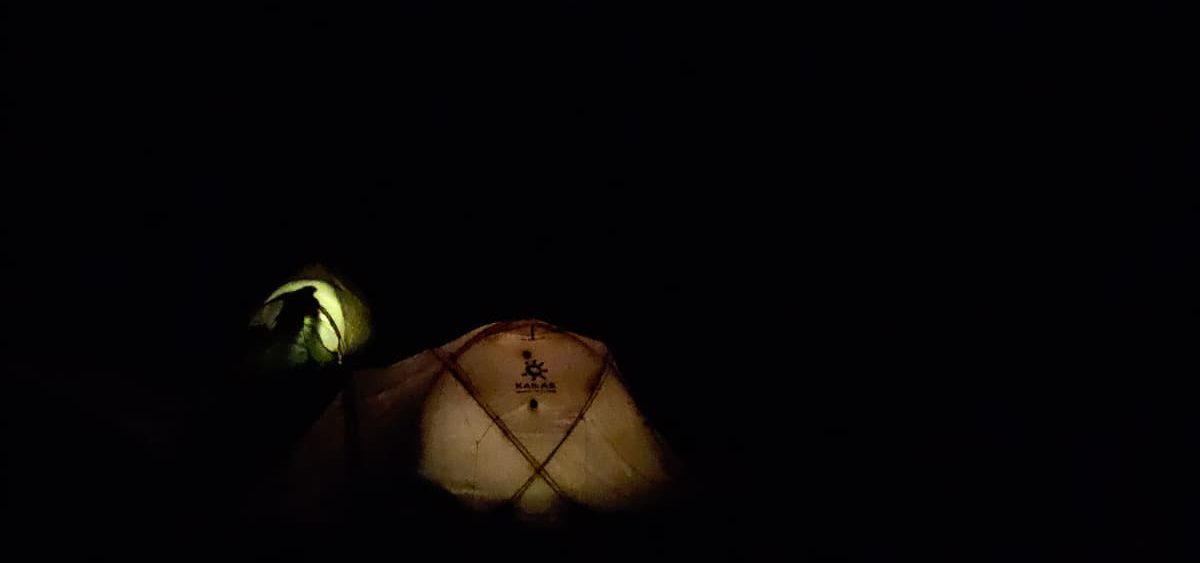
Another risk is that nights fall quickly on the equator (around 6.30 pm), increasing the risk of losing your warmth during the night. That is why you’ll need to pay ATTENTION to your clothing so you pack in layers, from shorts to thermal underwear and very warm hiking vests.
Another risk is that the warming temperatures have destabilized the glaciers (like Lewis Glacier) and increased rockfall. Chances are small that a rock will hit you, but it’s still possible.
Looking to book your Mount Kenya trip with a trustworthy local tour operator? Fill in our form below and get their answer within 48 hours! This includes your itinerary, cost, and so much more! No obligation.
Simply fill in the form below to get FREE QUOTES from trusted Kenyan local tour companies that we’ve personally traveled with.
It only takes 60 seconds, and you’ll receive custom itineraries and pricing directly in your inbox within 48 hours.
Free of charge. No pressure. No obligation.
*Our trusted local partners create every itinerary with care. We kindly ask that you submit a request only if you’re considering traveling.
Guide services and park regulations
Hiring a certified local guide is mandatory (but also always included when you book with a local tour operator).
KWS requires all visitors to register at the park gates.
Only daylight entry and exit are permitted, and porters can carry up to 22 lb (10 kg) of gear per person.
Plastic water bottles are banned (!), so you must use reusable metal or Nalgene bottles instead.
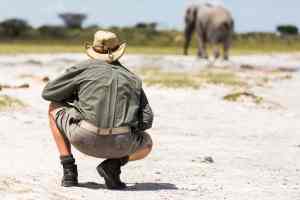
👉 BE AWARE: Trails pass through elephant and buffalo territory, so keep noise levels up to avoid surprising wildlife.
| Recommended SAFARI ESSENTIALS we personally use and trust | ||
| 🧳 Travel duffle bag | 👕 Long shirt: Men | Women | 👕 Short shirt: Men | Women |
| 👖 Pants: Men | Women | 🧥 Light fleece: Men | Women | 🌧️ Rain jacket: Men | Women |
| 🥾 Shoes: Men | Women | 🧢 Safari sun hat | 🕶️ Sunglasses |
| 🔋 Power bank | 🔭 Binoculars | 🔌 Universal plug adapter |
| 🦟 Insect repellent (DEET) | 💧 Electrolyte tablets | 🎒 Daypack |
More information in our complete post about Kenya safari clothing.
What clothing do I need to climb Mount Kenya?
High‑altitude trekking on Mount Kenya requires a layered clothing system.
The recommendations below separate men’s and women’s options and highlight key features from independent gear reviews.
Base Layers (Warmth & Moisture Management)
Men
Smartwool Classic Thermal Merino 1/4 Zip: Soft, 100% merino wool that regulates body temperature, wicks moisture, and stays warm even when damp. The quarter-zip design adds ventilation during steep climbs, and the natural odor resistance is ideal for multi-day treks.
Women
Merino Wool Base Layer Women: Lightweight merino blend with excellent breathability and warmth. Naturally odor-resistant, soft against the skin, and perfect as a first layer during cold summit mornings.
Mid-Layers (Insulation)
Men
Columbia Men’s Essential Hike Grid Fleece Full Zip: Lightweight fleece with a heat-trapping grid pattern that maintains warmth while allowing moisture to escape. Features three zip pockets, flat seams for comfort under backpacks, and a low-profile hood for layering.
Women
Columbia Women’s Essential Hike Grid Fleece Full Zip: A breathable fleece that balances warmth and airflow. The outer face repels light wind, while the soft inner grid retains heat for long ascents in cool mountain air.
Rain Jackets
Men
Columbia Men’s Tipton Peak III Insulated Jacket: Waterproof, insulated shell that keeps you warm and dry in unpredictable alpine weather. Adjustable cuffs and hood block wind and rain without sacrificing mobility.
Women
Columbia Women’s Tipton Peak IV Insulated Jacket: Waterproof and windproof jacket with light insulation for warmth at altitude. Ideal for summit days when temperatures drop and the wind increases.
Rain Pants & Hiking Pants
Women
Pioneer Camp Women’s Hiking Pants, Breathable Quick Dry Softshell Pants: Flexible softshell fabric that resists wind and moisture while allowing a full range of movement. Quick-drying, stretch-fit design with secure pockets—ideal for long days on Mount Kenya’s moorlands.
Men
Eddie Bauer Men’s Rainier Pant: Lightweight and weather-resistant nylon pants with StormRepel DWR finish. The four-way stretch and gusseted knees provide comfort during steep climbs and muddy descents.
Hiking Boots
Men
Merrell Men’s Moab 3 Mid Waterproof Hiking Boot: All-terrain boots with Vibram soles, waterproof membrane, and cushioned insoles. Durable and supportive for long summit days, offering excellent traction on scree and mud.
Women
Merrell Women’s Moab 3 Mid Waterproof Hiking Boot: Comfortable right out of the box, with shock-absorbing heels and reliable grip. Perfect for mixed terrain on Mount Kenya—from forest paths to rocky alpine ridges.
Looking to book your Mount Kenya trip with a trustworthy local tour operator? Fill in our form below and get their answer within 48 hours! This includes your itinerary, cost, and so much more! No obligation.
Simply fill in the form below to get FREE QUOTES from trusted Kenyan local tour companies that we’ve personally traveled with.
It only takes 60 seconds, and you’ll receive custom itineraries and pricing directly in your inbox within 48 hours.
Free of charge. No pressure. No obligation.
*Our trusted local partners create every itinerary with care. We kindly ask that you submit a request only if you’re considering traveling.
The travel items you’ll wish you had in Kenya
One often-overlooked “cost” of safari is what you WEAR AND PACK.
You don’t need to spend a fortune on SPECIALIZED SAFARI GEAR, but depending on what you have already, you might need to budget for a few clothing items or accessories to be comfortable in KENYA’S CLIMATE.
Here’s a QUICK SUMMARY:
- 🧥 Mornings and evenings in Kenya can get surprisingly chilly, bring a lightweight FLEECE (Link for men) (Link for women) so you can stay warm without overpacking.
- 🦟 Don’t let bugs ruin your safari. Grab this OFF MOSQUITO SPRAY for long-lasting protection in the bush!
- 🚰 Tap water isn’t safe to drink in Kenya, so pack a Vapur Insulated WATER BOTTLE and avoid the cost (and waste) of buying plastic daily.
- 🔌 Kenya uses UK-style outlets. This UNIVERSAL ADAPTER will keep your gear charged without any surprises.
- 🔋 Long drives and power cuts happen this Belkin POWER BANK keeps your phone and camera ready for anything.
- 🦓 Want to actually see that leopard in the distance? These travel-friendly BINOCULARS make your game drives way more exciting.
- 🧴 The equator sun hits hard, bring a reef-safe SPF 50+ SUNSCREEN so you don’t spend your trip nursing a burn.
- 👟 For walking safaris or climbing Mt.Kenya, good WALKING SHOES (Link for men) (Link for women) are non-negotiable in Kenya. Trust your feet, you’ll be glad you did.
- 🎒 Safari days start early and last long. This 24L Vaude backpack is perfect for snacks, layers, and your camera gear.
- 🩹 The closest pharmacy might be hours away. A compact travel FIRST AID KIT is worth its weight in peace of mind.
Conclusion: Is climbing Mount Kenya worth it?
Climbing Mount Kenya is definitely worth it. It’s one of Africa’s most rewarding climbing experiences and is worth its price.
Whether you’re hiking through the lush forests of Mount Kenya National Park, camping by Lake Michaelson, or standing on Point Lenana at sunrise, every section of this mountain feels special.
For the best balance between scenery and acclimatization, choose Sirimon up and Chogoria down.
The Sirimon route offers a gradual ascent through valleys like Mackinder and Teleki, while Chogoria rewards you with epic views of the Gorges Valley, Hall Tarns, and Mount Kenya’s glaciers on the descent.
Most Mount Kenya hiking tours take 4–5 days and include guides, porters, meals, and park fees. The Mount Kenya hike price averages USD 1,000 – 1,400 (€860 – 1,200), depending on your route and comfort level.
At 17,057 ft (5,199 m), Mount Kenya’s three peaks: Batian, Nelion, and Point Lenana, offer everything from scenic trekking to technical rock climbing.
Whether you plan a full Mount Kenya trek or a Mount Kenya day hike, the mountain’s high-altitude ecosystems and rich culture make it an unforgettable experience.



One Response