Kenya is the land of the ORIGINAL SAFARI. It was the first African country that have visitors coming for safaris.
A Kenya safari can be tailored to almost ANY BUDGET, from basic group camping trips to ultra-luxurious lodge experiences.
So, WHAT IS THE COST OF A SAFARI IN KENYA? It depends on factors like travel season, length of safari, accommodation level, transportation, and chosen activities.
By the end of this post, you’ll know what to expect and how to plan a Kenya safari that fits your budget.
-
- KEY TAKEAWAYS:
- 🌍 Kenya safaris for every budget: From $200 (185 EUR) per day to $1,000+ (930 EUR), the cost of a safari in Kenya depends on operator type, accommodation, and transport.
-
- 🦓 When and where you go matters: Prices peak during the Great Migration in the Masai Mara (July to October). For lower safari costs and fewer crowds, consider Samburu, Tsavo East, or Lake Nakuru in the shoulder season.
- 💰 Extra Kenya safari costs: Include visas, tips, travel insurance, and special activities. A hot air balloon safari is typically $450 to $600 (420 to 560 EUR). Guided walking safaris add $150 to $200 (140 to 185 EUR) per day to your Kenya safari costs.
Overview of the cost of a Safari in Kenya

Kenya safaris generally fall into THREE PRICE CATEGORIES: budget, mid-range, and luxury.
The per-person, per-day cost can range from around $200 on the low end to over $1,000 at the top end, excluding international flights.
Below is an overview of our Kenya safari price guide and what each category offers, and typical price examples.
| Safari type | Typical cost per person/day (USD) | Accommodation & inclusions |
|---|---|---|
| Budget safari (group) | $150 to $200 (€140 to €185) | Shared safari van or minibus, basic lodges or camping, group game drives, park fees included, and all meals provided. |
| Budget safari (private) | $250 to $350 (€230 to €325) | Private 4×4 safari vehicle, flexible schedule, upgraded tented camps or mid-range lodges, personalized guiding, and meals included. |
| Mid-range safari | $400 to $600 (€370 to €560) | Comfortable lodges or tented camps, private 4×4 vehicle, expert local guides, all meals, park fees, and sometimes internal flights between parks. |
| Luxury safari | $600 to $1,000 (€560 to €930) | High-end tented camps or boutique safari lodges, private vehicles, fine dining, all-inclusive packages, local flights, and top-tier guiding. |
| Luxury+ safari | $1,000+ (€930+) | Ultra-luxury lodges in private conservancies, charter flights, exclusive 4×4 vehicles, premium drinks, spa access… |
Fill in this form to receive a PERSONALIZED ITINERARY based on your preferences and budget! No strings attached, but serious inquiries only!
Budget Kenya safari costs
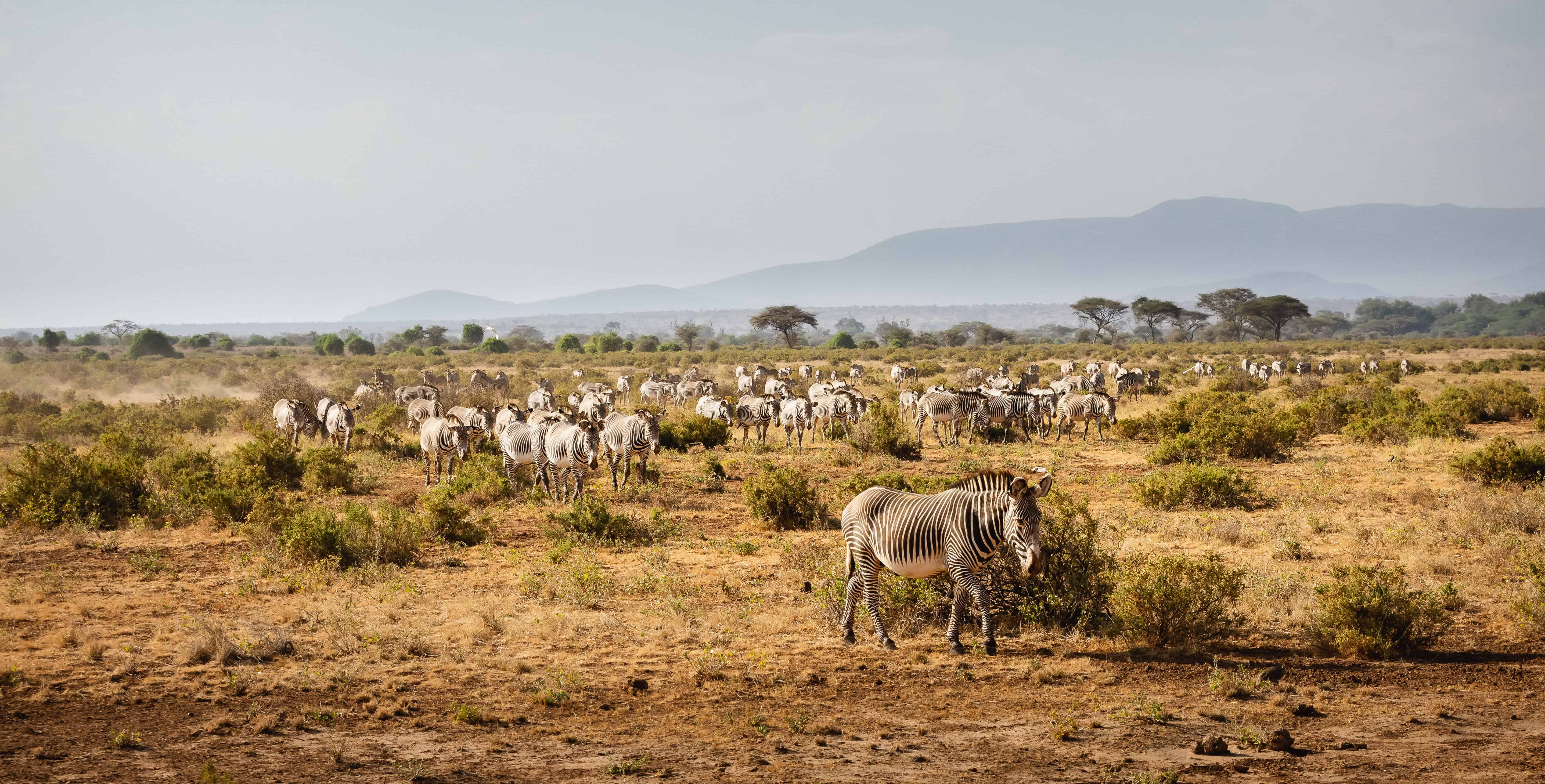
Kenya budget safaris are the most affordable way to experience Kenya’s wildlife.
These often involve joining a group tour (shared vehicle) and staying in simpler accommodations like basic lodges, guesthouses just outside the parks, or even tents on campsites.
By sharing transport and guides with 6–7 other travelers, group safaris keep costs low.
A budget GROUP safari in Kenya can start around $150 – $250 per person per day for a camping or basic lodging package.
For example, a 3-day Masai Mara group camping safari might cost roughly $600 to $750 per person all-in.
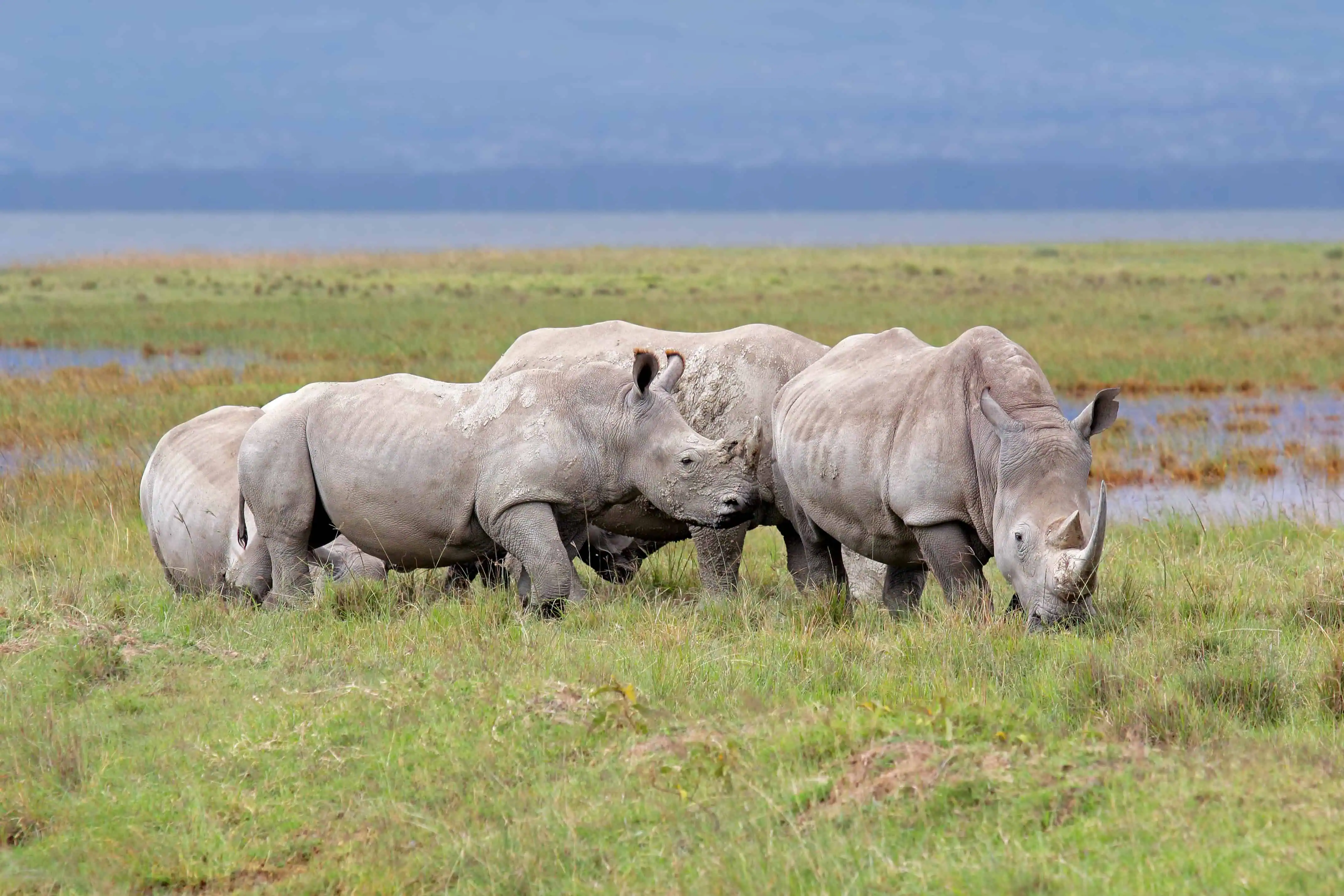
If you prefer a PRIVATE safari on a budget, it’s possible when traveling with your own small group.
The cost is higher than a shared tour because you’re not splitting the vehicle and guide with others.
A private budget safari for two people averages around $300 per person per day, covering a basic lodge, park fees, a driver-guide, and meals.
Going with four or more people can bring the per-person cost down further. Budget safaris usually drive between parks (using a minibus or 4×4) rather than taking internal flights to save costs.

What to expect on a budget safari?
You still get the core safari experience, like daily game drives with a guide, park entry fees covered, and amazing wildlife sightings.
The differences are in comfort and flexibility.
Accommodation will be basic but adequate (e.g., a simple room or tent with a bed and sometimes an en-suite bathroom).
Safari vehicles for budget group tours are often pop-top minibusses or standard 4x4s. They might be older or less spacious than luxury outfitted vehicles.
You might have slightly less experienced guides on the most rock-bottom tours, but many budget operators in Kenya are still very knowledgeable.
Meals are usually included, but may be simpler buffets.
A big benefit of a Kenya budget safari is that even at a low cost, you’ll likely visit the same famous parks (like Masai Mara, Amboseli, or Lake Nakuru), but you might spend a shorter time there.
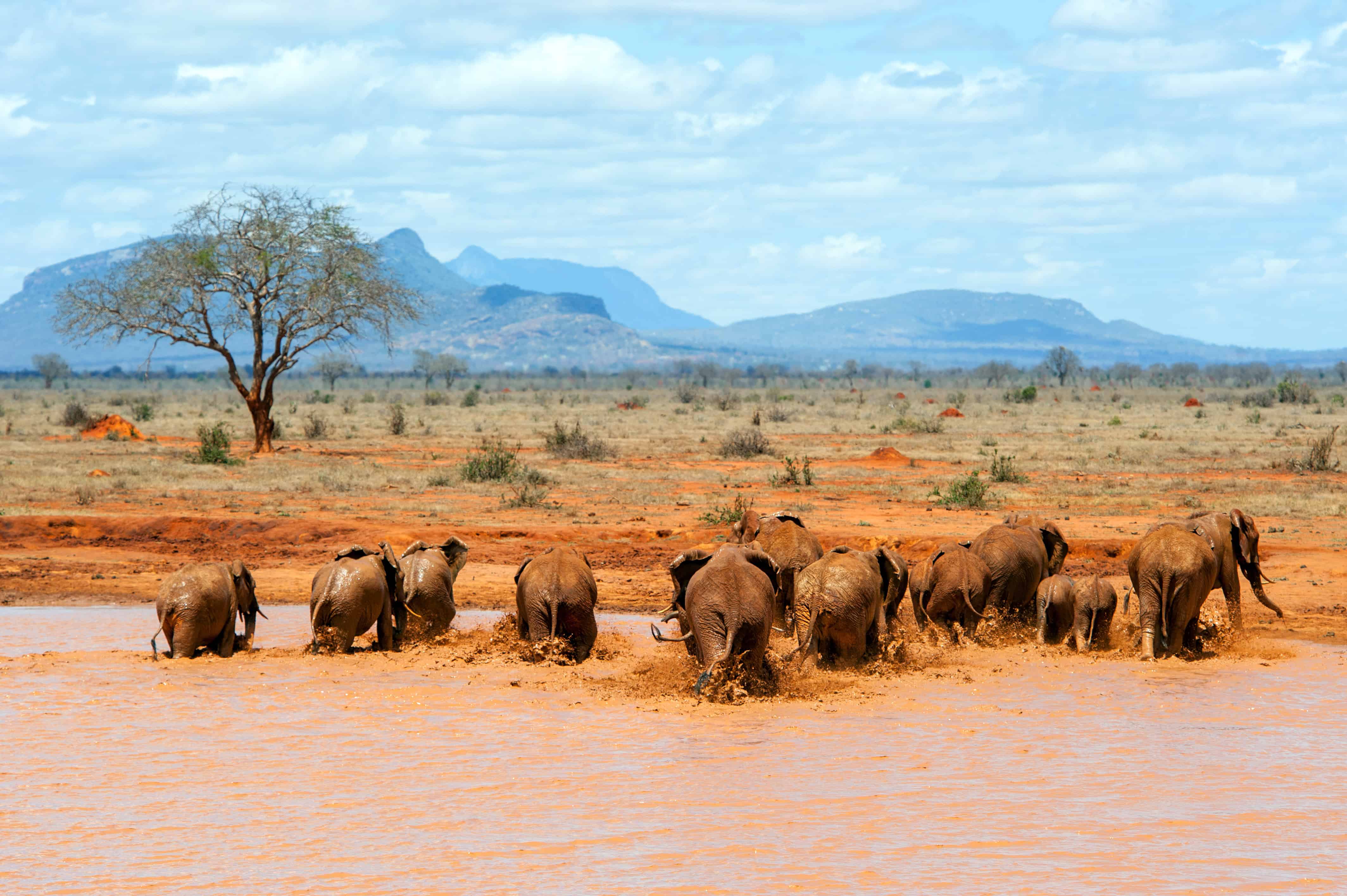
Example budget safari price
A 7-day group safari visiting Masai Mara, Lake Nakuru, and Amboseli costs about $1,400–$1,800 per person ($200–$260 per day).
This includes overland transport in a shared vehicle, basic lodges or tented camps (often outside park boundaries), all park fees and game drives, and meals.
By comparison, a similar private itinerary for two costs $2,400 per person (about $ 1,200 per day), offering more flexibility in scheduling.
Mid-range Kenya safari costs
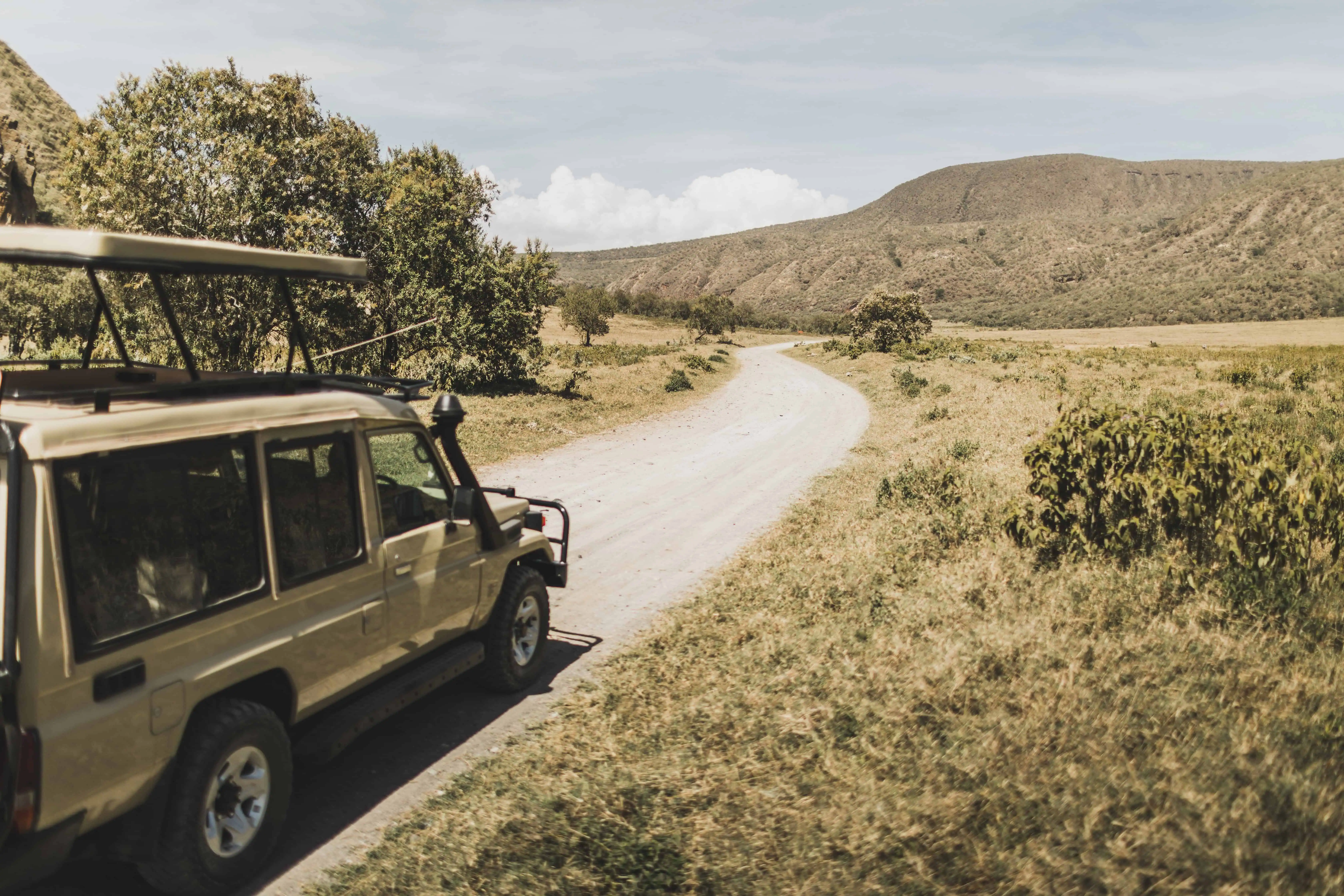
Mid-range safaris aim to balance comfort and cost.
This category covers a broad span, with costs ranging from $400 to $600 per person per day in Kenya.
What to expect on a mid-range budget safari?
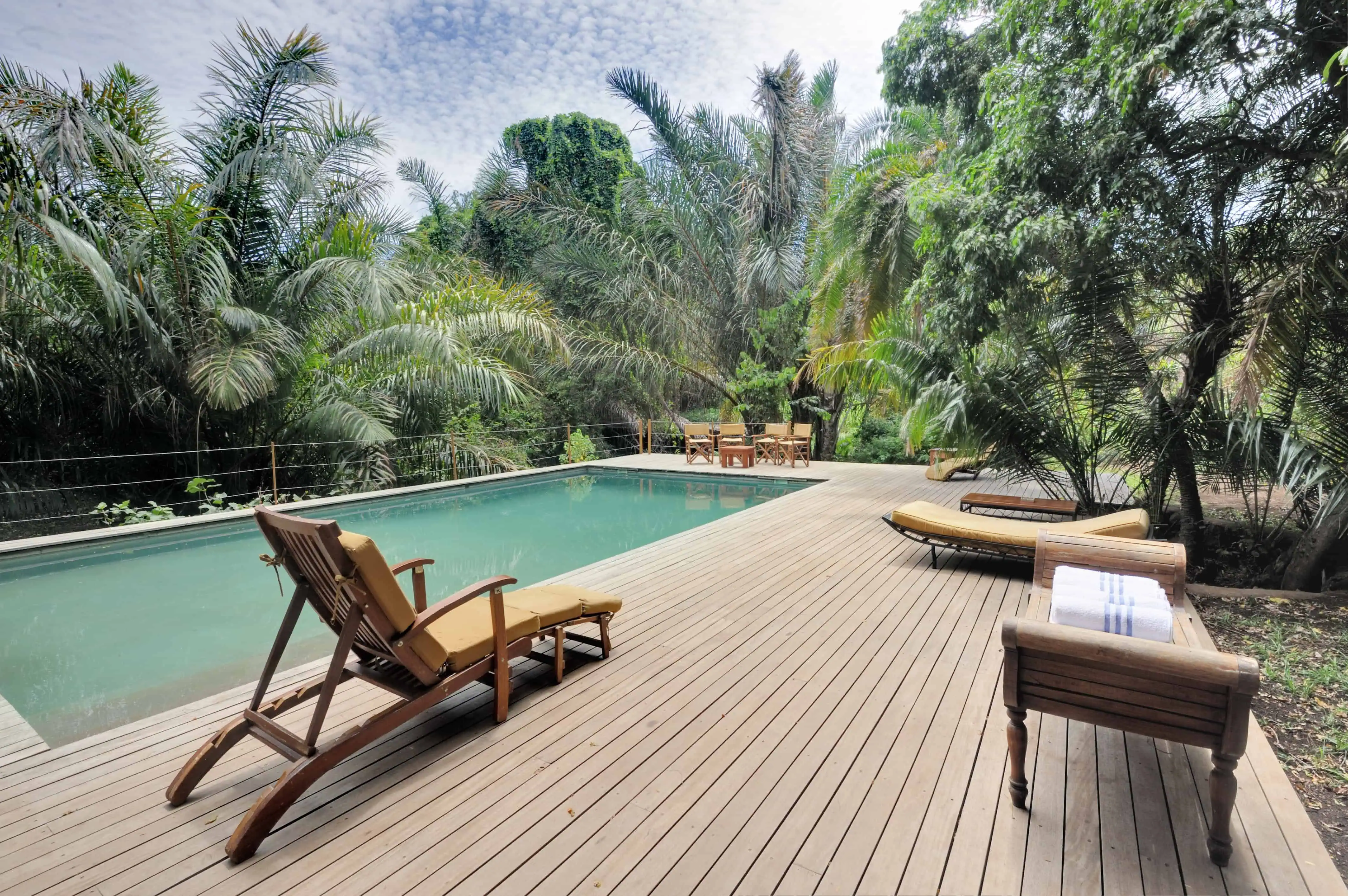
Safaris in this range use mid-tier or boutique lodges and tented camps that provide a higher standard of comfort (think sizeable tents or rooms with private bathrooms, nice dining, a pool) without being ultra-opulent.
You’ll have a private safari vehicle and guide for your travel party, especially if you are a couple or family, or you might join a small group of like-minded travelers (e.g., 4–6 people) arranged by the tour operator.
With a mid-range budget, you have the flexibility to include some extra conveniences. For instance, many mid-range itineraries will take an internal flight for long distances to avoid very long drives on rough roads.
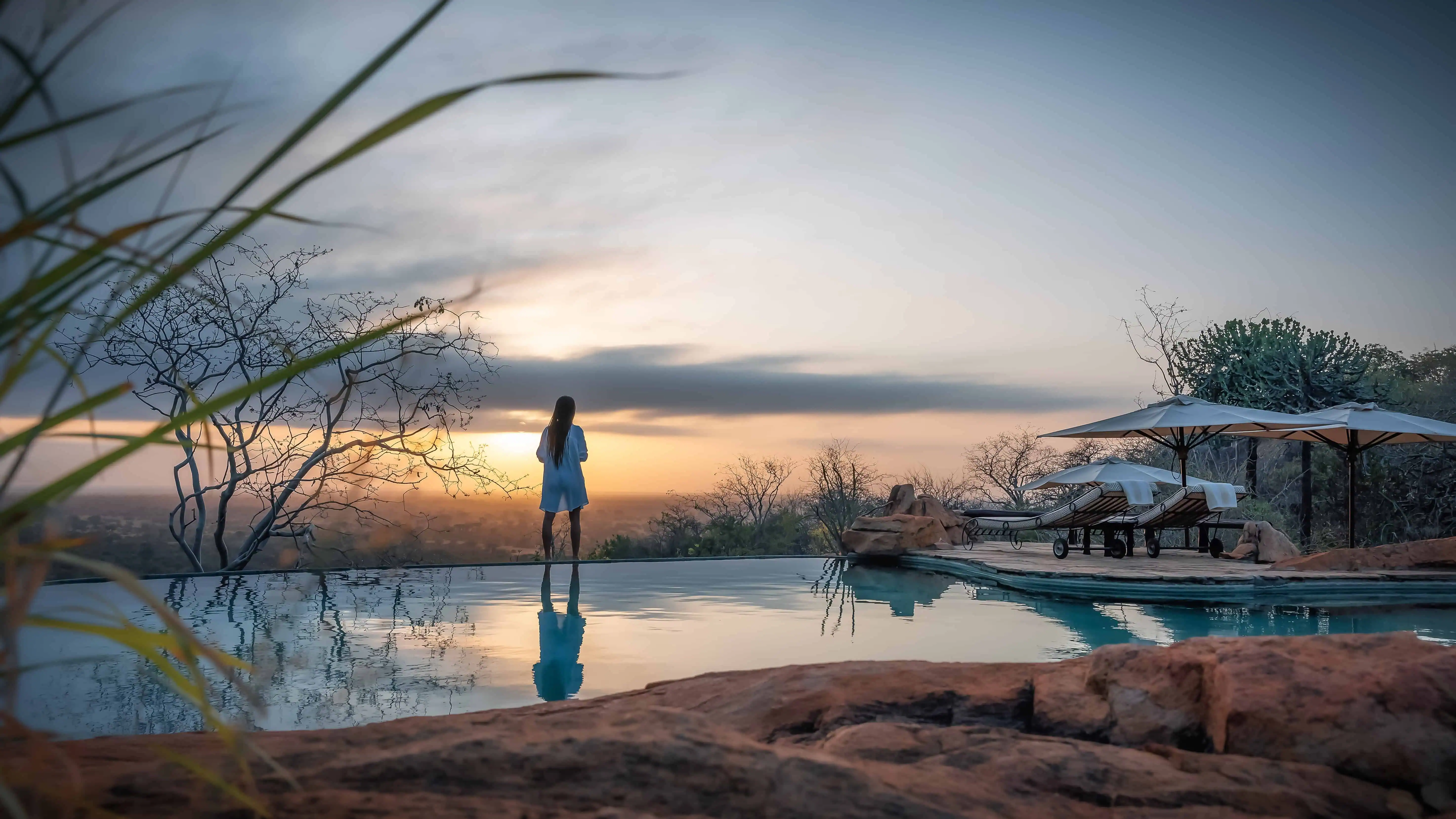
For example, rather than spending 8–10 hours driving from Nairobi to the Masai Mara and back, you might fly one way. This saves time but adds cost (domestic bush flights in Kenya are usually $150–$300 one-way).
In general, mid-range tours might use sturdier 4×4 Land Cruisers for game drives (instead of minibusses) for a smoother ride, and guides tend to be highly experienced professionals who enrich your wildlife viewing with expert insights.
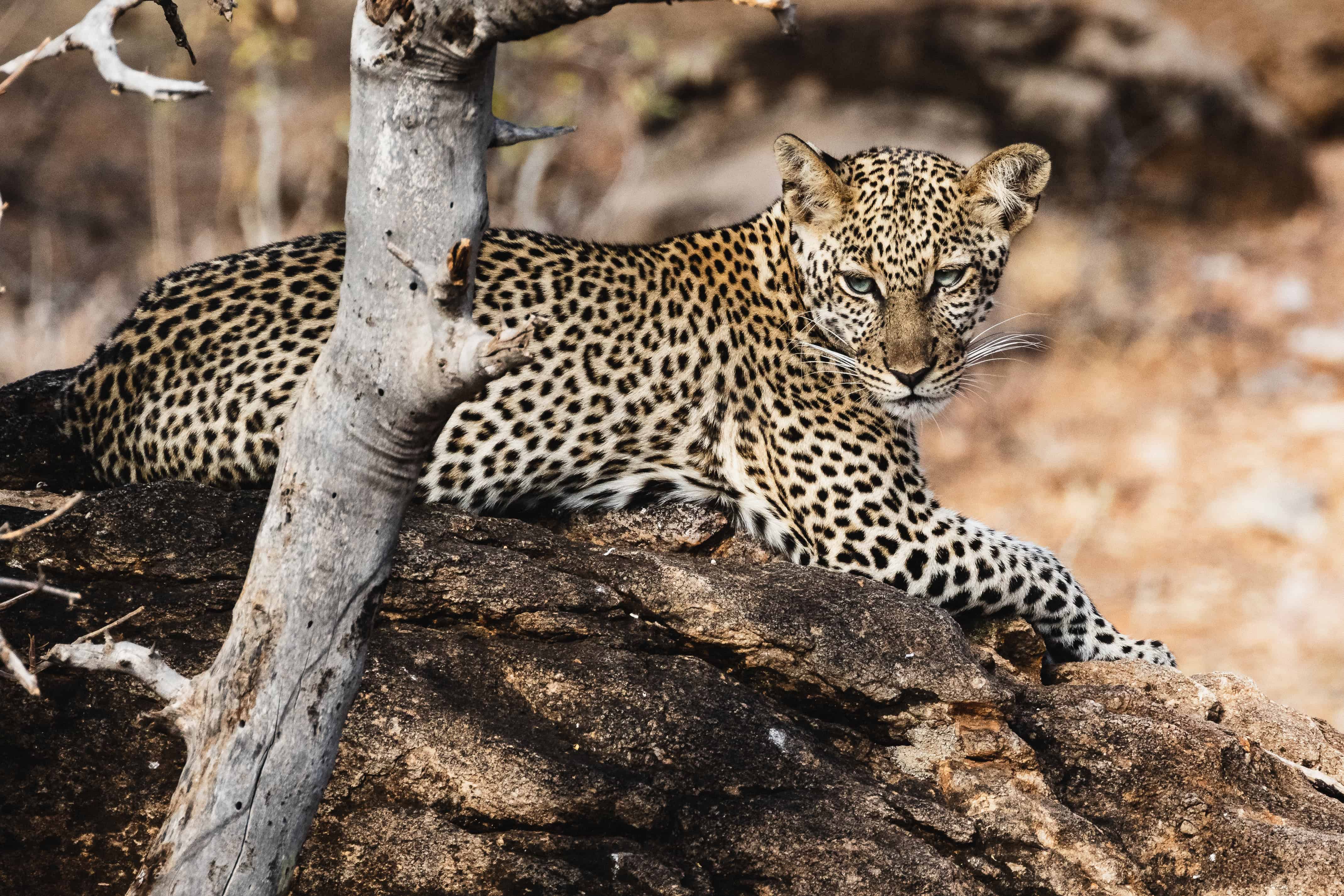
Sometimes, looking for a lion or leopard can be as easy as identifying their poo and recognizing their movements…
At mid-range lodges and tented camps, meals are included (full board), and you’ll enjoy things like sundowner drinks, cultural performances, or guided nature walks around camp at no extra charge.
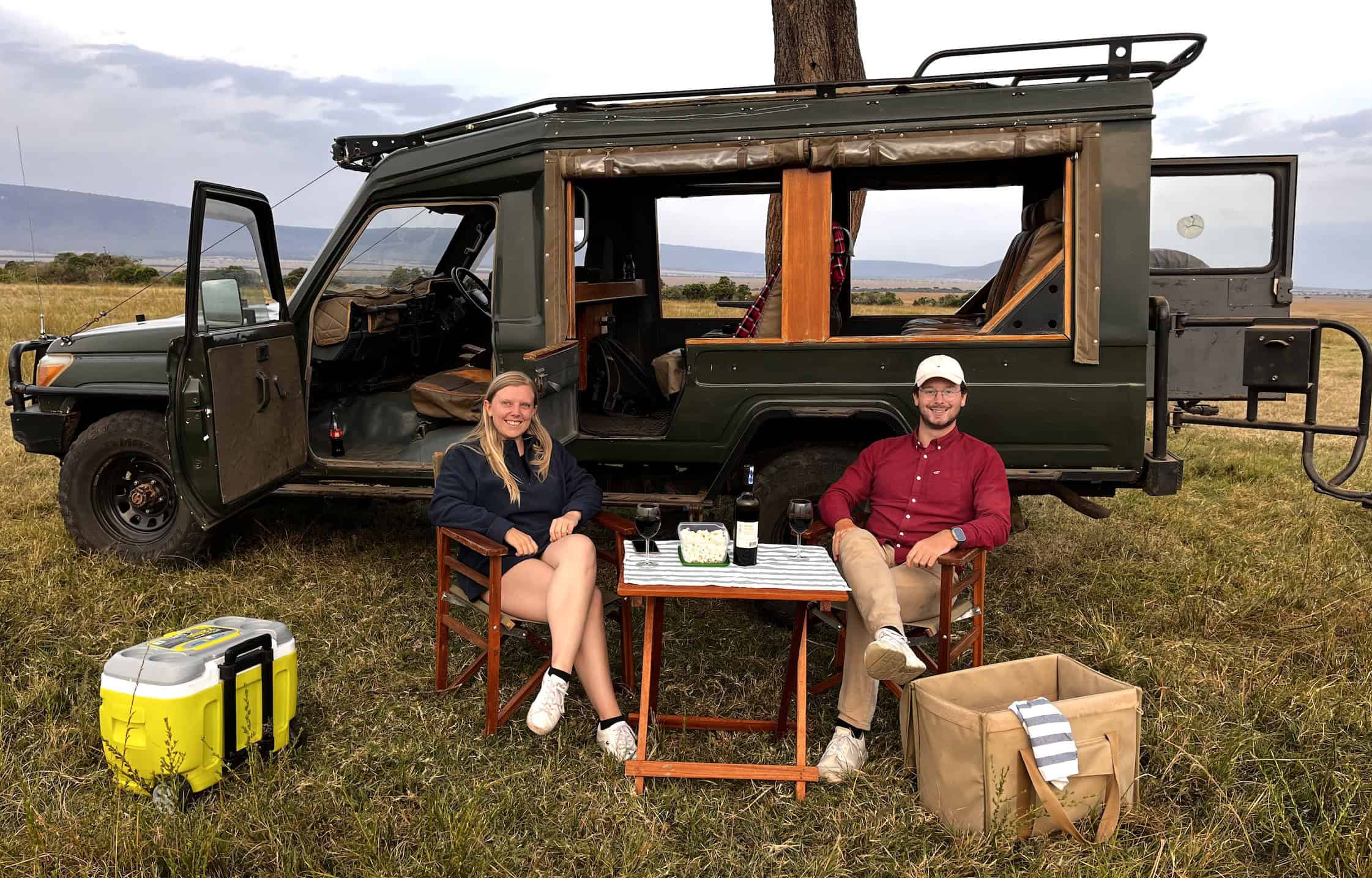
Locations are inside or very near the parks, so you get quicker access to wildlife each day.
A realistic mid-range safari itinerary might include 1 – 2 nights in a high-cost park (like the Masai Mara), balanced with a few nights in less expensive reserves or private conservancies where fees are lower, to keep the average cost reasonable.
Example mid-range safari price
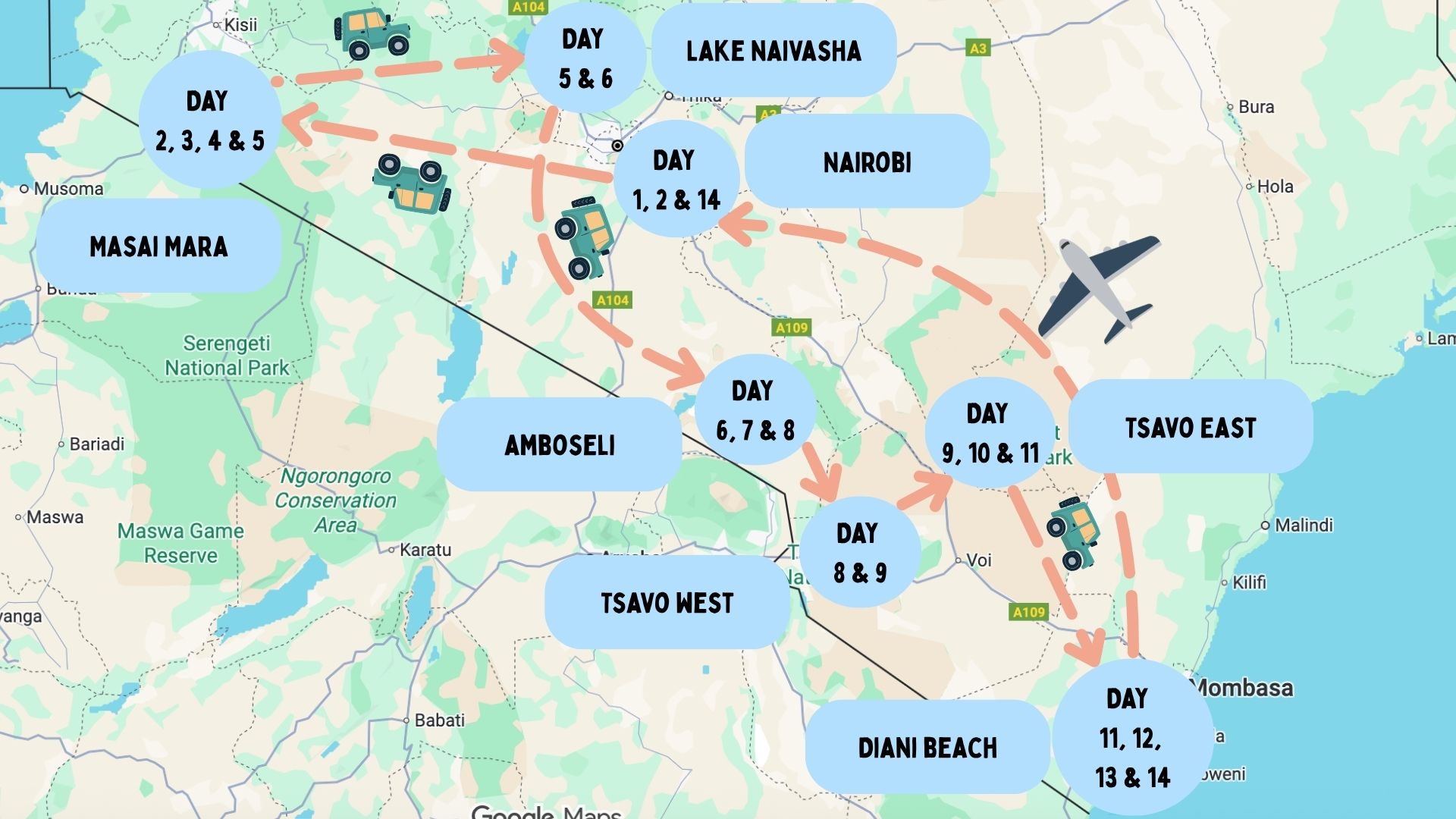
A 7-day mid-range private safari for two, covering Amboseli, Naivasha, and Masai Mara, costs around $3,000–$4,000 per person (roughly $450–$570 per day).
This includes a bush flight from the Mara back to Nairobi, a 4×4 vehicle and guide throughout, stays at comfortable tented camps (with en-suite bath) inside the parks, all meals, park fees, and possibly an extra activity like a night game drive in a private conservancy.
In a small group setting, a similar itinerary might be a bit less, perhaps $2,500 per person, because costs like the vehicle and guide are shared.
Luxury Kenya safari costs
At the luxury level, Kenya safaris become truly something else.
Luxury safaris typically start around $800 – $1,000 per person per day and can exceed $1,500+ per day for top-end exclusive experiences.
At this budget, “THE SKY IS THE LIMIT”.
Luxury safaris cater to travelers who want the very best lodges, personalized service, and seamless logistics.

What drives the high cost?
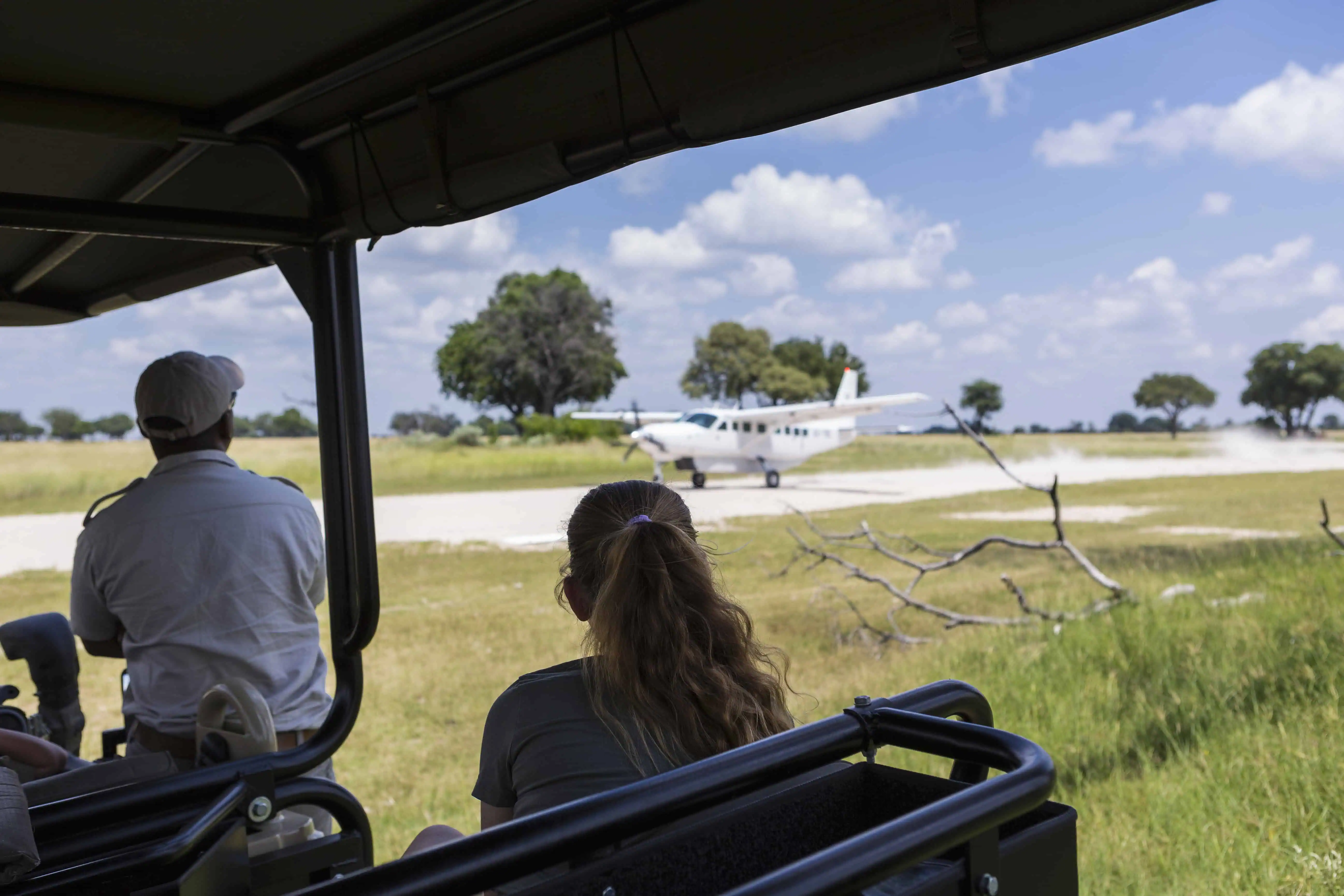
Firstly, luxury safari lodges and camps in Kenya charge $500 to $1,500 per person PER NIGHT just for accommodation.
These are the famous five-star camps often located in the best wildlife areas (e.g., overlooking the Mara River or on a private conservancy next to a national park).
Rooms are lavish tented suites or cottages with furnishings that rival a city boutique hotel – four-poster beds, indoor and outdoor showers, private plunge pools, and verandas where elephants wander past at sunset.
Such properties include all meals, drinks, laundry, and even local flights in their rates.
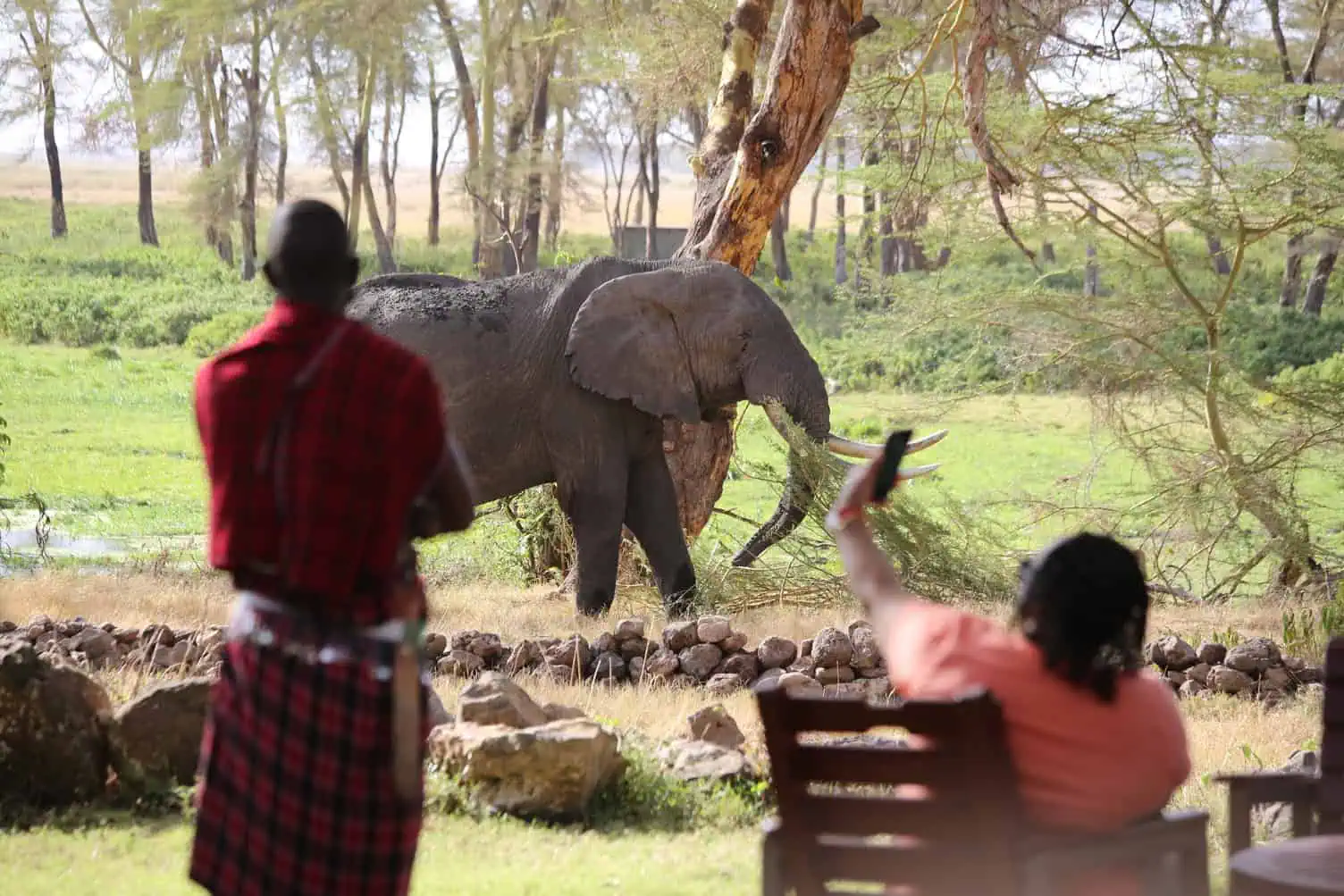
The level of service is top-notch: expect gourmet bush dinners, spa services, and very high staff-to-guest ratios (personal butler, anyone?).
Importantly, luxury camps often come with expert guides and trackers, and access to exclusive wilderness areas with fewer tourists.
Logistics on luxury safaris favor convenience and privacy.
It’s common to FLY BETWEEN PARKS in small charter planes rather than drive long hours.
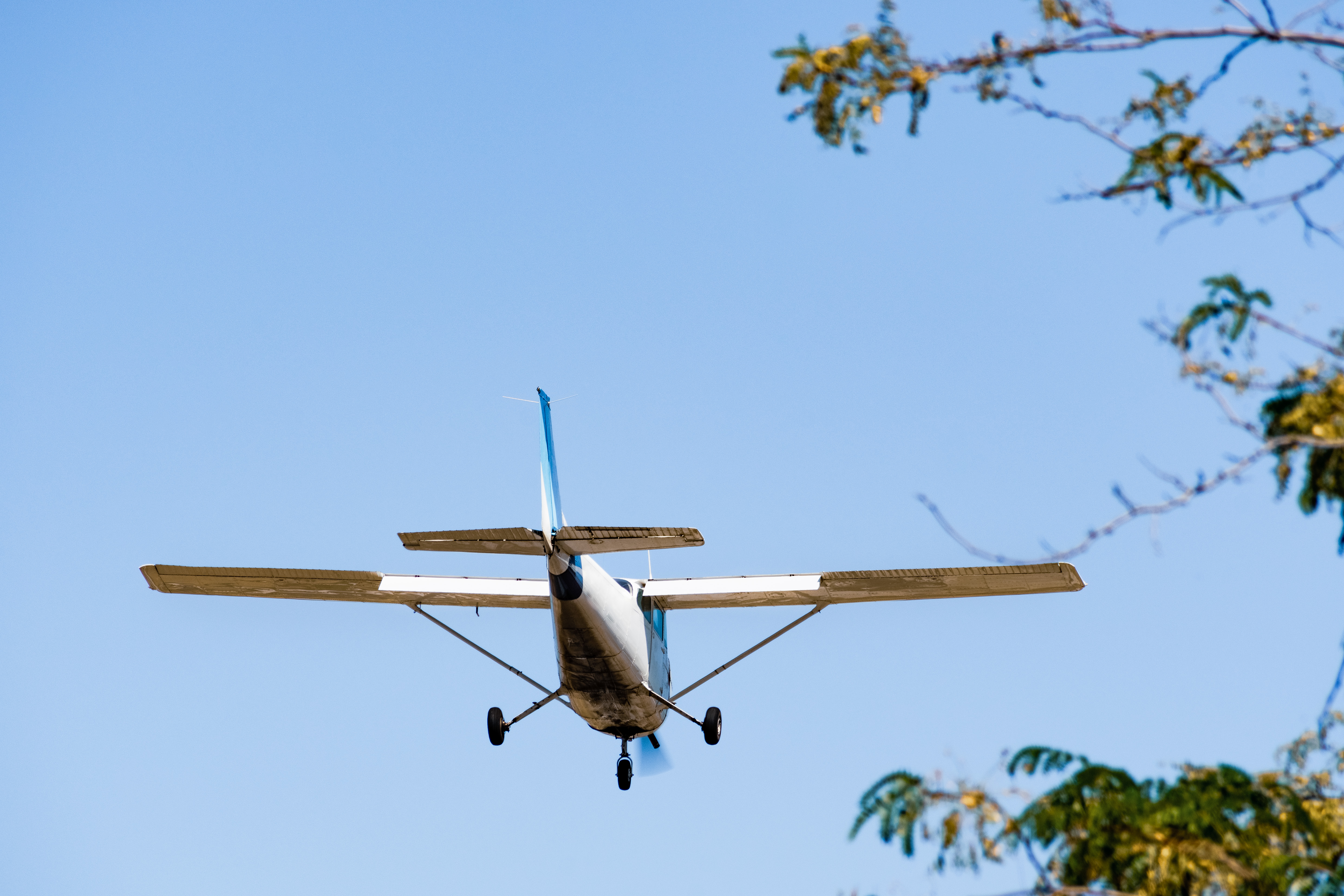
These internal flights can add approximately $300–$400 per person for each flight leg, but they allow you to hop between the Masai Mara, Samburu, and the coast quickly.
Many luxury packages are FLY-IN-SAFARIS: you’ll be picked up at an airstrip by your camp’s guide in an open 4×4 and whisked straight into game drives.
Vehicles are exclusive to your party in most cases, and often modified for comfort (plush seats, fridges with cold drinks) and better photography (unobstructed views).
Some luxury safaris are sold through international luxury tour agencies, which can drive costs even higher due to markups.
It’s not unheard of for ultra-luxury, all-inclusive Kenya safaris (with private chartered flights, celebrity guides, or multi-country extensions) to cost $15,000–$25,000 per person for a 10-day trip, and over $50,000 for the most lavish bespoke tours.
However, booking through reputable local luxury operators can often get you the same high-end experience for less, since you’re cutting out middleman commissions. That is why you can fill in our form below, and our local tour operators (the ones we have personally traveled with and trust) will contact you with a personalized quote.
Example luxury safari price
A 5-night luxury fly-in safari split between the Masai Mara and Amboseli might cost about $6,000 per person (around $1,200 per day).
That could include 2 nights at a posh camp in the Mara Reserve ($1,000+ per night range) and 3 nights at a deluxe ranch in Amboseli, all internal flights (Nairobi to Mara, Mara to Amboseli, Amboseli to Nairobi), private 4×4 vehicles and top guides at each location, all meals and drinks, laundry service, and special activities like a walking safari or nighttime drives on the private reserve.
Ultra-luxury touches, like a hot air balloon ride, spa treatments, or a private bush dinner under the stars, might be bundled in or available at extra cost. At this tier, every detail is handled, and the experience is extremely intimate and personalized.
Key factors that drive the safari cost in Kenya
Several key factors influence the cost of your Kenya safari.
Below are the main factors and how each can make your safari cheaper or more expensive:
Tour operator type (local vs. international)
Who you book with significantly affects the price of a kenya safari.
Local tour operators offer better Kenya safari rates because you’re paying the in-country price only.
Overseas travel agents or international safari companies often MARK UP PACKAGES BY 30% TO 300% (!) over what a local tour operator would charge for the same itinerary.
You’ll get the same lodges, vehicles, and routes for a much lower price, and often a more authentic, customized experience working with a local expert.
That is why we work with local tour operators we have personally traveled with! Fill in the form below and let them send you a PERSONALIZED ITINERARY based on your preferences and budget! No strings attached.
Prices for an itinerary like ours start from $360 per person per day (all-inclusive).
Simply fill in the form below to get FREE QUOTES from our trusted local tour companies that we’ve personally traveled with.
It only takes 60 seconds, and you’ll receive custom itineraries and pricing directly in your inbox within 48 hours.
Free of charge. No pressure. No obligation.
*Our trusted local partners create every itinerary with care. We kindly ask that you submit a request only if you’re considering traveling.
Group tour vs. private safari
The number of people you safari with affects your per-person cost.
Joining a group tour (sharing the vehicle with others) is cheaper because costs like the guide, jeep, and fuel are split.
As we noted earlier, a group safari is around $200 per person per day, whereas a private safari could be roughly $400 per person per day for the same itinerary if just a couple is traveling.
The trade-off is that group tours have fixed itineraries and less flexibility, as you’ll be on a set schedule and route with strangers whose interests may vary.
Private safaris let you tailor the schedule (e.g., spend more time watching a cheetah on a kill if you want, or start the day later if you’re tired) and often allow more intimate wildlife viewing.
Season (time of year)
Safari pricing in Kenya swings with the seasons.
There’s a high (peak) season, a low season, and shoulder periods in between. It’s important to understand the difference between the dry and the wet season!
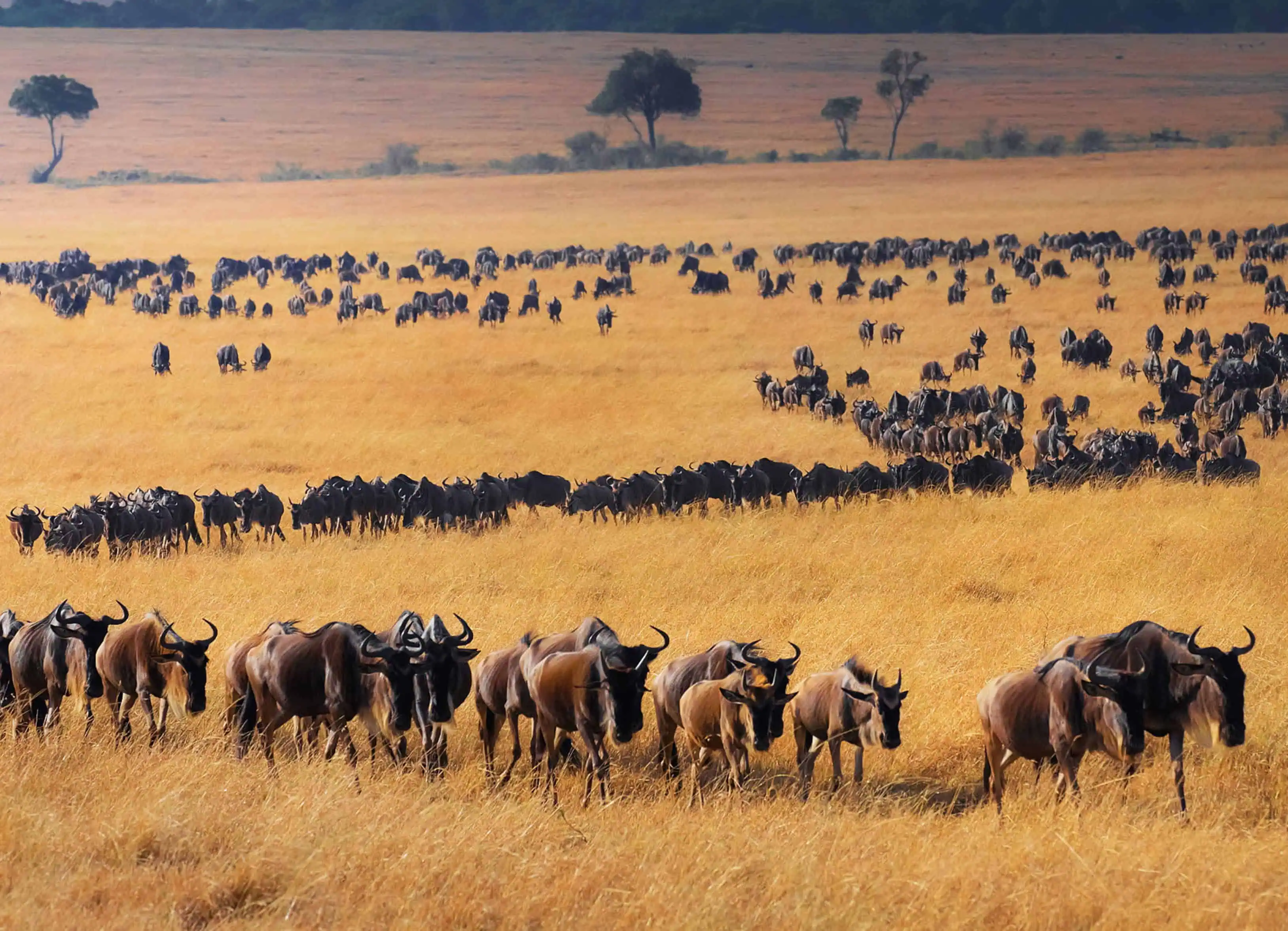
Peak safari season runs from about June through October, during the dry season and the Great Migration months in the Masai Mara (July–Aug).
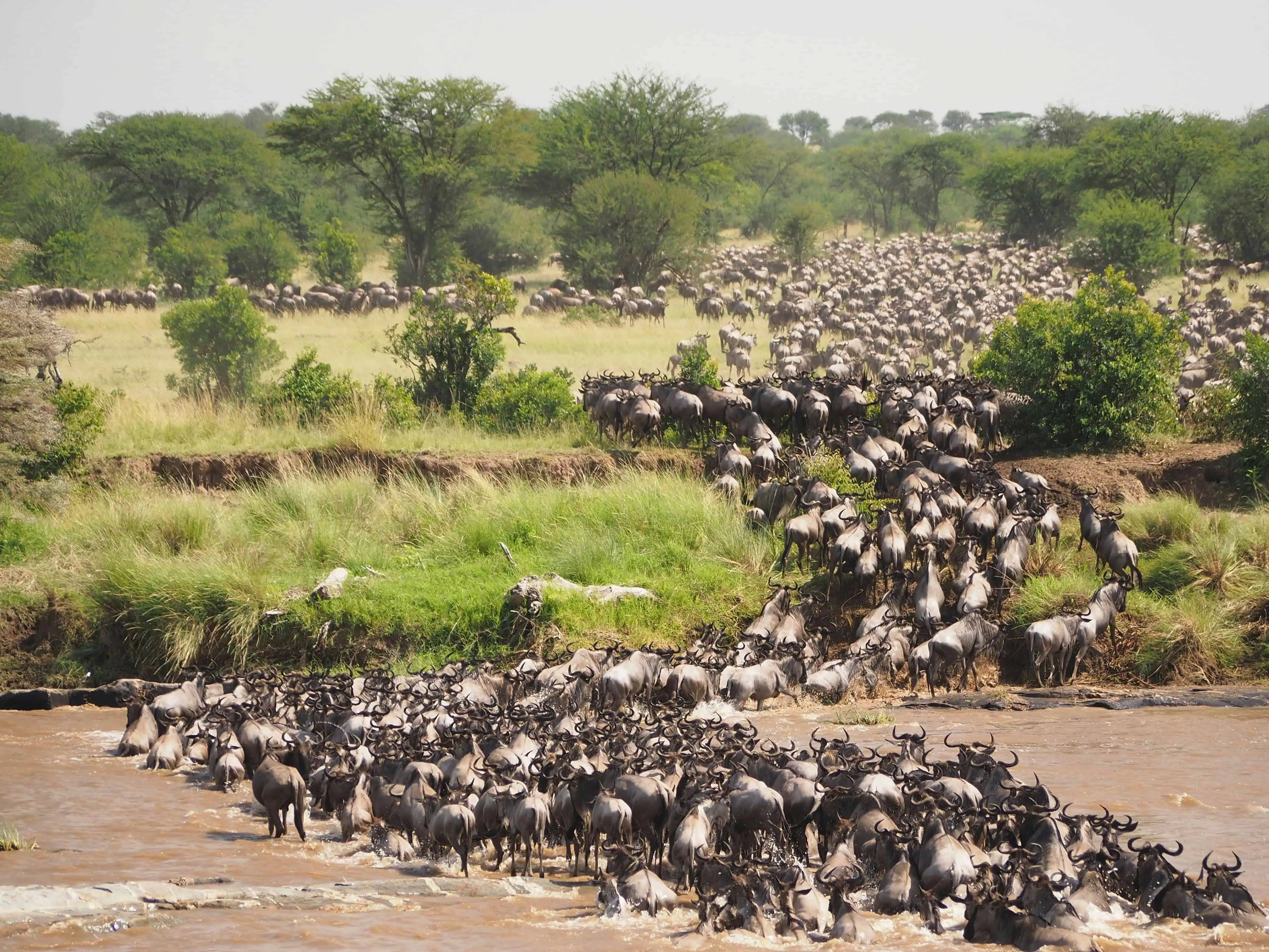
During these times, demand is high and lodges charge their highest Kenya safari rates, and national reserves (not national parks) have higher entry fees as well.
For example, the Maasai Mara National Reserve entry fee is $100 per adult per 12 hours (6 am to 6 pm) in low season, but $200 (!) in high season.
That’s double the cost to enter the same park in peak migration months!
Accommodation type & location
The type of accommodation you choose is one of the biggest cost drivers.
Budget safaris use basic lodgings or campsites, mid-range safaris use comfortable lodges/tented camps, and luxury safaris use high-end camps or lodges.
Sometimes, even within the same park, you’ll find a huge price range for lodging.
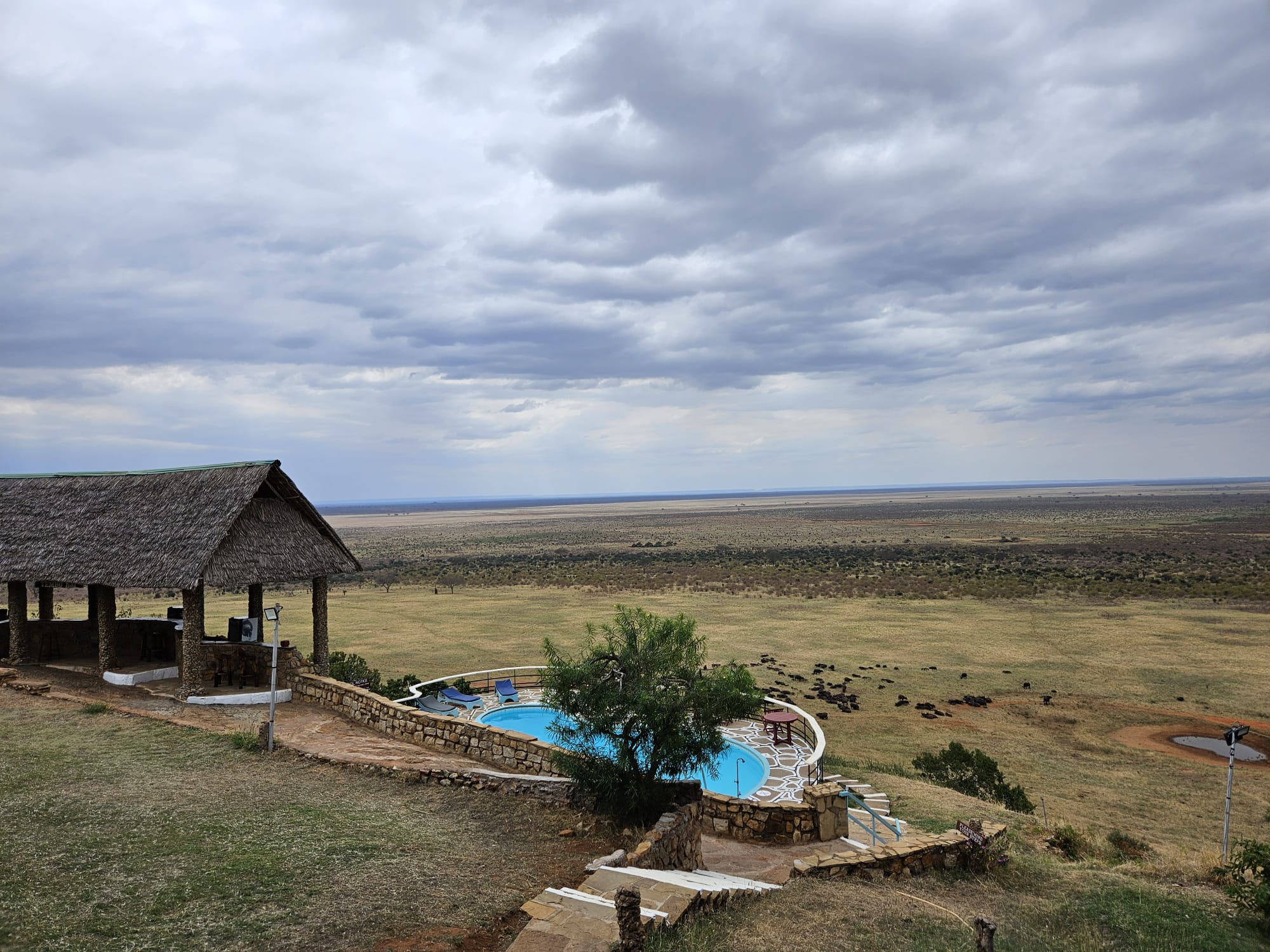
For example, in the Masai Mara, you could pay $100 per night at a simple camp just outside the reserve, or $1,500 per night at a famous luxury tented camp inside a prime game-viewing area.
What are you paying for?
Location, exclusivity, and amenities.
Staying inside a park or reserve usually costs more than staying outside (lodges outside the park boundaries tend to be cheaper).
However, staying inside means you can start game drives earlier, end later, and sometimes do night drives or walks, and you don’t waste time commuting from an outside hotel to the gate each day.
If cost is a concern, a common strategy is to stay just outside major parks. Many budget lodges near park gates offer guided drives inside the park by day, but cheaper rooms since they’re on community or private land.
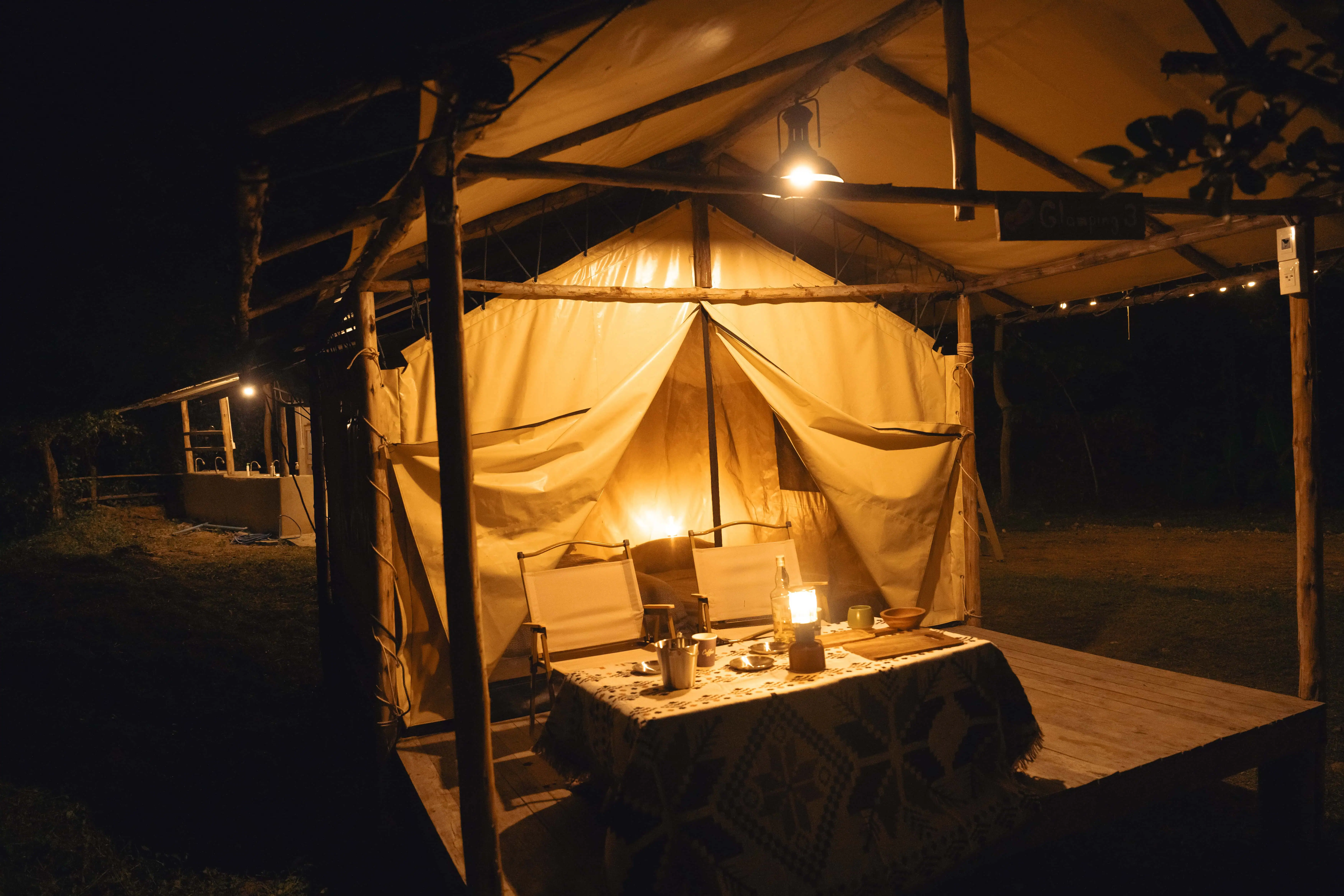
Also consider tent style vs. lodge vs. camping: If you’re okay with rustic comfort, you might opt for a “bandas” or basic safari tents with shared bathrooms at a site like public campsites in Nakuru or affordable tented camps in Amboseli, which saves money.
On a mid-range or luxury safari, you’ll have ensuite bathrooms, comfy beds, electricity, and often perks like pools or Wi-Fi.
Transportation (road vs. air vs. self-drive)
How you move around also impact the safari prices in kenya.
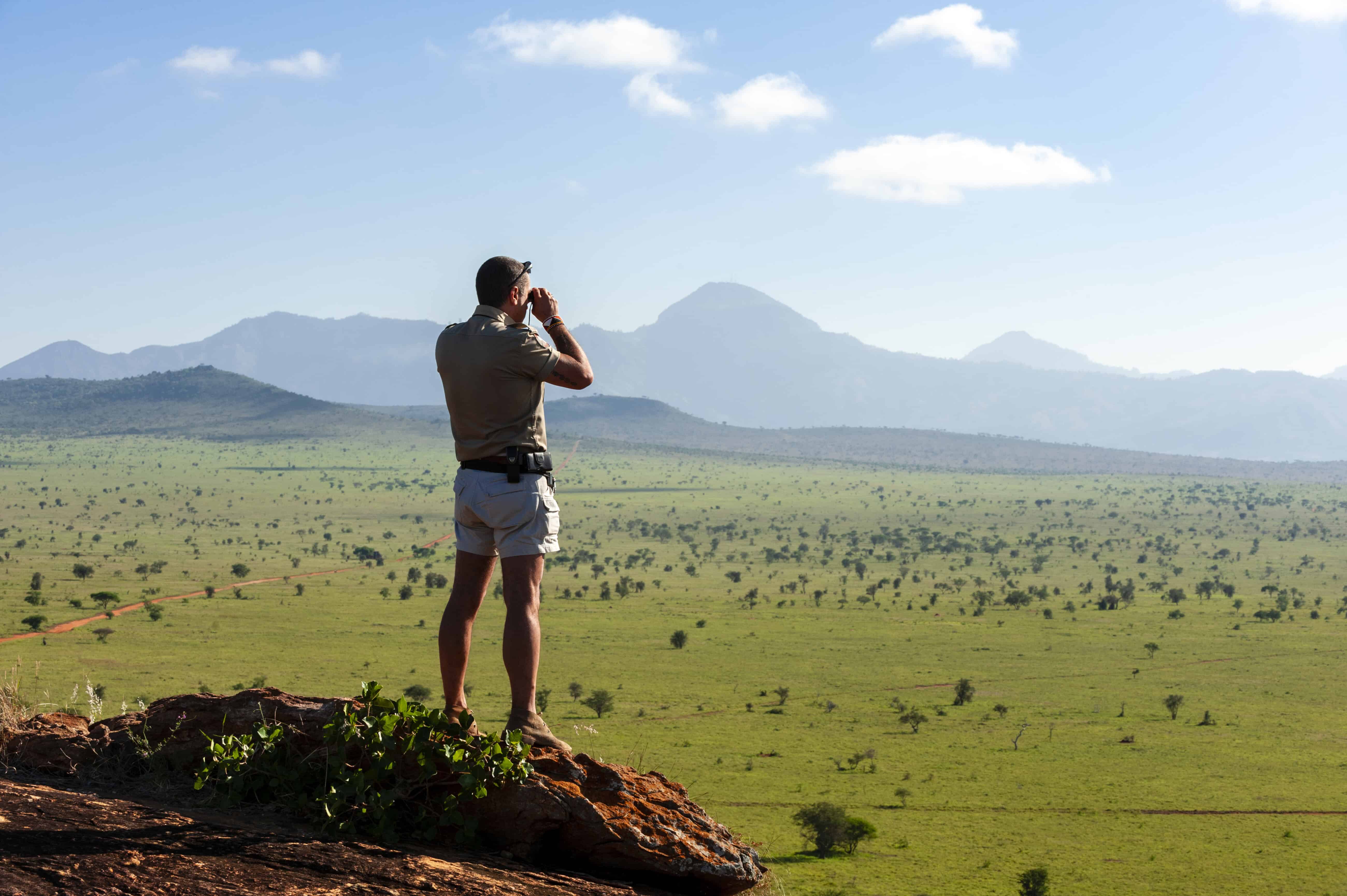
The cheapest way is typically an OVERLAND DRIVING SAFARI, where your safari vehicle and driver-guide take you from park to park via road.
This is what most group and mid-range tours do.
It’s cost-efficient because you’re just paying for fuel and vehicle use, but keep in mind Kenya is large and road conditions can be rough, so you’ll invest more time in transit, on average, around 4-6 hours.
Some travelers go for FLY-IN SAFARIS to save time: taking domestic flights to national parks like the Masai Mara, Amboseli, Samburu, or the Kenyan coast.
While super easy, these flights cost money. A one-way flight from Nairobi to the Masai Mara, for example, might be $300 per person.
If your itinerary has multiple hops (e.g., Nairobi -> Samburu -> Mara -> Nairobi), the flight costs add up quickly (several hundred dollars each leg).
Thus, driving is cheaper, but flying can raise your total considerably.

Within the parks, your transport will be the safari jeep (with driver).
However, note that some high-end safaris use SPECIALIZED VEHICLES (open-sided Land Cruisers, for example), or even offer private air transfers like helicopter hops, all of which are part of the luxury price tag.
On the other hand, budget safaris might use minibus vans, which cost less than heavy 4×4 Land Cruisers but can be less capable on muddy terrain.
Self-drive safaris
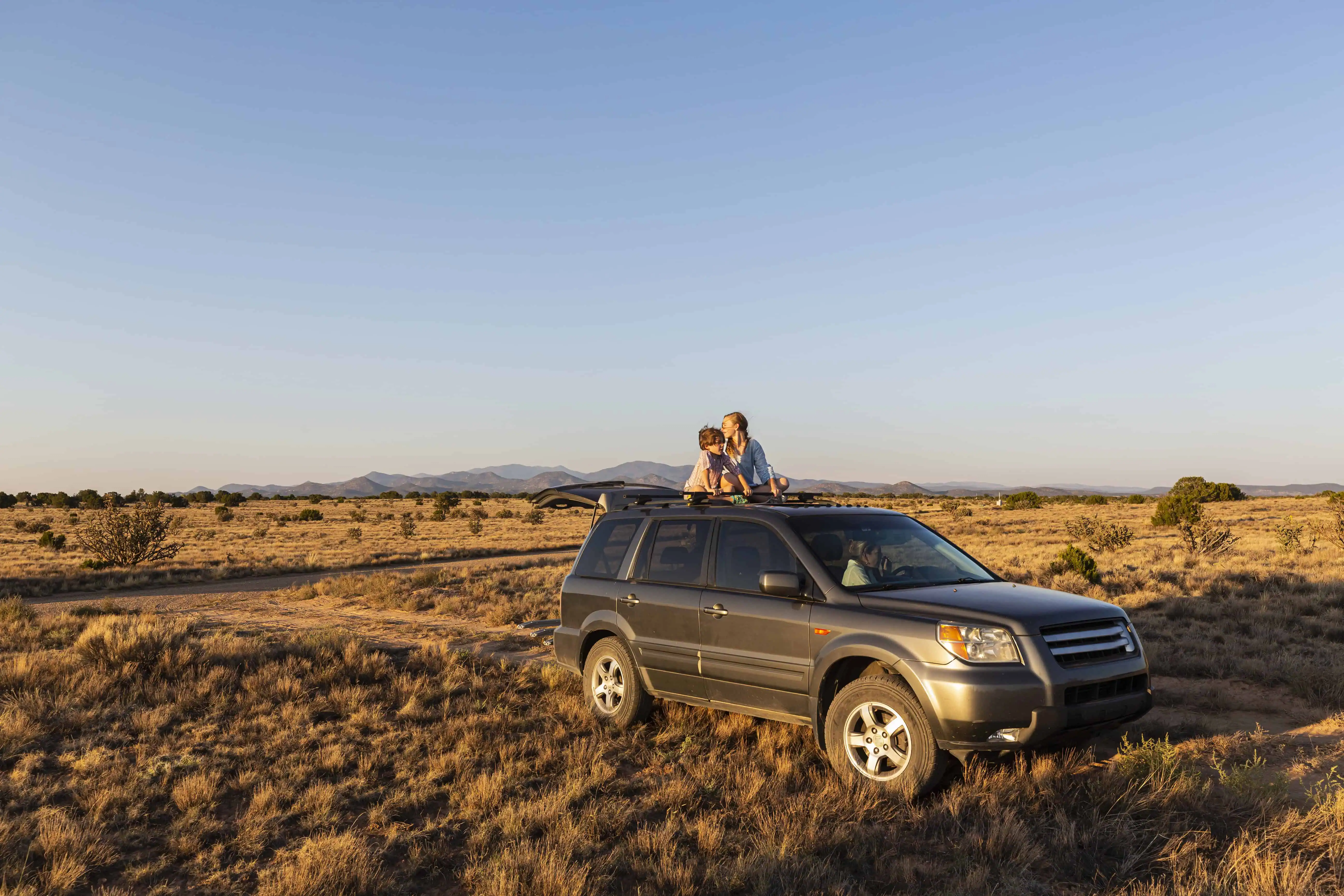
What about SELF-DRIVE SAFARIS? Self-driving in Kenya is not common for first-timers, unlike in some Southern African countries.
It can be the lowest-cost option if you are an experienced traveler. Then you’d rent a 4×4 vehicle and pay all park fees, fuel, and lodging yourself.
However, in practice, many find that the savings are not huge once you add fuel, rental (which can be $100+ per day for a 4×4), park fees, and lodging.
Plus, you miss out on having a guide who knows where animals are, and you won’t have access to the rangers’ wildlife radio network.
There’s also the challenge of navigation: Kenya’s parks often lack good maps or signage, and getting lost or stuck ruins a trip.
Some parks (like the Maasai Mara) do allow self-driving, but others require a guide, and night drives or walking on your own are prohibited in all national parks for safety.
Self-driving is more feasible in smaller parks with clear tracks (e.g., Amboseli or Lake Nakuru) or for visiting parks on a tighter budget.
👉 KEEP IN MIND: Many travelers conclude that hiring a local driver-guide is worth the extra cost for the stress it saves and the wildlife you’ll encounter that you might have missed on your own.
Cultural add-ons: Maasai and Samburu village visits
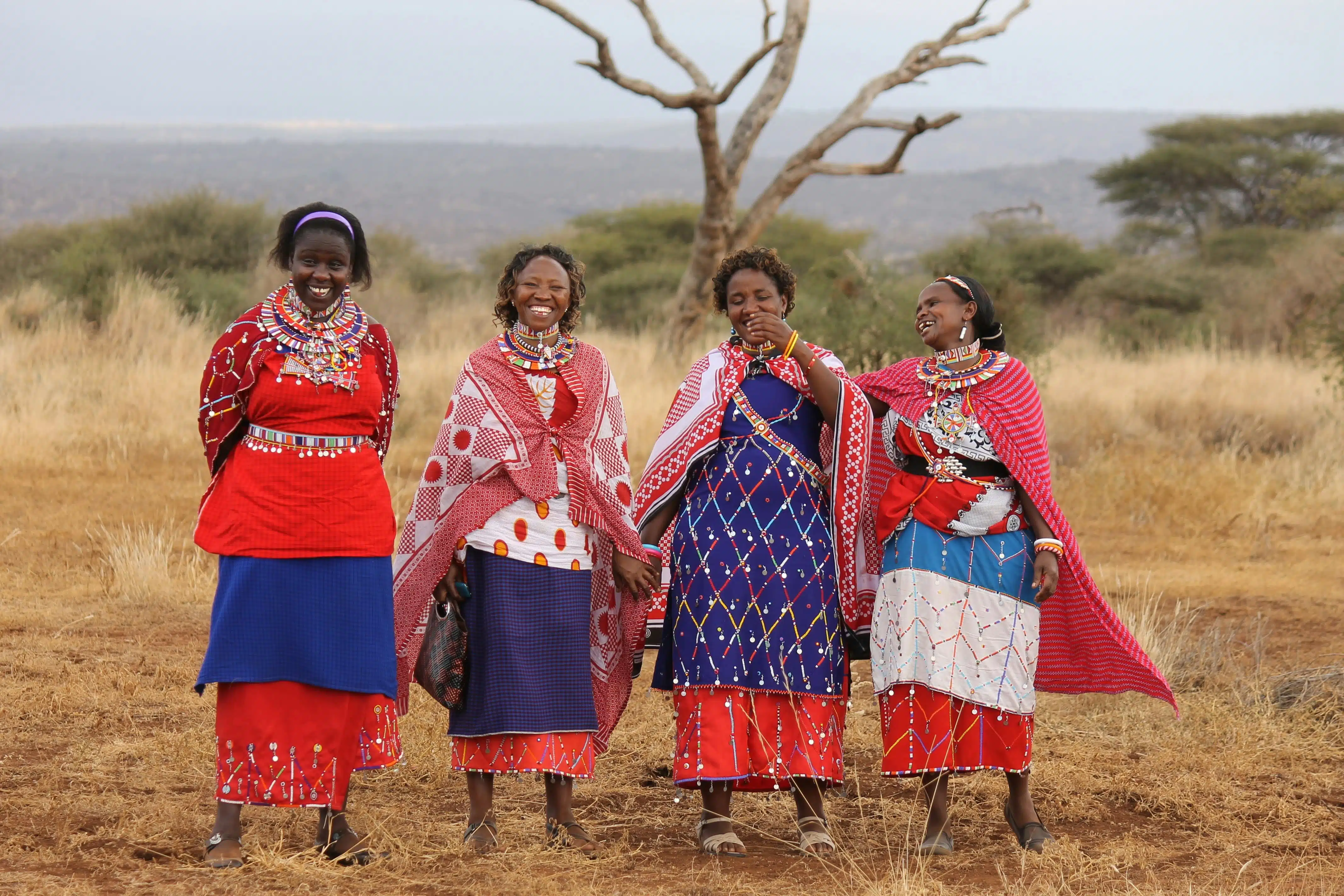
Beyond wildlife, Kenya’s rich human cultures are a highlight for many safari-goers.
Two popular cultural add-ons are visits to a Maasai village or a Samburu village.
These experiences offer a chance to meet indigenous communities, learn about their way of life, and support them through tourism.
They are optional excursions (not automatically included in safari packages), and they do come with an extra cost, so it’s good to know what to expect.
Visiting a Maasai or Samburu Village: In the areas around Maasai Mara and Samburu, local communities welcome visitors to their MANYATTAS (villages).
A typical village tour lasts about an hour.
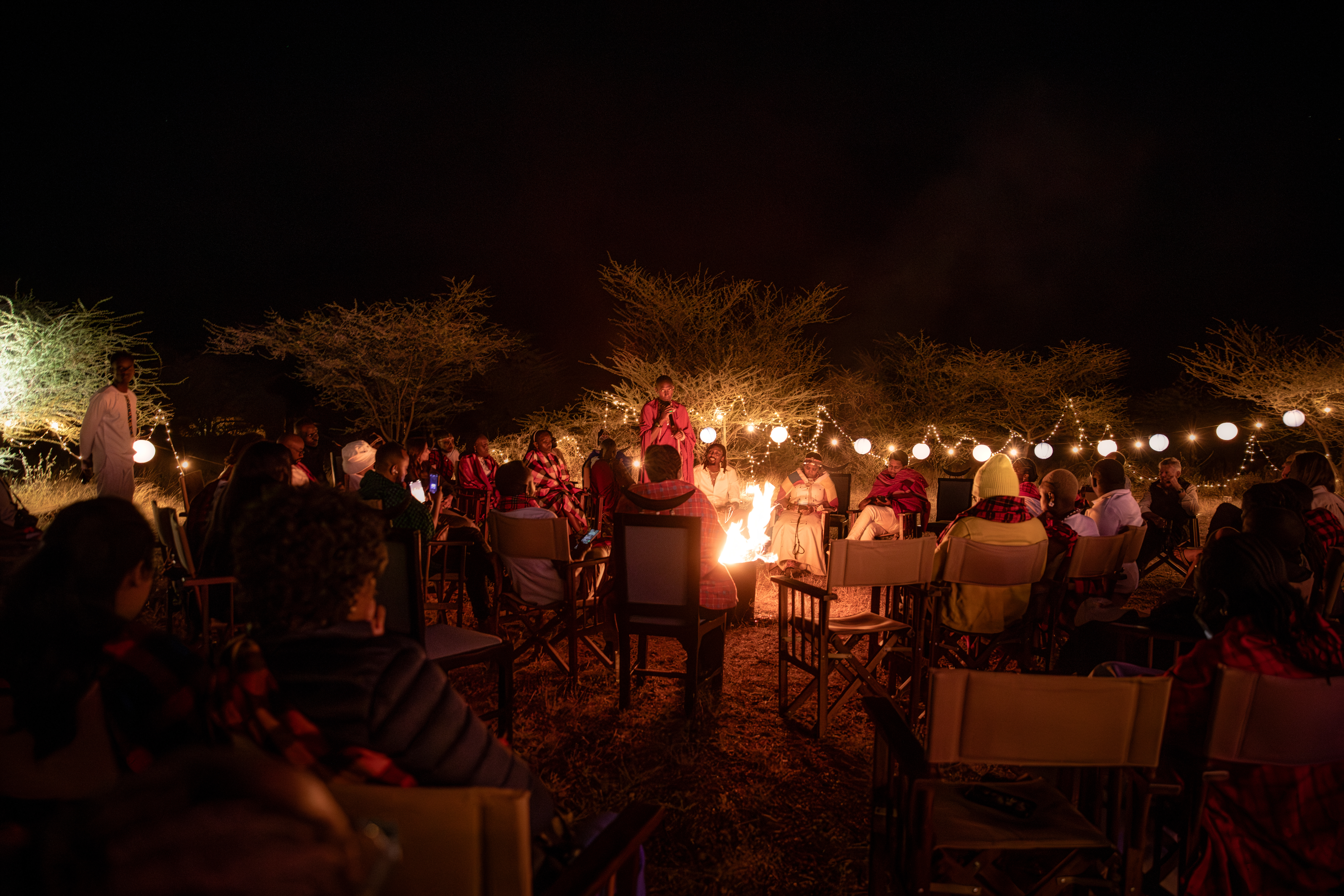
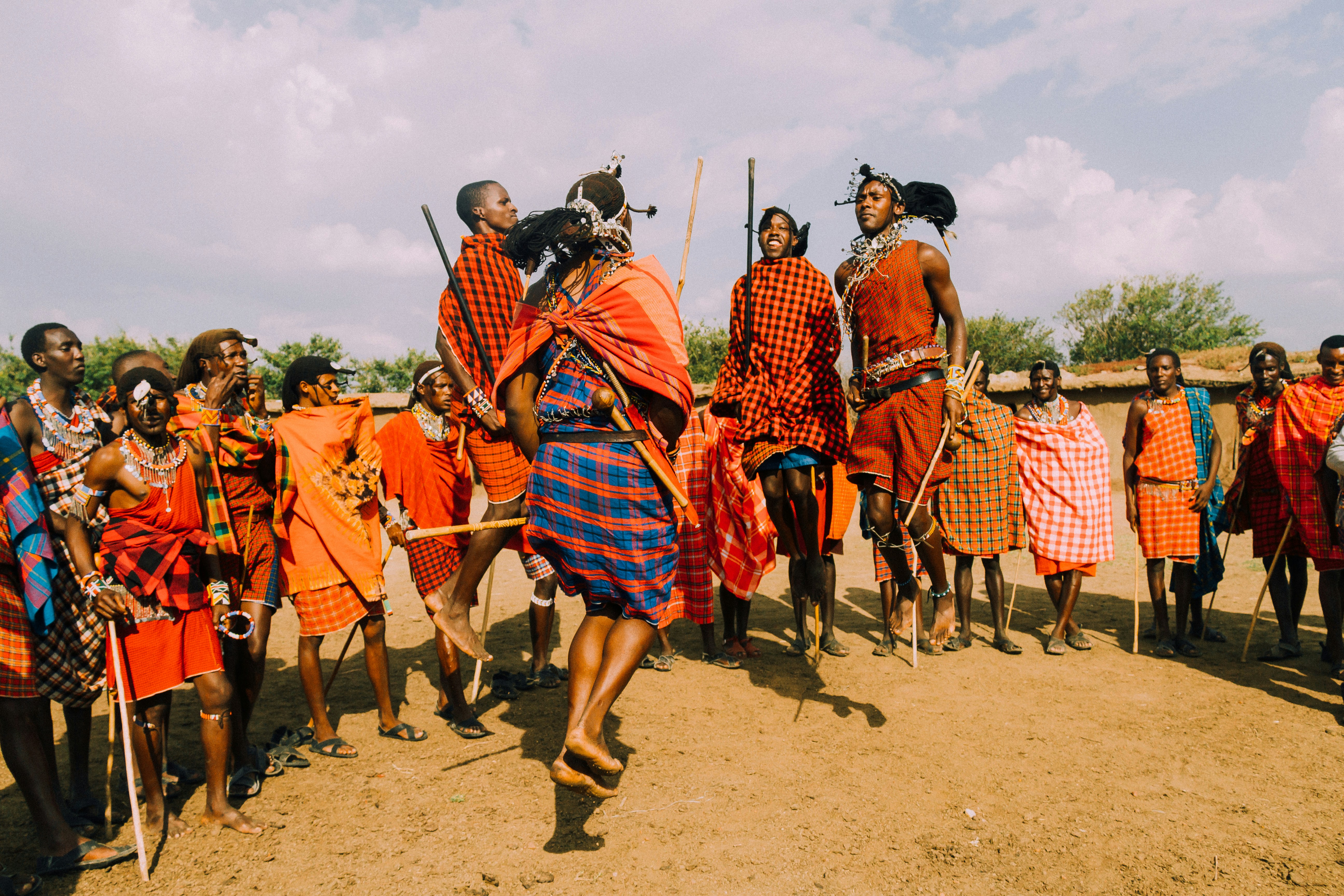
The villagers will perform traditional songs and the famous ADUMU (jumping dance), where the moran warriors leap high to show their strength.
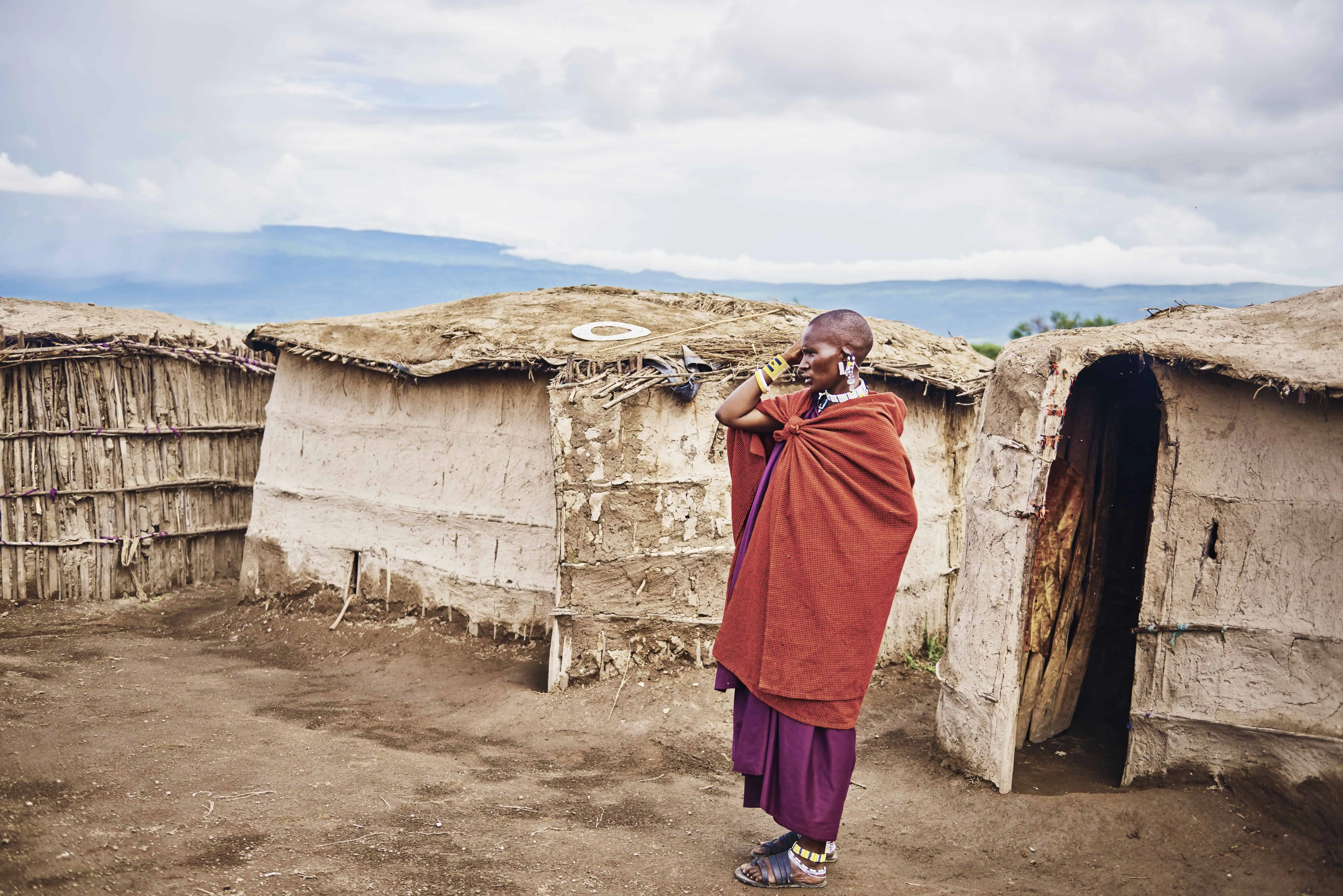
You’ll get to peek inside a traditional hut, learn how they build their homes from mud and sticks, and hear about their pastoral lifestyle and rituals.
At the end of the visit, there is a small MARKET where the women sell beadwork, jewelry, and crafts; there’s no obligation if an entry fee was paid.
The cost to visit a Maasai village or Samburu village ranges from $25 to $50 per person.
This fee usually goes to the community (often paid to the village chief or a cooperative fund).
In many cases, if you’re on a guided safari, your driver can arrange the visit and pay the fee on your behalf (usually the lower end, around $20–$30, because local guides have relationships with villages).
If you’re staying at a lodge and request a village visit through the camp, sometimes the price is a bit higher (closer to $50) as the lodge organizes the logistics.
Be prepared to pay in cash (USD or Kenyan shillings).
Are these add-ons worth it?

We believe they are, as they provide you with an insight into real-life nomadic communities.
The Maasai village you’ll visit is often NOT REALLY IN USE, but you’ll see many villages on your trip around Kenya that are being used and look just the same.
During a morning and afternoon safari, there are often 4-5 free hours. It’s the perfect time to go to a village and see how these tribes live traditionally, which you can’t quite get from a hotel dance show.

Special interest safaris: birding, photography, walking, balloon & Mount Kenya
Kenya’s safari offerings go well beyond the standard game drives.
There are specialized safaris and add-on activities like bird watching, wildlife photography, walking in the bush, or even a hot air balloon ride over the savanna available.
Birding safaris in Kenya

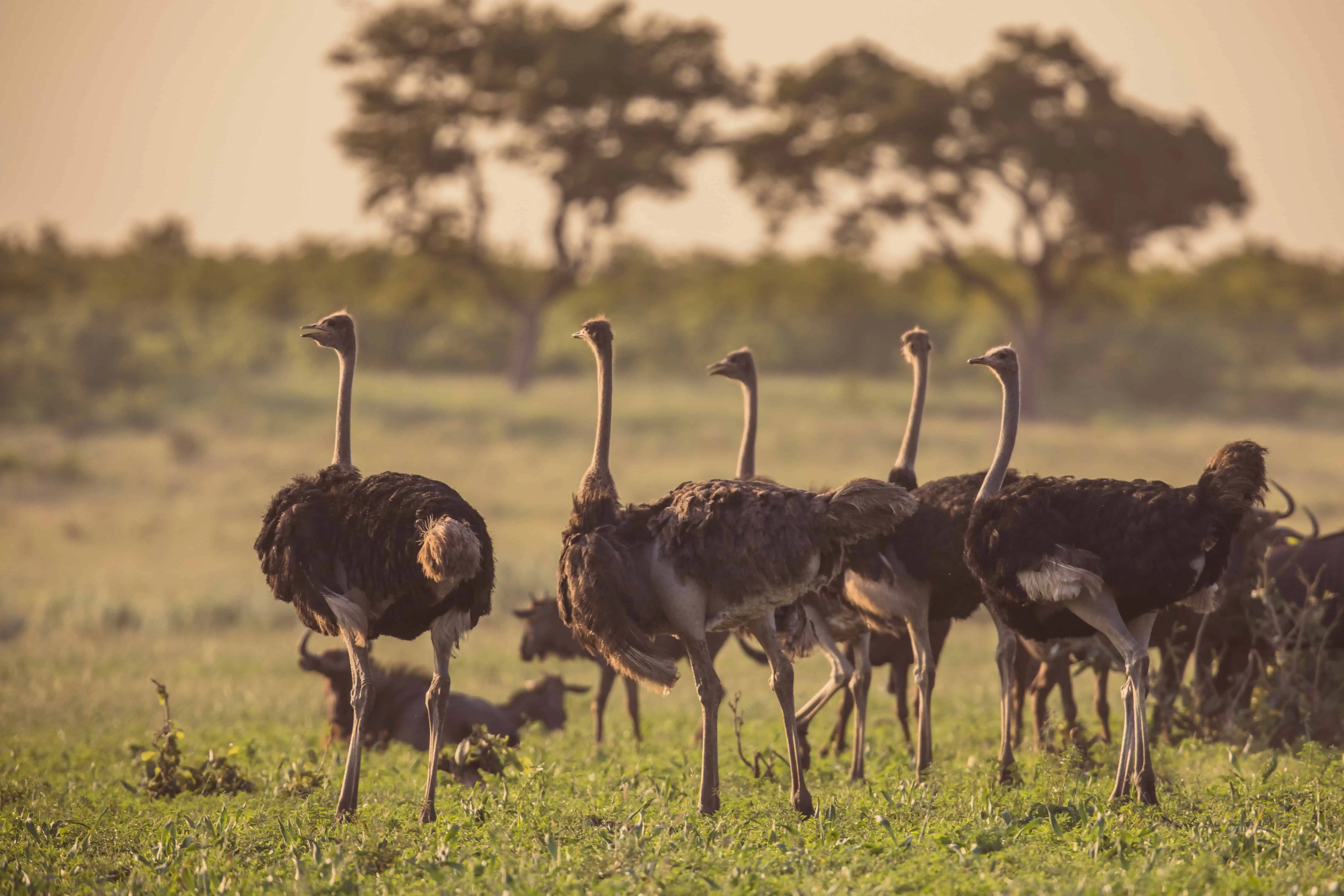
With over 1,100 (!) BIRD SPECIES, Kenya is one of Africa’s top birding destinations.
A birding safari focuses on spotting species from flamingos and ostriches to rare raptors and forest endemics, guided by an expert who can identify calls and behaviors.
You’ll visit diverse habitats like the Rift Valley lakes (Nakuru, Naivasha, Baringo), Kakamega Forest, Masai Mara, and arid northern reserves for dry-country species.
Cost: A birding safari costs slightly more than a standard Kenya safari due to specialist guides and longer routes.
Expect to pay $50 to $100 extra per person per day.
Photography safaris in Kenya
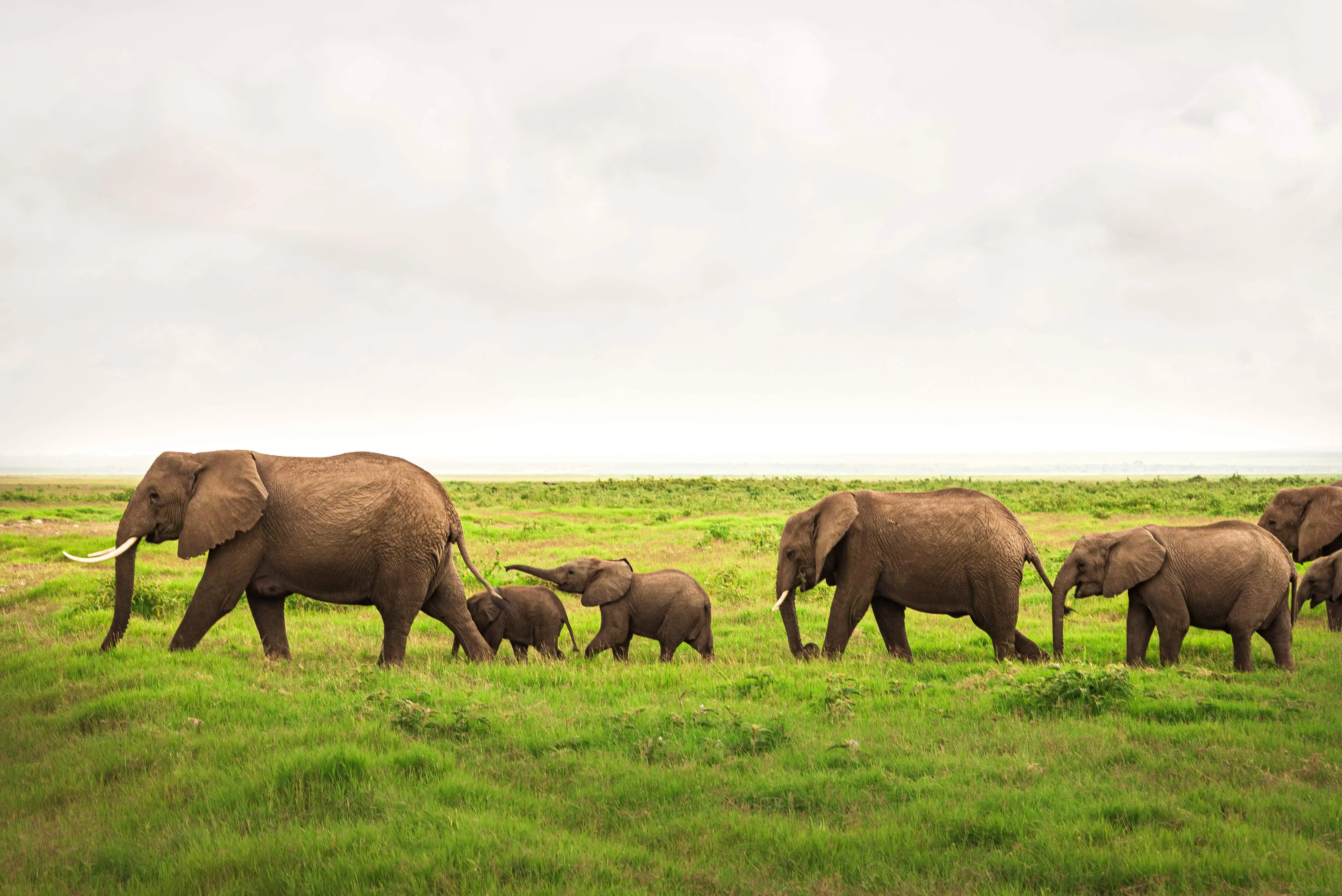
Kenya’s wildlife and landscapes make it a dream for photographers, from beginners to professionals.
A photography safari focuses on light, patience, and time, with longer stops at sightings to capture perfect Instagram and YouTube shots.
Setups vary:
- Specialist guides: High-end tours led by pro photographers who teach technique and ensure the best vantage points.
- Modified vehicles: Open 4x4s with removable windows, swivel seats, and beanbags designed for photography comfort.
- Small groups: Usually 2 to 4 guests per vehicle for clear shooting angles.
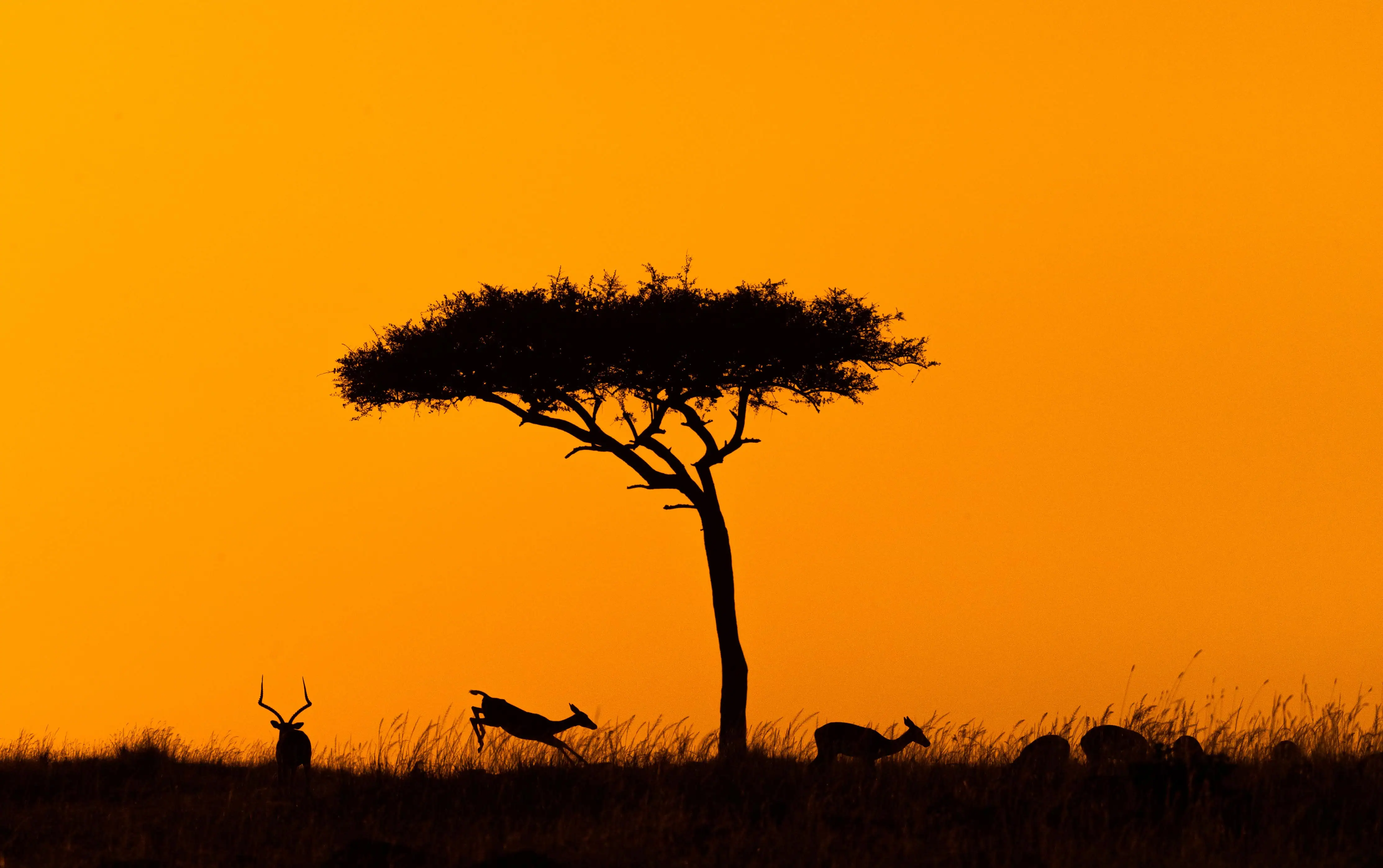
Cost: Expect to pay $50 to $150 extra per person per day above a regular Kenya safari price.
A mid-range 7-day photo safari with a professional guide typically costs about $4,000 per person, while luxury trips with renowned photographers can reach $8,000+.
Walking safaris and hiking in Kenya
A walking safari lets you experience the African bush up close, guided by an armed ranger who teaches you about tracks, plants, and animal behavior.
While most national parks don’t allow walking, it’s available in private conservancies around the Masai Mara, Laikipia, and in Hell’s Gate National Park, where you can even walk or cycle safely.
Northern Kenya also offers multi-day camel trekking safaris led by Samburu guides.
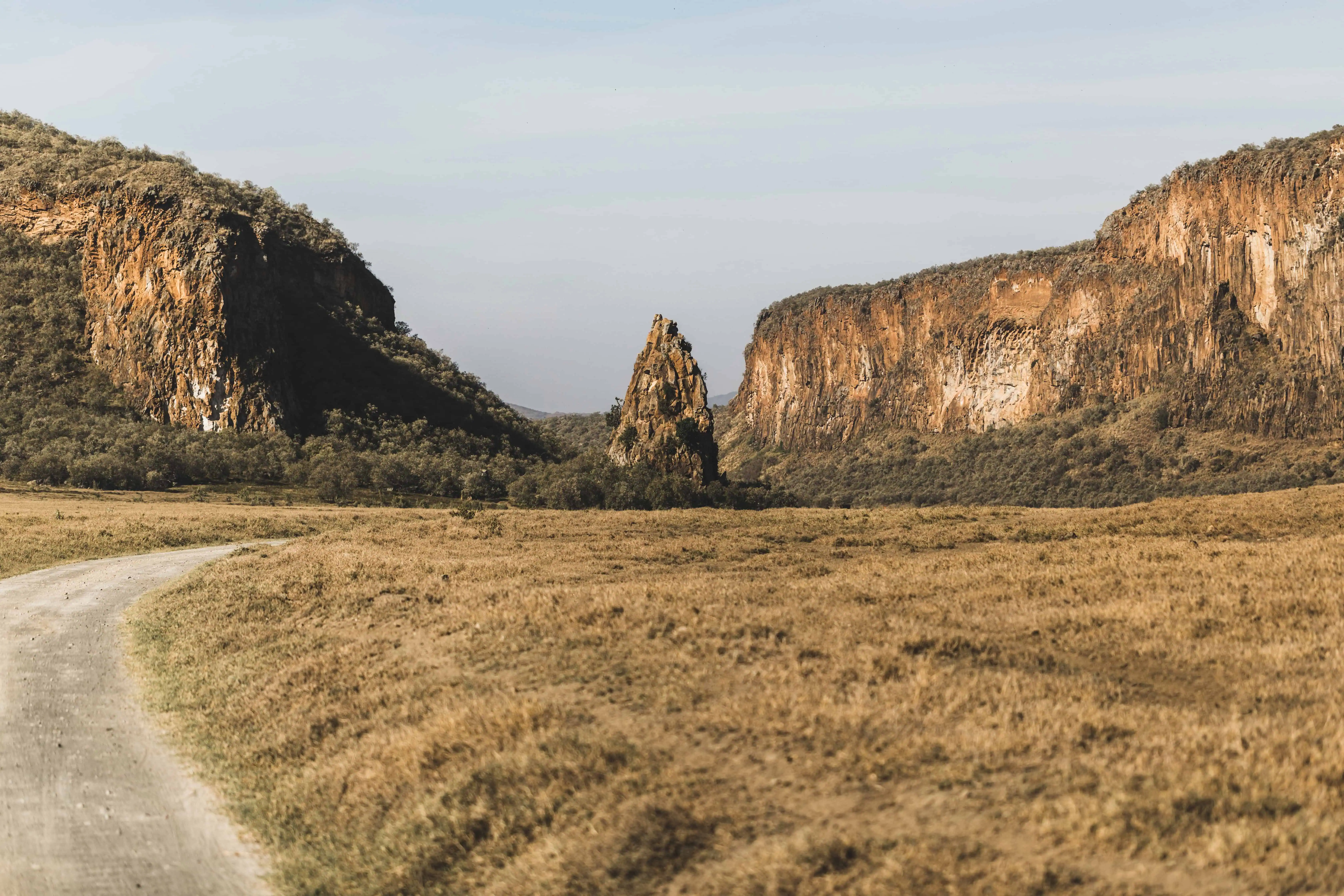
Cost: Short guided walks at lodges are often included or cost $30 to $50 per person.
Full walking safaris with rangers and support vehicles cost $150 to $200 per person per day, added to your normal Kenya safari cost.
These often feature small groups, fly-camping, and high guide-to-guest ratios for safety.
Walking safaris are rewarding and immersive, perfect for active travelers who want a deeper connection with the landscape.
Note that age limits (12–15+) apply for safety reasons.
Hot air balloon safari

A hot air balloon safari offers one of the most spectacular perspectives of Kenya’s wildlife and landscapes.
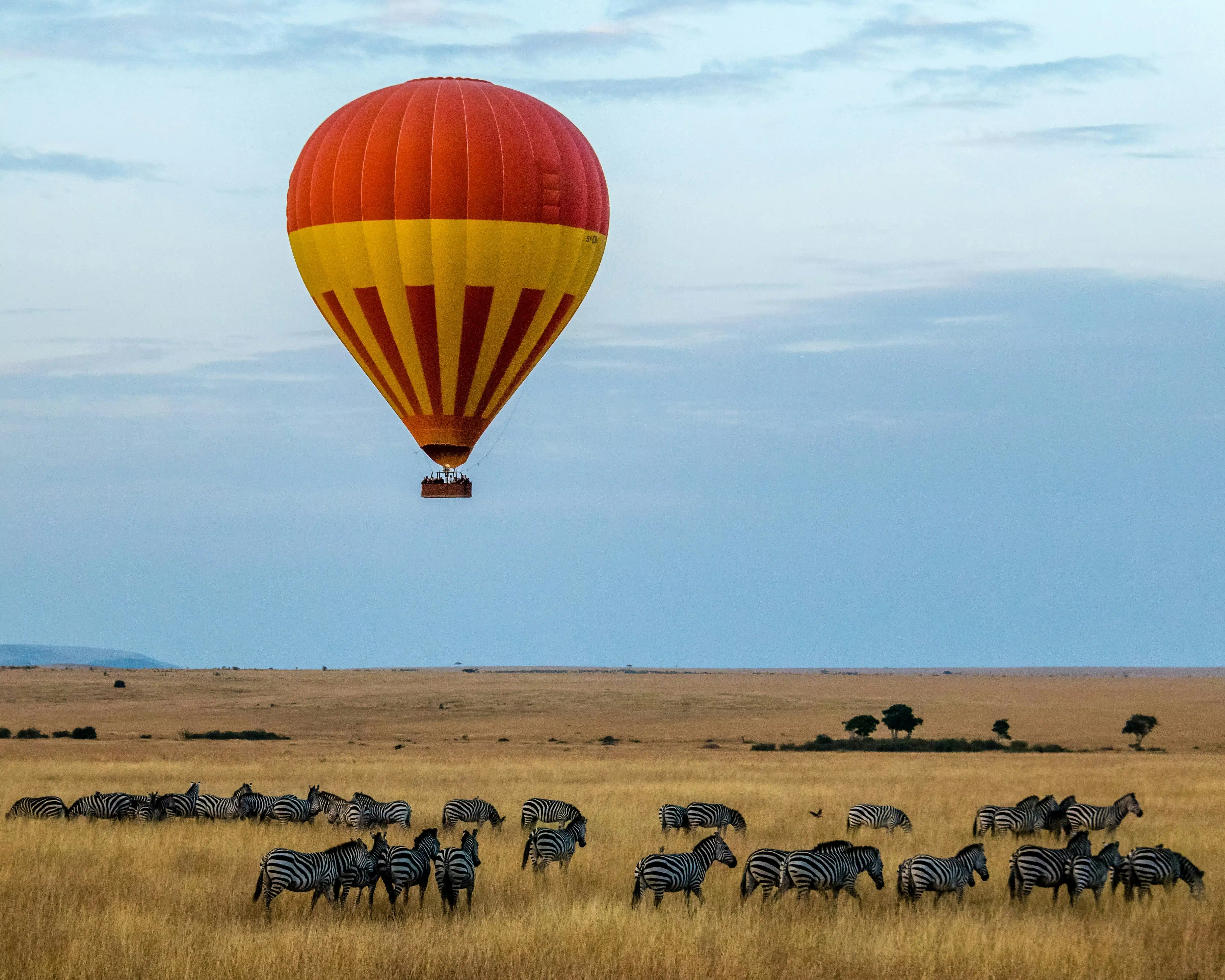
Floating silently at sunrise above the Masai Mara National Reserve, you’ll spot elephants, giraffes, and even the Great Migration from the air.
The experience ends with a CHAMPAGNE BREAKFAST in the bush, making it a memorable highlight of any Kenya safari.
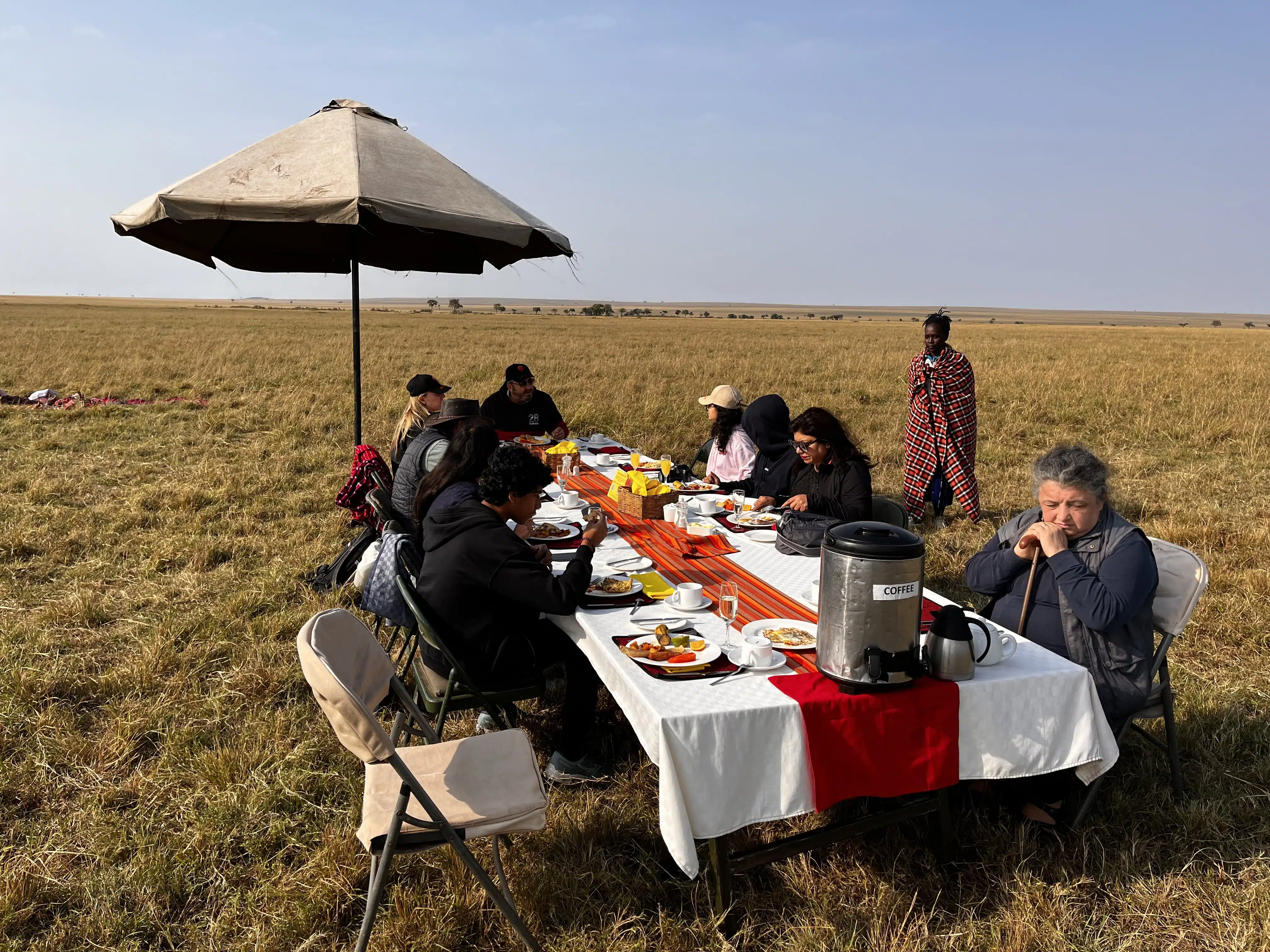
Cost: Expect to pay $450 to $600 per person (420–560 EUR) depending on the operator and season.
Prices include transfers, the balloon flight (about one hour), and breakfast.
👉 INSIDER TIP: Book your balloon safari early, especially during the wildebeest migration season (July–October), as spots sell out fast.

Mount Kenya climb
Mount Kenya, Africa’s second-highest peak, offers an unforgettable hiking experience with scenic routes like Sirimon to ascend and Chogoria to descend.
Most hikes last 4 to 5 days, taking you through bamboo forests, alpine meadows, and rocky summit trails.
Unlike Kilimanjaro, Mount Kenya allows both camping and lodge-based treks, making it ideal for travelers seeking flexibility.

Cost: Expect to pay $700 – $1,100 for a multi-day guided hike, including park fees, porters, meals, and accommodation.
The price varies depending on the route, group size, and whether camping or mountain huts are used.
Private expeditions or luxury treks with upgraded lodges can exceed $2,500.
Discover more information in our Mount Kenya climb review!

Other costs to consider on a Kenya safari
When budgeting for a Kenya safari, remember that the package price from your tour operator IS NOT THE ONLY MONEY you’ll spend.
There are additional travel costs and considerations that people sometimes overlook.
Here we cover the important “OTHER COSTS”: tipping, visa/entry fees, money and currency, clothing/gear, and vaccinations/medical prep.
Tipping guidelines
Tipping is expected on safari in Kenya and is a significant part of the local hospitality culture.
Tips are strongly expected for good service; they supplement the incomes of guides, drivers, and lodge staff, who rely on tips as a portion of their earnings.
It’s best to tip in cash (US dollars from after 2013 are widely accepted and preferred by many guides, but Kenyan shillings or even Euros/GBP are okay if that’s what you have).
To avoid scrambling at the end, carry some envelopes and small bills so you can hand tips discreetly.

Here are general tipping guidelines per safari traveler (in USD, per person):
- Safari guide/driver: About $10 per person per day is a good rule of thumb. If you have a private vehicle with just 2 of you, that might equate to $20 a day for the couple.
- Safari camp/lodge staff: Many lodges have a communal tip box at reception for staff who served you (room stewards, waiters, chefs, etc.). You can drop one tip at the end of your stay. A typical amount is $5 per guest per night at a lodge. So if you stayed 3 nights, $15–$20 from each guest in the tip box is generous.
- Safari cook (for camping safaris): If you are on a budget camping safari with a cook, consider $5 to $10 per day for the cook (from the group, not each person, unless it’s just you).
Visa and entry fees (Kenya eVisa/eTA)
As of January 2024, Kenya is the first visa-free country in the world!
WHY? Discover it in our Visa for Kenya guide!
HOWEVER, instead of a visa, you must now apply for an electronic travel authorization, which is $30 USD.
You must also pay the increased fees for all national parks in Kenya. If you ask us, the ‘visa-free country‘ is a PR stunt to increase the price of kenya safaris for tourists…
For your electronic travel authorization, you will need to provide:
- Valid passport for at least six (6) months after your planned date of arrival in Kenya, with at least one blank page
- Selfie or passport-type photo
- Contact information, email address, and phone number
- Details of your arrival and departure itinerary
- Accommodation booking confirmation(s)
- Credit card, debit card, Apple Pay, or other means of payment
We had some trouble with the website as it was lagging sometimes, so make sure to do it well enough in advance!
You can apply between 3 months and 3 days before your intended arrival date.
Money & cash tips
Having the right money on hand during your safari is important for tips, local purchases, and any extra expenses.
Here are some cash and currency considerations for Kenya:
- Currency: Kenya’s currency is the Kenyan Shilling (KES). The exchange rate fluctuates, but as a rough idea, 100 KES is about $0.80 to $0.90 USD (or conversely, $1 = 130–140 KES).
- USD Cash: Bring some small USD bills (especially $1, $5, $10 denominations) in good condition for tips. Many tourist establishments accept dollars for tips or payment, and in some cases, high-end lodges list prices in USD. However, note that older USD bills (printed before 2013) or any damaged notes are not accepted by banks or people, so bring newer, crisp bills if possible.
- ATMs: Major cities and towns in Kenya (Nairobi, Mombasa, Arusha, and even smaller towns like Nanyuki or Narok) have ATMs where you can withdraw shillings. Visa and MasterCard are widely accepted at ATMs. The fees are usually a couple of hundred shillings per withdrawal (e.g., we paid on average a fee of KES 400, so $3).
- Credit Cards: Mid-range and luxury lodges, as well as many curio shops, accept credit cards (mostly Visa/MasterCard). However, some places add a surcharge for card payments (like 3 to 5%). Fuel stations and smaller vendors are often cash only. One trend: Kenya is moving toward cashless payments in many tourist sites (in a move against corruption).
- Mobile Money: Kenya is famous for M-Pesa, a mobile phone payment system. Tourists can use it if they get a local SIM, but for short visits, you’ll likely stick to cards and cash. Your driver or guide uses M-Pesa to pay for things on your behalf sometimes (you give them cash back).
- How much cash to bring? This depends, but here’s a ballpark: For a week-long safari, you might bring, say, $300 to $400 in USD. This could cover tipping (maybe $100–$150 of that), and a cushion for small buys or an emergency. You’d also hit an ATM for shillings, for example, withdrawing the equivalent of $100 in KES (around 14,000 KES) for buying souvenirs, drinks, meals not included, etc.
Travel insurance
One more thing: Travel insurance with medical coverage is highly recommended for a safari trip.
Hospitals in Kenya often require payment UP FRONT if you get sick or injured.
Travel insurance (usually 5 to 10% of trip cost, so maybe $100 to $300 depending on your trip price) can cover emergency evacuation from a remote safari camp (helicopter or air ambulance), which would otherwise be exorbitant.
That is why we recommend using SafetyWing as your go-to travel insurance, as their prices are relatively low compared to the service you get in return.
It also covers things like trip cancellation or baggage. This isn’t a mandatory cost, but it’s a wise one to budget in.

The travel items you’ll wish you had in Kenya
One often-overlooked “cost” of safari is what you wear and pack.
You don’t need to spend a fortune on specialized safari gear, but depending on what you have already, you might need to budget for a few clothing items or accessories to be comfortable in Kenya’s climate.
Here’s a quick rundown:
- 🧥 Mornings and evenings in Kenya can get surprisingly chilly, bring a lightweight fleece (Link for men) (Link for women) so you can stay warm without overpacking.
- 🦟 Don’t let bugs ruin your safari grab this OFF mosquito spray for long-lasting protection in the bush!
- 🚰 Tap water isn’t safe to drink in Kenya pack a Vapur Insulated Water Bottle and avoid the cost (and waste) of buying plastic daily.
- 🔌 Kenya uses UK-style outlets this universal adapter will keep your gear charged without any surprises.
- 🔋 Long drives and power cuts happen this Belkin power bank keeps your phone and camera ready for anything.
- 🦓 Want to actually see that leopard in the distance? These travel-friendly binoculars make your game drives way more exciting.
- 🧴 The equator sun hits hard bring a reef-safe SPF 50+ sunscreen so you don’t spend your trip nursing a burn.
- 👟 For walking safaris or climbing Mt.Kenya, good walking shoes (Link for men) (Link for women) are non-negotiable in Kenya. Trust your feet, you’ll be glad you did.
- 🎒 Safari days start early and last long this Vaude backpack is perfect for snacks, layers, and your camera gear.
- 🩹 The closest pharmacy might be hours away a compact travel first aid kit is worth its weight in peace of mind.
Safari clothing
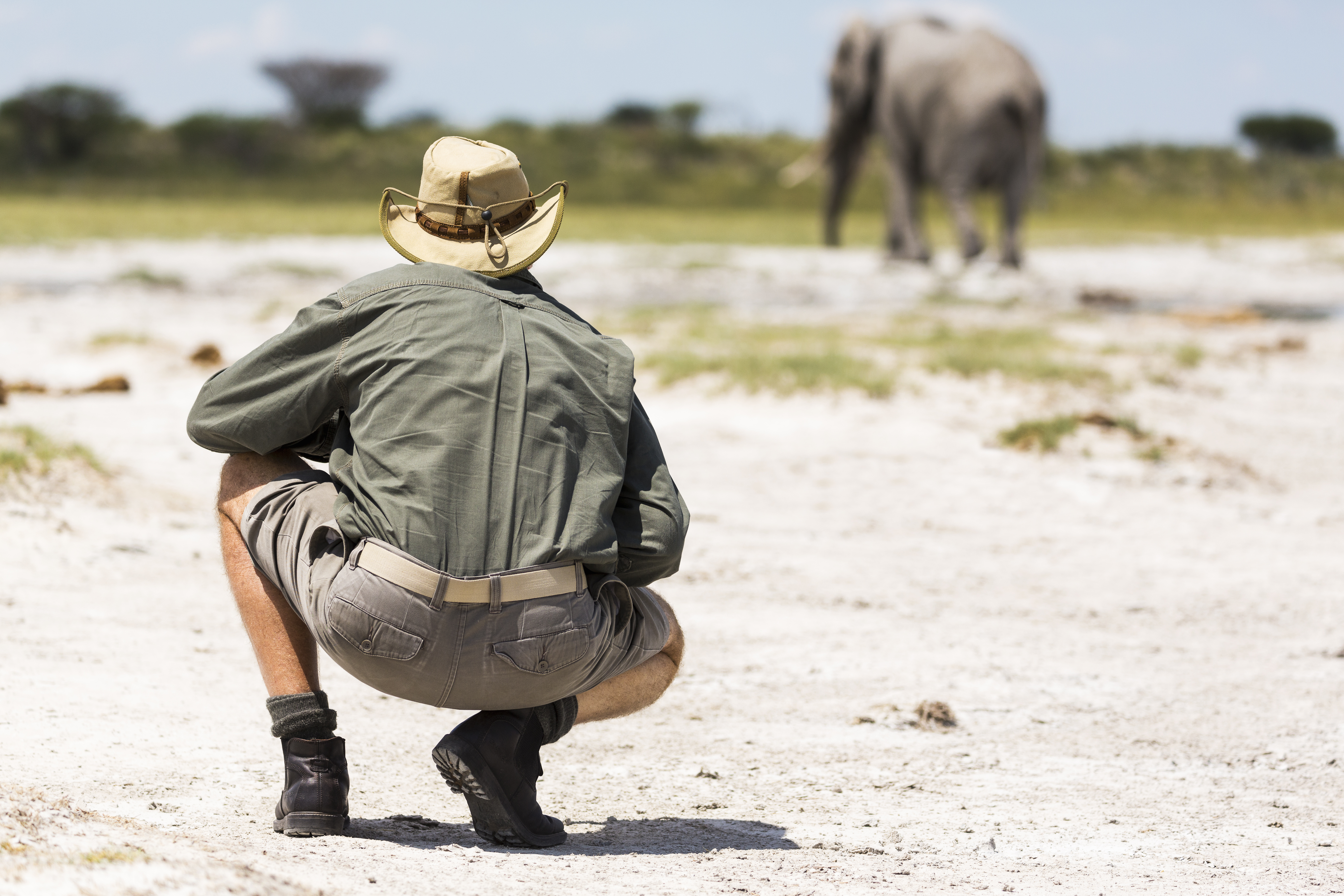
The key is comfort and colors.
Neutral colors (khaki, olive, brown, tan) are ideal because they don’t attract animals’ attention or tsetse flies (which are drawn to dark blue/black).
You likely already have some suitable clothes.
For example, hiking pants or joggers, t-shirts, a fleece or light jacket, and a brimmed hat.
Quick-dry and layered clothing is useful because Kenya’s temperatures can swing from chilly in the early morning (even <10°C / 50°F on some mornings) to very hot at midday.
Pack layers: e.g., a lightweight long-sleeve shirt (for sun and bugs), which you can wear over a t-shirt or tank top, and then a warmer sweater or fleece to put on top for dawn and dusk.
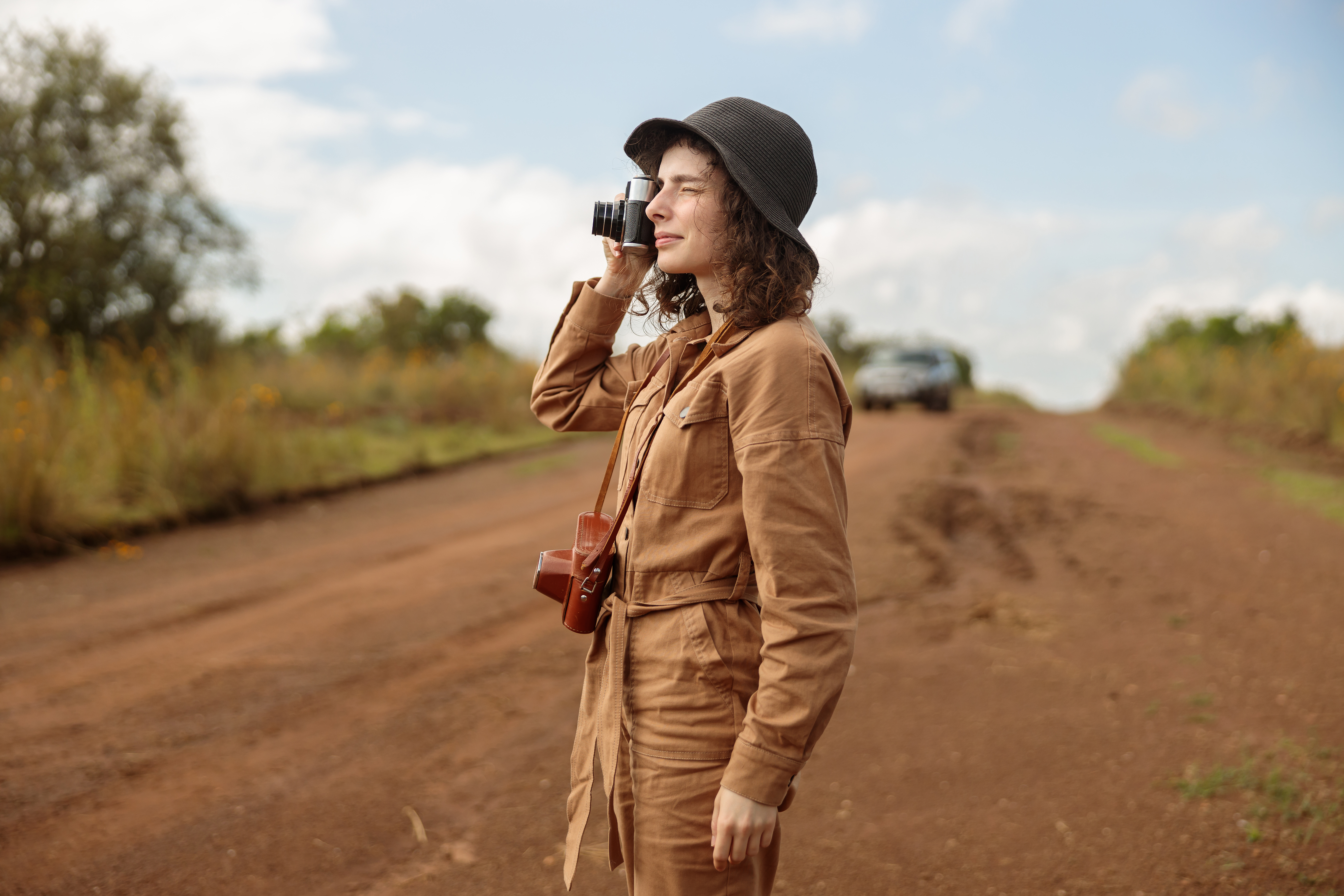
Footwear
Sturdy closed-toe shoes are important – hiking shoes or sneakers are fine. You don’t necessarily need heavy boots unless you plan on serious hiking. A pair of sandals can be nice for around the lodge. If you need to buy footwear, allocate maybe $50–$100 for a good pair, but most people have sneakers at least.
Binoculars
Think about binoculars (wildlife viewing is enhanced greatly with binoculars).
If you don’t own any, maybe budget $100–$300 for a mid-range pair.
Some tour operators provide a pair in the vehicle, but not always, and sharing can be a hassle.
Vaccinations and medical prep
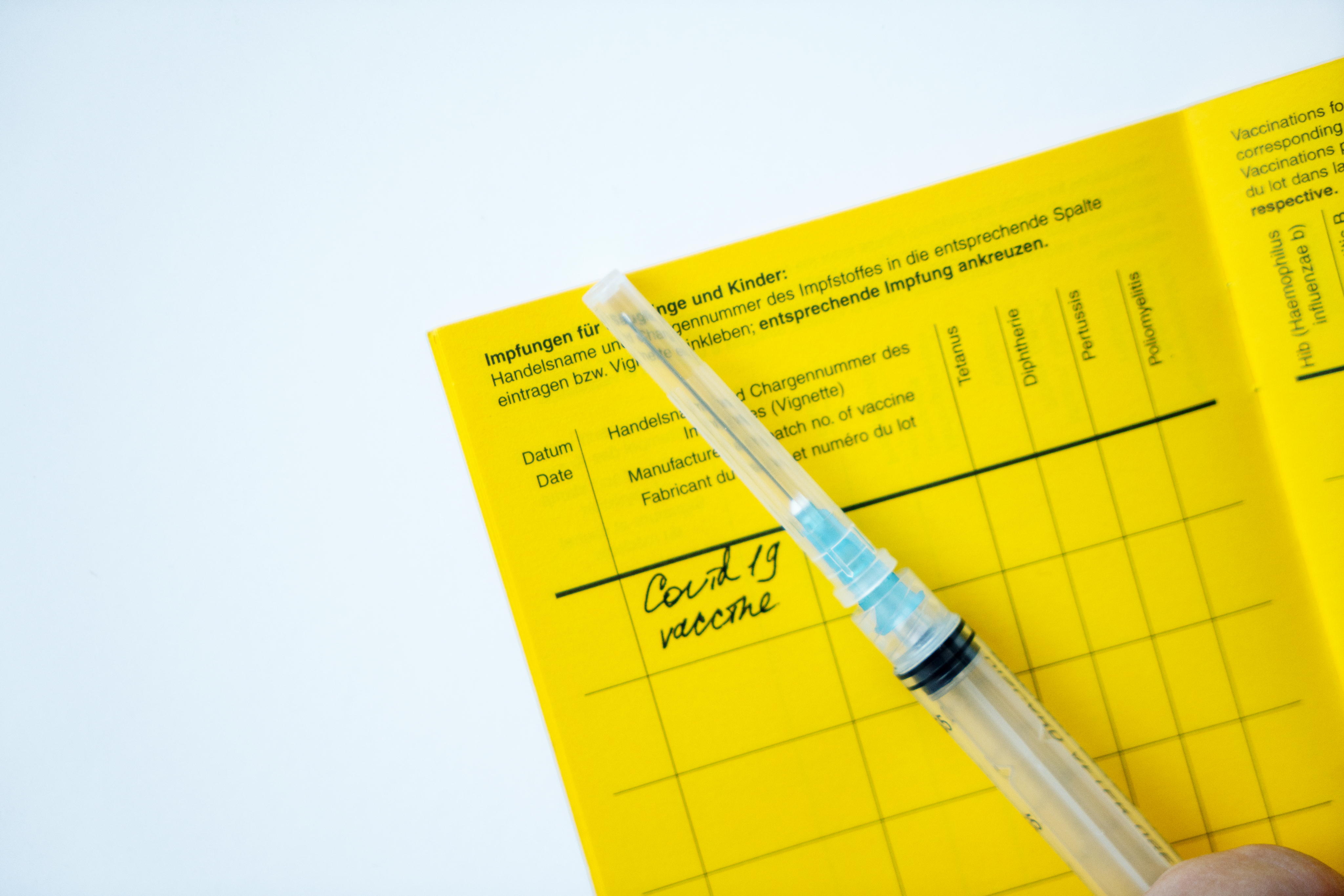
Staying healthy on safari is crucial, and that means getting the right vaccinations or medications before your trip.
Some vaccines are highly recommended for Kenya, and if you don’t have them yet, you may need to visit a travel clinic.
Here’s what to consider and the potential costs:
- Routine Vaccines: First, ensure your routine immunizations (like tetanus-diphtheria, measles, polio) are up to date. These are usually covered by insurance or provided by your regular healthcare provider. Tetanus boosters, for example, are recommended every 10 years, so if you haven’t had one in a while, get one (especially since stepping on an acacia thorn is not unheard of on safari!).
- Yellow Fever: If you are traveling to Kenya from a country with Yellow Fever (or if you plan to visit other African countries after Kenya), the Yellow Fever vaccine is strongly recommended and sometimes required. Many travelers from Europe and the US won’t be required to show the Yellow Fever vaccination to enter Kenya directly, but if you go to, say, Tanzania afterward, or if you had a layover in a Yellow Fever zone, you might need the yellow card.
- Typhoid: Recommended for Kenya (as typhoid fever can be contracted from contaminated food/water). There’s an injectable vaccine and an oral pill course.
- Hepatitis A (and B): Hepatitis A vaccine is highly recommended for travel (food and waterborne illness protection). Hep A is often covered by insurance as it’s routine in many countries now. Hepatitis B is generally recommended if you might have close contact with locals or medical care in the country.
- Malaria Prophylaxis: There’s no vaccine yet for malaria (for travelers, at least), but you will need antimalarial medication for Kenya unless you’re only going to high-altitude Nairobi for a short time (most safari areas are risk zones). Common medications are Atovaquone-Proguanil (Malarone), Doxycycline, or Mefloquine. Malarone is popular due to its few side effects; it’s taken daily.
Conclusion
So, how much does a safari in Kenya cost? Let’s take a look:
- Kenya budget safaris can be done for around $150 to $250 per day by joining group tours and using basic camps, whereas Kenya mid-range safaris average $300 to $600 per day for more comfort and flexibility. Kenya luxury safaris start around $600+ a day.
- Cost drivers are tour operator type, season, mode of transport, type of accommodation…
- Extras and add-ons such as cultural village visits ($30–$50), special safari activities (birding, photography, walking safaris are $50–$150 extra per day for those interests), hot air ballooning ($450 per person), or climbing Mount Kenya ($700–$1000 for the trek) enrich your trip but should be budgeted for in advance.
- Other trip costs like tipping (plan on $10 per day for guide, plus lodge staff tips), visa/eTA fee ($30), appropriate clothing/gear (perhaps $100 to $200 if you need to buy some outfits or gadgets), and medical prep (could be a few hundred for shots/meds if not covered) are all part of the full picture. Don’t forget travel insurance.
Kenya is an unforgettable safari destination, and with careful planning, you can make the most of it at a cost that makes sense for you.