Our Tahiti travel guide combines practical advice with INSIDER KNOWLEDGE to help you plan the perfect Tahiti getaway.
Planning a trip to Tahiti can feel overwhelming because of the many options. Discover the tips and secrets that most travelers miss!
Would you like to know what to expect from the island? Check out the video below!
KEY TAKEAWAYS:
- Tahiti’s location: As the largest island in French Polynesia, Tahiti is the region’s cultural and economic hub, located 15,700 kilometers (9,755 miles) from France and 4,000 kilometers (2,485 miles) southeast of Hawaii.
- Practical travel insights: The article addresses key questions about Tahiti, including what it’s known for, how to get there, typical costs, accommodations, and activities.
- Currency and visa information: Tahiti uses the French Pacific Franc (XPF), fixed to the euro at 1 EUR = 119.33 XPF. Travelers from the EU, US, Canada, Australia, and other visa-exempt countries can enter Tahiti visa-free for up to 90 days.

Dreaming of a French Polynesian vacation?
Fill in our SHORT FORM, and we will match you with trusted local tour operators who can build a personalized itinerary based on your STYLE, BUDGET, and TRAVEL DATES.
Our local partners create every itinerary with care. We kindly ask that you submit a request only if you’re considering traveling.
What is Tahiti, French Polynesia?
Tahiti is the largest island in French Polynesia, a collection of 118 (!) islands and atolls in the South Pacific Ocean. Its total landmass is 1,600 square miles (4,100 sq. km).
Only 75 of the 118 are inhabited islands.
Located about 6,000 kilometers (3,728 miles) west of South America and 4,000 kilometers (2,485 miles) southeast of Hawaii, Tahiti is the cultural and economic heart of this overseas French territory.
See that small dot in the middle of the map? That is Tahiti! You can zoom in and see for yourself.

Which country is Tahiti in?
Tahiti is part of French Polynesia, which is an overseas collectivity of France.
As part of France, it operates with a certain degree of autonomy.
For example, French Polynesia manages its own local government and cultural affairs, but key matters like defense and foreign policy are handled by France.
DID YOU KNOW: Tahitians have the FRENCH CITIZENSHIP? This is important for later (visa exemptions for tourists as French Polynesia is technically part of the EU).
Are Tahiti and Bora Bora the same?
No, Tahiti and Bora Bora are not the same, even though they are both part of French Polynesia.
Tahiti and Bora Bora are SEPARATE ISLANDS. Here are the differences between them:
|
Feature |
Tahiti |
Bora Bora |
|
Location |
Tahiti is the largest island in French Polynesia and serves as its cultural and economic hub. It is home to Papeete, the capital city, and the Faa’a International Airport, making it the gateway to other islands. |
Bora Bora is located about 230 kilometers (143 miles) northwest of Tahiti, a short 50-minute flight away. |
|
Size |
Largest island in French Polynesia |
Smaller, private-feeling island, known as the “PEARL OF THE PACIFIC” |
|
Primary focus |
Cultural and economic hub |
Luxury and honeymoon destination |
|
Beaches |
White sand beaches and turquoise lagoon |
|
|
Features |
Known for its volcanic mountains, Tahitian pearls, black sand beaches, and Polynesian culture. Offers a mix of urban life in Papeete and remote natural beauty in Tahiti Iti. |
Famous for its turquoise lagoon, barrier reef, Mount Otemanu, and luxurious overwater bungalows. |
|
Activities |
Explore Fautaua Falls, visit cultural sites like the Museum of Tahiti and Her Islands, or shop at the Marché de Papeete. |
Ideal for romance and relaxation, offering world-class snorkeling, scuba diving, and luxury resorts like the Four Seasons and St. Regis. |
|
Access |
International airport (Faa’a International Airport) acts as the gateway to French Polynesia. |
Accessible via domestic flights from Tahiti. |
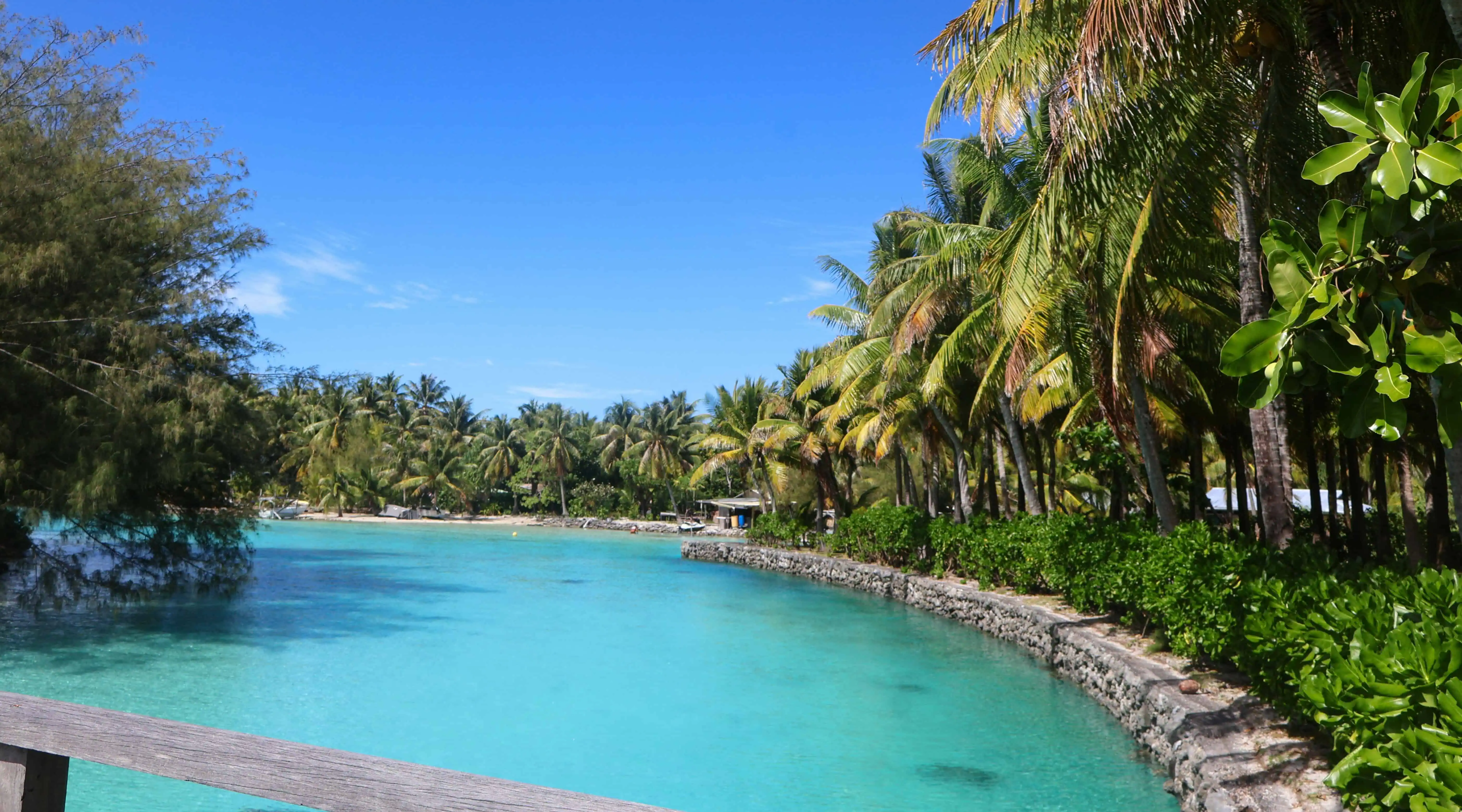
TRIPADVISOR REVIEW: Tahiti and Moorea are truly paradise, with stunning scenery, lots of safari style activities and just soaking in the glorious and laid back life style. It is always warm, night and day but not oppressive.
There are plenty of water activities, such as swimming with sharks and stingrays. I traveled specifically to attend the dance festival Heiva I Tahiti, and it did not disappoint.
Simply fill in the form below to get a FREE QUOTE from trusted local travel specialists who know the islands inside out.
It only takes 60 seconds, and you’ll receive custom itineraries and pricing directly in your inbox or WhatsApp within
48 hours.
Free of charge. No pressure. No obligation.
*Our trusted local partners create every itinerary with care. We kindly ask that you submit a request only if you’re considering traveling.
What is Tahiti known for?
Tahiti is famous for its natural beauty, culture, marine life, luxury, and Tahitian cuisine.
Landscapes
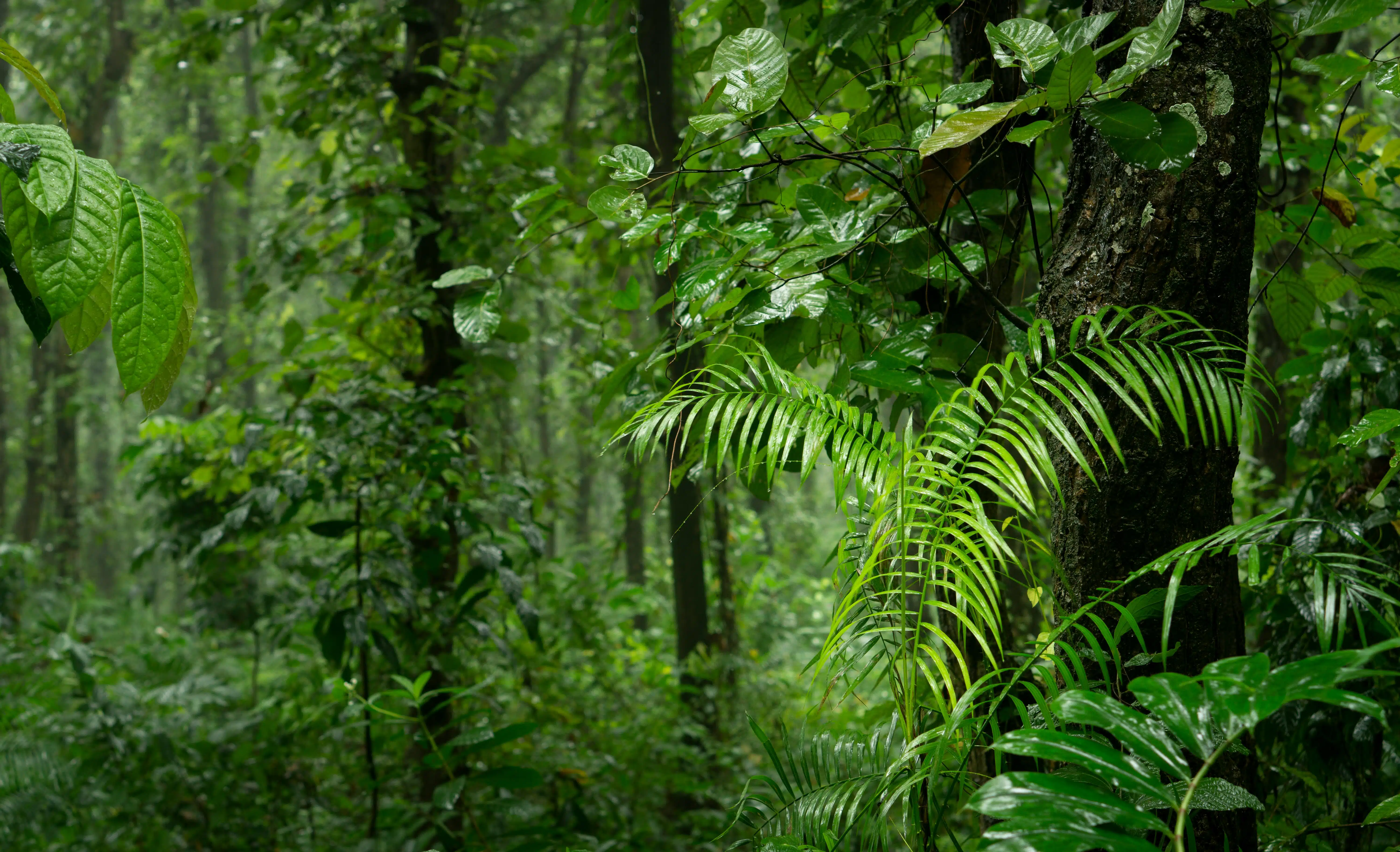
Tahiti has beautiful and rugged volcanic mountains, rainforests, and black sand beaches.
Highlights include:
- Mount Orohena: The highest peak, 2,241 meters (7,352 feet), is perfect for an intensive hike in Tahiti. Read all about it in our guide on the best hikes in Tahiti!
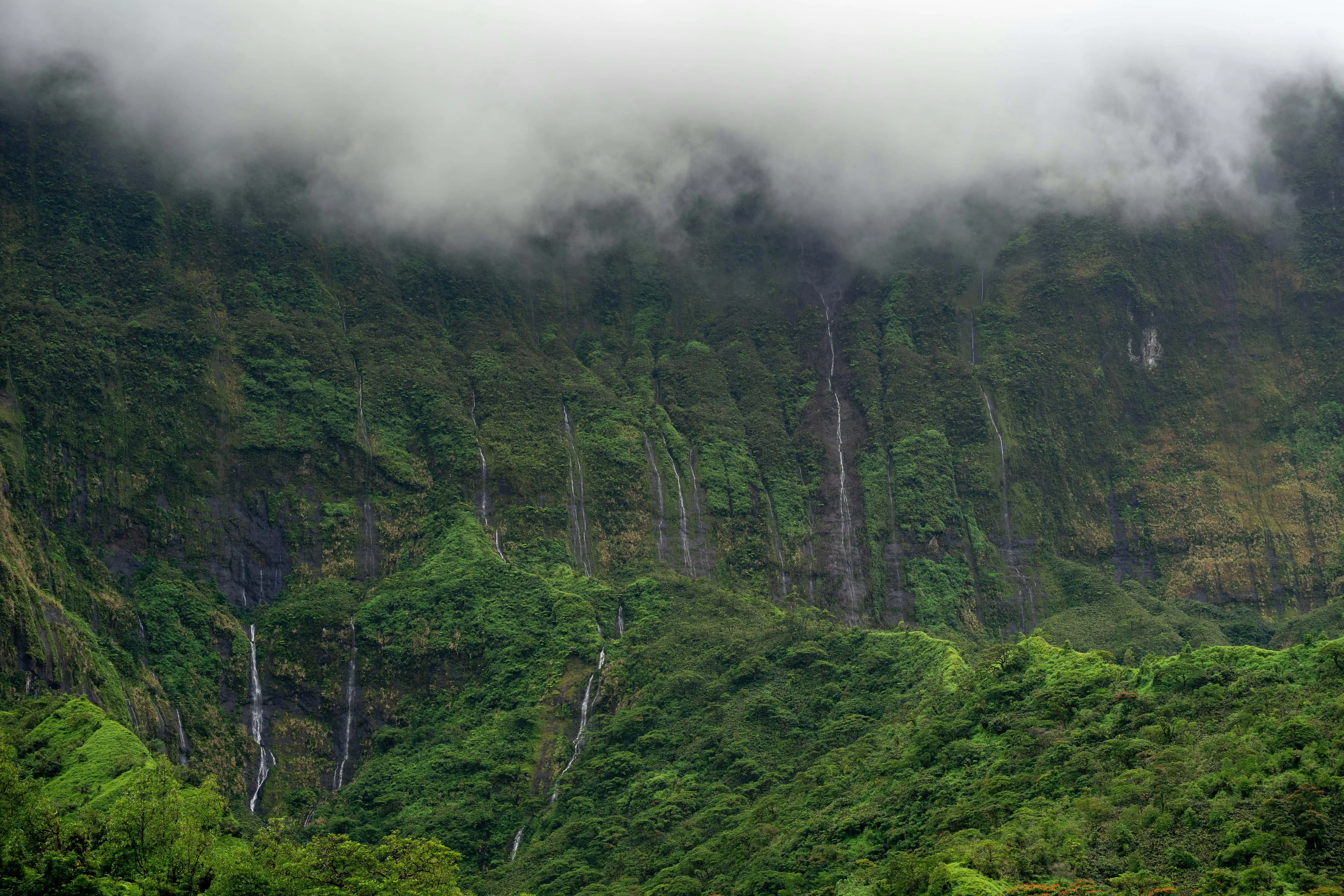
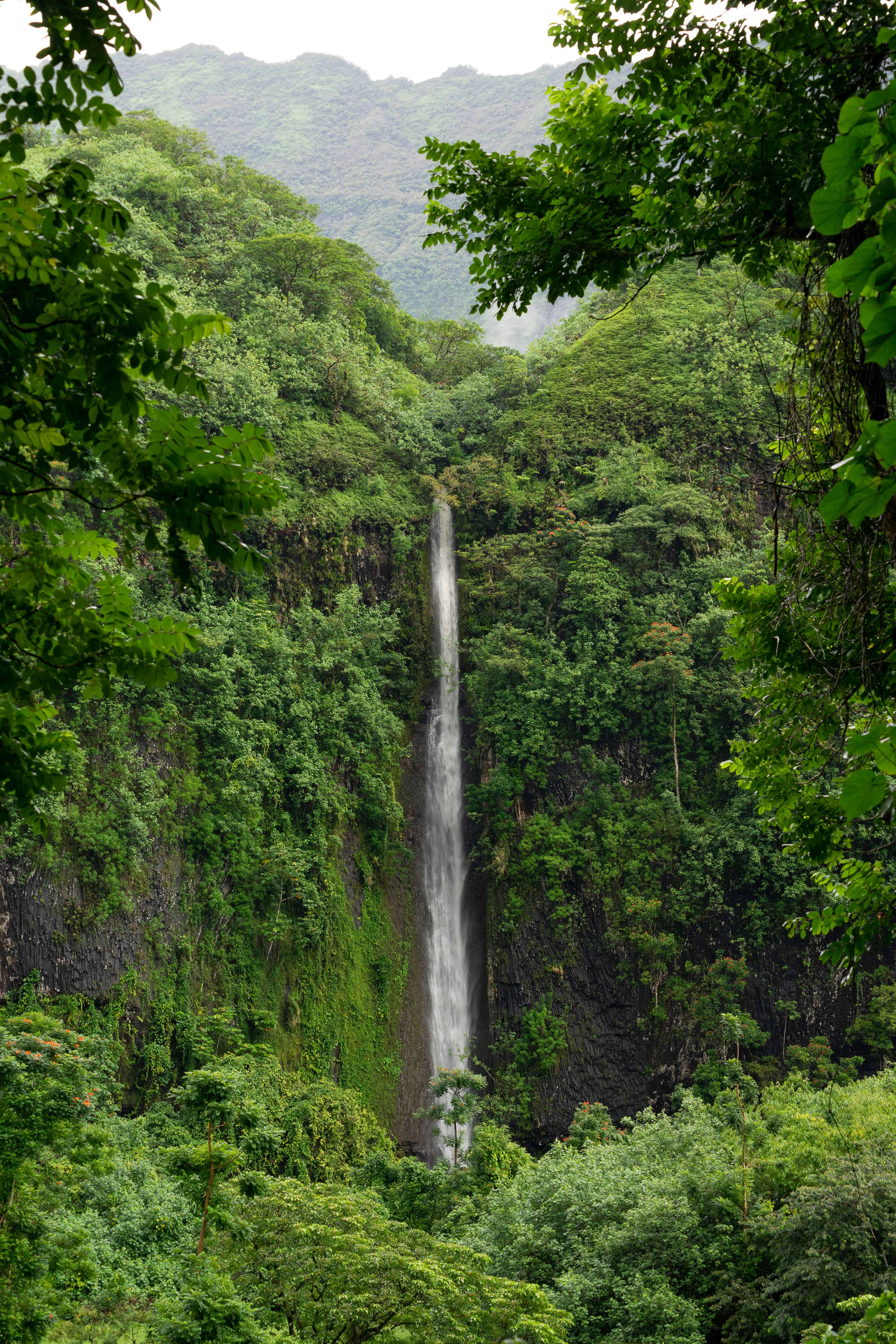
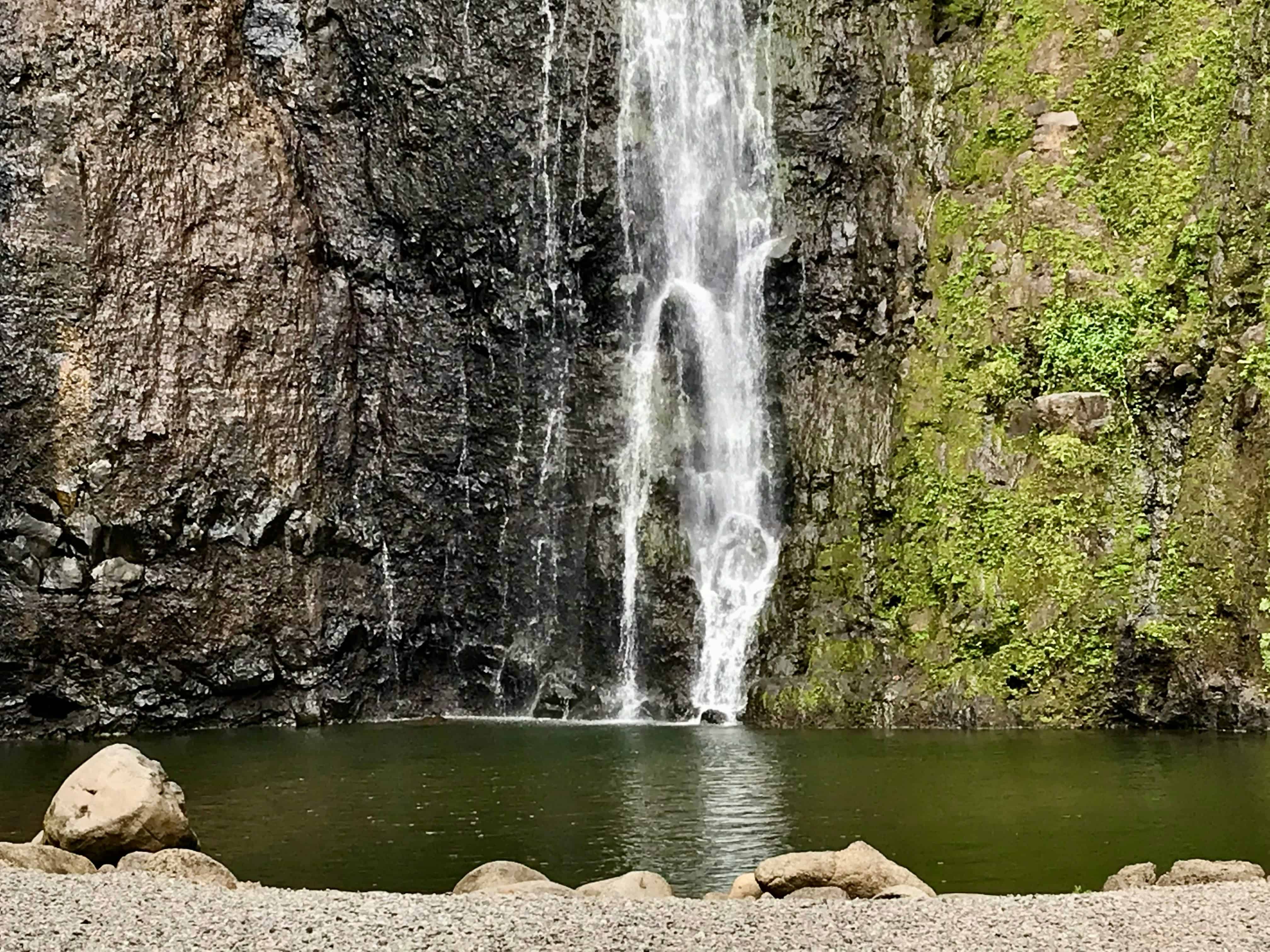
- Fautaua Waterfall: One of the world’s tallest waterfalls, plunging over 300 meters (984 feet). This is the best Tahiti waterfall to visit!
Even Lonely Planet recommends visiting Tahiti!
Take a look at our Google Maps below to discover the best things to do in Tahiti!
Culture
Tahiti is the cultural heart of French Polynesia.
- Traditional Polynesian dance and music: Events like the Heiva i Tahiti Festival in July showcase ori Tahiti (Tahitian dance).
- Tattooing: An ancient Polynesian art form deeply rooted in Tahitian heritage. You’ll see many of the locals with old tattoos on their arm and legs.
- Handicrafts: The Marché de Papeete is a great place to find locally made pareos (sarongs), woven baskets (you can even follow weave classes), and genuine Tahitian black pearls (you can even follow a tour on how they are being processed).

Marine life
Tahiti has some of the best underwater experiences in the South Pacific (maybe even in the world):
- Snorkeling and scuba diving: Tahiti has coral reefs (like the Lagoon of Punaauia and Tahiti Iti (Teahupo’o) filled with marine life, including rays, sharks, and many tropical fish.
👉 INSIDER TIP: To see the marine life up close, we recommend booking 2 (~$152) or 3 (~$233) dives with Fluid Tahiti, a passionate team based at Marina Taina. With access to 25+ dive sites, they promise you unforgettable dives at wrecks, DROP-OFFS, and passes where you can scuba dive with turtles, SHARKS, eagle rays,

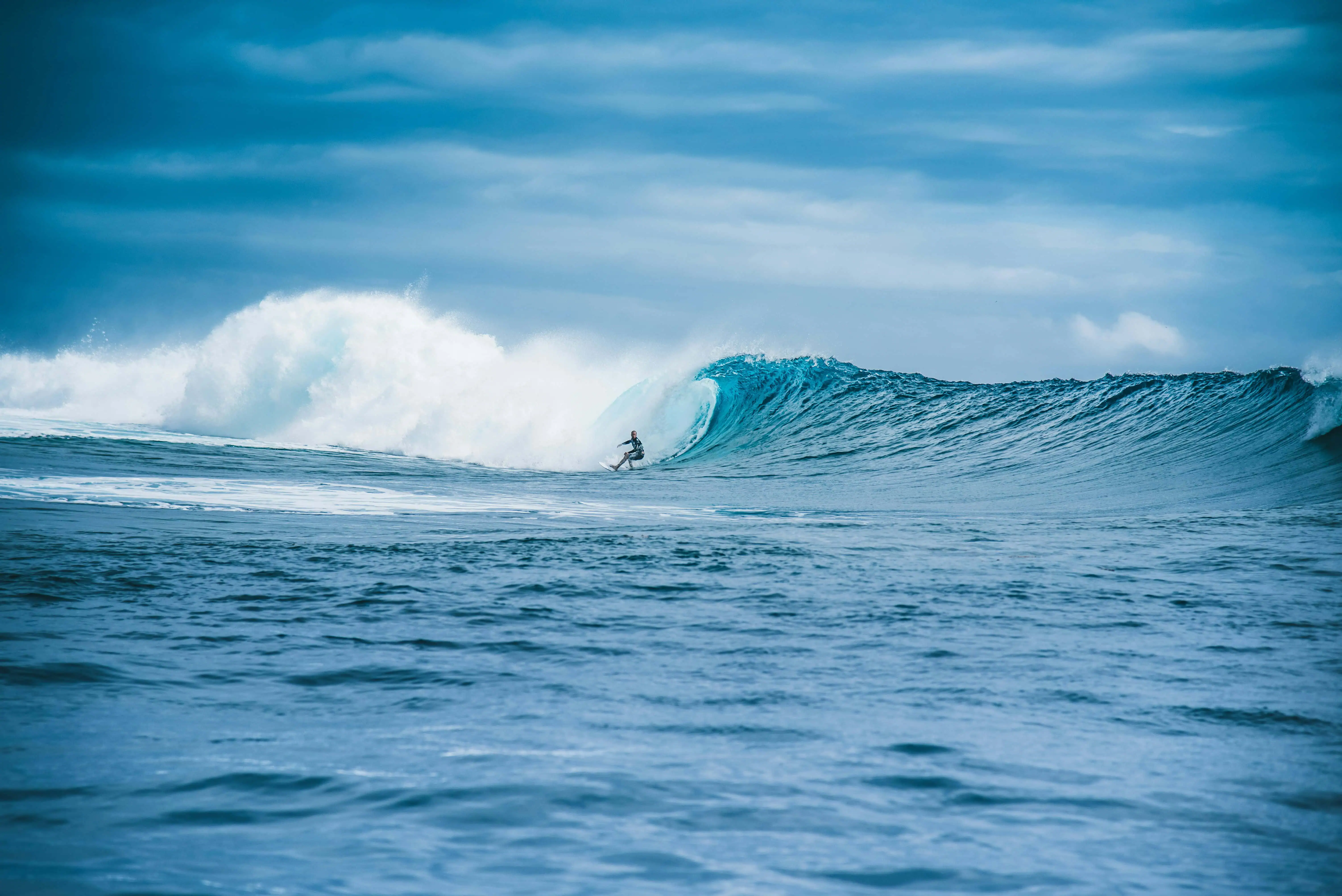
- Surfing: The island’s Teahupo’o wave is famous among professional surfers for its powerful left-breaking waves. A surf competition is held there each year in August.

Tahitian cuisine
Tahiti’s cuisine is a blend of Polynesian, French, and international flavors.
Traditional Tahitian dishes are:
- Poisson cru: A raw fish salad marinated in lime juice and coconut milk.
- Tahitian vanilla: Grown locally and often used in desserts or paired with seafood.
We even wrote a full guide on the Tahitian kitchen.
INSIDER TIP: Visit a local roulotte (food truck) in the Papeete shopping street for local dishes. Make sure you only take hot dishes to not get food poisening.
TRIPADVISOR REVIEW: Located down by the Port, is the nightly event of food trucks, offering amazing food, at awesome value, the experience of enjoying amazing food in the cool of the evening, Al fresco, is not to be missed.
Luxury
The difference with islands like Moorea and Bora Bora is that Tahiti offers both luxury overwater bungalow resorts and beachfront hotels that are quite affordable.
How do I get to Tahiti?
Reaching Tahiti is quite easy, as it is home to the region’s only international airport, Faa’a International Airport (PPT).
Here’s a step-by-step guide to start your Tahiti vacation:
International flights to Tahiti
Direct flights to Tahiti are available from major cities in North America, Asia, and Oceania:
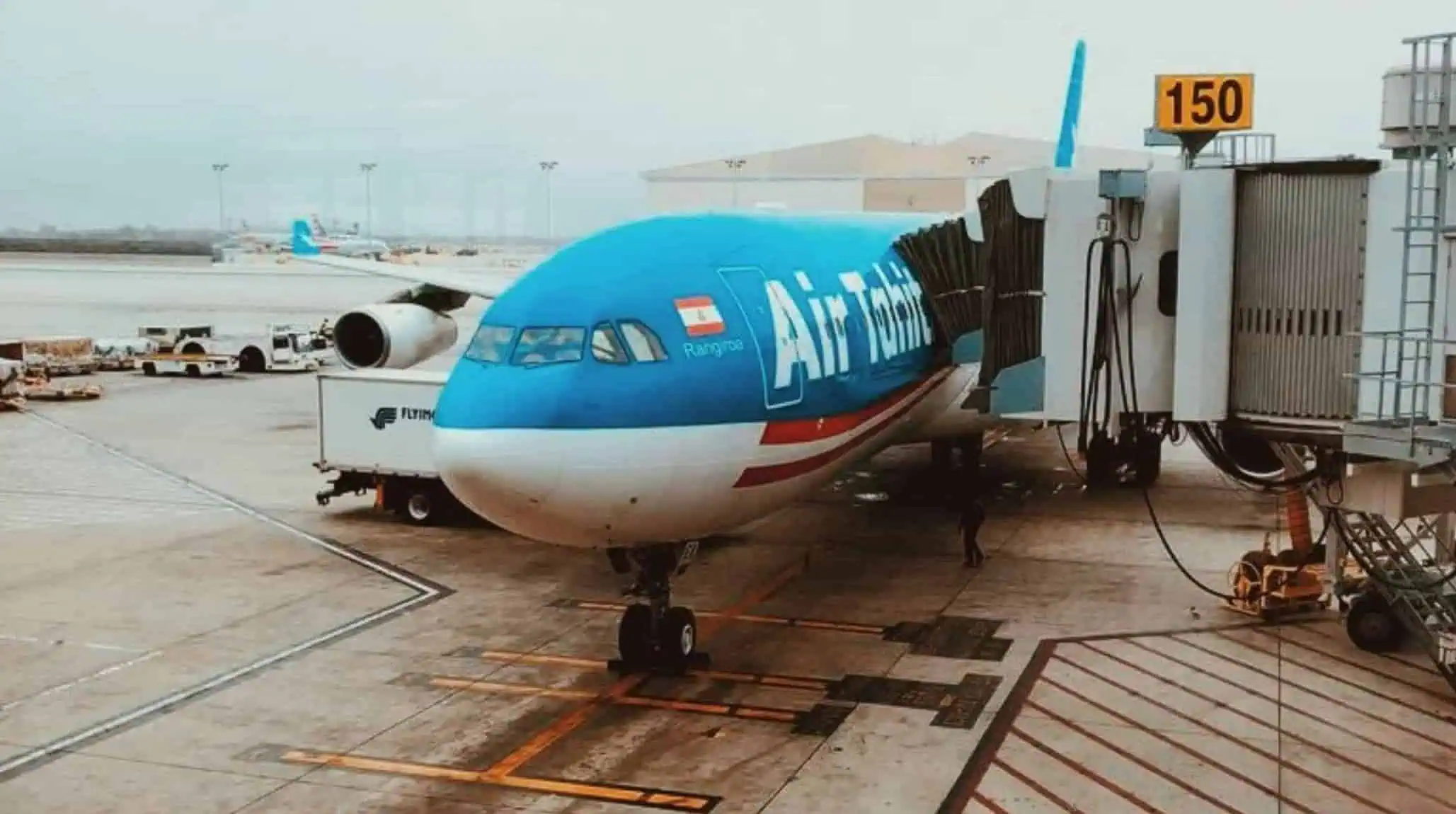
- From the United States: Nonstop flights from Los Angeles (LAX), San Francisco (SFO), and occasionally Seattle (SEA) via airlines like Air Tahiti Nui, United Airlines, and Delta.
- From Europe: Most flights connect via Paris (CDG) with Air France or Air Tahiti Nui. Expect a stopover in Los Angeles.
- From New Zealand and Australia: Direct flights from Auckland (AKL) are operated by Air New Zealand, while flights from Sydney (SYD) or Brisbane (BNE) often require a connection.
- From Japan: Direct flights from Tokyo (NRT) are operated by Air Tahiti Nui.
Flight duration to Tahiti
- Los Angeles to Tahiti: 8 hours 30 minutes.
- Auckland to Tahiti: 5 hours 30 minutes.
- Paris to Tahiti (via Los Angeles): 21–22 hours total, including layovers.
Connecting from Tahiti to other islands
If you have landed in Tahiti, the regional airline Air Tahiti provides flights to other French Polynesian islands such as Bora Bora and Moorea.
Transportation from the airport
Once you arrive at Faa’a International Airport, there are several options to get to your accommodation:
- Taxis: Available outside the airport terminal. Expect to pay around 2,500 XPF (€21 / $23) for a ride into Papeete.
- Shuttles: Many resorts and hotels offer pre-arranged shuttle services (the most recommended option).
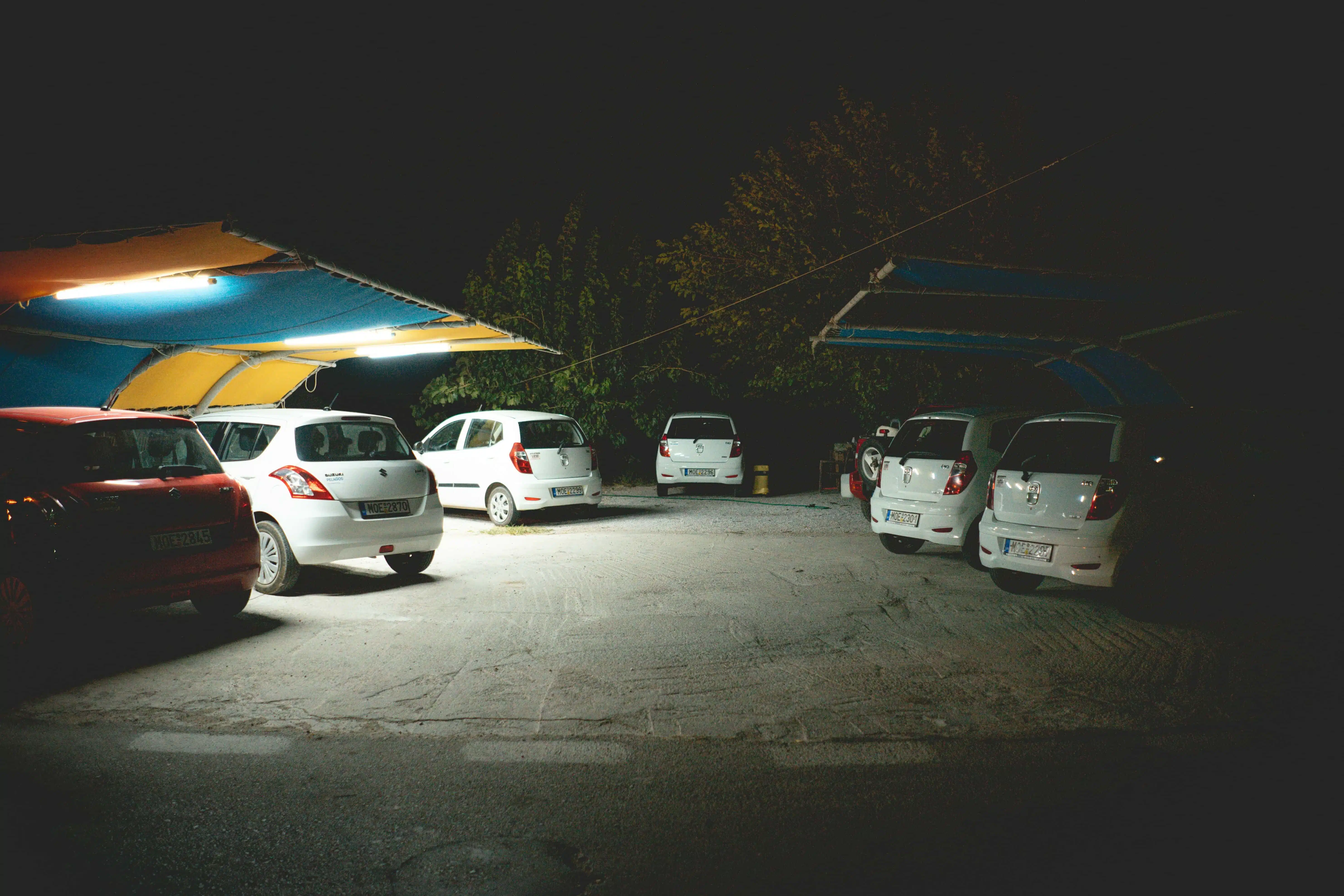
- Car rentals: Available at the airport if you plan to explore Tahiti for longer. Discover cars offers the best prices for car rentals.
How much does it cost to go to Tahiti?
The table below provides a breakdown of costs for visiting Tahiti, including flights, accommodations, meals, and activities.
Prices are shown in both EUR (€) and USD ($) to help you plan your budget.
|
Tahiti price for trip |
Cost in EUR (€) |
Cost in USD ($) |
|
Round-trip flights (high season) |
€1,500.00 |
$1,650.00 |
|
Accommodation (5 nights, luxury overwater bungalow in high season) |
€4,000.00 |
$4,400.00 |
|
7 Meals at roulottes (per meal) |
€175.00 |
$192.00 |
|
7 Meals at upscale restaurants (per meal) |
€350.00 |
$385.00 |
|
€600.00 |
$660.00 |
|
|
TOTAL (per week, per person) |
€6,625.00 |
$7,287.00 |
DID YOU KNOW: French Polynesia capped the number of tourists arriving through Tahiti, according to an article in CNN (an annual cap of one foreign tourist per local resident – about 280 000)?
Why is Tahiti so expensive?
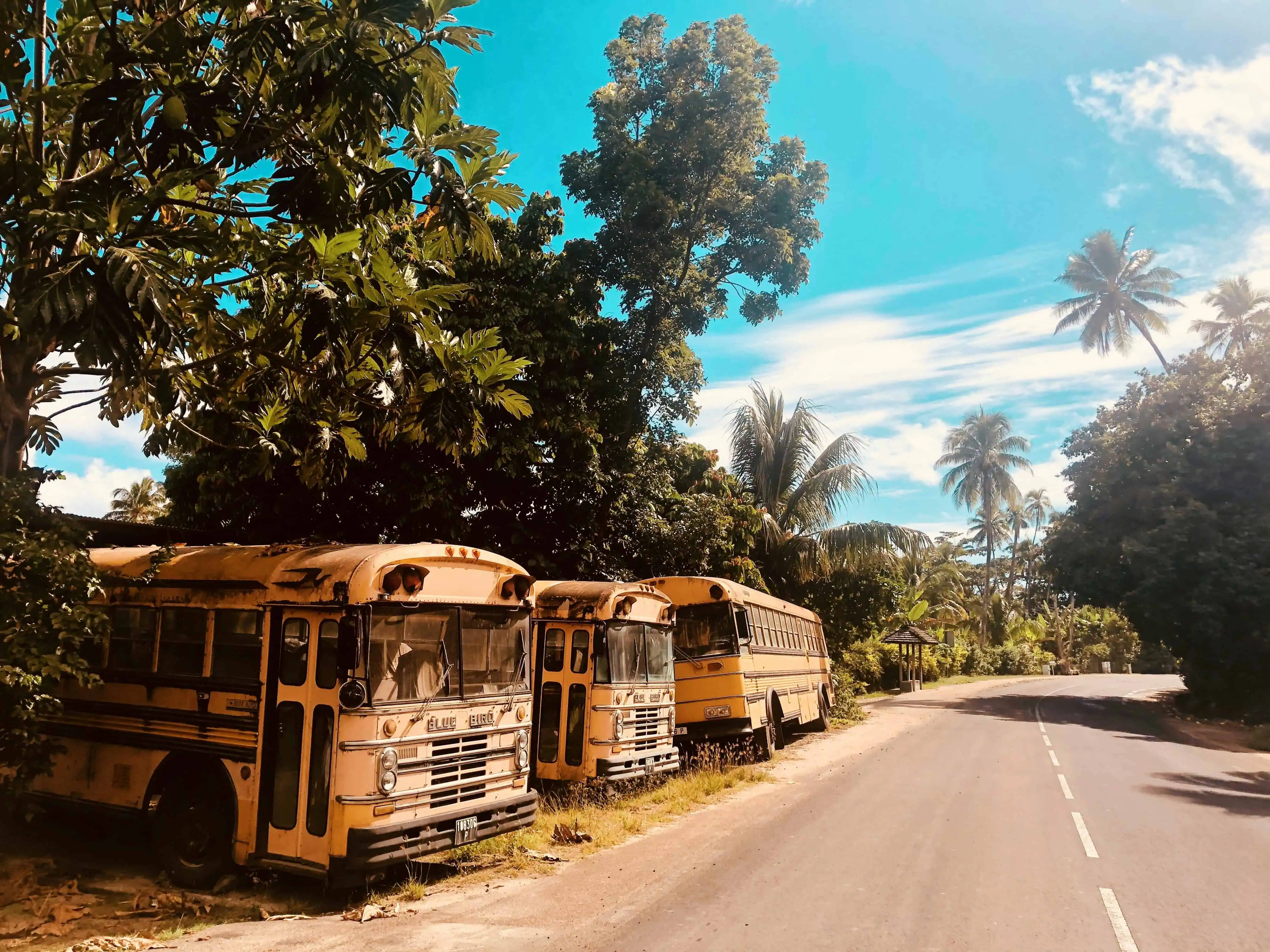
There are a few reasons why Tahiti is so expensive, for example, its remote location, limited transport competition, luxury tourism focus, and the preservation of environment make it more expensive than other locations.
Remote location and shipping costs
Tahiti is located 6,000 km (3,728 miles) from South America and 4,000 km (2,485 miles) from Hawaii, making it ONE OF THE MOST ISOLATED DESTINATIONS IN THE WORLD!
Almost all goods, including food and fuel, are imported, which increases costs due to high shipping fees.
For example, imported goods can cost up to 30–40% (!) more than in France.
Limited competition
Tahiti only has one commercial airline (Air Tahiti Nui) and ferry providers servicing the region.
This means that there is almost no competition, so prices are high.
For instance, flights to Tahiti from Los Angeles average around €1,500 ($1650) round-trip.
Luxury tourism focus
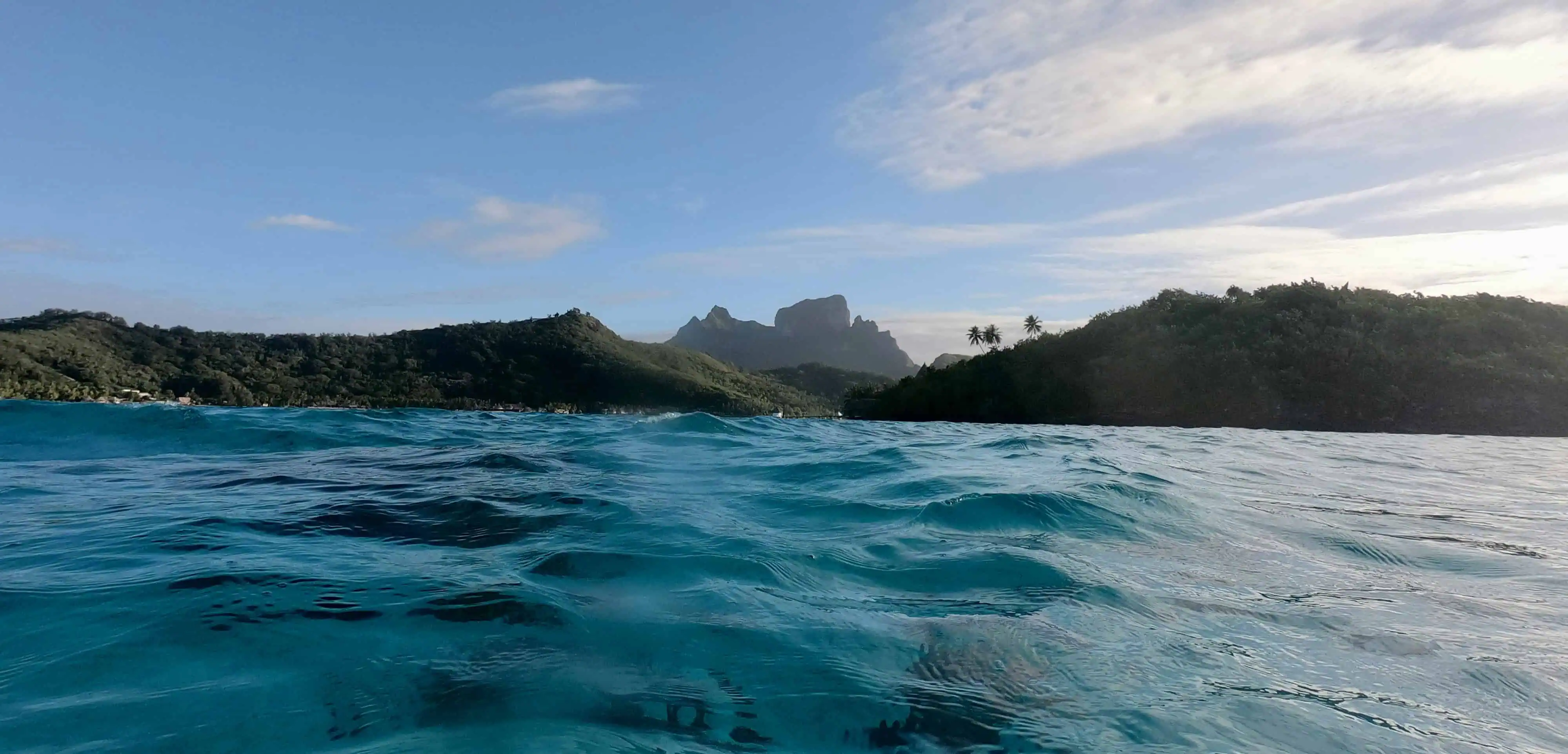
Tahiti attracts people seeking exclusive, luxurious experiences.
Overwater bungalows start at €800 ($880) per night in luxury resorts like the Four Seasons or St. Regis.
This high-end tourism model inflates overall prices for activities and accommodations. You can compare the prices on Booking.com when searching for the best accommodation.
For example, in Tahiti, a luxurious dinner costs around €50 ($55), while in Bora Bora, the same meal costs upwards of €100 ($110).
Preservation of culture and environment
Tahiti invests heavily in protecting its ecosystem and rich Polynesian heritage.
Simply fill in the form below to get a FREE QUOTE from trusted local travel specialists who know the islands inside out.
It only takes 60 seconds, and you’ll receive custom itineraries and pricing directly in your inbox or WhatsApp within
48 hours.
Free of charge. No pressure. No obligation.
*Our trusted local partners create every itinerary with care. We kindly ask that you submit a request only if you’re considering traveling.
The best time to go to Tahiti
The month of May is the ideal time to visit Tahiti.
As part of the DRY SEASON, May offers temperatures from 24°C to 30°C (75°F to 86°F), low humidity, and almost no rainfall.
The clear skies and calm weather make it perfect for activities like snorkeling, scuba diving, and exploring the island’s waterfalls.
May also marks the start of the high season, but it’s slightly less crowded than the peak months of June and July, allowing you to enjoy the island’s beauty without the heavier tourist influx.
You can read about it in our extensive French Polynesia weather blog post!
How many days in Tahiti is enough?
3 to 4 days in Tahiti is enough to experience the island’s highlights before going to nearby Moorea and Bora Bora.
What to do in 3 to 4 days in Tahiti?
- Day 1: Arrive in Papeete, visit the Marché de Papeete, and enjoy dinner at a local roulette (food truck).
- Day 2: Take a day trip to explore Fautaua Waterfall or hike Mount Aorai for breathtaking views.
- Day 3: Relax at one of Tahiti’s black sand beaches, such as Plage de la Pointe Venus, and visit the Museum of Tahiti and Her Islands and the Museum of the Paul Gauguin for cultural insights.
- Day 4 (optional): Enjoy a lagoon tour or snorkeling adventure.
What language is spoken in Tahiti?
The two official languages of Tahiti are French and Tahitian (Reo Tahiti).
But don’t worry, English is widely spoken in at resorts, in restaurants, and by tour operators.
French
As Tahiti is part of French Polynesia, French is the administrative and educational language.
Most locals, especially in Papeete, speak French fluently, and you’ll find French used on road signs, menus, and official documents.
Tahitian
Tahitian, or Reo Tahiti, is the indigenous Polynesian language many locals speak. It is especially spoken in rural areas and smaller islands (like the Marquesas and the Austral Islands).
What are the accommodations like in Tahiti?
Tahiti offers luxurious resorts and cheaper guesthouses, each with its own unique charm.
Luxury resorts
Many luxury resorts in Tahiti feature overwater bungalows, spacious villas, and lush gardens.
Luxury resorts include private pools, fine dining restaurants, and cultural performances.
Prices start at around €400–€800 ($440–$880) per night, with overwater bungalows on the higher end of the spectrum.
We recommend these two that offer the most luxury in Tahiti:
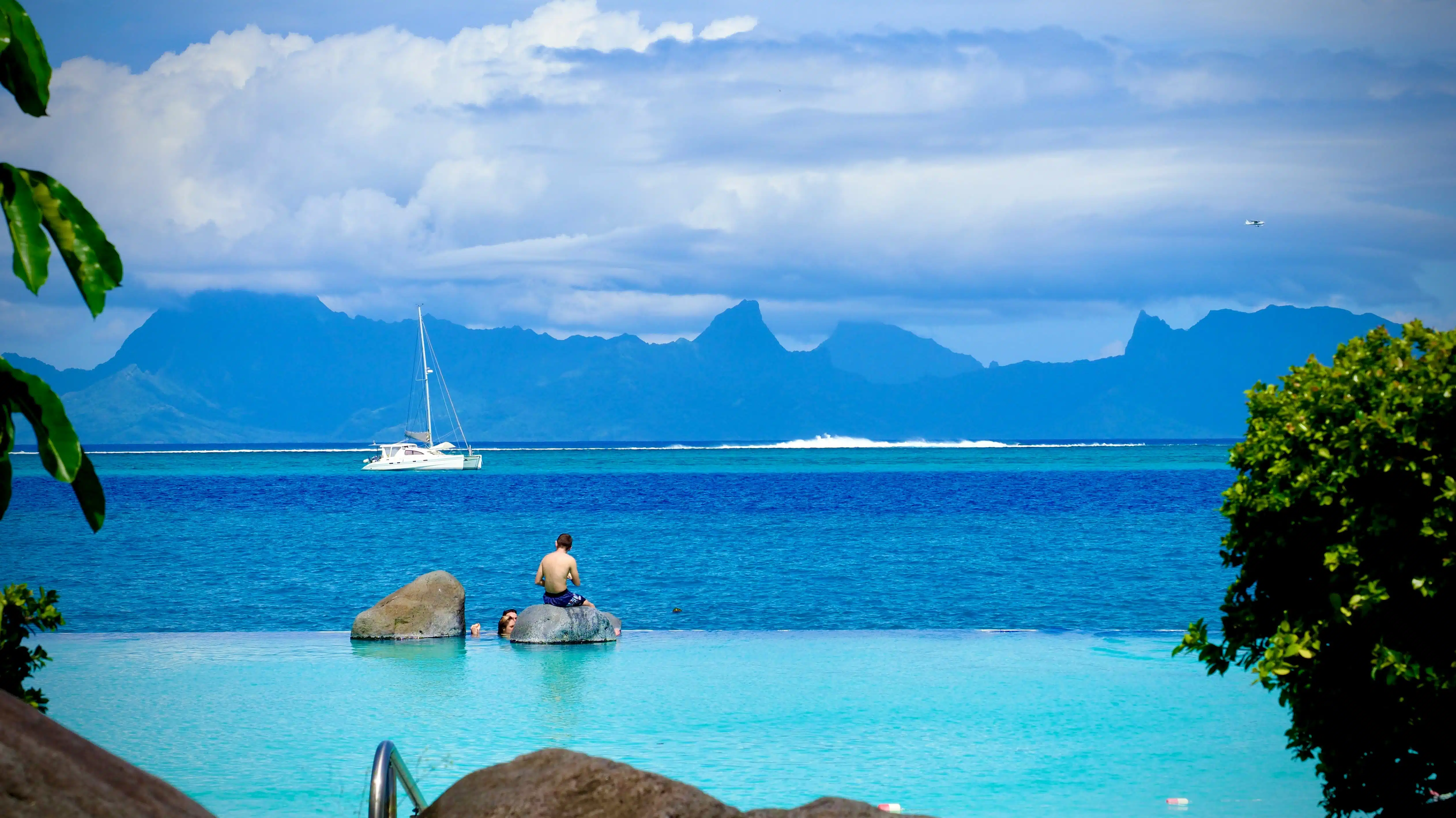
- InterContinental Tahiti Resort & Spa: Famous for its infinity pool overlooking the island of Moorea, fine dining, and a spa with treatments using local ingredients.
- Hilton Hotel Tahiti: Offers beachfront pool and rooms accomodate with a terrace.

Guesthouses (pensions)
For a more authentic and personal experience, Tahiti’s pensions (family-run guesthouses) offer an alternative to larger resorts.
These accommodations provide a glimpse into local life, often featuring traditional Tahitian hospitality.
DID YOU KNOW: The family in your guesthouse will often act as your tour operator fixing local tours, itineraries…?
- Pension de la Plage (Tahiti): Located near Papeete’s capital, this guesthouse offers budget accommodations with easy access to the city’s attractions. Prices start at €70 (approx. $75) per night.
- Hotel Royal Tahitien (Tahiti): Situated on a peaceful beach near Papeete, this budget-friendly hotel offers simple yet comfortable rooms, an on-site restaurant, and a beautiful location. Rates start around €100 (approx. $110) per night.
Guesthouses typically range from €100–€200 ($110–$220) per night.
Where are the Tahiti resorts located?
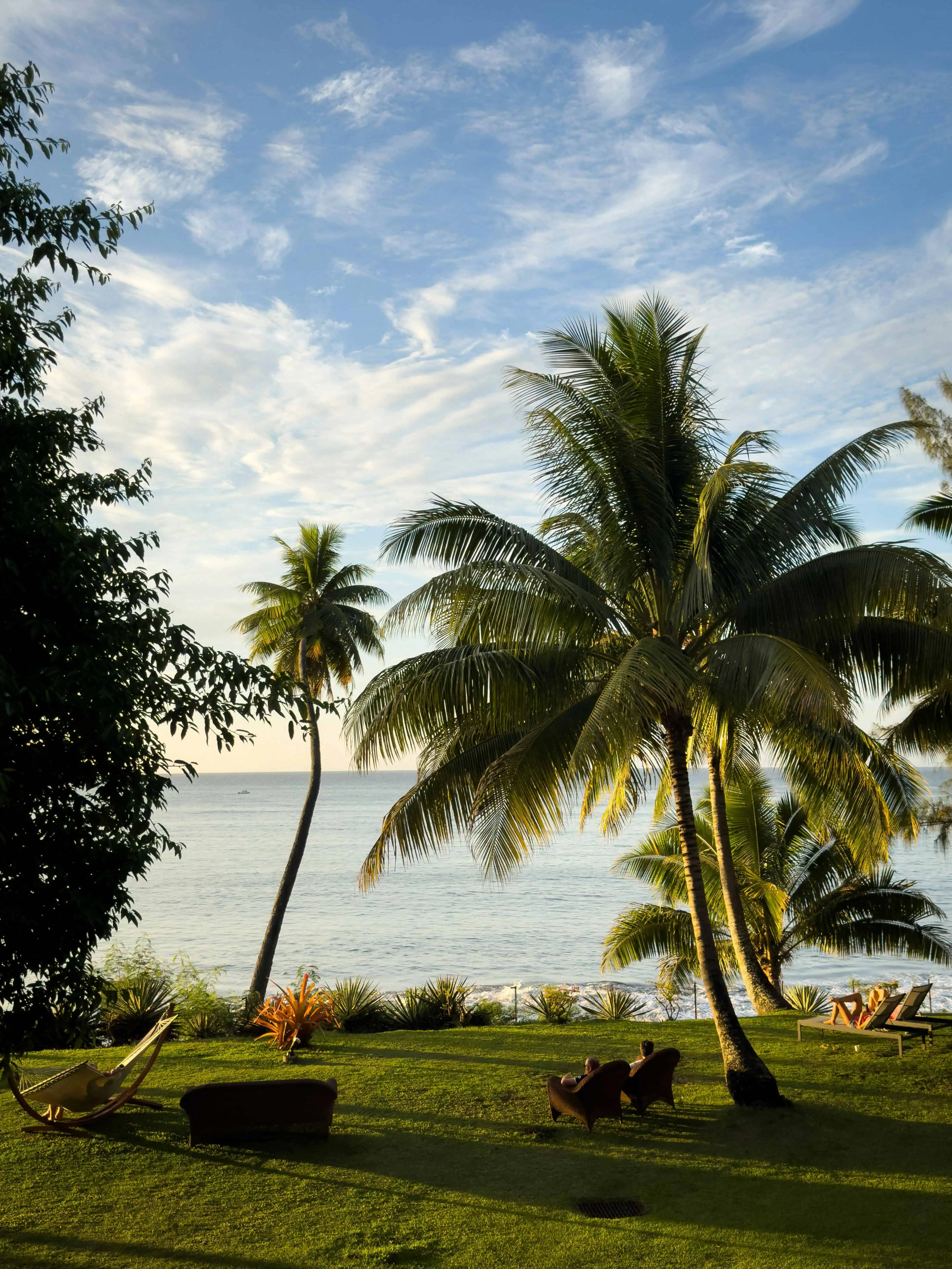
Tahiti’s resorts are mostly located along the island’s west coast or in secluded areas, offering private and amazing views of the lagoon and surrounding landscapes.
As you can see on the widget above, most hotels are on the island’s west side.
Simply fill in the form below to get a FREE QUOTE from trusted local travel specialists who know the islands inside out.
It only takes 60 seconds, and you’ll receive custom itineraries and pricing directly in your inbox or WhatsApp within
48 hours.
Free of charge. No pressure. No obligation.
*Our trusted local partners create every itinerary with care. We kindly ask that you submit a request only if you’re considering traveling.
Which Tahiti resort is the best?
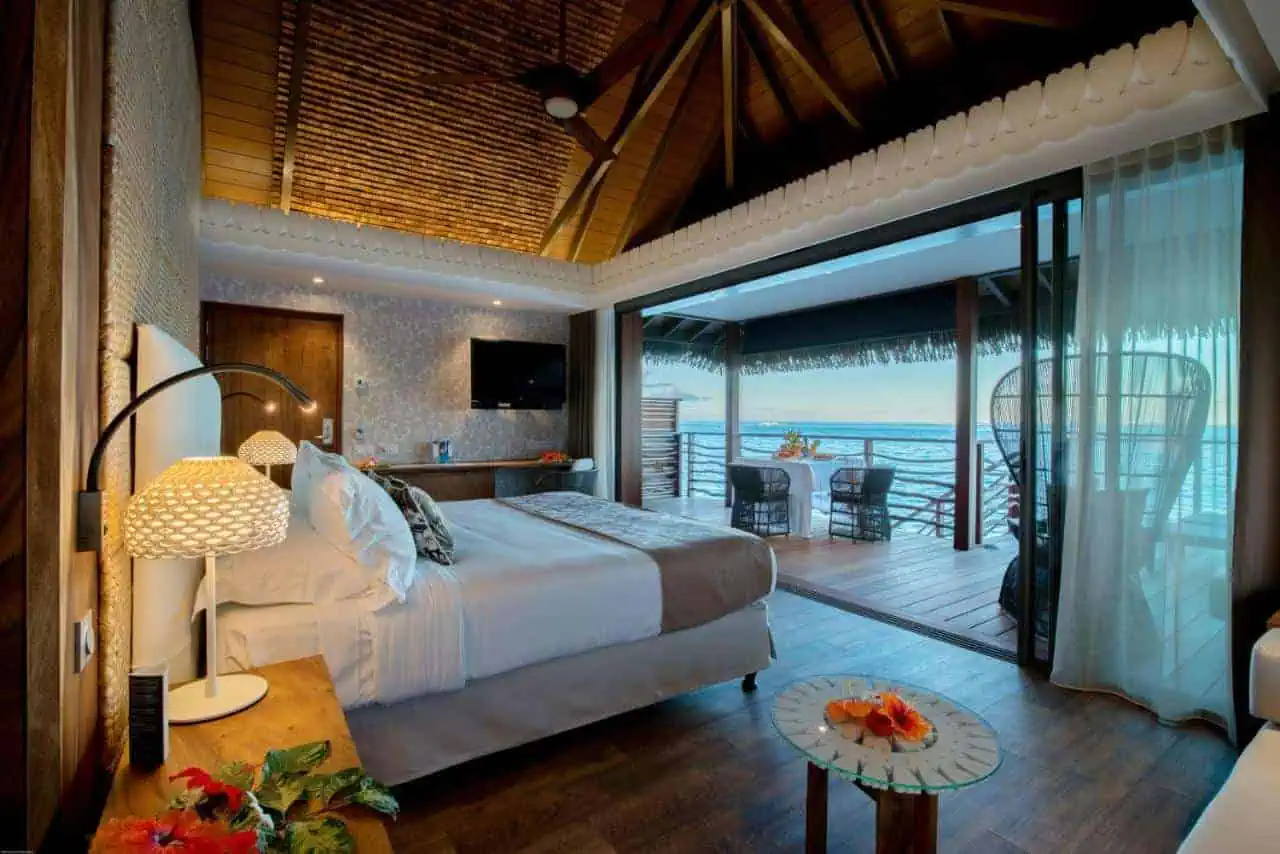
The best resort in Tahiti is the InterContinental Tahiti Resort & Spa.
Why? Take a look at the table below!
|
Feature |
Details |
|
Location |
Less than 5 minutes’ drive from Faa’a International Airport; 10-minute drive to Papeete city center. |
|
Accommodation |
Rooms with private balconies offering lagoon or garden views; overwater bungalows with private sun terraces and direct lagoon access. |
|
Dining |
Two restaurants: Le Lotus (overwater dining near a sand-bottomed pool with views of Moorea) and Te Tiare (serving French and international cuisine). |
|
Amenities |
Two swimming pools, a fitness center, a Deep Nature Spa by Algotherm, tennis courts, an open-air aquarium, and a diving center. |
|
Activities |
Snorkeling, scuba diving, cultural tours, and access to a lagoonarium. |
|
Guest Reviews |
Rated 8.3/10 based on 732 reviews; praised for location, facilities, and cleanliness. |
|
Room Rates |
Prices vary depending on dates and room type. |
Not impressed?
Take a look at all the resorts located on Tahiti to pick your favorite one!
What currency is used in Tahiti?
The currency used in Tahiti is the French Pacific Franc (XPF), which is also used throughout French Polynesia.
The XPF is pegged to the euro at a fixed rate of 1 EUR = 119.33 XPF, making it easy to calculate exchange rates.
For travelers using USD, the exchange rate typically hovers around 1 USD = 108 XPF, though rates may vary.
Credit cards are accepted in resorts, restaurants, and shops, but it’s advisable to carry some cash for local markets and smaller establishments.
KEEP IN MIND: Sometimes, the connection to pay with your card is not good enough.

Do I need a visa to visit Tahiti?
Whether you need a visa to visit Tahiti depends on your nationality and the length of your stay, as Tahiti is part of French Polynesia, an overseas territory of France.
Visa-free entry is available for tourists from what foreign countries?
- EU citizens: Citizens of the European Union do not need a visa to stay for up to 90 days.
- US, Canadian, and Australian citizens: You can enter Tahiti visa-free for up to 90 days within a 180-day period.
- Other visa-exempt countries: Many other nationalities, including New Zealand and Japan, are also allowed visa-free entry.

Does Tahiti require the COVID-19 vaccine?
No, as of August 1, 2022, travelers to Tahiti are not required to present a COVID-19 vaccination certificate or undergo testing to enter French Polynesia, according to Tahiti Tourism.
Does Tahiti have sharks?
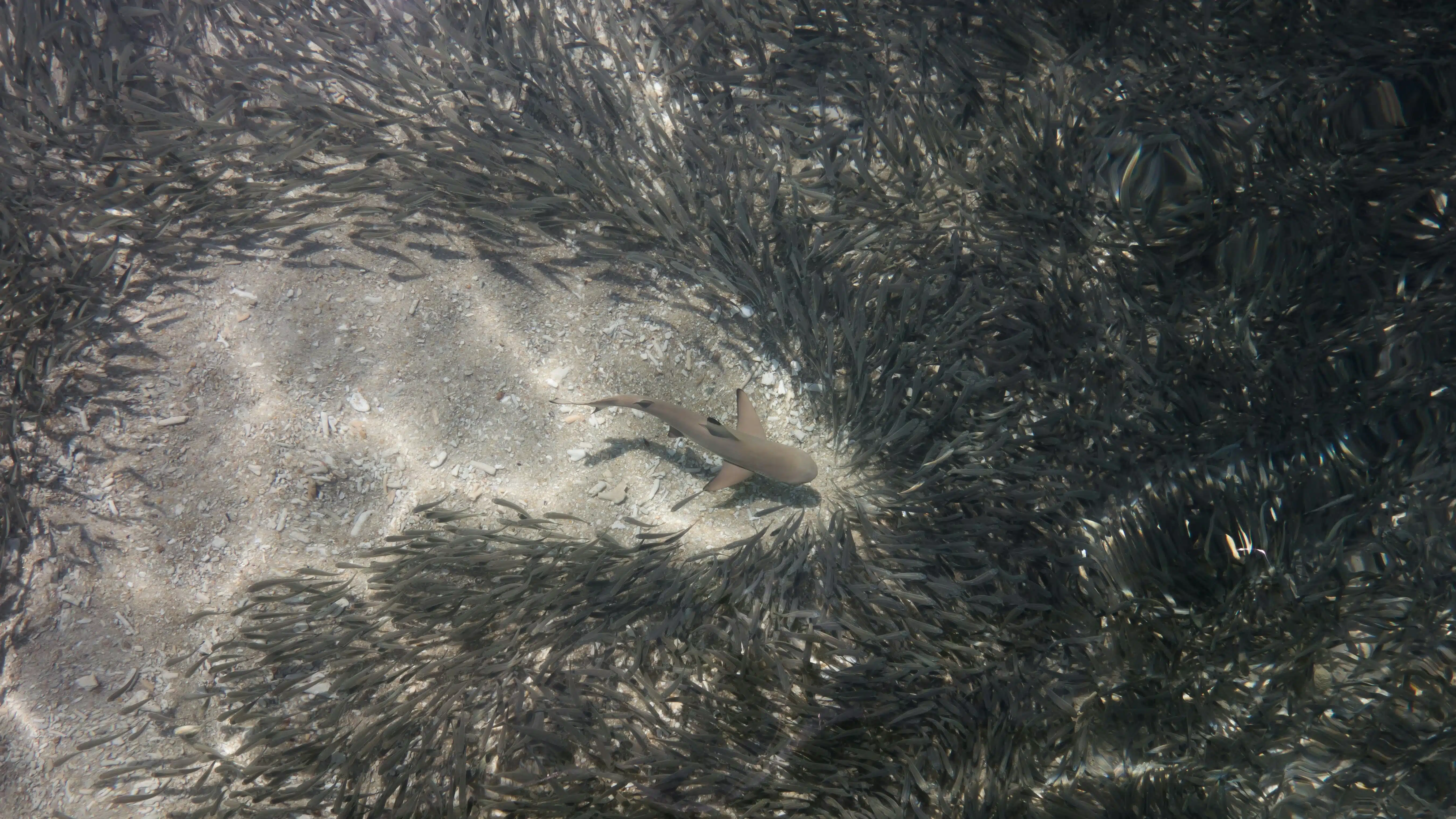
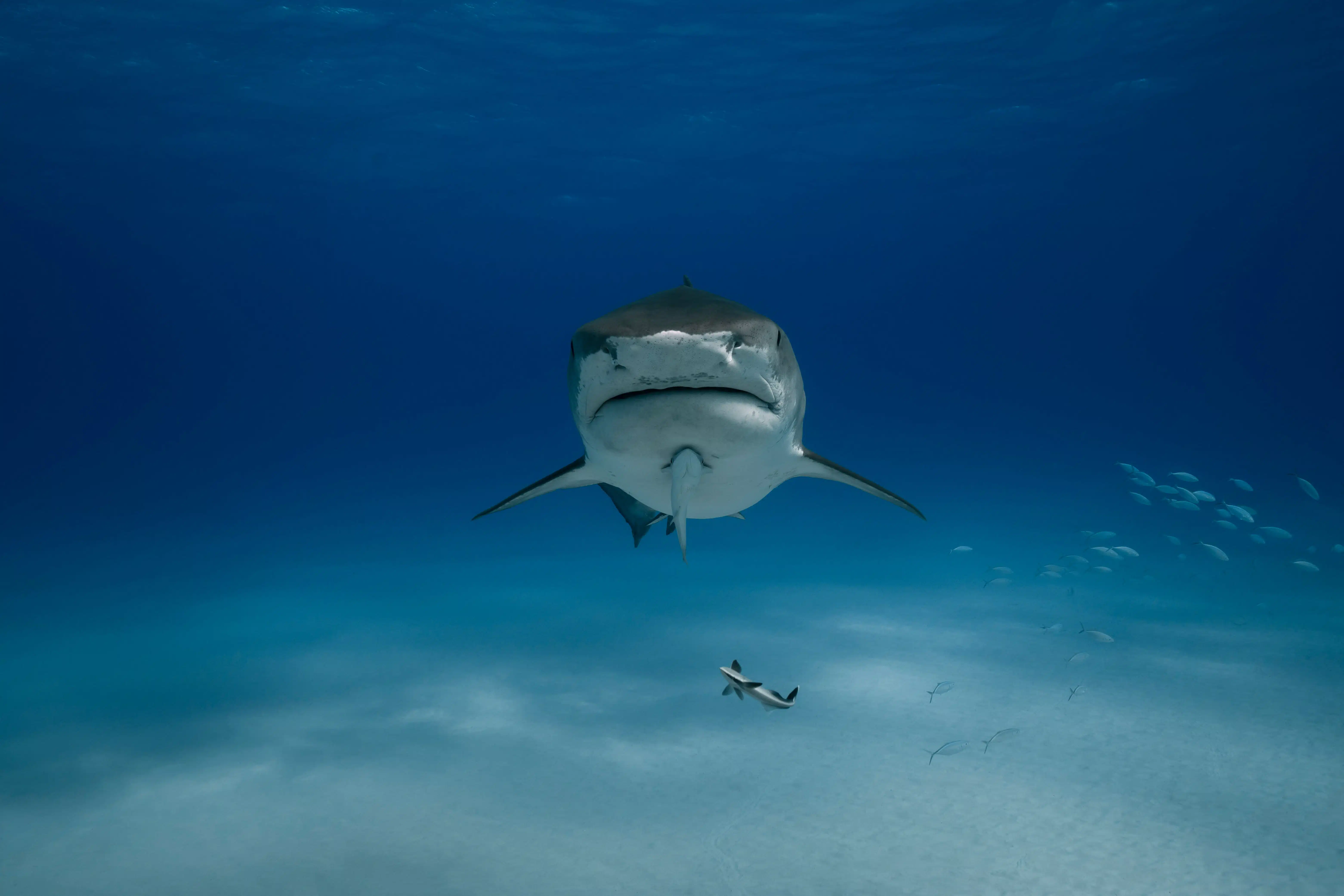
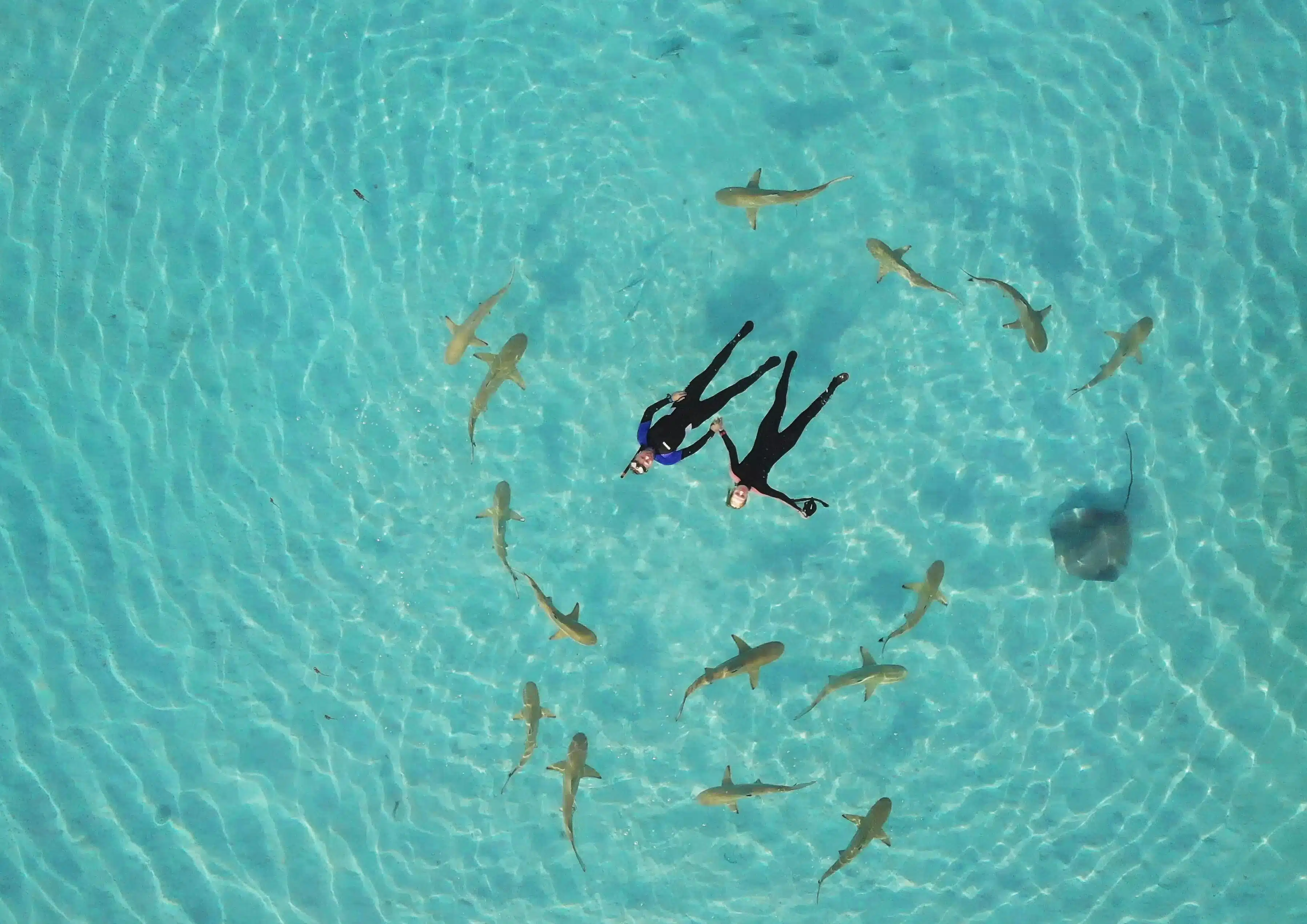
Yes, Tahiti is home to a variety of sharks, which are part of the island’s marine ecosystem.
The surrounding coral reefs and lagoon waters host several species, most of which are harmless to humans.
Common shark species
- Blacktip reef sharks: Spotted in shallow lagoons and known for their shy nature.
- Lemon sharks: Larger but non-aggressive, often seen during snorkeling or diving excursions.
- Gray reef sharks: Found in deeper waters, especially around reef drop-offs.
Are Tahitian sharks dangerous?
Shark attacks in Tahiti are extremely rare.
These sharks are used by humans, especially in areas popular for snorkeling and diving.
What kind of whales are in Tahiti?
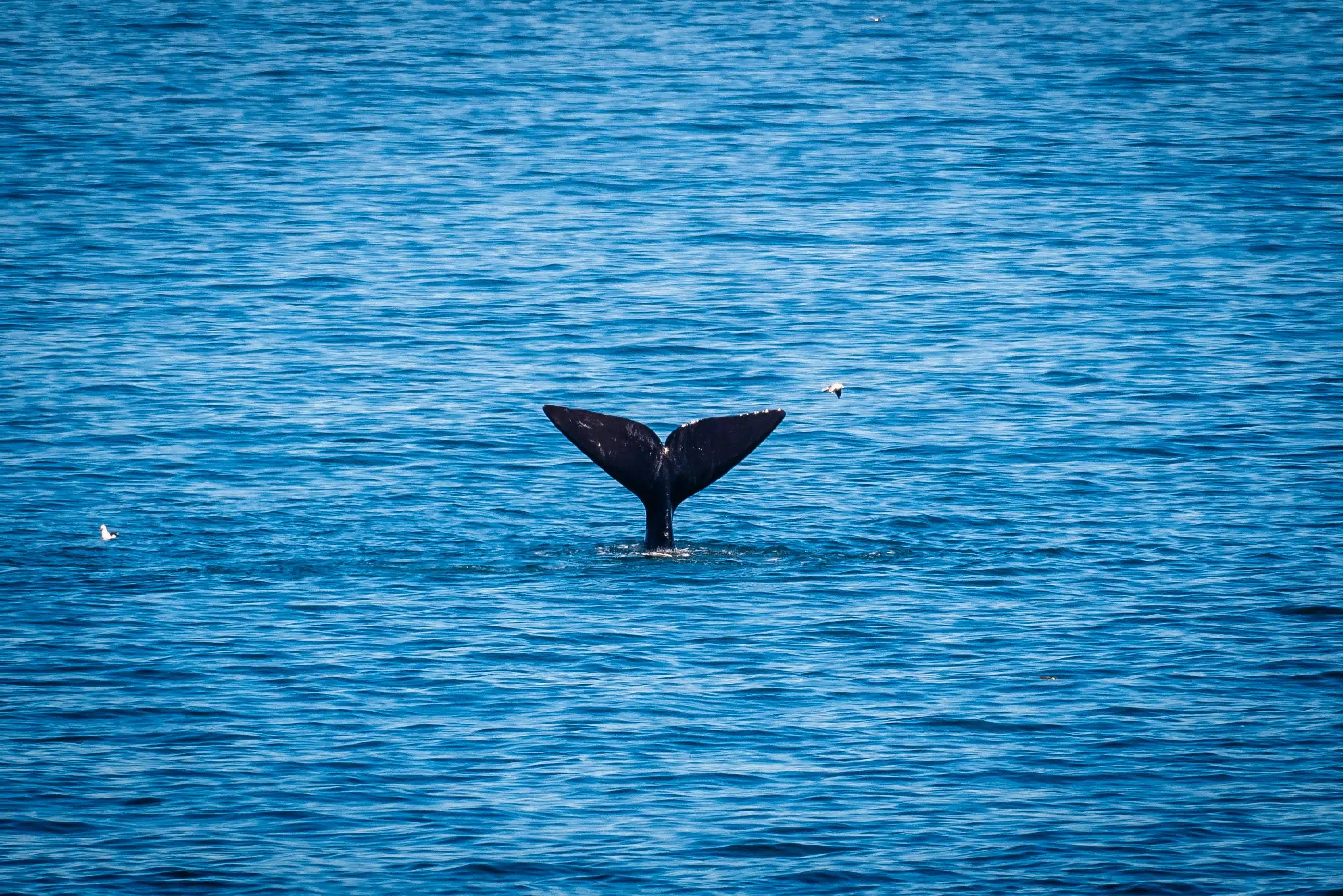
There are around 80 whale species in the world, and at least 16 species swim around the French Polynesian waters! You can expect to see humpback whales, narrow-beaked dolphins, spinner dolphins, pilot whales, and even… more rarely, their predator: ORCAS.
Every year, between June and December (but especially between August and November), THOUSANDS of whales are in the Polynesian waters. They migrate from the poles to reach the TROPICAL WATERS to give BIRTH and raise their calves in the shallow lagoons.
The Tahiti, Moorea, and Tetiaroa islands are especially famous for their whale sightings!
If you’re lucky, you might even swim with them…
Tour operators for whale-watching tour
If you are looking for trustworthy tour operators to book your activity with. We’ve got you covered.
We recommend booking with Tahiti Iti Diving as they will take you on a 3-hour boat ride where “we guarantee our outings because their presence is permanent.” So, if you’re looking for a whale-watching tour and want to make sure you see whales, we recommend them!
What is the main attraction in Tahiti?
The main attraction in Tahiti is its Fautaua waterfall. It is ONE OF THE TALLEST WATERFALLS IN THE WORLD!
Fautaua Waterfall plunges over 300 meters (984 feet) and is surrounded by lush tropical vegetation. It’s a rewarding spot for hikers seeking adventure. Read about it in our Tahiti hiking guide!
TRIPADVISOR REVIEW: This was a very easy waterfall to access from a driving trip around the island. Parking was plentiful and easy, and the road up was easy to navigate. I went with my kids (5 and 12) and senior parents. My dad walks with a cane or walker. He was able to walk to the waterfall with a few stops along the way. The path from the parking lot includes one bridge with steps up and down and a moderately sloped gravel path.
Can I get around Tahiti without a car?
Yes, you can get around Tahiti without a car. You can use the public bus (Le Truck) and taxis or book an organized tour to explore the island.
Let’s take a closer look.
Public buses (le truck)
Tahiti’s Le Truck buses operate between Papeete and popular destinations like Punaauia and Taravao. These buses are an affordable option, costing around 200–300 XPF (€1.70–€2.50 / $2–$3) per ride. However, schedules are inconsistent, especially in the evenings and on weekends, so plan ahead.
Taxis
Taxis are available in Papeete and near the airport but are expensive. A short ride within Papeete costs around 1,500 XPF (€12.50 / $14).
Organized tours and transfers
Many tour operators offer guided excursions to attractions like Fautaua Waterfall and Teahupo’o.
Take a look at Teahupoo Adventures’ website, which offers many tours to Teahupoo, including SURF TOURS!
These tours often include transportation, making them a hassle-free option for exploring without a car.
What is the local cuisine like in Tahiti?
Tahiti’s cuisine is a mix of Polynesian, French, and international influences.
Here are some highlights of Tahitian cuisine:
Poisson cru
The national dish of Tahiti, poisson cru (also called ia ota), is a refreshing raw fish salad. It features diced tuna marinated in lime juice and mixed with coconut milk, fresh vegetables, and seasonings. It’s a must-try for its light and tropical flavors.
Taro, breadfruit, and uru
Taro and breadfruit are often roasted, boiled, or mashed ingredients. They are typically served alongside fresh fish.

Grilled seafood
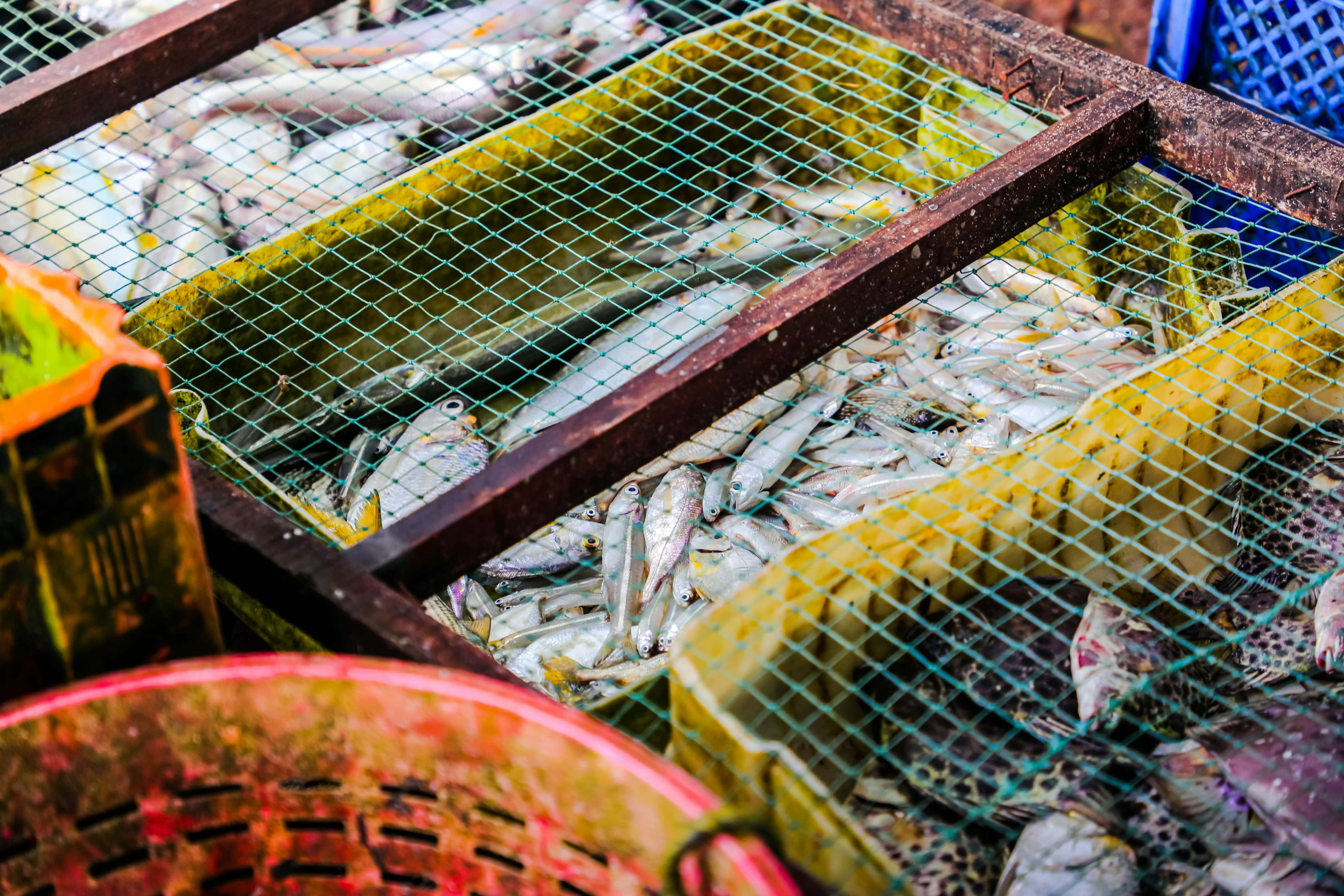
Fresh seafood, including mahi-mahi, tuna, and parrotfish, are integral to Tahitian cuisine.
Grilled or steamed fish is often paired with the famous French Polynesian vanilla sauce, made from the locally grown Tahitian vanilla, adding a subtle sweetness.
DID YOU KNOW: On Taha’a Island, you can visit the famous vanilla plantations, one of the biggest export products in French Polynesia.
Ma’a into
A fusion dish, ma’am tinito combines Chinese noodles, beans, pork, and vegetables.
What are the best restaurants in Tahiti?
Tahiti has some of the best French Polynesian restaurants for fresh seafood, beers, and fusion dishes.
- Le Grillardin: A family-run restaurant in Papeete known for its grilled meats and fresh seafood platters.
- Les 3 Brasseurs: A waterfront brewery offering house-brewed beers, a menu, and live music. Located on Boulevard Pomare in Papeete.
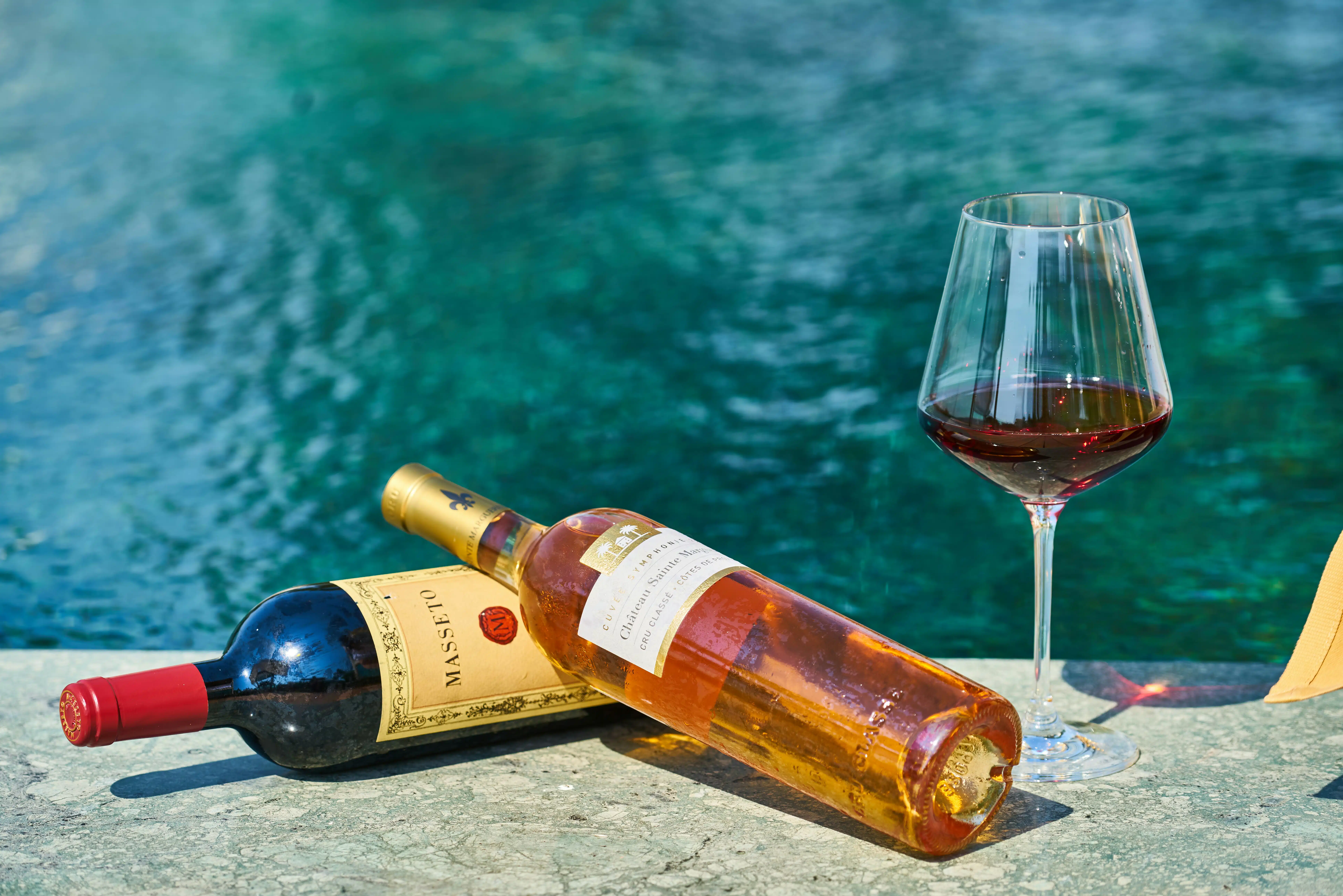
- L’O à la Bouche: A fine dining spot blending French culinary techniques with Polynesian flavors.
- Le Coco’s: A high-end restaurant in Punaauia featuring gourmet dishes with stunning ocean views. Known for its use of local ingredients and presentation.
- Le Soufflé: A hidden gem specializing in savory and sweet soufflés, combining French flair with local ingredients.
Is Tahiti safe for tourists?
Yes, Tahiti is a safe destination for tourists.
The island has a low crime rate, and the local population is known for its hospitality and friendly attitude toward visitors.
You should be more worried about the drinking water. The tap water is NOT safe to drink in Papeete, so we recommend sticking to bottled water.
However, Tahiti’s climate and geography mean there are some natural risks to be aware of:
- Sun exposure: The tropical sun is intense, so wear sunscreen and stay hydrated.
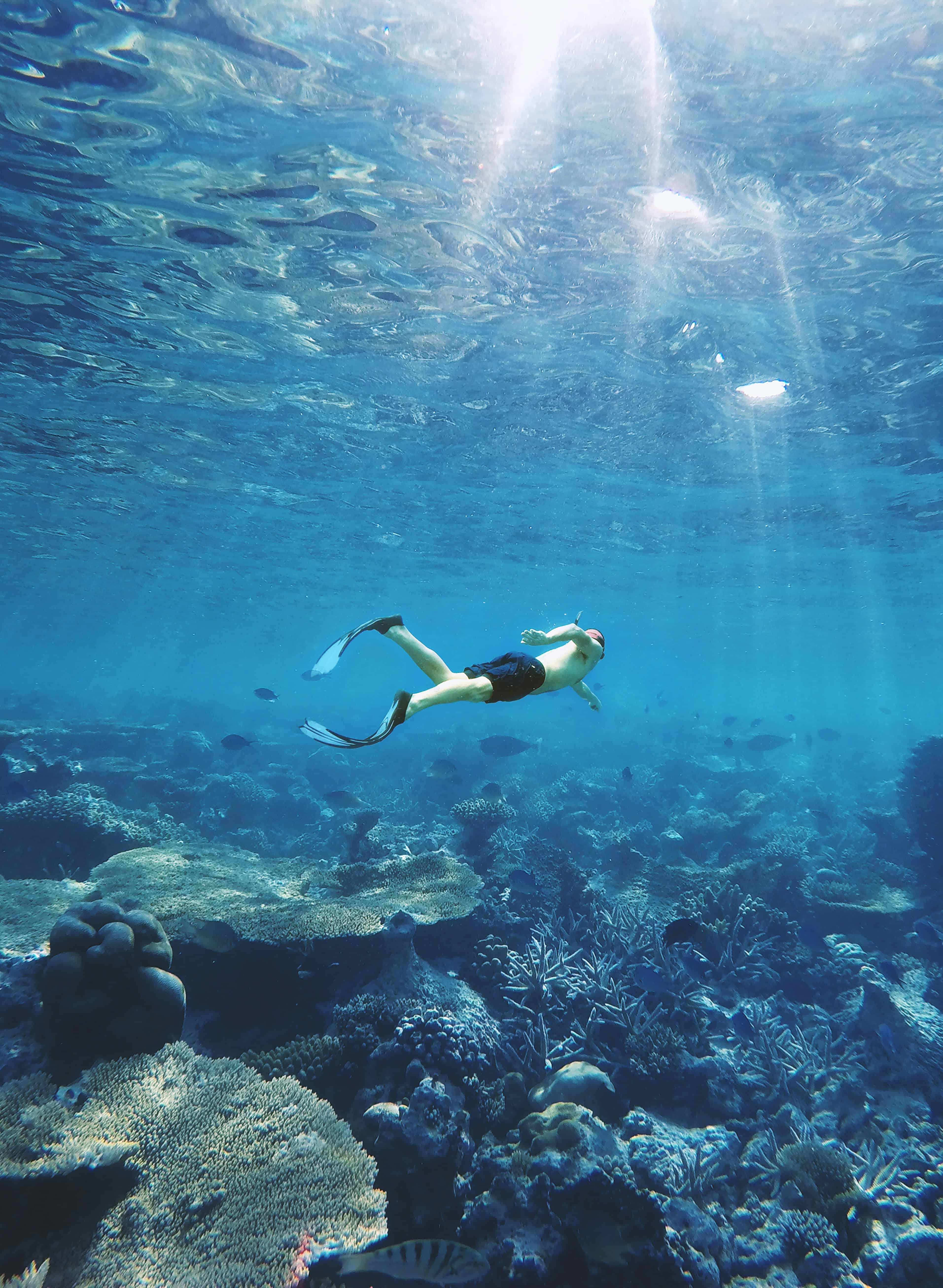
- Coral reefs: When swimming or snorkeling, be cautious of sharp coral and wear reef-safe footwear.
KEEP IN MIND: Tahiti has good medical facilities in Papeete, but smaller islands have almost no healthcare options.
What time is it in Tahiti?
- California (Pacific Time): Tahiti is 2 hours behind California. For example, if it’s 12:00 PM in California, it’s 10:00 AM in Tahiti.
- New York (Eastern Time): Tahiti is 5 hours behind New York. If it’s 12:00 PM in New York, it’s 7:00 AM in Tahiti.
- France (Central European Time): Tahiti is 11 hours behind France. If it’s 12:00 PM in France, it’s 1:00 AM the same day in Tahiti.
What should I pack for my trip to Tahiti?
Packing for Tahiti requires lightweight beach clothing and items for outdoor activities.
Clothing
- Lightweight, breathable clothing: Pack clothes made of cotton or linen to stay cool in the tropical heat.
- Swimwear: Bring multiple swimsuits for snorkeling, beach days, and resort pools.
- Sun protection: A wide-brimmed hat, sunglasses with UV protection, and a lightweight cover-up are essential.
- Evening wear: Casual evening wear, like sundresses or light trousers with collared shirts, works well for dining out.
- Comfortable shoes: Flip-flops for the beach and sturdy hiking shoes or sneakers for hiking.
Toiletries and health essentials
- Reef-safe sunscreen: Protects your skin and preserves Tahiti’s coral reefs.
- Insect repellent: Mosquitoes are active, especially in the evenings.
- Basic first-aid kit: Include band-aids, antiseptic wipes, and any personal medications.
Travel gear
- Snorkeling gear: Some resorts provide equipment, but bringing your own ensures a perfect fit.
- Underwater camera: Capture Tahiti’s vibrant marine life.
- Daypack: Ideal for excursions and hikes in Tahiti.
- Dry bag: Protects your valuables during water activities.
INSIDER TIP: Don’t forget a pareo (Tahitian sarong). While you can buy one locally, packing your own gives you a versatile item for use as a beach cover-up, picnic blanket, or lightweight scarf.
Simply fill in the form below to get a FREE QUOTE from trusted local travel specialists who know the islands inside out.
It only takes 60 seconds, and you’ll receive custom itineraries and pricing directly in your inbox or WhatsApp within
48 hours.
Free of charge. No pressure. No obligation.
*Our trusted local partners create every itinerary with care. We kindly ask that you submit a request only if you’re considering traveling.
Are there any health concerns in Tahiti that need to be considered?
Tahiti is generally a safe destination with a well-maintained healthcare system, especially in Papeete.
However, you should be aware of some specific health concerns:
- Dengue fever: Outbreaks can occur in Tahiti, so protect yourself with mosquito repellent and long sleeves, and stay indoors during peak mosquito activity (dawn and dusk).
- Zika virus: Though rare, cases have been reported. Pregnant travelers should consult a doctor before visiting.
Is there Wi-Fi and internet access in Tahiti?
Yes, Wi-Fi and internet access are available in Tahiti, but the quality and coverage vary depending on your location.
Most hotels and resorts in Tahiti offer Wi-Fi, often free in areas like lobbies and restaurants.
However, in-room Wi-Fi may come with additional charges, especially in luxury accommodations.
Speeds are sufficient for browsing and emails but too slow for streaming or video calls.
Is Tahiti suitable for families?
Yes, Tahiti is a fantastic destination for families, offering a mix of relaxation, adventure, and cultural experiences.
The island’s hospitality, safe environment, and variety of activities make it a great choice for a family getaway.
Family-friendly activities
- Beaches and lagoons: Tahiti’s calm lagoons are ideal for children to swim and snorkel safely. Plage de la Pointe Venus, with its shallow waters, is particularly family-friendly.
- Cultural experiences: Kids can enjoy learning about Polynesian traditions through dance shows and music, as well as visits to cultural sites like the Museum of Tahiti and Her Islands.
- Nature excursions: Family hikes to Fautaua Waterfall or exploring the lush interior provide adventure and bonding opportunities.
Tahiti is near which country?
Tahiti’s closest neighbors are Hawaii, New Zealand, and Australia.
- Hawaii (United States): Around 4,000 kilometers (2,485 miles) north of Tahiti.
- New Zealand: About 4,400 kilometers (2,735 miles) southwest of Tahiti.
- Australia: Approximately 6,100 kilometers (3,790 miles) west of Tahiti.
Tahiti is actually the largest island of the Îles du Vent (Windward Islands) of the Society Islands of French Polynesia.
Who owns Tahiti?
Tahiti is part of French Polynesia, which is an overseas territory of France. This means it is not an independent country but is governed by France, with some autonomy for local affairs.
- French control: Tahiti has been under French administration since the 19th century.
- Autonomy: While France manages foreign policy, defense, and currency, French Polynesia has its own government, including a President of French Polynesia, who oversees local matters such as education and economic development.
- Representation in France: French Polynesia is represented in the French Parliament, with elected members in both the National Assembly and Senate.

What is the electrical voltage in Tahiti?
The electrical voltage in Tahiti is 220 volts with a frequency of 50 Hz, the same as in France and most European countries.
Tahiti uses Type C and Type E electrical outlets, which have two round pins.
So bring a Type C/E adapter if your plugs differ from the local standard. Many hotels and resorts also provide adapters upon request.
Can I drink tap water in Tahiti?
No, we do not recommend drinking tap water on the island, especially outside of Papeete.
While the water in Papeete and larger towns are most of the time safe for locals, we were always advised to stick to bottled water to avoid stomach issues.
Bottled water is available in all supermarkets, hotels, and restaurants. Expect to pay around 150–300 XPF (€1.25–€2.50 / $1.35–$2.75) per liter.
Tahiti Sister Island
Moorea is referred to as Tahiti’s sister island.
Located just 17 kilometers (11 miles) northwest of Tahiti, Moorea is easily accessible by a 30-minute ferry ride or a 10-minute flight from Papeete.
Why is moorea called the sister island?
- Proximity: Its proximity and ferry connections make Moorea a natural extension of your trip.
- Similar natural beauty: Like Tahiti, Moorea has lush mountains, lagoons, and vibrant coral reefs perfect for scuba diving, but it offers a more tranquil and less developed atmosphere.
- Shared culture: Both islands share a rich Polynesian heritage, from traditional dance and music to tattoo art and cuisine.
Highlights of Moorea
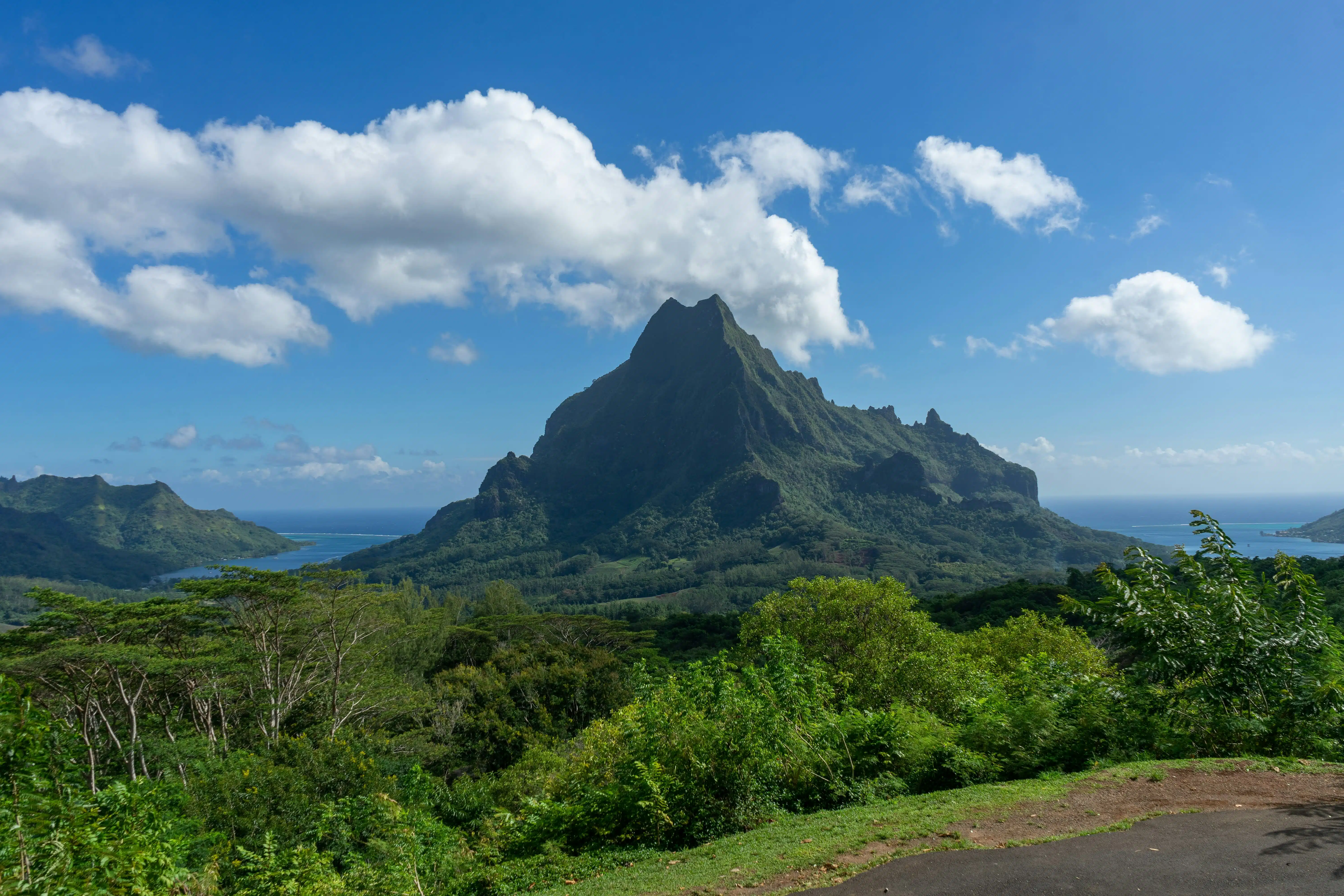
- Mount Rotui and Mount Tohivea: Iconic volcanic peaks perfect for hiking or photographing.
- Opunohu Bay and Cook’s Bay: Stunning bays surrounded by dramatic landscapes.
- Snorkeling and diving: Explore coral reefs teeming with marine life.
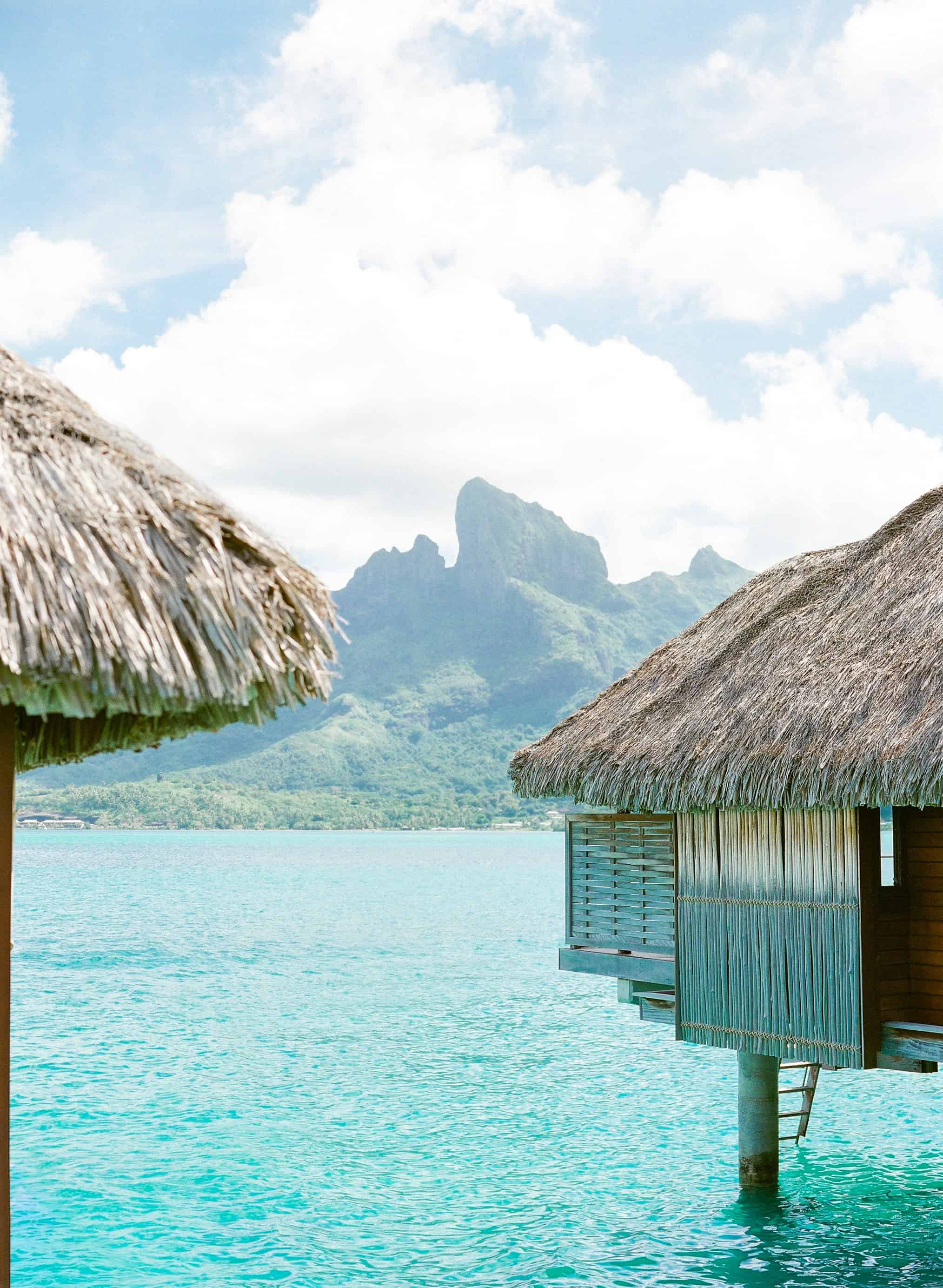
- Overwater bungalows: Moorea offers a quieter, more intimate alternative to the island’s resorts.
Islands like Tahiti
There are a few other beautiful islands in French Polynesia and the South Pacific.
Moorea (French Polynesia)
Often called Tahiti’s sister island, Moorea is just a short ferry ride away.
It has dramatic peaks, turquoise lagoons, and a quieter atmosphere with opportunities for snorkeling, hiking, and exploring local villages.
Bora Bora (French Polynesia)
Known as the “Pearl of the Pacific,“ Bora Bora offers luxury and romance with its overwater bungalows, turquoise lagoons, and the iconic Mount Otemanu.
Ra’iatea and Taha’a (French Polynesia)
These two islands share a lagoon and are famous for their culture and natural beauty.
Raiatea is considered the sacred birthplace of Polynesian culture, while Taha’a is famous for its vanilla plantations and coral gardens.
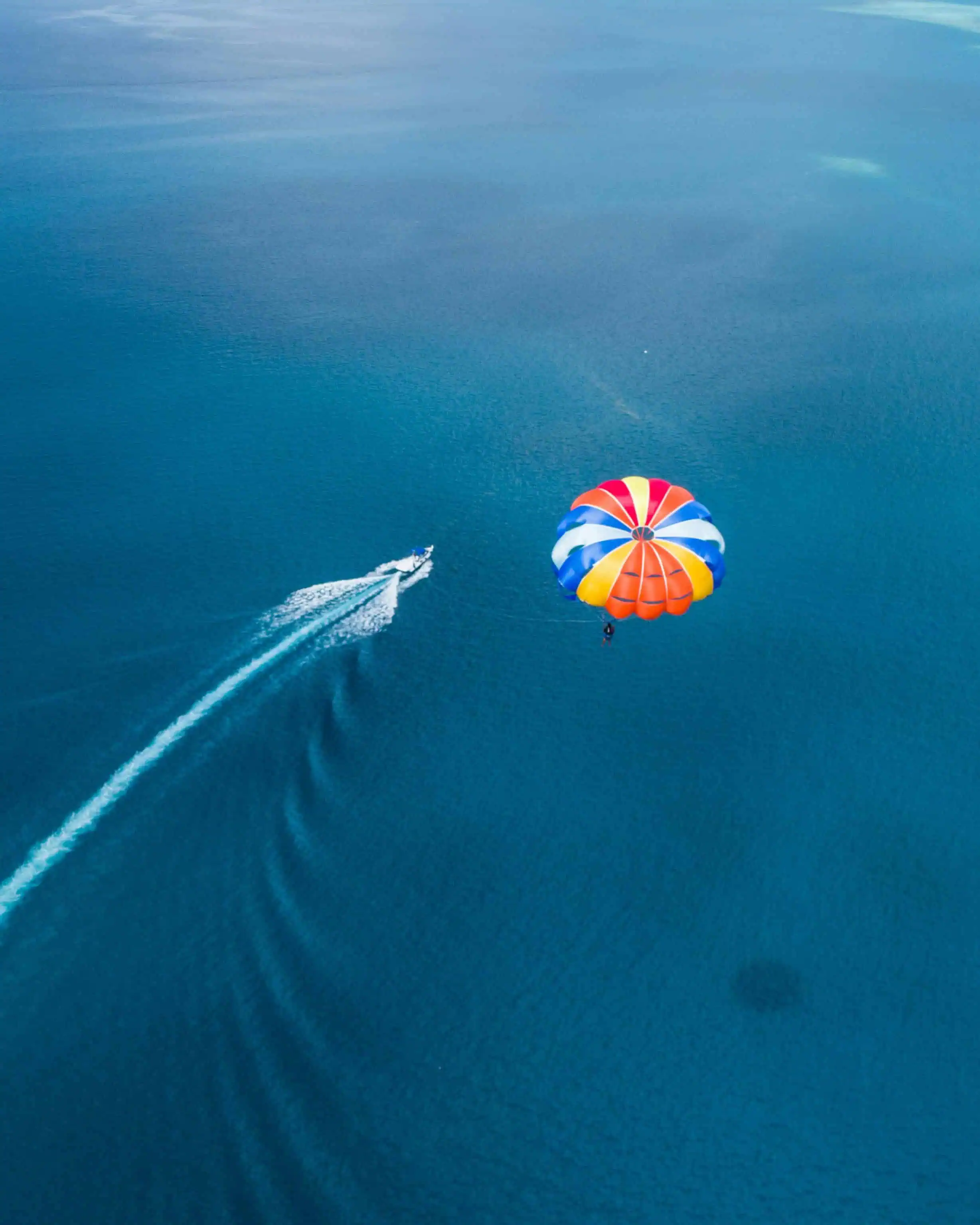
What is ‘island time,‘ and why does it matter in Tahiti?
‘Island time‘ refers to the relaxed and unhurried pace of life typical on tropical islands like Tahiti.
It’s a cultural mindset that prioritizes living in the moment, enjoying life, and valuing human connections over strict schedules or deadlines.
Which Tahitian phrases should you know before visiting?
Learning a few basic phrases helps you connect with locals and show respect for their culture.
Here are some essential phrases to know before your trip:
- ‘Ia ora na (ee-ah oh-rah-nah): Hello
- This is the most common greeting in Tahitian.
- Mauruuru (mah-roo-roo): Thank you
- A simple way to express gratitude, whether at a market or after a meal.
- Nana (nah-nah): Goodbye
- An informal and friendly way to say goodbye.
- Eaha te huru? (eh-ah-teh-hoo-roo): How are you?
- This phrase is great for starting a conversation.
- Maitai (my-tie): Good
- Use this to respond when someone asks how you are or to express approval.
- Aita pe’a pe’a (eye-tah pay-ah pay-ah): No problem
- A polite way to say “you’re welcome“ or to let someone know it’s all good.
- Manava (mah-nah-vah): Welcome
- You’ll often hear this upon arriving at a hotel or event.
Simply fill in the form below to get a FREE QUOTE from trusted local travel specialists who know the islands inside out.
It only takes 60 seconds, and you’ll receive custom itineraries and pricing directly in your inbox or WhatsApp within
48 hours.
Free of charge. No pressure. No obligation.
*Our trusted local partners create every itinerary with care. We kindly ask that you submit a request only if you’re considering traveling.
Conclusion
Visiting Tahiti is a journey into a world of natural beauty, vibrant culture, and warm Polynesian hospitality.
From its lush mountains and lagoons to its rich traditions and delicious cuisine, Tahiti offers something for every traveler.