Welcome to:
Chile
Chile is one of the most dramatic countries on earth to drive through. It’s a narrow ribbon of land running from the Atacama, the driest desert in the world, down through vineyards, volcanoes, and lakes to the glaciers and granite towers of Patagonia. We’re exploring it, overlanding in our Land Rover Defender as part of our Pan-American expedition, weaving back and forth across the Andes with Argentina.
Weather in Chile
Because Chile stretches across so many latitudes, you can experience almost every climate in one trip. The north is dry desert with hot days and freezing nights, central Chile around Santiago has a Mediterranean climate with dry summers, the Lake District is green and rainy, and Patagonia is cool and famously windy year-round. Seasons are the reverse of Europe’s, so summer runs from December to February.
Best time to visit Chile
Patagonia and the Carretera Austral are best from November to March, when roads, ferries and trails are fully open. Santiago and the wine valleys are most pleasant in spring (September to November) and autumn (March to May), especially during the grape harvest. The Atacama can be visited year-round, though January and February can bring rain to the high-altitude areas. For skiing in the Andes, go from June to September.
🇨🇱
Best time to visit Chile:
Jan–Dec
⏳
Faq’s
What time is it in Chile?
Mainland Chile uses UTC−4 in winter and UTC−3 in summer (daylight saving time runs roughly from September to April). That puts Chile 4 to 6 hours behind Paris, depending on the time of year. The southern Magallanes region stays on UTC−3 all year, and Easter Island is 2 hours behind the mainland.
Is Chile tourist-friendly?
Yes. Chile has good infrastructure, reliable long-distance buses, well-organized national parks and plenty of tour operators in the main destinations. The biggest challenges are the long distances and the need to book popular spots like Torres del Paine far in advance.
What is Chile best known for?
Chile is famous for its wine (especially Carmenère), the Atacama Desert, Torres del Paine, the moai statues of Easter Island, world-class stargazing and pisco. Fun fact: Chile and Peru both claim pisco as their national drink.
Can you drink the tap water in Chile ?
We do not recommend the tap water, even in big cities like Santiago. For Chile, we recommend bottled or filtered water.
What is the culture of Chile ?
Chilean culture mixes Spanish colonial roots with Indigenous Mapuche heritage in the south and Rapa Nui culture on Easter Island. Family is central, “once” (an early-evening tea with bread and snacks) is a daily ritual, and the Fiestas Patrias around 18 September are the biggest celebration of the year, with asados, cueca dancing and plenty of wine.
Where are the airports in Chile ?
The main international airport is Arturo Merino Benítez (SCL) in Santiago. Key domestic airports include Calama (CJC) for the Atacama, Puerto Montt (PMC) for the Lake District, Balmaceda (BBA) for the Carretera Austral, Punta Arenas (PUQ) and Puerto Natales (PNT) for Patagonia, and Mataveri (IPC) on Easter Island.
What are the national dishes of Chile ?
Popular dishes include empanadas de pino (beef, onion, egg and olive), pastel de choclo (corn pie), cazuela (a hearty soup), completos (loaded hot dogs), curanto from Chiloé, sopaipillas and, of course, the pisco sour.
Is it safe to travel to Chile ?
Yes, Chile is generally safe for tourists and one of the safer countries in South America.
What are some famous landmarks in Chile ?
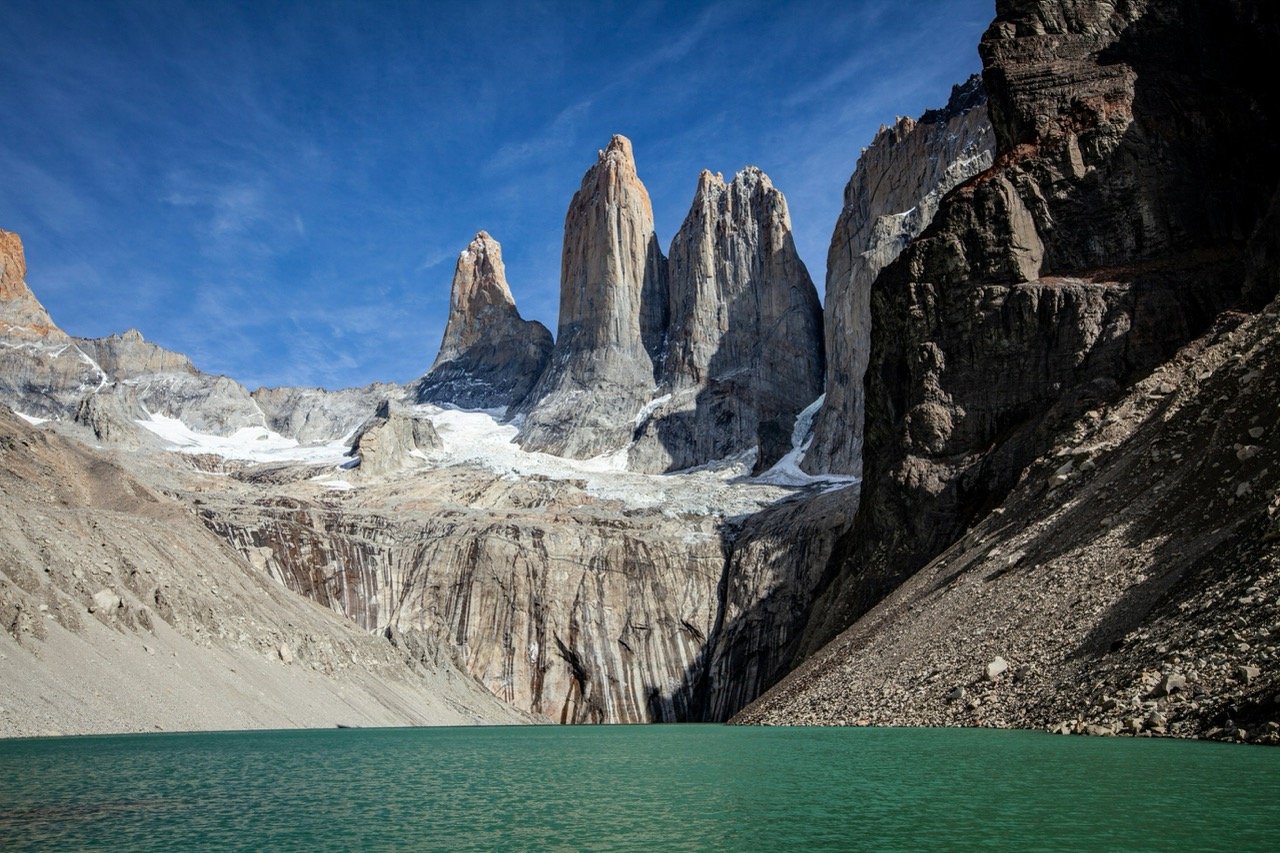
Famous landmarks include Torres del Paine National Park, the moai of Easter Island, Valle de la Luna in the Atacama, the colourful hills of Valparaíso, the Marble Caves on General Carrera Lake, Osorno Volcano and the wooden churches of Chiloé.
Is Chile expensive to visit?
Chile is one of the more expensive countries in South America, with prices in Santiago and Patagonia feeling closer to Europe than to its neighbours. Torres del Paine in particular is pricey, as accommodation inside the park is limited and books out months ahead. Paying hotels with a foreign card to skip the VAT and self-catering in the south help keep costs down.
Get Ready For Your Trip
Book popular activities in Chile
Be prepared for Chile
Language
The official language is Spanish, but Chilean Spanish is famously fast and full of local slang like po and u00bfcachai?, so even fluent Spanish speakers need a few days to adjust. English is spoken in hotels and tour agencies in hubs like Santiago, San Pedro de Atacama and Puerto Natales, but much less elsewhere.
Currency + How to pay
The currency is the Chilean peso (CLP). Cards are widely accepted, even in small towns, and we use Revolut for this: always choose to pay in pesos, never in euros or dollars, and top up before the weekend, as Revolut adds a small markup on weekend exchanges. ATM fees can be steep, so withdraw larger amounts less often. Insider tip: foreign tourists paying for hotels in USD or with a foreign card can often avoid the 19 percent VAT, so always ask at check-in.
Visa
EU, US, UK, Canadian and Australian citizens can visit Chile visa-free and get a 90-day tourist permit at the border. Greek citizens are an exception, with stays limited to 60 days. As of 2026, Chile charges no reciprocity fee to any nationality, and the 90-day stay can usually be extended once from inside Chile for another 90 days, for a fee. A small number of nationalities still need a visa in advance. Always check the latest requirements before traveling.
Plugs
Chile uses type C and L plugs with a standard voltage of 220V. Standard European two-pin plugs usually fit, but thicker grounded plugs may not, so a small adapter is worth packing. Shop your international plug.
Safety
Chile is one of the safer countries in South America, though petty theft and phone snatching are common in busy parts of Santiago and Valparau00edso. Keep valuables out of sight and never leave anything visible in a parked car. Chile is also very earthquake-prone, so take a minute to note the tsunami evacuation signs in coastal towns.
Driving & fuel prices
Chile is roughly 4,300 km (2,670 mi) long, so driving here means long days. The famous Carretera Austral runs around 1,240 km (770 mi) through Patagonia, much of it on gravel, and fuel stations can be far apart in the south, so fill up whenever you can. Insider tip: rental cars need special paperwork to cross into Argentina, so arrange it with your rental company well in advance.