
Colico Guide: 12 Best Things To Do In Colico (Lake Como’s windy town)
This post has affiliate links. We earn a small commission, which helps us create better content and share amazing destinations with you at no extra cost.
On this page
Travel essentials we use
On this page
If we wanted a Lake Como town for wind, hiking, forts, and outdoor activities rather than villas and polished old towns, we’d look at Colico.
It feels completely different from Varenna or Menaggio.
The first thing we noticed when we arrived was the wind. Not a soft lake breeze, but proper wind across the open water with kite sails moving back and forth in front of the mountains.
That tells you what Colico is about.
We stayed one night, which was enough for the forts, lakefront, and nature. If we stayed longer, we’d add one bigger experience such as horseback riding, cycling, a vineyard tasting, or a boat trip.
For us, the three things we would prioritise are Forte Montecchio Nord, one outdoor activity, and a walk or hike away from the lakefront.
This guide covers what we think is genuinely worth doing, who Colico is right for, where we’d stay, and which experiences we’d actually spend money on.
🌬️ Colico is Lake Como for outdoor travellers: Come for wind, hiking, forts and open space rather than famous villas and postcard streets.
🎖️ Forte Montecchio Nord is our history pick: If you only have time for one fort, choose the intact WWI fort and check the guided-tour schedule before planning your day.
🐎 Want an easy outdoor activity? This horseback ride from Colico is a good alternative to hiking or watersports, especially if you want something beginner-friendly.
🍷 Prefer something slower? A vineyard tasting with local wine, cheese and cured meats is our pick for couples or a relaxed afternoon.
🚤 Want to see more of Lake Como? The 2.5-hour mini-cruise from Colico lets you see both the northern and central lake without making public ferries your entire day.
🏨 Stay one or two nights: Seven Park Hotel suits couples wanting a beachfront stay, while Hotel Risi is better for the ferry and centre.
🚂 Staying longer? Colico station makes the Bernina railway and St. Moritz a surprisingly practical full-day trip.
Is Colico worth visiting?
Yes, but only if you know what you’re coming for.
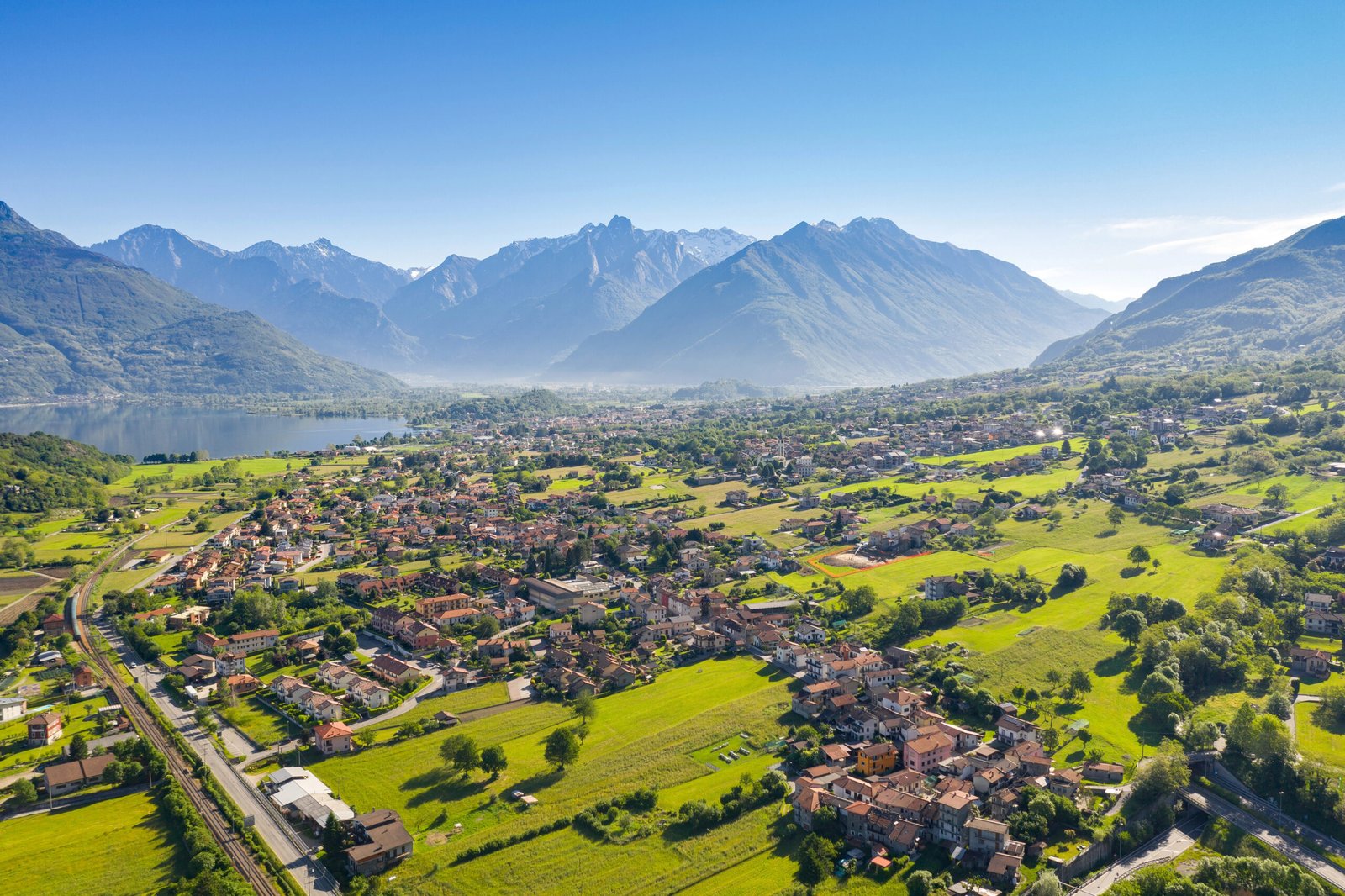
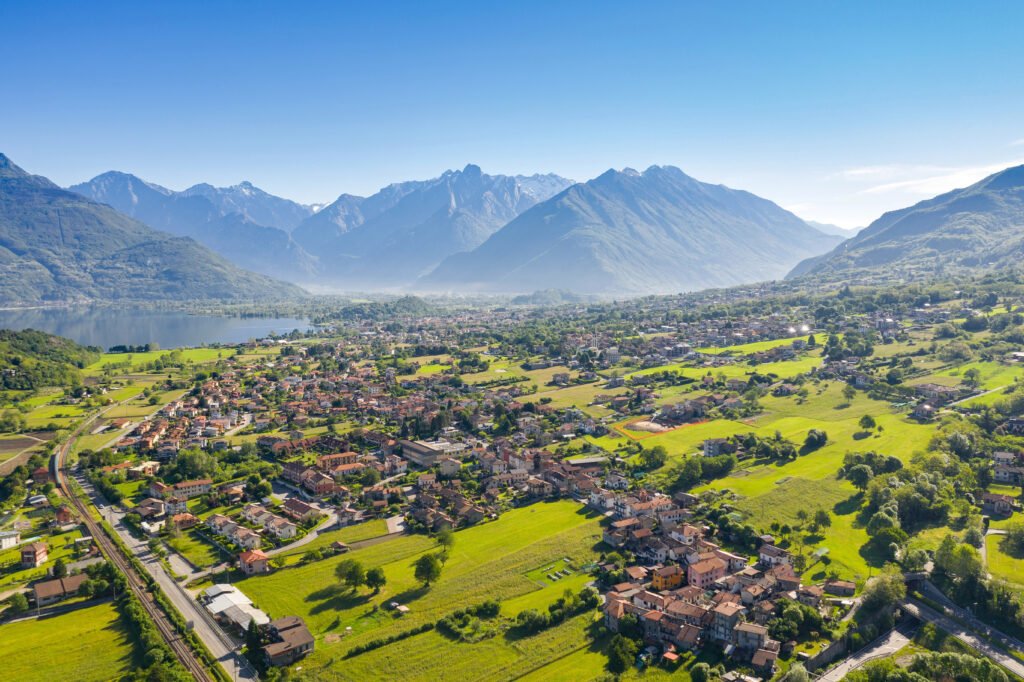
Colico sits at the northern tip of Lake Como, and it has a completely different character from Bellagio, Varenna, or Menaggio.
This is not the town to stay in if you want to see the luxurious and fancy villas from the movies, romantic lanes, or constant central-lake ferry hopping.
We choose Colico for watersports, hiking, military history, open space, and generally lower prices.
👉 Keep in mind: there are NO BIG VILLAS or postcard old towns here. Instead, you get strong wind, open water, forts, and nature reserves. If a packed list of boutique shops and lakefront villas is what you’re after, this isn’t that town, head to Bellagio or check our full list of things to do in Lake Como instead.
It’s also one of the more affordable bases on the lake, and A LOT LESS CROWDED than the central towns.
Stay here if:
- You’re into water sports like kitesurfing, windsurfing, or sailing.
- You want lower prices and fewer crowds.
- History and nature interest you more than villas and gardens.
Skip it if:
- The classic postcard Lake Como look is the whole point of your trip (visit Bellagio)
- You’re relying entirely on ferries (a car makes the northern lake much easier)
Our verdict: Colico makes the most sense for active travellers, road trips, and anyone who wants the northern lake rather than the classic central Lake Como experience.
How long to spend in Colico
A half day is enough for the promenade and town itself.
With one full day, add Forte Montecchio Nord and either Piona Abbey or Pian di Spagna.
With two days, Colico becomes much more interesting because you have time for one of the experiences that actually makes this part of Lake Como different:
- watersports;
- horseback riding;
- cycling;
- vineyard tasting;
- or a proper hike.
If you stay three nights or more, we would start using Colico as a launch point for bigger excursions rather than trying to invent more things to do in town.
The Bernina railway to St. Moritz is particularly interesting because you can start directly from Colico station.
🤔 How would we use an extra day in Colico?
Want something active? Go horseback riding →
Prefer food and wine? Visit the vineyard →
Want classic Lake Como scenery? Take the mini-cruise →
Want a full-day adventure? Take the Bernina railway to St. Moritz →
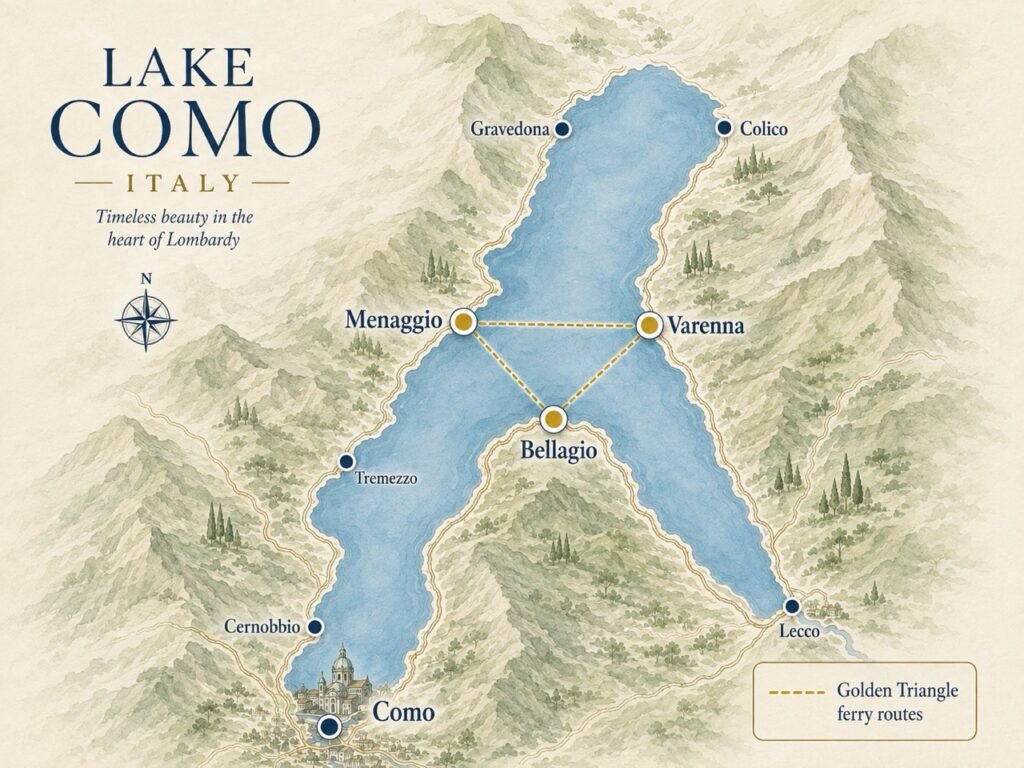
👉 Want to see exactly where Colico sits relative to the rest of the lake before you plan your route? Check our Map of Lake Como post.
👉 DID YOU KNOW: With just under 8,000 inhabitants, Colico is the largest town on the upper Lake Como and lies at the foot of Monte Legnone, which at 2,609 meters is the highest mountain on Lake Como.
The best things to do in Colico
The activities below are the main reasons to come to Colico.
Summary of the best things to do in Colico
| Best things to do in Colico | |
| 🪁 Kitesurfing & sailing | Best for wind-sports fans: the Breva wind is one of the main reasons to choose Colico over the central lake. |
| 🐎 Horseback riding | Best easy outdoor experience: ride through fields and lakeside scenery without committing to a full hike. Check the horseback tour → |
| 🍷 Vineyard wine tasting | Best relaxed experience: taste local wine with cheese, salami and grappa in a vineyard above Colico. Check the vineyard tasting → |
| 🎖️ Forte Montecchio Nord | Our history pick: choose this over Forte di Fuentes if you only have time for one fort. |
| ⛪ Piona Abbey | Best quiet cultural stop: combine the abbey with the peninsula and lake views for a slower half-day. |
| 🚲 Three-lakes e-bike tour | Best if you want to cover more ground: a 3.5-hour ride connecting the flatter northern-lake scenery. Check the e-bike tour → |
| 🚤 Lake Como mini-cruise | Best for classic Lake Como scenery: see the central and northern lake from Colico without spending the whole day changing ferries. Check the 2.5-hour cruise → |
| 🥾 Baia di Piona | This is one of the easier walks around town. The route stays gentle, with only a small amount of elevation, and the real reason to do it is the lake scenery rather than the challenge. |
| 🚂 Bernina railway & St. Moritz | Best full-day extension: leave from Colico station and spend the day travelling through the Alps to St. Moritz. Check the Bernina train ticket → |
Try kitesurfing or sailing
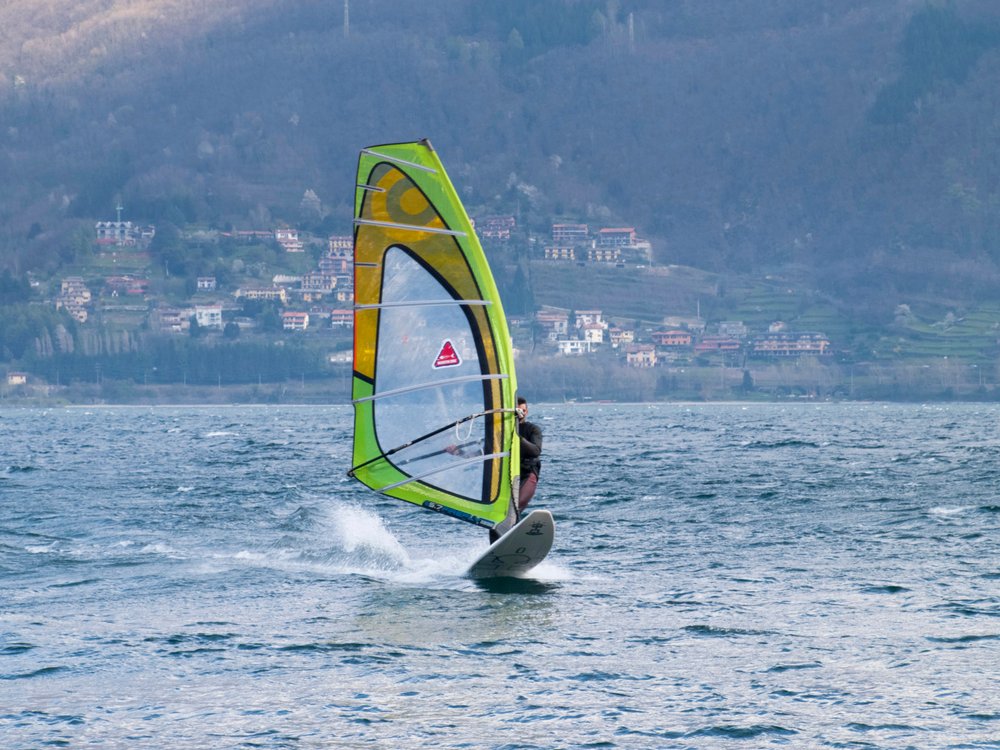
Colico is one of the windiest parts of Lake Como, thanks to the famous BREVA WIND, a thermal wind that builds through the day and makes the northern tip one of the most consistent spots on the lake for kitesurfing and sailing.
It’s why the schools are set up here rather than further south.
We haven’t done this ourselves, but we’d highly recommend trying it out if you’re even a little bit into watersports. This is genuinely what sets Colico apart from the rest of the lake.
Check local kitesurfing schools like Kitezoo.
Ready to catch the wind?
Book a kitesurfing or sailing lesson right on Colico’s shore.
Book a kitesurfing or sailing lessonGo horseback riding around Colico
If kitesurfing is too intense but you still want an outdoor activity that feels specific to this part of Lake Como, horseback riding is one of the other best things to do in Colico.
The guided rides last around one or two hours and head through the countryside around Colico toward the lake. The longer option adds woodland and some of the first trails toward Valtellina.
You also get a short familiarisation session before setting off, so this makes more sense than kitesurfing for someone who wants an outdoor experience without needing previous technical skills.
In warmer weather, the route can even include riding into the water when conditions allow.
OUR PICK FOR BEGINNERS
🐎 Want an outdoor experience without the hiking boots?
This guided ride is a good fit if you want to see the countryside around Colico at a slower pace, with one- and two-hour options depending on how much time you have.
Check Colico horseback-riding times →See Piona Abbey
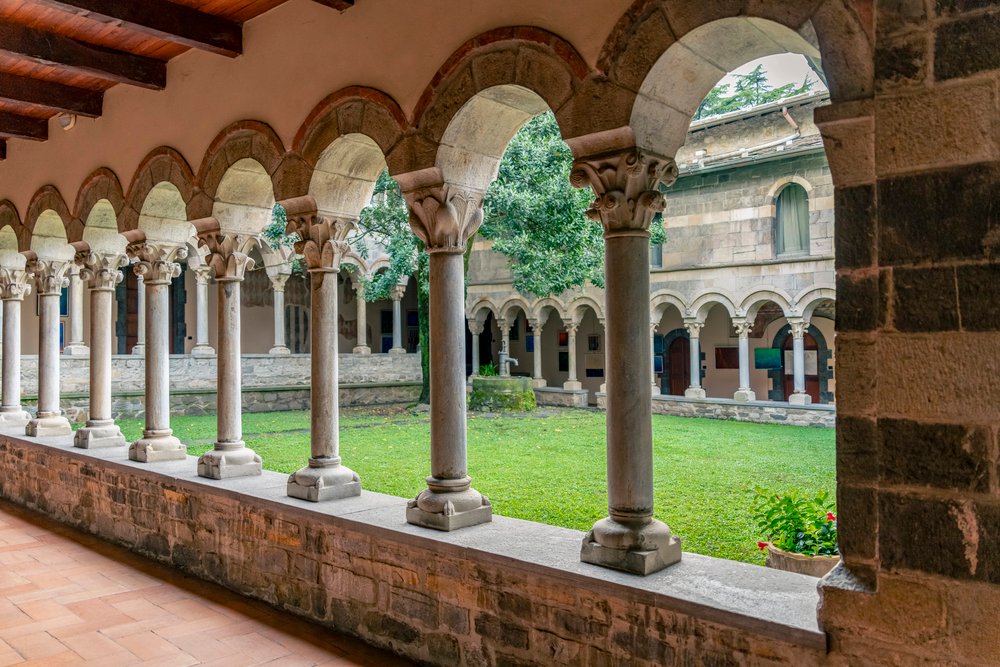
Located on a peninsula just outside Colico, this Cistercian abbey is one of the most beautiful places on the whole lake.
Founded in the 11th century, its Roman-Gothic cloister dates to the 13th century and is considered one of the best examples of Lombard Romanesque architecture on the lake.
The combination of cloisters, gardens, and lake views makes the Abbey of Piona feel completely removed from the wind and watersports energy just down the shore, a nice contrast if you’ve spent the morning on the water.
If you want one calm cultural stop after a morning of forts or outdoor activities, this is the one we would choose.
Check current Piona Abbey opening and visitor information →
Follow this trail to get to the abbey!
The abbey is quieter before noon. Worth booking ahead in summer.
Check availability for guided Piona Abbey tours and cloisters visits.
Check guided Piona Abbey tours and availabilityTaste wine in a Colico vineyard

If your ideal afternoon is more wine and local food than hiking or kitesurfing, this is one of the strongest activities we would add to the article.
The experience takes place at a small vineyard on Montecchio Sud in Colico.
You walk among the vines, learn about the local terroir, and taste the farm’s wines, including Pinot Noir, alongside local cheeses and farm-made salami.
It finishes with honey grappa, and the small-group format keeps it much more intimate than a generic tasting room.
GOOD TO KNOW: the organisation provides a shuttle from the Piona meeting point, so you don’t necessarily need to drive there yourself.
We would choose this for:
- couples;
- a slower afternoon;
- food-and-wine travellers;
- anyone who wants a bookable activity but has zero interest in watersports.
OUR PICK FOR A SLOW AFTERNOON
🍷 Swap the wind for wine
Taste Colico wine in the vineyard with local cheese, farm-made salami and grappa. It’s a much better fit if your idea of Lake Como is food and scenery rather than adrenaline.
Check the Colico vineyard tasting →Visit Forte di Fuentes
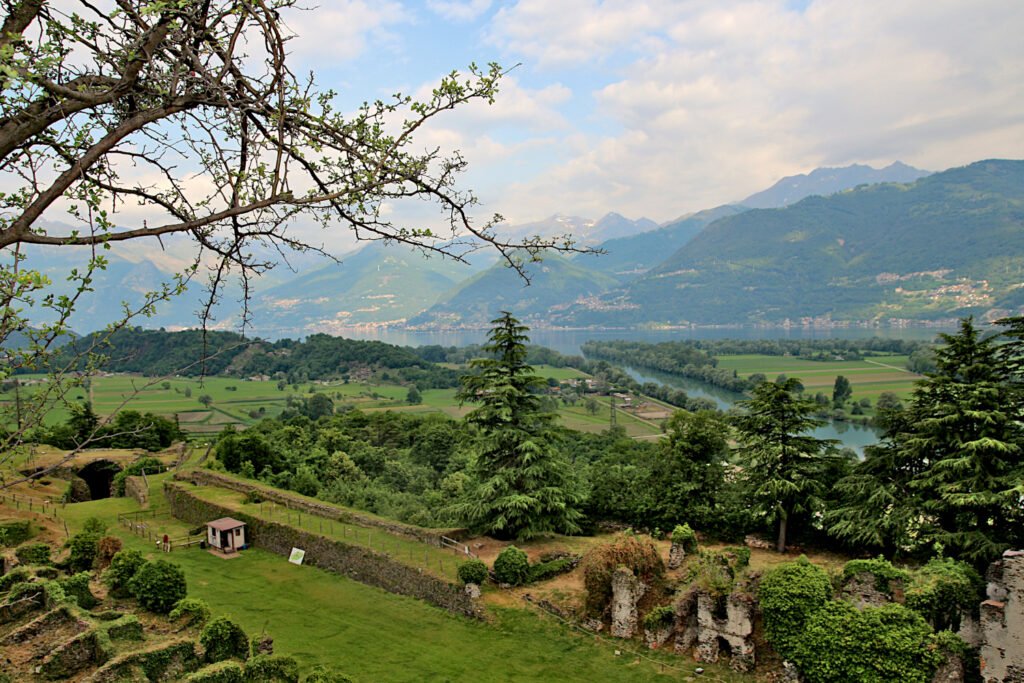
Built in 1603 by Pedro Enríquez de Acevedo, the Spanish governor of Milan, Forte Fuentes was constructed to block any expansion by the Grisons, who controlled the Valtellina and Valchiavenna valleys to the north.
Napoleon’s army destroyed most of it in 1796, so what you’re walking through today is an open-air ruin rather than a complete fort, but the remains of the barracks, governor’s house, and chapel are still visible, and the setting above the Pian di Spagna plain is genuinely striking.
It’s a less fancy experience than Forte Montecchio Nord; there’s no guided tour and no armaments in place, but that’s also what makes it a more flexible stop.
Summary:
- Choose Forte di Fuentes if you prefer outdoor ruins and flexibility.
- Choose Forte Montecchio Nord if you want the better historical experience.
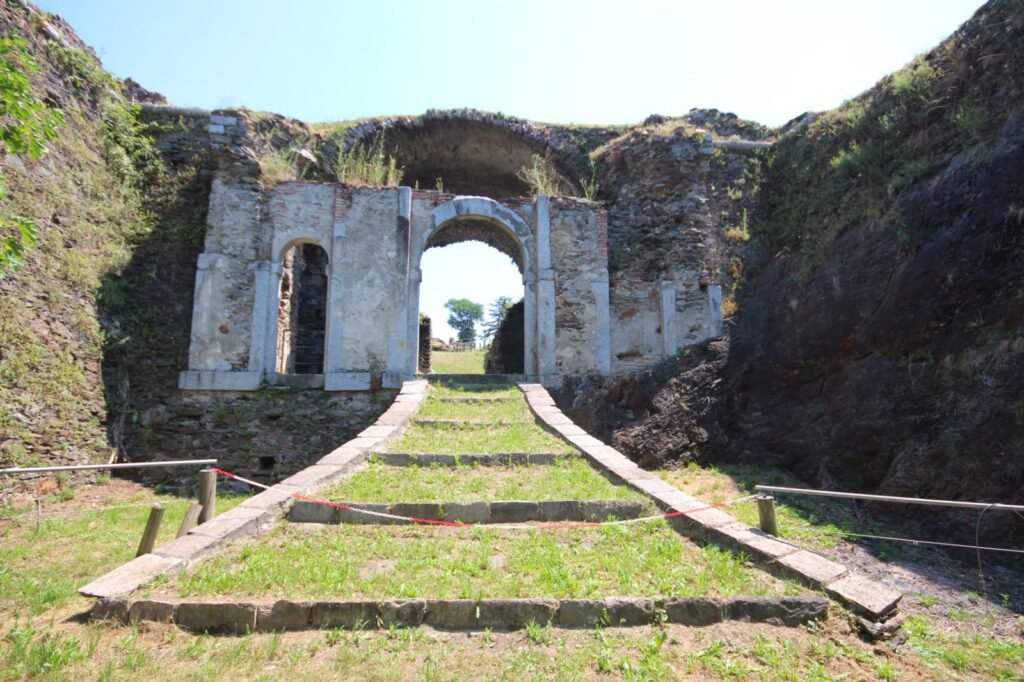
The Sentiero dei Forti hiking route connects both forts, and Forte di Fuentes is the natural first stop if you’re doing that loop on foot.
👉 Tickets and opening: Forte di Fuentes opens Saturdays and Sundays from Easter to early November (check visitcolico.it for more information).
Adult entry is €8, children aged 6 to 17 pay €4, and children under 5 enter free.
If you’re planning to visit Forte Montecchio Nord on the same trip, the combined ticket is €15 for adults and €8 for children, which is better value if you’re doing both in a day.
Curious about the fort’s history?
Book a guided visit to Forte di Fuentes and the Pian di Spagna reserve.
Book a Forte di Fuentes tourVisit Forte Montecchio Nord
Montecchio Nord Fort is the only Italian military fort from the First World War that has preserved its original armament completely intact, and one of the best-preserved WWI forts in Europe.
It was built to defend against a possible attack through Switzerland from Germany or Austria-Hungary during the Great War, yet it was never used in combat during either World War.
The only cannon shots ever fired here came on 27 April 1945, against a column of Italian-German forces retreating up the opposite shore of the lake after Mussolini was handed to the partisans at Dongo.
From the fort, you can see Lake Como, the Valtellina, and the Valchiavenna simultaneously, which is hard to match anywhere else on the northern lake.
👉 One practical thing worth knowing before you plan around it: it is only open on Saturdays, Sundays, and public holidays from March onward. Visits are by guided tour only, no self-guided access.
Tickets: Adult entry is €10, children aged 6 to 17 pay €6, and children under 5 enter free.
👉 Which fort to prioritise if you only have time for one: Forte Montecchio Nord is the more complete experience: the intact armament, the guided context, and the 360-degree views make it the standout.
Forte di Fuentes is the better pick if you want something open-air, more flexible, and easy to walk between the Pian di Spagna reserve and the Sentiero dei Forti trail.
If you have a full day, buy the combined ticket and do both.
Check the current guided-tour times before building your day around the fort.
Don’t miss the only guided slot of the day
Reserve your Forte Montecchio Nord guided tour ahead of time.
Reserve a Forte Montecchio Nord tourWalk through Colico’s town centre and lakefront
Start at Piazza Garibaldi and stroll along the promenade lined with cafés and restaurants, a relaxed, local-feeling spot for an aperitivo by the water, and a good vantage point for watching the kitesurfers if the wind is up.
We sat on the promenade for an hour in the afternoon and watched the kite sails cut back and forth across the water.
Explore Pian di Spagna Nature Reserve
A large protected wetland area at the confluence of the Valtellina and Valchiavenna rivers, between Lake Como and Lake Mezzola, home to herons and other waterbirds and one of the more important biodiversity reserves in northern Lombardy.
It’s reachable on foot or by bike from Colico’s centre in around 20 to 25 minutes along the flat lakeside path following the Sentiero Valtellina along the Adda River.
Several stretches link straight onto the Greenway and the Sentiero del Viandante.
The flat terrain around Pian di Spagna also makes this one of the better places around Lake Como to explore by bike.
If you want to cover much more than you would on foot, there is a 3.5-hour guided e-bike experience connecting three lakes, which turns this into a proper half-day activity rather than a quick nature-reserve walk.
OUR CYCLING PICK
🚲 See more of the northern lake without a big climb
The flatter landscape around Colico is ideal for cycling, and this guided e-bike tour lets you turn the nature reserve into a bigger half-day experience.
Check the three-lakes e-bike tour →| Recommended ITALY TRAVEL ESSENTIALS we personally use and trust | ||
| 🧳 Carry-on / travel duffel | 🎒 Daypack | 👜 Anti-theft crossbody bag |
| 👟 Walking shoes: Men | Women | 🥿 Walking sandals: Men | Women | 👕 Breathable layers: Men | Women |
| 🧥 Packable rain jacket: Men | Women | 🧢 Sun hat | 🕶️ Sunglasses |
| 🔌 EU plug adapter (Type F/L) | 🔋 Power bank | 💧 Reusable water bottle |
| 🧴 Sunscreen | ☂️ Compact travel umbrella | |
See the Fontanedo Tower
The medieval village of Fontanedo, with its homonymous tower, sits at 500 metres altitude on a hill surrounded by chestnut trees.
It can be reached on foot from Villatico via a mule track following the CAI Colico AF signs, a 40-minute walk that is straightforward and suitable for most fitness levels.
The Fontanedo tower was restored in 2019 and is open to enter.
The viewpoint looking back over the lake from up here is noticeably better than anything you get from the promenade, and the walk is quiet enough that most visitors driving straight to the forts miss it entirely.
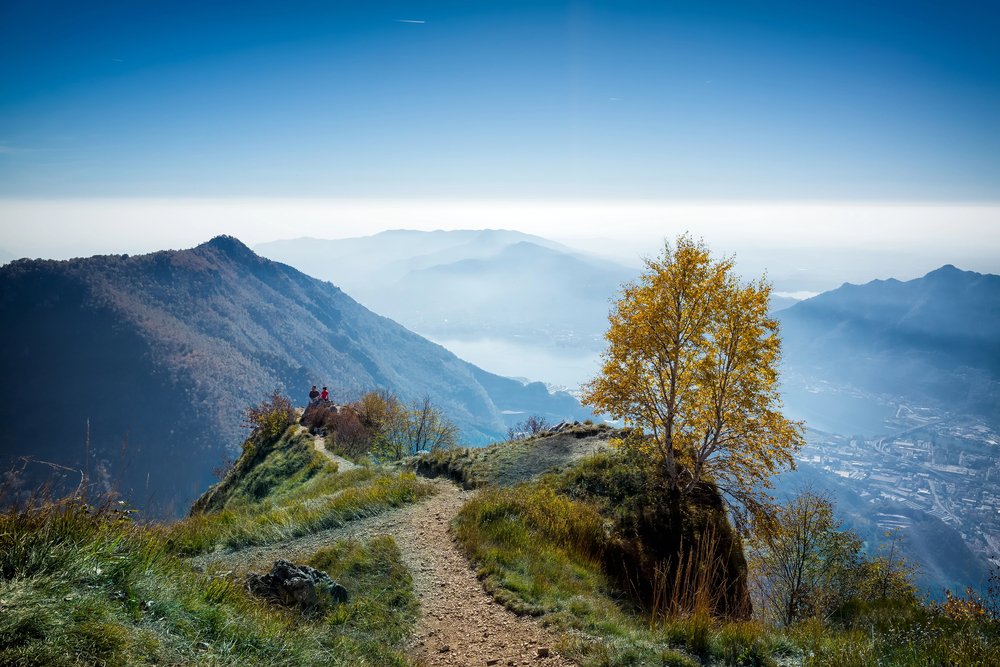
Go hiking around Colico: we recommend the Baia di Piona
We did this walk on a clear morning, following the route out toward Baia di Piona rather than heading into the hills behind Colico.
This is one of the easier walks around town. The route stays gentle, with only a small amount of elevation, and the real reason to do it is the lake scenery rather than the challenge.
As you get closer to Piona, the views open across the bay toward the surrounding mountains and the quieter northern end of Lake Como.
We’d allow around two hours for the return walk, longer if you want to stop beside the water or take your time with photos.
If you want a proper hike with more climbing, we would choose the Sentiero del Viandante instead. But if you want an easy walk that still gets you away from Colico’s promenade, Baia di Piona is the better choice.
We particularly like this as a morning walk because it still leaves most of the day free for Forte Montecchio, the lakefront or another activity.
OUR EASY WALK PICK
🥾 Want lake views without a big climb?
The Baia di Piona route is a much gentler option than Colico’s mountain hikes, with around two hours of walking and beautiful views across the bay.
Check the Baia di Piona route →See Lake Como on a mini-cruise from Colico
One disadvantage of staying this far north is that reaching places such as Bellagio by normal ferry eat up a large part of the day.
This 2.5-hour shared cruise from Colico offers a completely different way to see the lake.
Instead of using the boat as transport, you stay onboard and follow a route past northern and central Lake Como scenery, including places such as Domaso, Gravedona, Tremezzo, Bellagio, Varenna, Bellano and Piona.
One important thing to understand before booking: this is a sightseeing cruise, not a hop-on sightseeing tour. There are no planned stops along the route.
That makes it a good choice if:
- you want to see central Lake Como without changing ferries;
- you only have one or two days;
- you enjoy sightseeing from the water;
- you don’t need to spend hours walking around Bellagio or Varenna.
OUR PICK FOR SEEING MORE OF THE LAKE
🚤 See Bellagio, Varenna and the northern lake from the water
This 2.5-hour cruise works well if you want the classic Lake Como scenery without spending most of the day changing public ferries.
Check the Colico mini-cruise →Staying longer? Take the Bernina railway to St. Moritz
Colico’s railway station gives you one unusual advantage that the central Lake Como towns do not have as conveniently: you can use it as the starting point for a full-day rail trip into Switzerland.
This ticket package covers the regional train from Colico to Tirano, then the Bernina railway from Tirano to St. Moritz, with the return journey included.
IMPORTANT: This is the regular train travelling on the Bernina route, not the panoramic-carriage Bernina Express.
We would only add this if:
- you are staying at least 2–3 nights;
- you want one big day away from Lake Como;
- Switzerland is already on your wish list.
We would skip it on a one-night Colico stop.
STAYING LONGER?
🚂 Turn Colico into your gateway to St. Moritz
If you have an extra full day, you can leave from Colico station, connect in Tirano and ride the famous Bernina railway into the Swiss Alps.
Check the Colico–St. Moritz train ticket →Where to stay in Colico
Seven Park Hotel: best for couples and a beachfront stay
If we wanted the hotel itself to feel part of the Lake Como trip, Seven Park Hotel would be the one we would look at first.
It makes the most sense for:
- being directly beside the lake.
- couples;
- adults-only atmosphere;
- pool and wellness;
OUR PICK FOR COUPLES
🏖️ Stay beside the lake at Seven Park Hotel
We’d look here first if a beachfront setting, pools and adults-only atmosphere matter more than being directly beside the ferry.
Check Seven Park Hotel rates →Hotel Risi: best for ferry and town access
We would choose Hotel Risi instead if location and practicality matter more than resort facilities.
It is the stronger option for:
- families;
- travellers without a car;
- ferry access;
- walking into the centre;
- shorter stays.
BEST FOR LOCATION
🛏️ Want the ferry and town on your doorstep?
Hotel Risi makes more sense for a practical short stay, particularly if you’re travelling without a car and want easy ferry and town access.
Check Hotel Risi rates →🤔 Which Colico hotel should you choose?
Couples / pools / beachfront: Seven Park Hotel →
Ferry / town / simpler stay: Hotel Risi →
Want to compare everything? See more Colico hotels →
Getting to and around Colico
Do you need a car in Colico?
Not really, but we would want one if outdoor sightseeing is the main reason we chose Colico.
You can manage without a car if:
- you stay around the town;
- use the train;
- use the ferry;
- take bookable experiences that start locally.
We would rent one if:
- doing both forts;
- visiting Piona;
- Fontanedo;
- exploring the northern valleys;
- Colico is part of a bigger Lake Como road trip.
Where to park in Colico?
The easiest parking is along the lakeside promenade on Via Lungolario Polti, a short stretch of blue-line (paid) spaces right next to the ferry pier.
These fill up quickly in summer, so arrive early if you’re here in July or August. Blue lines in Colico typically cost around €1.50 per hour during the day.
If the lakeside spots are full, there is additional parking near Piazza Garibaldi, the main square, within a 5-minute walk of the pier and most of the promenade restaurants.
Both Hotel Risi and Seven Park Hotel offer free private parking for guests, which removes the problem entirely if you’re staying overnight.
One thing worth knowing: Colico does not have a ZTL (restricted traffic zone) the way Bellagio and Varenna do, so driving into the centre is allowed.
OUR PICK FOR EXPLORING THE NORTH
🚗 Want the forts, valleys and quieter side of Lake Como?
You can visit Colico without a car, but we’d rent one if the northern lake and outdoor sights are the reason you’re staying here.
Compare Lake Como rental cars →By ferry and where to catch it
Colico has a single pier, located on Via Lungolario Polti, right on the lakefront promenade.
It’s hard to miss.
Tickets can be bought at the pier or in advance at navigazionelaghi.it, and booking ahead is recommended in peak season (June to September).
Key ferry journey times from Colico:
- Colico to Bellagio: €9.50 one-way on the regular service or €14.00 on the express. It takes 2h10 minutes to reach Bellagio.
- Colico to Varenna: approximately 30 to 40 minutes on a regular ferry, shorter on express
- Colico to Como: about 1 hour 40 minutes on the express service
Note that Colico’s ferry runs all year round, which is one advantage over Gravedona, where the service is more limited outside of the April to October season.
By train
Colico has its own train station with direct connections south to Lecco and Milan (approximately 1.5 hours to Milan) and north to Chiavenna.
The station is a 10-minute walk from the pier and the promenade.
Frequently asked questions about Colico
Is Colico worth visiting on Lake Como?
Yes, if watersports, forts, or nature interest you more than villas and postcard towns. It’s a different kind of Lake Como experience.
Is Colico good for kitesurfing?
Yes. The Breva wind makes it one of the most consistent spots on the lake for kitesurfing and sailing, which is why the schools are based here rather than in the central towns.
Is Forte Montecchio Nord open every day?
No. It opens on weekends and public holidays from March, with daily opening only in August. Check the schedule before visiting.
How many days do you need in Colico?
A day covers Piona Abbey and one of the forts. Two days lets you add a watersports lesson and a hike without rushing.
Should I visit both forts or just one?
If you have a full day, the combined ticket (€15 adults, €8 children) covers both Forte di Fuentes and Forte Montecchio Nord and is worth it. If you only have half a day, Forte Montecchio Nord is the more impressive: intact armament, a proper guided tour, and wider views. Forte di Fuentes is easier to combine with a Pian di Spagna walk. Verify current pricing at visitcolico.it before going.
The Italy travel items you’ll wish you had
One often-overlooked part of a trip to Italy is WHAT YOU WEAR AND PACK.
You don’t need to invest in expensive gear, but having the right ESSENTIALS FOR COBBLESTONES, SUMMER HEAT, CHURCH DRESS CODES, AND BUSY CITIES will make your trip far more comfortable.
Here’s a QUICK SUMMARY:
- 🧳 A light CARRY ON BAG keeps you mobile on trains and up the narrow staircases of old-town hotels.
- 🧳 To keep a carry-on organised across multiple towns, a set of VACUUM SUCKED PACKING CUBES makes living out of a bag far easier.
- 👕 Summers get hot, so pack breathable LIGHT LAYERS AND LINEN SHIRTS (Link for men) (Link for women) to stay cool and presentable.
- 🩹 The Italian cobblestones are famous for causing blisters, so a few BLISTER PLASTERS in your daypack are always worth it.
- 🔌 Italian sockets are Type F and Type L, so a UNIVERSAL PLUG ADAPTER keeps your devices charged everywhere.
- 🔋 Long days of maps, photos, and tickets drain a phone fast, so a POWER BANK is a lifesaver.
- 💧 Many towns have free drinking fountains, so a REUSABLE WATER BOTTLE saves money and keeps you hydrated in the heat.
- 🧴 The Mediterranean sun is stronger than it feels, so pack SUNSCREEN to avoid ruining a day with a burn.
- ☂️ Summer thunderstorms roll in quickly, so a COMPACT TRAVEL UMBRELLA keeps a sudden downpour from cutting your day short.
- 🎒 A comfortable DAYPACK is perfect for carrying water, layers, and a camera through long days of sightseeing.
- 👜 Pickpockets work the busy squares and stations, so an ANTI-THEFT CROSSBODY BAG lets you relax and keep valuables in front of you.
- 👟 Italy means cobblestones and a lot of walking, so broken-in WALKING SHOES (Link for men) (Link for women) will save your feet.
- 🥿 For hot afternoons, a pair of supportive WALKING SANDALS (Link for men) (Link for women) beats sweaty trainers.
- 🧥 Lake and mountain weather changes fast, so a packable RAIN JACKET (Link for men) (Link for women) is worth the space it takes.
- 🧢 The midday sun is strong, so a SUN HAT makes long piazza days and boat trips much more comfortable.
- 🕶️ Good SUNGLASSES cut the glare off the water and the pale stone facades.
Final thoughts on visiting Colico
Colico is worth visiting because it feels unlike the polished central part of Lake Como.
Come here for wind, forts, hiking, and open space, not because you expect another Bellagio.
If we had one day, we would visit Forte Montecchio Nord, walk the lakefront, and choose one outdoor experience.
With two days, we would add either horseback riding, the vineyard tasting, cycling, or a hike.
Stay longer, and Colico becomes more useful as a base: take a cruise down Lake Como or use the train station for a full day toward St. Moritz.
If you want villas and romantic old streets, stay farther south.
If you want activities, mountains and a more open side of Lake Como, Colico makes much more sense.
HOW WE’D BOOK IT
🌬️ Planning a Colico trip?
Stay one or two nights, choose the hotel based on whether you want beachfront relaxation or ferry access, then book one experience that fits the kind of trip you actually want.
🐎 Take a horseback ride around Colico
Planning the rest of your trip?
See our full guide to the best things to do in Lake Como, including Bellagio, Varenna, and the villages most visitors miss.
See the full Lake Como guideWritten by Laura and Alexander, a travel couple who’ve spent time across Lake Como’s towns, from the central triangle to the quieter northern towns of Colico and Gravedona.


*If you purchase something through our links, we may earn a small fee. However, you still pay the same (or even get a discount). Win-win! And one day we may get to be full-time travel bloggers!
Please check our affiliate disclosure policy for more details. Your suppport is appreciated!
We share travel guides for couples who want a little luxury, a lot of heart and lifelong stories to tell!
Laura and Alexander
Founders of Lost Between Oceans

Reviews
Lost Between Oceans gave me and my husband the perfect tips and destinations to plan our dream honeymoon in French Polynesia, making the experience stress-free.

I never thought I’d dare to go diving in a cenote and surfing in Mexico. Their travel guides made me more confident and adventurous, overcoming my travel fear of the unknown. Thank you!
I looked up Lost Between Oceans for last-minute tips about my roadtrip in the Amalfi Coast. They showed me the best cliffside villages and hidden beaches. This saved me a lot of time researching everything myself!



Related Posts