
Welcome to:
Uruguay
Uruguay is South America’s most relaxed country, and the perfect place to start an overland adventure. Squeezed between Argentina and Brazil, it has colonial cobblestone towns, wild Atlantic beaches, rolling cattle country, and a capital where everyone seems to carry a thermos of mate. This is where our Pan-American expedition begins, as our Land Rover Defender arrives in Montevideo by ship.
Practical guides for Uruguay
Weather in Uruguay
Uruguay has a mild, humid climate with four distinct seasons and rain possible in any month. Summers (December to February) are warm and sunny, perfect for the beach, while winters (June to August) are cool, damp and windy, and can feel colder than the thermometer suggests. Seasons are the reverse of Europe’s.
Best time to visit Uruguay
December to March is peak beach season, when the coast comes alive and Carnival fills Montevideo with candombe drums. Be aware that Punta del Este gets very crowded and expensive in January. Spring (October to November) and autumn (March to April) are ideal for fewer crowds, pleasant temperatures and lower prices.
🇺🇾
Best time to visit Uruguay:
Jan–Apr, Oct–Dec
⏳
Faq’s
What time is it in Uruguay ?
Uruguay uses UTC−3 all year and doesn’t switch to daylight saving time. That puts it 4 hours behind Paris in the European winter and 5 hours behind in the European summer.
Is Uruguay tourist-friendly?
Yes, very. Uruguay is safe, relaxed and easy to get around, with a good bus network and short distances between the main sights. It’s also easy to combine with Buenos Aires, which is just a ferry ride away. Montevideo does not have a tram or subway network.
What is Uruguay best known for?
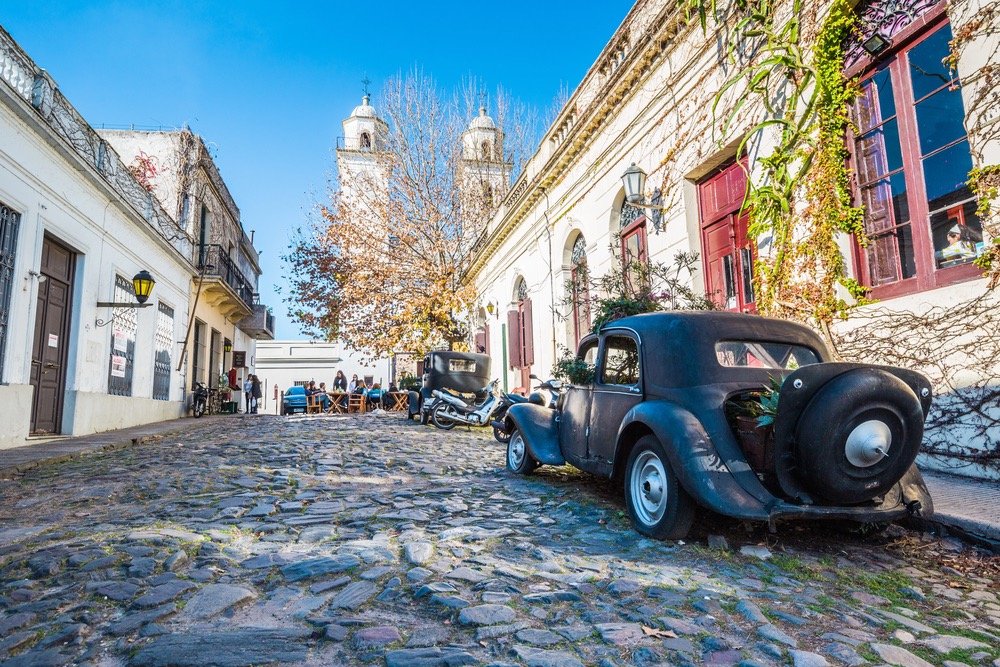
Uruguay is famous for its beaches, the UNESCO-listed old town of Colonia del Sacramento, asado, Tannat wine, football (it won the first ever World Cup in 1930) and its national obsession with mate.
Can you drink the tap water in Uruguay ?
Yes, tap water is generally safe to drink throughout the country.
What is the culture of Uruguay ?
Uruguayan culture is laid-back, family-oriented and deeply social. Sharing mate, weekend asados and long evenings with friends are part of everyday life. Afro-Uruguayan candombe drumming is a UNESCO-recognised tradition, and Carnival in Montevideo is one of the longest in the world, lasting around 40 days.
Where are the airports in Uruguay ?
The main international airport is Carrasco International Airport (MVD) near Montevideo. Punta del Este has its own airport, Laguna del Sauce (PDP), mostly busy in summer. Many travelers also arrive by ferry from Buenos Aires to Colonia or Montevideo.
What are the national dishes of Uruguay ?
The national dish is the chivito, a huge steak sandwich loaded with ham, cheese, egg and more. Other favourites include asado, milanesa, torta frita, pizza by the slice (called “fainá” when made from chickpea flour) and desserts like chajá, all washed down with Tannat or a “medio y medio”.
Is it safe to travel to Uruguay ?
Yes, Uruguay is one of the safest countries in Latin America for travelers. Use normal city precautions in Montevideo, especially at night, and check your government’s current travel advice before you go.
What are some famous landmarks in Uruguay ?
Famous landmarks include the historic quarter of Colonia del Sacramento, the Hand sculpture (Los Dedos) on the beach in Punta del Este, Casapueblo, Montevideo’s Palacio Salvo and Mercado del Puerto, the remote beach village of Cabo Polonio and the Santa Teresa Fortress near the Brazilian border.
Is Uruguay expensive to visit?
Uruguay is the most expensive country in South America, with prices in Montevideo and especially Punta del Este closer to Europe than to its neighbours. Travelling outside January, skipping VAT on hotels with your foreign passport and paying restaurants by foreign card helps keep costs down.
Get Ready For Your Trip
Book popular activities in Uruguay
Be prepared for Uruguay
Language
The official language is Spanish, spoken with the same Rioplatense accent as Buenos Aires and using u201cvosu201d instead of u201ctu00fau201d. Near the Brazilian border youu2019ll also hear Portuguese and u201cportuu00f1olu201d, a mix of both. English is spoken in hotels and tourist hubs like Punta del Este and Colonia, but less so in the countryside.
Currency + How to pay
The currency is the Uruguayan peso (UYU), though US dollars are also widely accepted for bigger purchases like hotels and car rentals. Cards work almost everywhere, and we use Revolut for this: always choose to pay in pesos, and top up before the weekend, as Revolut adds a small markup on weekend exchanges. Insider tip: non-resident tourists donu2019t pay VAT on hotel stays when showing a foreign passport, and paying restaurants and car rentals with a foreign card gets you a partial VAT discount, applied automatically at the terminal.
Visa
EU, US, UK, Canadian and Australian citizens can visit Uruguay visa-free for up to 90 days as tourists, and the stay can usually be extended once from inside the country. Some other nationalities need a visa in advance. Always check the latest requirements before traveling.
Plugs
Uruguay uses several plug types, mainly C, F and L, with a standard voltage of 220V. Most European plugs fit without a problem, but a small universal adapter is handy for older sockets. Shop your international plug.
Safety
Uruguay is one of the safest countries in Latin America. Petty theft does happen in Montevideo, especially in the Ciudad Vieja after dark and on quiet streets at night, so keep your phone and valuables out of sight and take a taxi or Uber late in the evening.
Driving & fuel prices
Uruguay is small and easy to drive, with good main roads and short distances: Montevideo to Colonia is about 180 km (110 mi) and to Punta del Este about 130 km (80 mi). Fuel is among the most expensive in South America, so factor it into your budget. Watch out for speed cameras, which are common on the main routes.