
What to Pack for Uruguay: Our Essential Packing List
This post has affiliate links. We earn a small commission, which helps us create better content and share amazing destinations with you at no extra cost.
On this page
Travel essentials we use
On this page
Working out what to pack for Uruguay is a different job than packing for the rest of South America: there’s no altitude to prepare for and no multi-day trek to gear up for.
We arrived in Montevideo in October 2026, after our car spent four weeks at sea being shipped from Germany in a container.
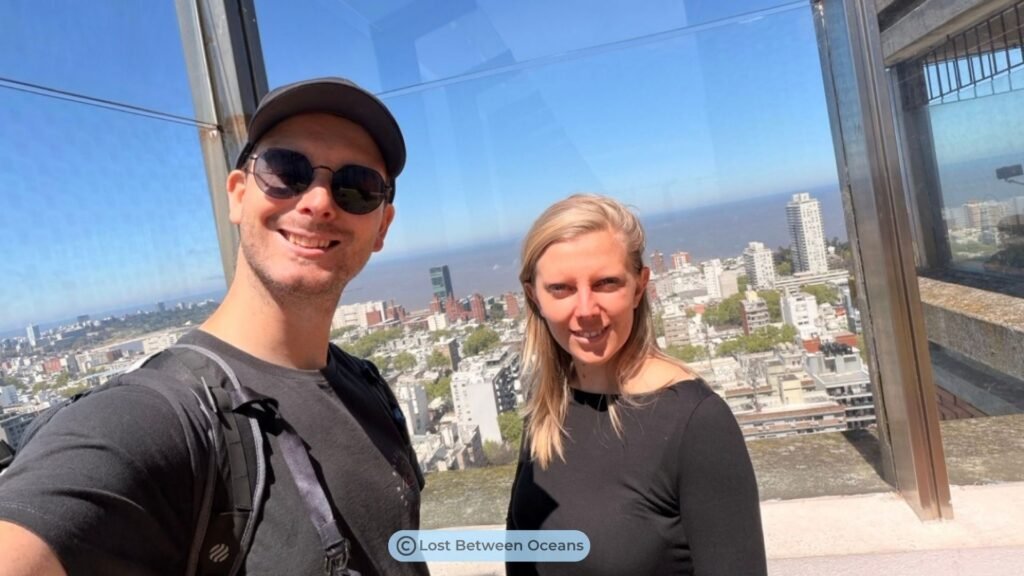
Spring was around 14°C (57°F) on cloudy days and closer to 20°C (68°F) when the sun came out, mostly cloudy, with light showers every day or so.
Our biggest packing lesson: pack for two seasons and definitely bring a warm layer, even if the forecast looks mild.
We arrived in Montevideo a few days before our car did, and guess what?
Our warm clothes were all in the car inside the container. We had to survive for 5 days with just one long-sleeve T-shirt. That’s what being underprepared means 😉

You don’t need to overspend on gear for Uruguay.
Having the right Uruguay travel essentials for changeable coastal weather, city walking, and the off-grid night in Cabo Polonio makes the difference between a comfortable trip and a slightly miserable one.
Our Uruguay packing list at a glance
QUICK SUMMARY: WHAT TO PACK FOR URUGUAY
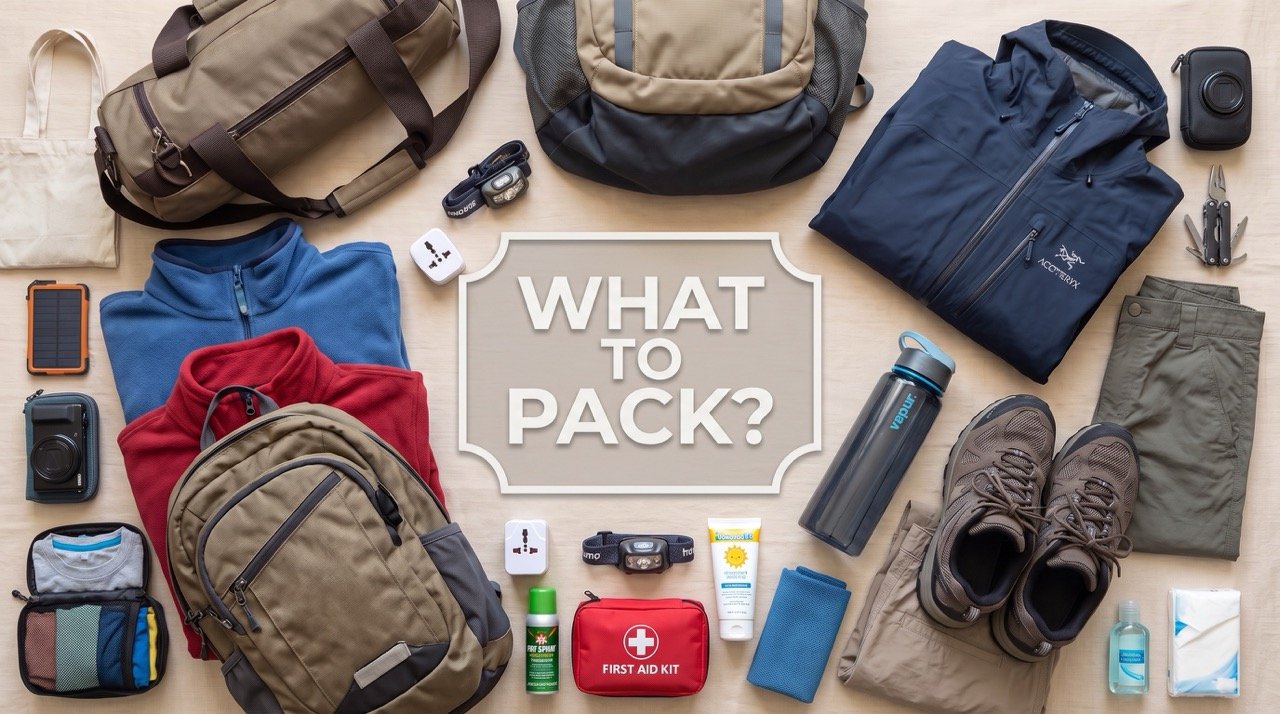
- 🪩 We took a flight to Montevideo, carrying only two DUFFEL BAGS. They are a lot easier to live out of for a few weeks of moving between Montevideo, the coast, and wine country than a rigid suitcase.
- 🎒 Our good DAYPACK covers city walks, day trips to Colonia or Carmelo, and beach days in one bag. INSIDER TIP: Always leave your passport or money in your daypack so it cannot get stolen from your pockets.
- 👕 Pack breathable MOISTURE-WICKING SHIRTS for a hilly Montevideo summer and an asado afternoon in the sun. See our Uruguay food and drink guide for what that actually involves.
- 🧥 Mornings and evenings on the Rambla get cold even in shoulder season, so we brought our warm FLEECE (link for men) (link for women).
- 🌧️ Weather off the Río de la Plata changes fast (rain, sunshine, rain again), so our WATERPROOF JACKET came in handy (every day).
- 👖 For cobblestone streets and wine-country visits, pack comfortable TRAVEL PANTS (link for men) (link for women) rather than anything too dressy or too technical, which you do not need for Uruguay.
- 🧦 Winter mornings (June to August) and cooler Rocha-coast nights call for very warm BASE LAYERS.
- 🛌 After long travel days between regions, we love wearing our COMFORTABLE SLEEPWEAR, which makes all the difference when we try to fall asleep in our sleeping bag in our car.
- 👟 You don’t need true hiking boots for this trip, but WALKING SHOES (link for men) (link for women) hold up better on cobblestones than sneakers with no grip.
- 🦟 River beaches and the Rocha coast bring out the bugs in summer: BUG SPRAY earns its space. We even have three bottles of this bug spray for our travels, oops…
- 🔦 A HEADLAMP matters in Cabo Polonio, which has no electricity grid. We always carry one with us for a late-night walk.
- 💧 Hot summer days mean you’ll want a REUSABLE WATER BOTTLE on hand at all times. We use this daily, and it is a standard setup for us. We both have our own Vaput bottle.
- 🧺 A lightweight QUICK-DRY TOWEL is useful for beach days and Cabo Polonio’s outdoor showers. When we travel by car, it’s easier if the towel dries quickly so we don’t have to wait all day.
- 🩹 A compact FIRST AID KIT is always worth the small amount of space it takes up.
- 🔌 A UNIVERSAL TRAVEL ADAPTER: Uruguay runs on 220V and uses Type C, F, I and L sockets, so pick one adapter that covers all four (the World Power Plugs guide shows each type). European should be fine, but if you’re from the UK or the US, definitely bring a universal travel adapter with you.
- 🧴 High-factor SUNSCREEN: the UV index in Uruguay regularly reaches very high to extreme levels in summer, even on hazy beach days. I believe we have about 4 bottles of sunscreen to get us through the year.
What to pack for Uruguay in each season
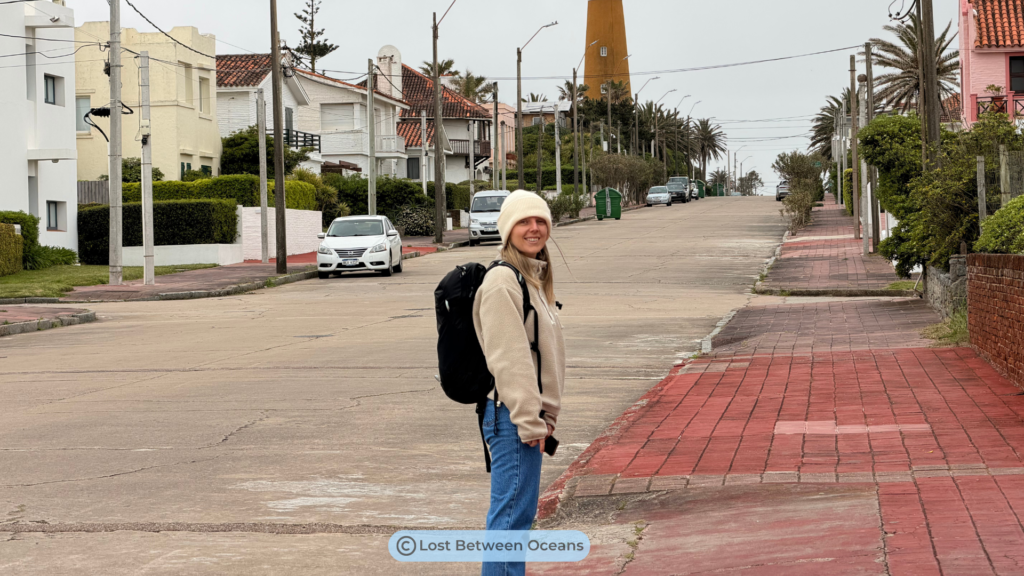
Uruguay has four real seasons, and the right Uruguay packing list depends on which one you land in.
Spring is the only one we’ve packed for ourselves during our three-week trip, which gave us warm days (up to 25 degrees), but also cold days (as low as 5 degrees).
| Season | Typical Montevideo temps | What to add to the basics |
|---|---|---|
| Summer (Dec to Feb) | Highs around 28°C (82°F), lows around 17°C (63°F) | Sandals, sunscreen, hat, water bottle, bug spray, one light layer for windy evenings |
| Autumn (Mar to May) | Highs around 26°C (79°F) in March, dropping to about 18°C (64°F) in May | Fleece, rain jacket, long pants, closed shoes |
| Winter (Jun to Aug) | Highs around 14°C (57°F), lows around 6°C (43°F), damp and windy | Base layers, warm jacket, fleece, waterproof shoes; many beach towns are half closed |
| Spring (Sep to Nov), our trip | In October we had about 14°C (57°F) when cloudy and 20°C (68°F) in the sun | A warm layer and a rain jacket every day; light showers came every day or so |
What to wear in Uruguay

Uruguayans dress casually and practically.
Jeans or travel pants, a sweater or jacket, and clean walking shoes fit in almost everywhere in Montevideo, including most restaurants, and you won’t need anything formal.
Punta del Este and José Ignacio dress up on summer evenings (since they are party destinations), so pack one nicer outfit if the beach towns are on your route in high season.
Buy your own yerba mate gear as a souvenir

We followed a maté experience to understand why about 25% of the whole country’s population walks around with a thermos and a glass in their hand to sip their drink.
We learned about the history of it, the way it’s being drunk (one glass can last up to one day), and the differences between the Uruguayan maté and the Argentine and Brazilian versions.
It was no surprise to us that Uruguay drinks more yerba mate per person than any other country.
We’ve seen people carrying a thermos and gourd on buses, in parks and along the Rambla, in markets, even at the airport when boarding a flight!
If you’re buying yerba to bring home, know what you’re choosing between.
Classic Uruguayan yerba is finely ground, strong and bitter. Blends with herbs, citrus, or green tea are gentler if the straight version is too much. For us, maté tastes like an herbal tea.
A small sampler of two or three styles is an easy way to find what you like before buying a full 1 kg (2.2 lb) bag.
You can also buy your maté starter kit here!
WHAT TO PRIORITIZE, BY TRIP TYPE:
- Mostly Montevideo and Colonia (city + wine country): supportive walking shoes, a fleece, a waterproof jacket. Skip the camping gear entirely.
- Beach-focused (Punta del Este, José Ignacio): sandals, sun protection, a reusable water bottle, electrolyte tablets. Lighter on layers unless you’re there off-season. Our Punta del Este travel guide covers the beach side.
- Rocha coast / Cabo Polonio: headlamp, bug spray, a quick-dry towel, and a real look at what your accommodation provides before you decide on camping gear. Our Rocha travel guide explains how Cabo Polonio works.
- Winter trip (June–August), any region: base layers and the fleece move from optional to essential. See our best time to visit guide for what the cold actually feels like.
- Spring trip (September to November), like ours: a fleece, a waterproof jacket, travel pants, and walking shoes do most of the work. Bug spray and electrolyte tablets can wait for summer.
Don’t bother with trekking poles or altitude sickness tablets: neither has a real use case anywhere in Uruguay.
What you don’t need in Uruguay
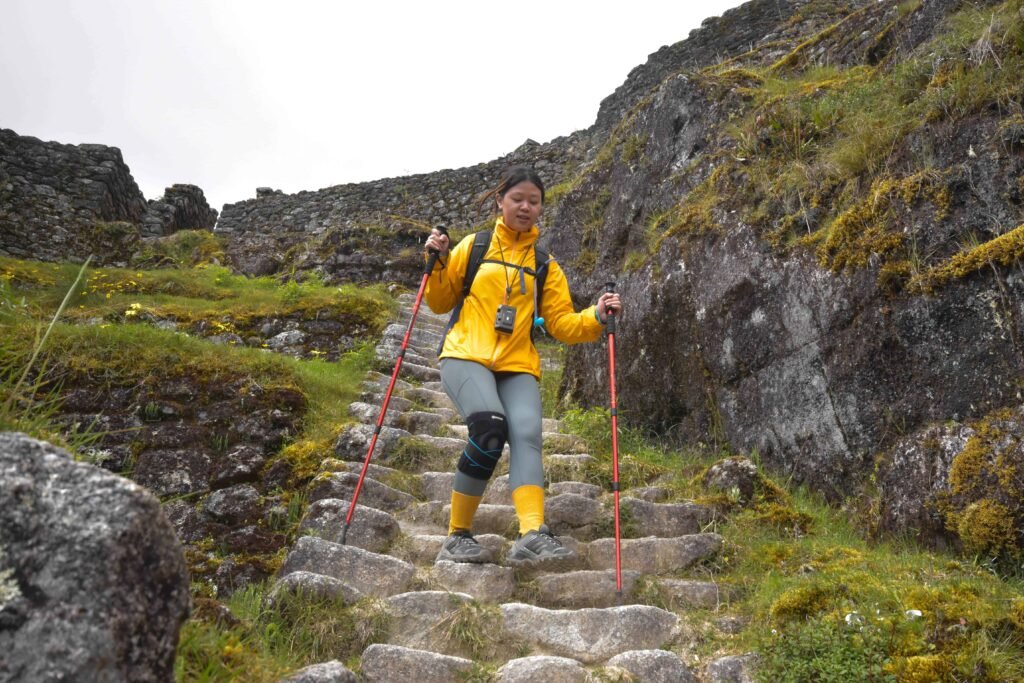
A few things worth leaving at home, specifically because Uruguay isn’t the Andes:
- Trekking poles: there’s no multi-day trek here comparable to the Inca Trail; the closest thing (a day hike near Sierra de las Ánimas) doesn’t call for them
- Altitude sickness tablets: Uruguay’s highest point, Cerro Catedral, is only 514 m (1,686 ft), so altitude isn’t a factor
- Heavy-duty rain gear: a packable waterproof jacket covers it; you don’t need anything built for sustained mountain weather
- A full camping setup: only relevant if you’re specifically doing Cabo Polonio or Valizas independently rather than through a guesthouse
We never used any of the items above, so we do not recommend them. They come in handy when you go to Argentina, Chile, or Peru.
Not sure which season you’re packing for?
Our season-by-season guide breaks down exactly how cold Uruguayan winter actually gets, region by region.
See the best time to visit UruguayUruguay travel essentials beyond clothing: cards, cash and toiletries

The most useful thing in our bags wasn’t clothing.
It was the right VISA card.
Paying with our foreign Visa always got us a discount, sometimes up to 15% off the bill, because Uruguay refunds part of the VAT on many card payments by foreign visitors (restaurants, hotels, car rental).
Check out our full posts on how the money system works in Uruguay. A must-read when you’re travelling!
We never needed US dollars: a card plus one ATM withdrawal in pesos covered everything for us.
Two ATM lessons from Montevideo: the Abitab machines we tried wouldn’t accept our foreign card at all, while RedBROU ATMs (the state bank’s network) worked best for us.
With our Wise card, we paid 100 pesos (about €2.20 / $2.50) per withdrawal, the same at every bank we tried.
As a couple, we share one joint Wise account, so we both pay from the same balance and never have to settle up on who paid for dinner.
One more money-related packing tip: bring sunscreen and toiletries from home, because Uruguayan supermarkets aren’t cheap. In Montevideo, we easily paid $25 (€23) for just a few items.
👉 INSIDER TIP: if one ATM rejects your foreign card, don’t assume your card is blocked. Try a RedBROU machine before you call your bank. Our full breakdown of cards, ATMs, and tipping is in our money in Uruguay guide.
Sorting out cards and cash before you fly?
Our money guide covers which ATMs took our foreign card, what the fees were, and when paying by card saved us up to 15%.
Read our money in Uruguay guideOur take

When it comes to what to pack for Uruguay, pack for your season first.
If you’re coming in spring as we did, a warm layer and a rain jacket will get more use than your shorts.
In summer, flip that and go for sandals, sunscreen, and a water bottle; in winter, base layers and a fleece are really essential.
Whatever the season, prioritize good walking shoes, skip the altitude gear, bring the right card instead of a stack of US dollars, and buy your mate gear once you’re there.
Landing in Montevideo first?
Our honest take on Montevideo covers what we’d skip, what was worth it, and why three days is enough. For the rest of the country, see our best things to do in Uruguay guide.
Is Montevideo worth visiting?Written by Laura and Alexander, a travel couple overlanding through Uruguay, from Montevideo’s Ciudad Vieja to the wineries of Carmelo and the landscapes at Punta del Diablo.



*If you purchase something through our links, we may earn a small fee. However, you still pay the same (or even get a discount). Win-win! And one day we may get to be full-time travel bloggers!
Please check our affiliate disclosure policy for more details. Your suppport is appreciated!
We share travel guides for couples who want a little luxury, a lot of heart and lifelong stories to tell!
Laura and Alexander
Founders of Lost Between Oceans

Reviews
Lost Between Oceans gave me and my husband the perfect tips and destinations to plan our dream honeymoon in French Polynesia, making the experience stress-free.

I never thought I’d dare to go diving in a cenote and surfing in Mexico. Their travel guides made me more confident and adventurous, overcoming my travel fear of the unknown. Thank you!
I looked up Lost Between Oceans for last-minute tips about my roadtrip in the Amalfi Coast. They showed me the best cliffside villages and hidden beaches. This saved me a lot of time researching everything myself!



Related Posts